How to Use a Washing Machine: Simple Steps
You’ve thrown in a load of laundry, added detergent, and pressed start, only to find your clothes still dirty, wrinkled, or smelling musty. If you’ve ever wondered why your washing machine isn’t delivering fresh, clean results, the problem often isn’t the machine itself but how you’re using it. Knowing how to use a washing machine properly goes far beyond tossing clothes in and pressing a button.
This guide covers everything you need to know, from sorting fabrics correctly to choosing the right cycle and avoiding common mistakes. Whether you own a front-loader, top-loader, or high-efficiency model, you’ll learn how to wash clothes effectively, extend fabric life, and keep your machine running smoothly for years.
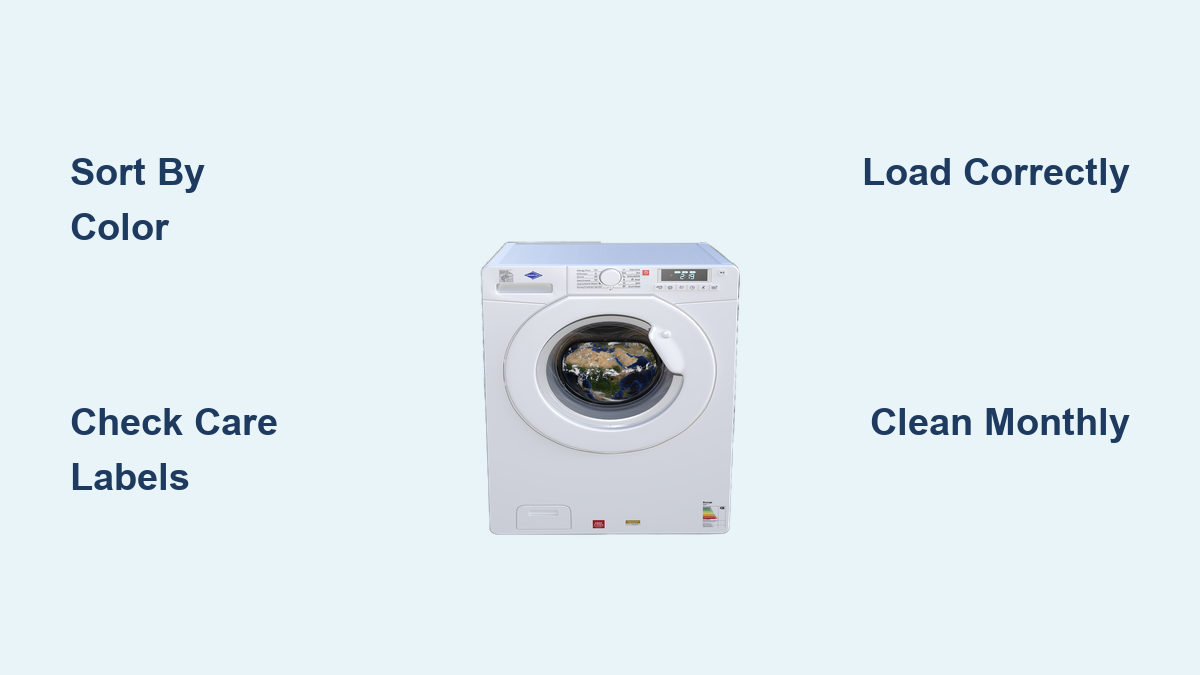
Sort Laundry by Color and Fabric Type
Sorting your laundry correctly prevents dye transfer, fabric damage, and poor cleaning results. Taking a few minutes to separate clothes before washing saves you from ruined garments later.
Separate Lights, Darks, and Brights
Mixing colors leads to dye bleeding, turning whites pink or dark jeans streaked with blue. Separate your laundry into four main groups: whites (t-shirts, socks, undergarments), lights (pastels, light grays, beige), darks (blacks, navies, dark grays), and brights (reds, oranges, purples). Wash bright colors separately the first few times since new reds and purples often bleed.
Group by Fabric Type
Different fabrics need different care. Washing heavy towels with delicate lingerie damages both. Group heavy fabrics (jeans, towels, bedding) together, synthetics (workout gear, polyester blends) separately, delicates (silk, lace, bras, hosiery) in their own load, and everyday cottons (shirts, socks, sheets) separately. Also isolate heavily soiled items like muddy work clothes to avoid spreading dirt to cleaner garments.
Check Care Labels Before Washing
Every garment comes with washing instructions. Ignoring these symbols leads to shrinking, fading, or destroyed fabrics.
Follow Tag Instructions
Care labels tell you the safe water temperature, recommended cycle type, and whether an item should be dry-cleaned only. Wool, silk, and spandex blends are particularly sensitive to heat and agitation. When in doubt, wash in cold water on delicate cycle, which is the safest option for unknown fabrics.
Understand Common Symbols
Learn these basic icons: a bucket of water means machine washable, a hand in water means hand wash only, a triangle indicates bleaching is allowed (filled triangle means color-safe), and an iron symbol shows ironing temperature. Refer to your machine’s manual if you encounter unfamiliar symbols.
Load Your Washing Machine Correctly
:max_bytes(150000):strip_icc()/formula-to-calculate-washer-tub-capacity-2145871_V2-ac9665fddba4474d9f2b988bad0e3a7e.png)
How you load the drum directly impacts cleaning effectiveness and machine longevity. Both overloading and underloading cause problems.
Fill the Drum Properly
Overloading reduces cleaning power and strains the machine. Underloading wastes water and causes imbalance. Fill the drum up to 75% capacity, leaving space for clothes to move freely. Do not pack items above the top of the agitator in top-loaders or block the door seal in front-loaders. Distribute clothes evenly around the drum to prevent shaking during the spin cycle.
Load Order Matters
For machines with detergent dispensers, add detergent to the designated compartment. For pods, place them in the empty drum first, then add clothes on top. Never put pods in the detergent drawer. If using liquid detergent directly in the drum, some manufacturers recommend adding it before clothes, while others suggest pouring it in after loading.
Add Detergent and Additives the Right Way

Using the correct detergent type and amount ensures clean clothes without residue or damage.
Choose the Correct Detergent
Your machine type determines the best detergent. If your washer has an HE symbol, use high-efficiency detergent only. Non-HE detergents create too many suds, which reduce cleaning effectiveness, cause overflow, and damage internal components. Liquid detergent goes in the dispenser or drum, pods go in the drum, and powder goes in the main dispenser.
Measure Accurately
Too much detergent leaves residue and causes odors. Too little means poor cleaning. Follow product guidelines, but general rules apply: small loads need 1 to 2 cap units of liquid or 1 pod, medium loads need 3 units or 2 pods, and large or heavily soiled loads need 4 to 5 units or 3 pods. Adjust based on soil level, water hardness, and detergent concentration.
Use Fabric Softener and Bleach Safely
Add fabric softener to the designated dispenser, never directly on clothes where it causes stains. Use bleach only if the fabric allows, adding it to the bleach compartment. Never mix chlorine bleach with vinegar or ammonia since toxic fumes result. For colored fabrics, use oxygenated (color-safe) bleach instead.
Choose the Right Wash Cycle and Settings
Selecting the wrong cycle damages clothes or leaves them dirty. Match your settings to the fabric and soil level.
Match Cycle to Fabric
Use this guide for best results: normal cycle works for cottons and everyday wear, delicate for silk and lace, heavy duty for muddy clothes and workwear, permanent press for wrinkle-prone synthetics, quick wash for lightly soiled items, and cold wash for dark colors and activewear.
Set Water Temperature Wisely
Cold water (60 to 80°F) prevents fading, shrinking, and sets protein stains, making it ideal for darks and delicates. Warm water (90 to 110°F) balances cleaning and fabric safety. Hot water (120 to 140°F) sanitizes towels, bedding, and whites but can shrink natural fibers. Modern enzymatic detergents work well in cold water, making it the most energy-efficient choice for most loads.
Adjust Spin Speed and Soil Level
High spin removes more water, best for towels and jeans. Low spin protects delicates and knits. Set soil level to heavy for sweaty gym clothes or muddy items, light for delicate or lightly worn items, and medium for most regular loads.
Start the Cycle and Monitor Progress
Once settings are selected, starting and running the cycle properly ensures optimal results.
Begin Correctly
Close the lid or door fully since most machines won’t start otherwise. Select your settings (cycle, temperature, options) and press start. An indicator light usually confirms the cycle has begun.
Avoid Opening Mid-Cycle
Don’t open the lid or door unless your model allows adding a forgotten item. Doing so may interrupt water filling or draining, stop the spin cycle, or trigger error codes, especially in front-loaders. Wait until the door lock light turns off before opening.
Understand the Wash Sequence
The typical wash cycle follows this order: fill (water enters the tub), wash (agitation begins and detergent dissolves), drain (soapy water pumps out), spin (water extraction), rinse (fresh water enters and softener releases), final spin (maximum water removal), and end (chime sounds and cycle completes).
Remove Clothes Promptly After Washing
What you do after the cycle ends matters as much as the wash itself.
Prevent Odors and Mold
Leaving wet clothes in the washer for more than 30 to 60 minutes creates a breeding ground for mold and mildew, leading to musty smells. Always remove laundry immediately after the cycle ends.
Transfer to Dryer or Air Dry
If using a dryer, clean the lint trap first. Use low heat for delicates, medium for everyday fabrics, and high for towels and jeans. Sensor dry mode stops automatically when clothes are dry, saving energy. For air drying, hang items labeled “lay flat” or “do not tumble dry” and use drying racks for sweaters and bras to prevent stretching.
Handle Special Fabrics Properly
Certain items require extra care to maintain their quality and longevity.
Wash Jeans the Right Way
Turn jeans inside out to preserve color. Use cold water and gentle detergent. Wash alone the first time to prevent dye transfer. Add fabric softener to reduce stiffness and pilling.
Keep Towels Soft and Absorbent
Wash towels in warm or hot water with enzymatic detergent and citric-acid rinse to remove body oils. Add fabric softener for softness, but avoid overuse since buildup reduces absorbency.
Care for Delicates
For silk, use cold water, delicate cycle, mesh bag, and gentle detergent. For wool, only machine wash if the label permits, and use wool-specific detergent. For lingerie, always use a mesh bag and avoid high spin. Wash sneakers in a mesh bag using cold delicate cycle and air dry only. For gym clothes, use enzymatic detergent and citric-acid rinse, and skip fabric softener since it reduces moisture-wicking ability.
Maintain Your Washing Machine
Regular maintenance prevents musty smells, mold, and performance problems.
Clean the Machine Monthly
Run an empty hot water cycle monthly with either washing machine cleaner, 1 cup citric-acid rinse, 1 cup bleach (top-load only), or 2 cups vinegar. Wipe the door seal, detergent drawer, and drum with a damp cloth afterward.
Clean the Detergent Drawer
Remove the drawer and rinse under warm water. Clear any clogs in compartments and reinstall only when dry.
Leave the Door Open After Use
Especially for front-loaders, leave the door and detergent drawer open after each use to allow moisture to escape. This prevents mold from growing in the rubber gasket.
Troubleshoot Common Washing Problems
Know how to address typical issues quickly.
Fix Musty Smells
Cause: mold in the machine or detergent residue. Solution: clean machine monthly, use fabric rinse, remove clothes promptly.
Eliminate Lingering Odors in Clothes
Cause: body oils trapped in synthetic fabrics. Solution: use enzymatic detergent with citric-acid rinse and skip fabric softener.
Remove Detergent Residue
Cause: overuse, wrong detergent, or cold water. Solution: use correct amount, switch to HE detergent, add extra rinse option.
Machine Won’t Start
Possible causes: lid or door not fully closed, power outage, or door lock still engaged. Fix: close lid completely, check power supply, wait 1 to 2 minutes after previous cycle.
Reduce Vibration and Noise
Cause: unbalanced load or uneven machine. Fix: redistribute clothes, adjust leveling feet, avoid overloading.
Frequently Asked Questions About Using a Washing Machine
Can I use vinegar instead of fabric softener?
Vinegar helps with odors but is less effective than citric-acid based rinses. It requires more product, may leave a smell, and can interfere with detergent. A better choice is 1/4 cup fabric rinse in the softener compartment.
Why do gym clothes smell after washing?
Synthetic fabrics trap body oils and bacteria. Use enzymatic detergent with citric-acid rinse and avoid fabric softener, which coats fibers and traps odors.
How often should I clean my washing machine?
Monthly cleaning prevents mold, odors, and buildup and is essential for front-loaders.
Are pods better than liquid detergent?
Pods offer convenience and precise dosing. Liquid is better for pre-treating stains. Both work well, so choose based on your preference and needs.
Does cold water clean effectively?
Yes, modern enzymatic detergents are designed for cold water and clean most loads effectively while saving energy.
Key Takeaways for Using Your Washing Machine Properly
Using a washing machine correctly requires attention to detail but isn’t complicated. Sort laundry by color and fabric type to prevent dye transfer and damage. Always check care labels and choose the right cycle and temperature for each load. Use the correct detergent type and amount, measuring carefully to avoid residue. Remove clothes promptly after washing to prevent mold and musty odors. Clean your machine monthly and leave the door open after use to maintain fresh, efficient performance. By following these best practices, you’ll get cleaner clothes, longer-lasting fabrics, and fewer headaches from your washing machine.