Amana Washing Machine Repair Guide
Is your Amana washing machine not starting, spinning, or draining? You’re not alone. Amana washers, known for durability, still develop predictable problems after years of use. Whether you own a top-load or front-load model, most issues stem from a handful of failing components: lid switches, drain pumps, clutches, control boards, and inlet valves. The good news? Many repairs are within reach for DIYers with basic tools, and professional help is available when complexity or safety is a concern. In this guide, you’ll learn how to diagnose and fix the most common Amana washing machine problems, when to call a technician, and how to extend your washer’s life with smart maintenance.
Diagnose Starting Problems
If your Amana washer won’t start, the issue likely lies in the power delivery, lid or door safety system, or control electronics. Start with the simplest checks before moving to internal components.
Check Lid Switch or Door Lock
A failed lid switch (top-load) or door lock (front-load) is the number one reason Amana washers won’t start. These safety mechanisms prevent operation when the lid or door is open.
For top-load models, listen for a click when closing the lid. No click means the switch may be broken. For front-load models, watch for a flashing Door or Lock light. If it blinks continuously, the lock assembly may be faulty.
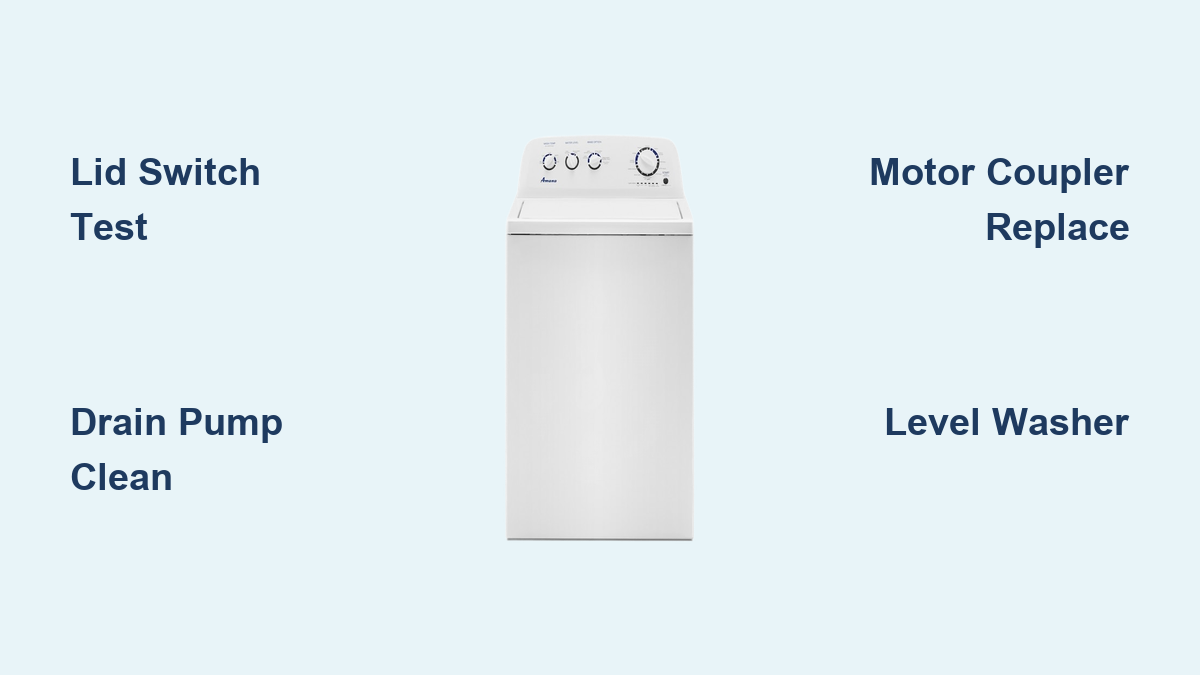
To test the switch, use a multimeter to check for continuity. Unplug the washer, remove the switch, and test across terminals. No continuity means replacement is needed.
On vertical modular top-load washers, a flashing Lid Lock light often means the lid isn’t closing fully or the switch is stuck.
Test Control and Timer Boards
Direct-drive top-load Amana washers use an electro-mechanical timer instead of digital controls. If the timer knob doesn’t advance, the timer motor may be dead.
For electronic models, look for error codes on the display. Refer to the Amana error code chart (available online) to decode issues.
If there’s no power at all, check the house circuit breaker, the power outlet (test with another device), and the internal fuse on the control board if accessible.
Replace the user interface board or main control board if buttons are unresponsive or the display is blank.
Fix No-Spin Issues

When your Amana washer fills but won’t spin, the problem is usually mechanical, especially in older models. Understanding your washer type helps narrow down the cause.
Inspect the Drive Belt and Clutch
Top-load washers fall into two categories: direct-drive and vertical modular. Each has different spin mechanisms.
Vertical modular models use a drive belt and shifter assembly. If the belt is loose, cracked, or broken, the tub won’t spin. Check the shifter. If it’s worn, it won’t engage the spin cycle.
Direct-drive models have no belt. The motor connects directly to the transmission. Common culprits include a bad clutch, worn clutch band, or broken drive block. A grinding noise during spin-up often indicates clutch failure.
Remove the cabinet and observe during a spin cycle. If the motor runs but the tub doesn’t spin, the clutch or drive block is likely faulty.
Replace the Motor Coupler
The motor coupler connects the motor to the transmission in direct-drive washers. It’s a small rubber-and-plastic piece that wears out over time.
Symptoms include the washer agitating but not spinning, and loud thumping at cycle start.
To fix this, unplug the washer, remove the cabinet, disconnect the pump and motor, and replace the coupler (part number W10820028). This repair takes 30 to 60 minutes.
Repair Drainage Failures
A washer that won’t drain is usually blocked or has a failed pump. Start with the simplest fixes before accessing internal components.
Clear Clogs in Hose and Pump
Start with the simplest fix: check the drain hose. Ensure it’s not kinked or looped too high. Disconnect and inspect for lint, coins, or fabric. Check the house drain. A clogged standpipe can prevent drainage.
Next, access the drain pump. It’s usually at the front bottom of front-load models or behind the lower panel on top-load units.
Place towels underneath, unscrew the pump access panel, and open the pump filter to remove debris. Spin the impeller by hand. It should move freely.
If the pump hums but doesn’t drain, it may be seized. Replace it if damaged.
Test the Pressure Switch
The water-level pressure switch tells the washer when the tub is empty. If stuck, it may prevent the drain cycle.
Test with a multimeter. Unplug the washer, locate the switch (usually near the control panel), and check for continuity. Check the pressure hose as well. A clogged or detached hose can fool the switch into thinking the tub is full.
Reduce Noise and Vibration
Excessive shaking or banging during spin is alarming, but it’s often fixable with basic adjustments.
Level the Washer and Check Load
First, ensure the washer is level. Use a bubble level on the top. Adjust the front feet until stable. Make sure the floor is solid, not sagging.
An unbalanced load is the most common cause of vibration. Redistribute clothes and restart the cycle.
Inspect Shock Absorbers and Suspension

If the washer still walks or thumps loudly, internal parts may be worn.
Shock absorbers (or suspension springs in some models) dampen tub movement. Signs of failure include the washer rocking violently, visible oil leakage on shocks, and the tub sitting unevenly.
Replace both shocks at once because they wear together. Access requires removing the cabinet and sometimes the tub.
Do not operate a washer with broken shocks. It can damage the transmission or drum.
Stop Water Leaks
Leaks under or around your Amana washer can lead to floor damage or mold. Address them promptly to avoid costly repairs.
Replace Worn Hoses and Seals
Check fill hoses for bulges, cracks, or drips at connections. Replace them every five years. Inspect the drain hose for cracks or loose clamps. Ensure it’s securely attached to the standpipe.
For front-load models, the door boot seal is a common leak source. Peel back the rubber folds and look for tears or mildew. Clean with a bleach solution (three-quarters cup bleach in one gallon water). Replace if cracked or permanently stretched.
Fix Pump and Tub Leaks
A leaking drain pump often shows wetness near the base. Remove and inspect the seals.
Tub gasket leaks are rare but serious. They require drum removal.
Overflow leaks? Check the water inlet valve. If stuck open, it overfills the tub.
Resolve Agitation Problems
If your top-load Amana washer fills but doesn’t agitate, the issue is likely mechanical. Focus on the agitator and drive components.
Replace Agitator Dogs
In direct-drive models, agitator dogs are small plastic pieces that grip the agitator. When worn, the agitator spins freely but doesn’t move clothes.
To test, remove the agitator cap, then the center bolt. Pull up the agitator. If it lifts easily or spins without resistance, the dogs are bad.
To replace, install new dogs (part number 285812) and reassemble. This takes about 20 minutes.
Check Transmission and Motor
If the motor runs but the transmission doesn’t turn, the transmission may be seized.
Listen for a humming motor with no movement. Inspect the motor coupler (see earlier section). If the coupler is good, the transmission may need replacement, a job best left to professionals.
Address Error Codes and Controls
Modern Amana washers display error codes to help diagnose issues. Understanding these codes saves time and frustration.
Decode Common Error Messages
F1 or E1 indicates a motor fault. Check the motor, harness, or control board.
F2 or E2 indicates a drain problem. Inspect the pump, hose, and pressure switch.
F3 or E3 indicates a temperature sensor failure.
F5 or E5 indicates a lid or door lock error.
Write down the code, consult the Amana error code chart, and cross-reference with symptoms.
Reset the Control Board
Sometimes, a simple reset fixes unresponsive controls.
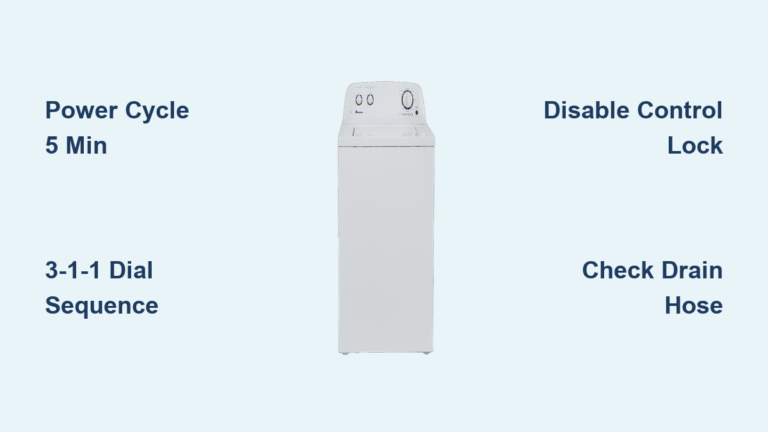
Unplug the washer for two minutes, then plug it back in. Press and hold Start or Pause for five seconds. Restart a cycle.
If buttons remain unresponsive, the user interface board may need replacement.
Eliminate Bad Smells
Front-load Amana washers are prone to musty odors due to trapped moisture. Regular cleaning prevents this common problem.
Clean the Door Boot Seal
Mold grows in the rubber door boot’s folds. Clean it monthly.
Mix a bleach solution (three-quarters cup bleach in one gallon warm water). Wipe the entire seal, including crevices. Let it sit for five minutes, rinse, and dry. Run a clean cycle with Affresh or a similar tablet.
Prevent Future Odors
Leave the door ajar after use. Use only HE detergent (low-sudsing). Wipe the seal dry weekly. Run a hot water clean cycle every one to two months.
Replace Key Components
When parts fail, replacement is often more cost-effective than repair. Knowing how to swap major components saves money.
Install a New Water Inlet Valve
A washer that fills when off likely has a failing inlet valve.
Turn off the water supply, remove the rear panel, disconnect hoses and wires, unmount the old valve, install the new one, and reconnect and test.
Use genuine Amana parts for proper fit.
Upgrade the Control Board
If error codes persist or the display is dead, replace the main control board.
Power must be off. Static electricity can damage electronics. Match the part number exactly. Consider professional help if wiring is complex.
When to Call a Pro
Some repairs are too risky or complex for DIY. Knowing your limits prevents injury and further damage.
Signs You Need a Technician
A burning smell indicates electrical or motor failure. Stop use immediately.
Repeated error codes after part replacement require professional diagnosis. Internal leaks (tub gasket, bearing) need expert attention. Gas appliance involvement (dryer combos) demands certified technicians. Sealed systems (refrigeration units) require EPA certification.
Choose Certified Repair Services
Sears Home Services and Washingtons Appliance Repair offer reliable Amana washer repairs.
Sears offers nationwide coverage, certified Amana technicians, and an average repair cost of $150 to $400. The diagnostic fee applies to the repair.
Washingtons Appliance Repair offers same-day service in their region, seven-day availability, and a small diagnostic fee. Call 855-290-1600.
Get a repair quote and compare it to 50% of a new washer’s price. If repair exceeds half, consider replacement.
Prevent Future Breakdowns
Regular maintenance prevents 70% of common washer problems. A few minutes each month extends your washer’s life significantly.
Follow a Monthly Maintenance Routine
Run a clean cycle with hot water and Affresh. Inspect and clean inlet hose screens. Check hoses for leaks, bulges, or stiffness. Clean the detergent dispenser with warm water. Level the washer if it vibrates.
Use the Right Detergent and Load Size
Only use HE detergent in front-load and high-efficiency models. Avoid overloading. Clothes should fit loosely. Zip up zippers and remove coins to prevent drum damage.
Key Takeaways for Amana Washing Machine Repair

Amana washing machines are built to last 10 to 14 years with proper care. Most common problems, including no spin, no drain, leaks, and odors, can be diagnosed and often fixed without a technician. Start with simple checks: power, water supply, leveling, and error codes. Use genuine parts for replacements, and don’t hesitate to call a certified professional for electrical, mechanical, or safety-critical repairs. With regular maintenance, your Amana washer can keep performing reliably for years to come.
Frequently Asked Questions About Amana Washing Machine Repair
Why won’t my Amana washing machine start?
The most common cause is a failed lid switch (top-load) or door lock (front-load). Check for a clicking sound when closing the lid or a flashing door light. Test the switch with a multimeter for continuity. If faulty, replace it. Other causes include a defective timer, control board, or power supply issue.
How do I fix a washer that won’t spin?
For top-loaders, check the drive belt, clutch, or motor coupler. A grinding noise often indicates clutch failure. For direct-drive models, the motor coupler (part W10820028) is a common culprit. Replace worn components and ensure the load is balanced.
Why is my Amana washer leaking water?
Common leak sources include cracked fill hoses, damaged door boot seal (front-load), faulty pump seals, and loose drain hose connections. Inspect all hoses annually and replace every five years. Clean the door boot seal monthly to prevent mold damage.
How do I stop bad smells in my front-load washer?
Mold and mildew buildup in the door boot seal causes musty odors. Clean the seal monthly with a bleach solution (three-quarters cup bleach in one gallon warm water). Leave the door ajar after use, use only HE detergent, and run a hot water clean cycle every one to two months.
When should I call a professional for Amana washer repair?
Call a technician if you notice a burning smell (possible electrical or motor failure), repeated error codes after part replacement, internal leaks (tub gasket or bearing), or complex electrical issues. Also seek professional help for gas appliance repairs or sealed system problems.