
How to Clean a Deck Without a Pressure Washer
Your wooden deck likely hosts summer barbecues and quiet morning coffees, yet grime and mildew often turn it dull. You do not need a high-pressure machine to restore its beauty. In fact, learning how to clean a deck without a pressure washer is often safer for older wood. High-pressure water can gouge soft fibers and cause splintering that ruins the surface.
This guide reveals how to deep-clean your outdoor space using simple tools and effective solutions. You will discover specific mixing ratios for oxygen bleach and vinegar to tackle algae and stains. We will walk through scrubbing techniques that protect wood grain while removing years of buildup.
Prepare Your Deck Surface for Deep Cleaning
Proper preparation prevents mud formation and ensures your cleaning solution works effectively. Skipping this step often leads to poor results and wasted effort.
Clear Furniture and Sweep Debris
Remove all chairs, tables, planters, and rugs from the deck area. Use a stiff broom to sweep away leaves, dirt, and cobwebs thoroughly. Leaving debris behind creates mud when you apply water, making the job much harder.
Pre-Rinse with Gentle Water Flow
Attach a spray nozzle to your garden hose set on a gentle fan or mist setting. Dampen the entire deck to moisten wood fibers and loosen surface dust. Avoid high-pressure streams that can drive dirt deeper into the wood pores.
Test Solutions on Hidden Spots
Select a discreet area near a support beam to test your chosen cleaning mixture. Apply the solution, wait ten minutes, and rinse to check for discoloration. This crucial step prevents accidental damage to your stain or sealant.
Select the Best Cleaning Solution for Your Deck

Choosing the right cleaner depends on whether you face heavy algae, light dirt, or stubborn stains. Using the wrong product can waste time or damage wood fibers.
Oxygen Bleach for Algae and Mildew
Sodium percarbonate, known as oxygen bleach, is the top choice for green patches and musty odors. It fizzes upon contact with water to lift organic growth from deep within wood pores. Unlike chlorine bleach, it is color-safe and environmentally friendly for surrounding plants.
- Mix 1 cup of powdered oxygen bleach with 1 to 1.5 gallons of warm water.
- Stir until the powder dissolves and the solution begins to fizz slightly.
- Apply immediately while the chemical reaction is active for best results.
Mild Dish Soap for General Grime
A simple soap solution works well for decks with only surface dirt or light staining. This gentle approach cuts through oils without aggressive chemicals that strip wood.
- Combine 1 part mild dish soap with 5 parts water in a bucket.
- Avoid ultra-concentrated formulas that leave slippery residues behind.
- Use this mix for routine annual maintenance in good condition areas.
Vinegar and Baking Soda for Tough Stains
White vinegar breaks down mineral deposits while baking soda acts as a gentle abrasive. These natural options are perfect for spot-treating specific problem areas without harsh chemicals.
- Create a vinegar mix using 1 part white vinegar to 3 parts water.
- Make a baking soda paste by mixing 1 cup of powder with minimal warm water.
- Never combine these two in one bucket as they neutralize each other.
Pro Tip: Always use warm water when mixing oxygen bleach or baking soda. Warmth accelerates the chemical activation process for a deeper clean.
Apply Cleaner and Scrub Effectively by Hand
Working in small sections ensures the solution does not dry before you can rinse it away. This method gives you total control over every square foot of your deck.
Spread Solution with Stiff Brush
Dip a stiff-bristled scrub brush or sponge into your mixed solution and spread it evenly. Focus heavily on areas with visible staining, dark spots, or heavy growth. Look for foaming or bubbling action, which indicates the cleaner is lifting dirt.
Scrub in Direction of Wood Grain
Use firm back-and-forth motions that follow the natural direction of the wood grain. Scrubbing against the grain can scratch soft wood and create splinters that hurt bare feet. Pay extra attention to joins between boards and shaded corners where moisture collects.
- Wrap an old rag around a putty knife for tight spaces between boards.
- Apply extra pressure on darkened patches to work the solution deep.
- Use a narrow deck brush for hard-to-reach areas under railings.
Allow Dwell Time for Stubborn Areas
Let the cleaning solution sit on the wood for 5 to 10 minutes for heavy algae. For vinegar or baking soda spot treatments, extend this time to 10 to 15 minutes. Reapply the solution if the surface begins to dry out, as moisture enhances cleaning power.
Warning: Never let oxygen bleach dry completely on the wood surface. Dried residue can leave white marks and reduce the overall effectiveness of the clean.
Rinse Thoroughly and Allow Proper Drying Time
Rinsing removes loosened debris and leftover cleaner, which is critical for preventing future dirt attraction. Proper drying ensures your deck is ready for sealing or immediate use.
Rinse from Top to Bottom
Start at the highest point of your deck and rinse downward with a gentle spray. This technique prevents dirty water from flowing over already cleaned areas and causing streaks. If you lack a hose, pour clean water from a bucket and sweep it off with a squeegee.
- Run your hand over the surface after rinsing to check for slickness.
- Rinse again if the wood feels soapy to ensure all residue is gone.
- Work systematically to avoid missing any sections of the deck.
Air Dry Completely Before Sealing
Let the deck dry fully in open air with help from sun and breeze. Avoid walking on the surface until it is completely dry to prevent tracking in new dirt.
- Minimum drying time is 4 to 6 hours in direct sunlight.
- Wait 24 to 48 hours before applying any sealant or stain.
- Trapped moisture leads to mold regrowth and poor sealant adhesion.
Treat Specific Stains and Problem Areas
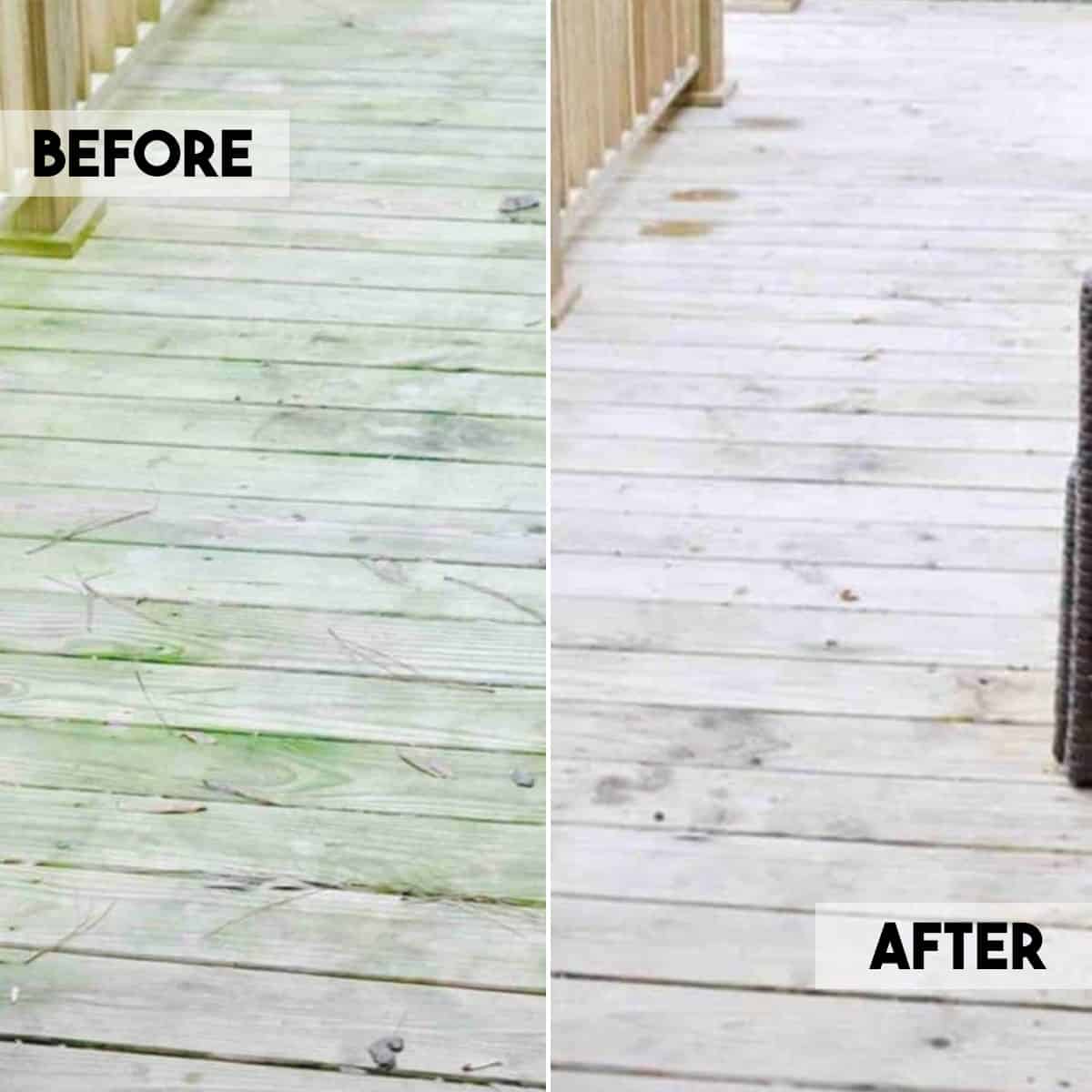
Not all deck issues respond to the same treatment, so match your method to the specific problem. Targeted approaches save time and yield better visual results.
Remove Algae and Mildew Quickly
Dark green or black patches require the power of an oxygen bleach solution for effective removal. Apply the mixture generously and let it dwell for the full 10 minutes. Scrub firmly with the grain and rinse thoroughly to eliminate all spores.
Eliminate Tough Discoloration Spots
Try undiluted white vinegar for stubborn gray or black spots that resist standard cleaning. Pour it directly on the stain, wait 15 minutes, and scrub with a baking soda paste for extra lift. Avoid chlorine bleach entirely as it weakens wood fibers and fades color over time.
Neutralize Odors and Mild Stains
A baking soda solution works wonders for musty smells or light discoloration from spills. Mix 1 cup of baking soda per gallon of warm water, apply, and scrub the area. Let it sit for 10 minutes before rinsing to ensure odors are fully neutralized.
Protect and Maintain Your Deck Long Term
Cleaning is only half the battle, so long-term protection keeps your deck looking great. Regular maintenance prevents the need for aggressive cleaning in the future.
Apply Sealant After Cleaning
Once the deck is fully dry, apply a water-repellent sealant or wood preservative immediately. This shield protects against rain, snow, UV fading, and future mildew growth. Applying sealer too soon traps moisture and causes peeling, so respect the drying window.
Establish a Cleaning Schedule
Set a routine based on your local environment to keep buildup at bay. Standard decks need cleaning once per year in spring or early fall. High moisture or shaded areas may require cleaning twice per year to prevent algae.
- Keep gutters clean to reduce runoff onto the deck surface.
- Trim overhanging trees to increase sunlight and reduce dampness.
- Sweep regularly to remove leaves that trap moisture and cause stains.
Avoid Common Deck Cleaning Mistakes
Even careful homeowners make errors that reduce results or damage wood fibers. Knowing what not to do is just as important as knowing the right steps.
Using Chlorine Bleach
Chlorine bleach degrades wood fibers, fades color, and harms nearby plants severely. It may kill mildew fast but leaves wood brittle and prone to splintering. Stick to oxygen bleach for safer and longer-lasting results on your deck.
Skipping Dwell Time
Rushing the process means missing embedded grime that needs time to loosen. Letting the solution sit allows it to penetrate deep into wood pores. Patience equals a deeper clean and less physical scrubbing effort for you.
Cleaning Freshly Sealed Decks
Wait at least 30 days after staining or sealing before cleaning your deck. Early exposure to cleaners can strip protective coatings and ruin your hard work. Always check the manufacturer guidelines for your specific sealant product.
Scrubbing Against the Grain
Cross-grain scrubbing scratches the surface and invites water retention in wood fibers. Always follow the wood natural direction to preserve texture and integrity. This simple habit prevents unnecessary wear and tear on your investment.
Compare Cleaning Methods and Solutions
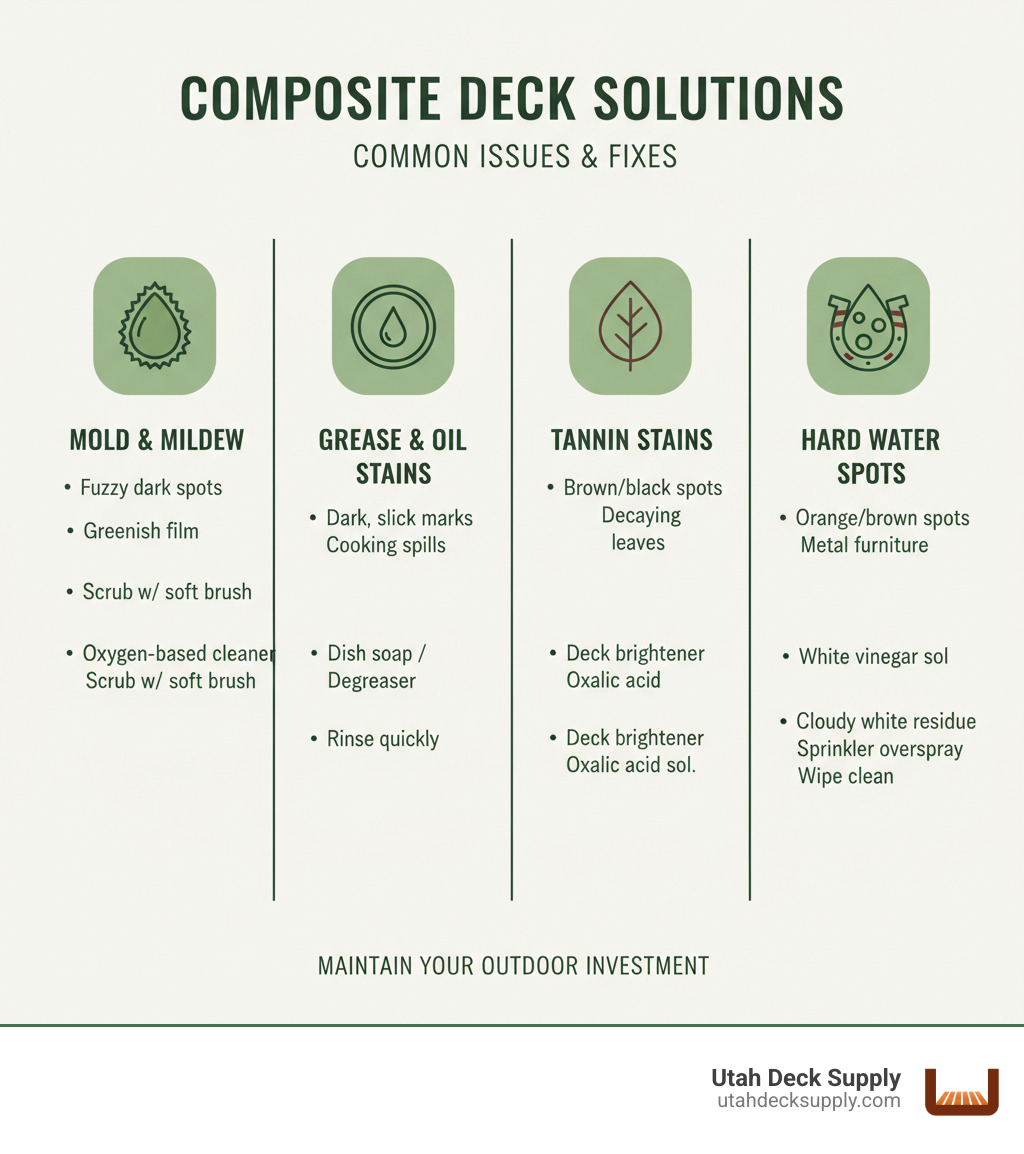
Choosing the right approach saves time and effort while protecting your wood. Use this comparison to decide which solution fits your specific deck needs.
| Problem Type | Best Solution | Dwell Time | Rinse Required |
|---|---|---|---|
| General Dirt | Dish Soap Mix | Minimal | Yes |
| Algae/Mildew | Oxygen Bleach | 5–10 Min | Yes |
| Tough Stains | White Vinegar | 10–15 Min | Yes |
| Odors | Baking Soda | 10 Min | Yes |
Note for Large Decks: If your deck exceeds 1,500 square feet, consider using a pump sprayer for application. This tool speeds up the process, though manual scrubbing remains necessary for deep cleaning.
Frequently Asked Questions About Deck Cleaning
Can I clean my deck with just soap and water?
Yes, mild dish soap mixed with water works well for light dirt and annual maintenance. However, this mixture will not remove deep-seated algae, mildew, or tough stains effectively. Use oxygen bleach for heavier buildup.
How often should I clean my wooden deck?
You should clean your deck at least once a year, preferably in spring or early fall. Decks in high-moisture areas or heavy shade may need cleaning twice a year. Regular sweeping helps extend time between deep cleans.
Is oxygen bleach safe for plants around my deck?
Oxygen bleach is generally safe for plants once it breaks down into oxygen and soda ash. However, you should still rinse surrounding vegetation if they get sprayed accidentally. It is far safer than chlorine bleach for garden environments.
How long must I wait to stain after cleaning?
Wait 24 to 48 hours after cleaning before applying stain or sealant. The wood must be completely dry to ensure proper adhesion and prevent moisture trapping. Humid weather may require a longer drying period.
Will this method remove gray weathered wood color?
Cleaning removes dirt and mildew but may not restore the original color of deeply weathered gray wood. You may need a wood brightener containing oxalic acid to restore color before staining. Sanding is another option for severely weathered surfaces.
Key Takeaways for Cleaning Your Deck Without Pressure
You now know how to clean a deck without a pressure washer using safe and effective manual methods. Oxygen bleach, vinegar, and baking soda provide powerful cleaning action without damaging wood fibers. Proper scrubbing with the grain and adequate drying time ensure lasting results.
Start by clearing your deck and testing your solution on a hidden spot. Mix your chosen cleaner, scrub in sections, and rinse thoroughly to reveal a refreshed surface. Your deck will look new again, ready for sealing and summer enjoyment.