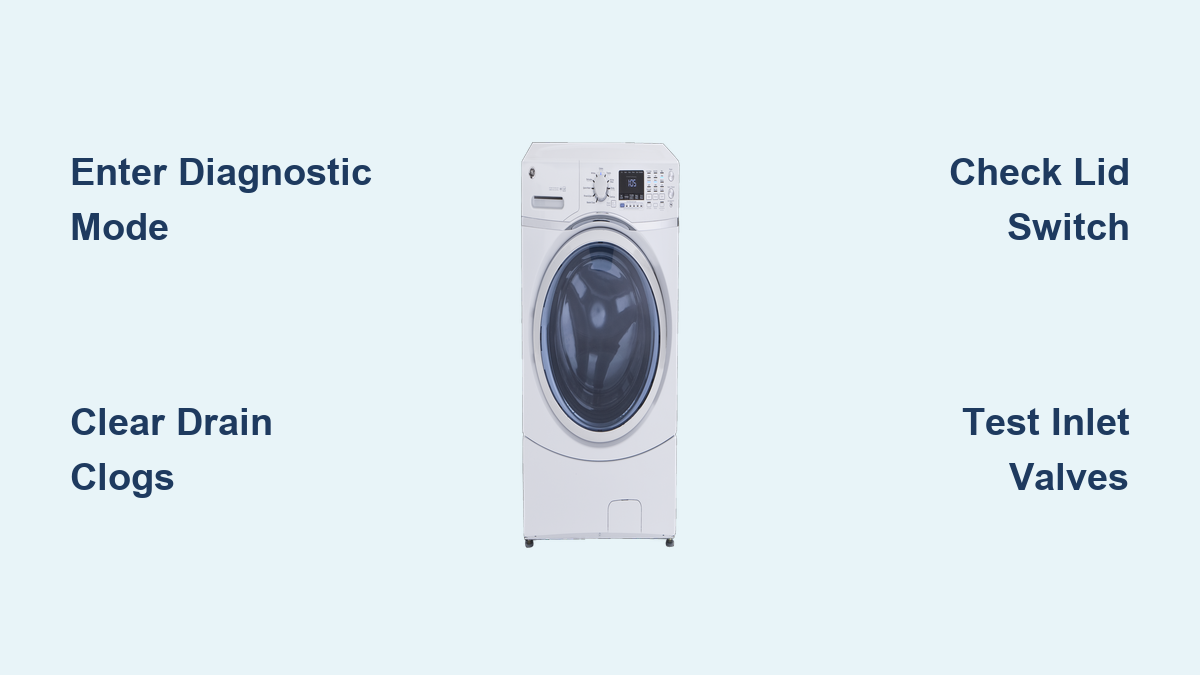
GE Washing Machine Repair Guide
Is your GE washing machine refusing to start, leaking, or making strange noises? You are not alone. Millions of homeowners face GE washing machine repair challenges every year, especially with drainage problems, spin cycle failures, or mysterious error codes. Whether you own a standard GE top-loader or a high-end GE Profile model with Wi-Fi, most issues can be diagnosed quickly and fixed affordably, often without calling a technician. This guide gives you step-by-step solutions, service provider insights, and a clear decision framework for when to repair versus replace.
You will learn how to enter diagnostic mode, clear clogs, test components like the lid switch and drain pump, and recognize signs of irreparable damage like failed drum bearings. We will also compare top repair services like Bodewell, Sears, and Mr. Appliance so you can choose the right help fast.
Decode GE Washer Error Codes

Access Diagnostic Mode Quickly
To see hidden error codes on most GE washers, enter Field Service Mode. Set the timer to 12:00, then press and hold the Start/Pause button while rotating the dial seven clicks clockwise. Release the button and watch for flashing lights to confirm entry. Once inside, use Mode 1 to view stored faults by pressing Start/Pause to scroll through codes. Clear old codes by holding Start/Pause for three seconds after turning the dial counterclockwise.
Pro Tip: Always clear codes first. This ensures only current issues appear during testing.
Read Blinking Light Patterns
GE washers without digital displays use Paw and Lid Lock lights to communicate faults. Hold Start/Pause for 10 seconds, then release and observe blink sequences. One blink indicates a lid lock issue, two blinks mean water inlet problems, three blinks signal drain failure, four blinks point to motor or tachometer errors, and five blinks indicate a temperature sensor fault. Press Start/Pause to cycle through codes. If lights toggle all on and off when held, the system is clearing properly.
Note: Mechanical problems like a broken belt may not trigger codes. Always combine diagnostics with physical inspection.
Fix Washer Won Start
Check Power and Lid Switch
A GE washer that will not start is usually due to simple power issues or a faulty lid switch. Start by verifying the power supply. Ensure the cord is fully plugged in, test the outlet with another device like a lamp, and reset the circuit breaker if tripped. For top-load models, inspect the lid switch by opening and closing the lid while listening for a click. If silent, the switch may be broken. Unplug the washer and check for visible damage near the lid opening. Test the start button by pressing firmly. No response suggests a failed switch or control board.
Warning: Never bypass the lid switch. It is a critical safety feature that prevents injury.
Examine Control Board and Wiring
If power is present but the washer remains dead, unplug the unit and remove the top panel, typically two to three screws at the back. Inspect the main control board for burn marks, swollen capacitors, or charred traces. Check wiring harnesses between the control panel and board, reconnecting any loose plugs. A damaged board usually requires replacement. Use only OEM parts to avoid compatibility issues.
Repair Washer Not Draining
Clear Pump and Hose Blockages
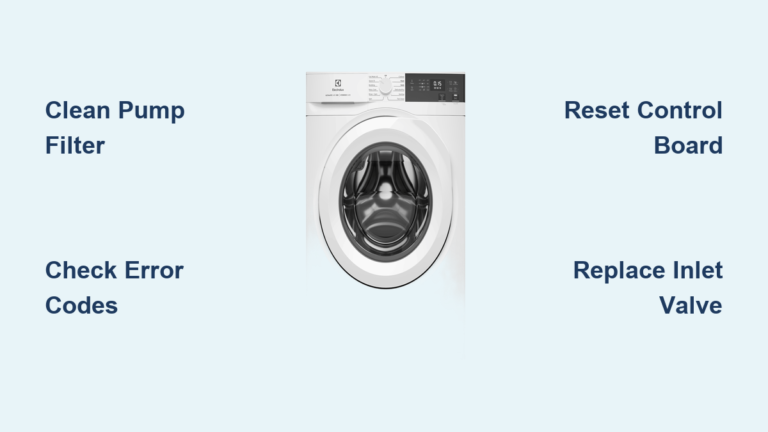
A washer that fills but will not drain is often clogged. Unplug the washer and shut off the water supply. Locate the drain pump access panel at the front bottom and place a towel underneath to catch residual water. Open the filter cap and remove debris such as coins, lint, or socks. Clean the impeller by spinning it by hand and replace it if cracked. Check the drain hose by disconnecting it from the standpipe and flushing with warm water to remove clogs. Ensure no kinks or crushing behind the machine. Test the drain pump by reconnecting power and running a spin cycle while listening for a humming sound. No noise means use a multimeter to test for continuity, which should read approximately 10 to 20 ohms. Replace the pump if it fails the test.
Fix Washer Not Filling with Water
Clean Inlet Valve Filters
No water entering usually points to the water inlet valve or supply. Shut off both hot and cold water valves, then disconnect inlet hoses from the back of the washer. Use pliers to remove the small mesh filters inside the valve and rinse them under warm water while scrubbing with a soft brush. Reinstall filters and hoses, turn the water back on, and test. If water still does not flow, the solenoid valve may be defective. Replace the entire inlet valve assembly, which is available for under $40.
Tip: Always use high-efficiency HE detergent. Regular detergent causes suds buildup that mimics fill issues.
Diagnose Washer Won Spin

Inspect Belt, Clutch, and Lid Switch
A non-spinning drum is often caused by an unbalanced load, faulty lid switch, worn drive belt, or failed clutch or motor coupling. Start by redistributing laundry. If no improvement occurs, check the lid switch as described earlier. Inspect the drive belt by tilting the washer backward with a box under the rear to prevent tub damage. Remove the bottom front panel, typically three screws, and look for belt wear, oil stains, or slippage. Test the clutch by disconnecting power, removing the belt, and inspecting the clutch assembly. Use a multimeter with one wire pair reading 0.01 ohms and the other reading 5200 to 5700 ohms. Replace the clutch if readings are off.
Replace Motor Pulley if Needed
A loose or damaged pulley prevents spin. Remove the 9/16-inch nut securing the pulley and pry it off the motor shaft. Install a new pulley by aligning splines and pressing fully. Re-tighten the nut and use a screwdriver to guide the belt onto both pulleys during reassembly.
Stop Washer Leaks Fast
Find and Seal Common Leak Points
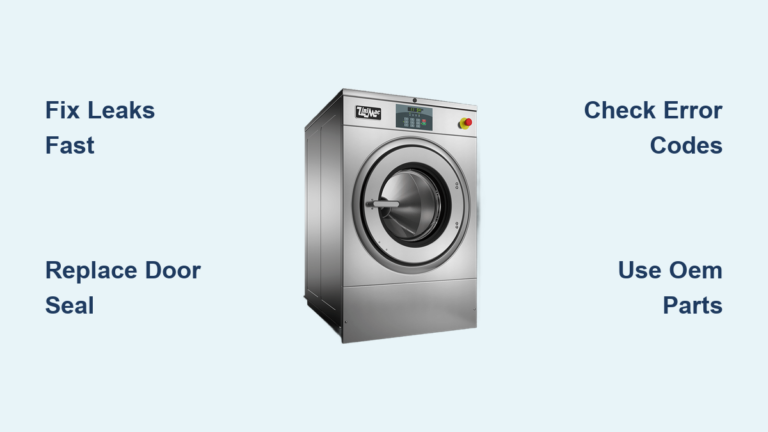
Leaks usually come from loose inlet or drain hoses, worn door gasket on front-load models, failed tub seal, or a clogged or cracked pump. Tighten hose connections at the back. Inspect the door gasket by looking for tears, mold, or debris, then clean with vinegar and wipe dry. Check the pump housing by removing the front panel and looking for cracks or moisture around the casing.
Critical: A leaking tub seal requires drum removal, which is best left to professionals. Repair cost often exceeds replacement value.
Eliminate Bad Odors in Washer
Run Monthly Clean Cycles
Musty smells come from mold and detergent buildup. Prevent them by running a Clean Washer cycle monthly using bleach or a manufacturer-approved cleaner while selecting the hottest water and longest cycle. Wipe the door gasket after each use. Leave the door and detergent drawer open when not in use. If equipped, use the UltraFresh Vent System to dry the tub after each cycle. Avoid overloading and always use HE detergent to reduce residue.
Identify Irreparable Washer Damage
Recognize Beyond-Repair Failures
Some issues make repair uneconomical. Destroyed drum bearings cause loud grinding during spin, severe gearbox damage, control board failure with no replacement available, or motor failure in discontinued models warrant replacement rather than repair.
Key Fact: If the drum bearings are gone, the unit is non-repairable. Gearbox replacement costs $400 or more, often more than a new washer.
Of five tested units, three were junk due to bearing, motor, or board failure. Only two were repairable with simple part swaps.
When to Replace Instead of Repair
Replace your GE washer if it is over 10 years old, repair cost exceeds 50% of a new model’s price, bearings or gearbox are damaged, or you have had multiple repairs in the past year. Modern high-efficiency models save water and energy, paying for themselves over time.
Choose the Right Repair Service
Bodewell: Official GE Partner
Bodewell is GE factory-authorized repair provider. Call 833-426-3393, Monday through Friday, 8 AM to 8 PM ET. Technicians are factory-trained and use genuine GE parts. Exclusions include small, RV, or commercial units.
Sears Home Services: Nationwide Coverage
Sears offers reliable nationwide service at 1-800-4-MY-HOME. Average cost ranges from $160 to $400, with OEM parts, diagnostic fees applied to repair, warranty on work, and same or next-day service in many areas. Sears is GE-authorized, making it safe for warranty-related repairs.
Mr. Appliance: Local Franchises
Mr. Appliance provides expert local service at (888) 998-2011. Technicians carry common parts and provide on-site repairs with upfront, honest quotes. Availability varies by location, so confirm locally.
NY GE Appliance Repair: Fast NYC Service
For New York City residents, call (212) 444-8114 for same or next-day service in Manhattan, Brooklyn, and the Bronx. Benefits include 90% of repairs completed on first visit, fully stocked trucks, no payment until fixed, 90-day warranty on parts and labor, and one-hour emergency response. Technicians have 8 to 10 years of experience.
DIY vs. Professional Repair Guide
| Issue | DIY Possible | Risk Level | Pro Recommended |
|---|---|---|---|
| Lid switch replacement | Yes | Low | Only if electrically safe |
| Inlet valve cleaning | Yes | Low | Yes, if clog persists |
| Drain pump cleaning | Yes | Medium | Yes, if motor fails |
| Drive belt replacement | Moderate | High | Yes, due to complexity |
| Clutch or transmission | No | Very High | Yes |
| Control board swap | Advanced | High | Yes |
| Motor replacement | No | Very High | Yes |
Rule of Thumb: Never attempt motor, gearbox, or drum repairs without experience. High voltage and heavy components pose serious risks.
Frequently Asked Questions About GE Washing Machine Repair
How do I enter diagnostic mode on my GE washer?
Set the timer to 12:00, press and hold the Start/Pause button, rotate the dial seven clicks clockwise, and release. Flashing lights confirm entry. Use Mode 1 to view stored error codes.
What causes a GE washing machine to not start?
Common causes include a tripped circuit breaker, unplugged power cord, faulty lid switch, or failed start button. Check power first, then inspect the lid switch mechanism.
Can I repair a GE washer that will not drain myself?
Yes, most drain issues are caused by clogged pumps or hoses. Unplug the washer, access the drain pump filter, remove debris, and check the drain hose for kinks or clogs.
When should I replace my GE washing machine instead of repairing it?
Replace if the washer is over 10 years old, repair costs exceed 50% of a new model’s price, or major components like drum bearings or gearboxes are damaged.
How much does professional GE washer repair cost?
Average repair costs range from $160 to $400, with higher costs for complex issues like motor or control board replacement. Sears, Bodewell, and Mr. Appliance provide upfront quotes.
What causes bad odors in a GE washing machine?
Musty smells come from mold and detergent buildup. Run monthly clean cycles with bleach, wipe the door gasket after each use, and leave the door open when not in use.
Key Takeaways for GE Washing Machine Repair

Regular maintenance prevents 80% of GE washer problems. Clean filters monthly, check hoses every six months, and always use HE detergent. For common issues like lid switch failure, drain clogs, or inlet valve problems, DIY repair is often straightforward and cost-effective. However, motor, gearbox, and control board repairs require certified technicians due to safety risks and complexity. If your washer is over a decade old with repeated failures, replacement makes more financial sense than pouring money into repairs. Use diagnostic mode to identify problems quickly, and choose factory-authorized services like Bodewell or Sears for warranty-protected work.