Commercial Washing Machine Repair Guide
If your commercial washing machine stops mid-cycle or leaks onto the floor, downtime costs more than just repairs it impacts revenue, service quality, and customer trust. Whether you manage a laundromat, hotel, hospital, or apartment complex, commercial washing machine repair is critical to keeping operations running smoothly. This guide delivers actionable insights from industry experts, covering common faults, top service providers, and preventive strategies to minimize disruption.
Top Commercial Washing Machine Repair Service Providers
Reliable repair support starts with choosing the right service partner. Two major networks dominate the U.S. commercial laundry repair landscape: regional specialists and national distributors.
H-M Laundry: Midwest Rapid Response
H-M Company covers Ohio, Indiana, Kentucky, Pennsylvania, and West Virginia with fast, dependable service tailored to high-use environments.
Why Choose H-M?
- 24–48 Hour Service Window: Most calls resolved in one to two days; emergencies get same-day attention
- Local Expertise, Long-Term Trust: Serving clients since 1957, technicians are trained on all major brands
- First-Time Fix Focus: High success rate due to well-stocked vans and genuine OEM parts
- Downtime Reduction: 11,000 sq-ft warehouse ensures access to hard-to-find components
Ideal For: Hospitals needing uninterrupted linen processing, hotels requiring quick turnaround, and apartment complexes with multiple units
Tip: If you’re within their service zone, H-M’s proximity means faster dispatch than national providers
Alliance Laundry Systems: Nationwide Coverage
With over 85 technicians across the U.S., Alliance offers factory-backed repair through a network of local offices.
Key Advantages:
- Factory-Trained Technicians: Repairs meet original equipment standards
- Brand-Agnostic Support: Services Speed Queen, UniMac, Huebsch, and other top brands
- Same-Day Service Available: Many locations offer urgent response
- Preventive Maintenance Plans: Includes vent cleaning, inspections, and system calibration
Office Access Example:
- Chicago Area: Elk Grove Village, IL (847) 613-4926
- Houston: Pasadena, TX (281) 688-1676
- Atlanta: Alpharetta, GA (770) 343-8455
Pro Tip: Call your nearest Alliance office directly for faster scheduling than using a central hotline
Central Ohio Appliance Repair Inc.
Focused on Columbus and surrounding areas, this provider specializes in both emergency fixes and long-term care.
Special Features:
- All commercial washer and dryer brands serviced
- Preventive maintenance programs to reduce breakdowns
- Expertise in industrial extractors and tunnel washers
Best For: Multi-family housing and small laundromats wanting consistent local support
Common Commercial Washer Types and Their Applications

Understanding your equipment type helps diagnose issues and communicate effectively with technicians.
Top-Loading Commercial Washers
Design: Central agitator moves clothes through water with a robust mechanical system
Where Used: Hotels, apartment buildings, vended laundromats (coin or card-operated)
Brands: Speed Queen, Whirlpool
Pros: Durable, simple controls, easy to service
Cons: Higher water usage, less energy efficient
Fix Tip: Agitator wear often mimics “no spin” issues; inspect before replacing motors
Front-Loading Commercial Washers
Design: Tumbling action via rotating drum with door at front and rubber seal
Where Used: Healthcare facilities, high-volume laundromats, resorts
Brands: Electrolux, Speed Queen
Pros: Water and energy efficient, gentler on fabrics
Cons: Door seals prone to mold; complex electronics
Warning: A musty smell indicates you should check the door seal for trapped debris or mildew
High-Efficiency Top Loaders
Design: No agitator; uses impeller and variable-speed motor
Where Used: Eco-conscious hotels, fitness centers, universities
Pros: Less water, better cleaning, lower utility bills
Cons: Sensitive to unbalanced loads; control boards fail more often
Industrial Tunnel Washers
Design: Continuous flow system with conveyor screw moving laundry through chambers
Where Used: Hospitals, prisons, large resorts
Pros: Processes hundreds of pounds per hour
Cons: Expensive; requires specialized maintenance
Note: Only repair firms with industrial experience should service these units
Industrial Extractor Washers
Design: Massive capacity (some hold over 300 lbs); used for spin-only extraction or full cycles
Where Used: Industrial laundries, athletic facilities, correctional institutions
Repair Challenge: Bearings and drive systems wear faster under heavy loads; inspect monthly
Key Components and Common Failure Points

Knowing key parts helps identify problems early and avoid costly damage.
Drum and Tub System
Inner Drum: Perforated basket that holds laundry; rotates during wash and spin
Outer Drum: Sealed casing that contains water; leaks here mean major repair
Front-Loader Seal: Rubber gasket around the door; common leak source
Check This: After each cycle, wipe the seal dry to prevent cracking and mold
Motor and Drive System
Drive Belt: Transfers power from motor to drum; visible in rear access panel
Signs of Failure:
- Squealing noise
- Burnt rubber smell
- Drum turns slowly or not at all
Solution: Replace if cracked or loose; modern direct-drive models skip belts entirely
Caution: Always disconnect power before removing panels
Control System
Electronic Control Board: Manages cycle settings, displays error codes
Common Failures:
- No power to display
- Intermittent operation
- Wrong cycle progression
Diagnosis: Look for error codes; they pinpoint failed sensors or components
Example: A “F02” on a Speed Queen may indicate a drain pump issue
Water and Drain Components
Inlet Valves: Control hot and cold water flow
Clogs: Sediment buildup restricts flow; clean screens annually
Drain Pump: Removes water after rinse and spin
Jam Signs: Water remains in tub; gurgling sounds during drain
Fix: Remove and clear lint, coins, or fabric scraps
Pro Move: Install a pump filter access door if your model does not have one
Fast Diagnosis for 3 Common Faults
Use these steps to troubleshoot before calling a technician or verify they have done the job right.
Machine Will Not Start
Step 1: Check Power Source
- Is the unit plugged in fully?
- Did a GFCI outlet trip? Reset it
- Check the breaker panel for tripped switches
Step 2: Test Door/Lid Switch
- Close the door firmly; listen for a click
- No start? The switch may be broken (common on older units)
Step 3: Look for Error Codes
- Even blank screens can indicate board failure
- No lights at all? Possible blown fuse on control module
When to Call Tech: If power is confirmed but no response, internal electronics may need replacement
Drum Not Spinning
Quick Checks:
- Overloaded? Remove some items and restart
- Belt slipping? Open back panel; look for looseness or cracks
Advanced Diagnosis:
- Motor Capacitor Test: Use a multimeter; low microfarads indicates bad capacitor
- Bearing Wear: Drum wobbles or grinds during spin; requires professional repair
- Pulley Damage: Misaligned or worn pulley prevents belt grip
Time-Saver: Replace belt and capacitor together; they often fail simultaneously
Water Leaks Under Machine
Source 1: Hoses
- Inspect inlet (hot/cold) and drain hoses
- Look for bulges, cracks, or loose clamps
- Tighten connections or replace with braided stainless steel hoses
Source 2: Door Seal (Front Loaders)
- Open the door; check the rubber gasket
- Tears, splits, or mildew mean replacement needed
- Wipe clean weekly to extend life
Source 3: Pump-to-Tub Connection
- Located near the base; check clamps and hoses
- A loose clamp causes slow leaks that damage flooring
Critical: Always unplug before inspecting; water and electricity are deadly together
Essential Safety Protocols for Repairs
Even simple repairs carry risks. Follow these guidelines to stay safe.
Required Safety Gear
- Heavy-Duty Gloves: Protect from sharp metal edges
- Safety Glasses: Shield eyes from detergent splashes or flying debris
- Closed-Toe Shoes: Prevent foot injuries from dropped tools
Skip the risk: Never work barefoot or with wet hands
Workspace Safety
- Power Off: Unplug or switch off circuit breaker
- Dry Floor: No standing water near electrical outlets
- Good Lighting: Use a portable work lamp to see inside tight spaces
Pro Tip: Place a towel under disconnected hoses to catch residual water
Read the Manual First
Each model has unique disassembly steps and safety warnings.
Why It Matters:
- Some doors lock hydraulically; forcing them breaks latches
- Springs and belts store energy; release tension slowly
Save Time: Download your model manual online before starting
Preventive Maintenance That Works
Prevention cuts repair costs by up to 40% and doubles equipment lifespan.
Monthly Tasks
- Inspect Hoses: Check for wear, kinks, or leaks
- Test Door Seal: Look for cracks or trapped debris
- Listen for Noises: Grinding or squealing signals early failure
Quarterly Actions
- Clean Drain Pump Filter: Remove lint and foreign objects
- Check Drive Belt Tension: Should have slight give (about half inch)
- Wipe Down Control Panel: Prevent moisture damage
Semi-Annual Must-Dos
- Vent Cleaning (Dryers): Lint buildup causes fires; clean every 6 months
- Lubricate Moving Parts: Bearings and pulleys last longer with light oil
Annual Professional Service
- Calibrate Sensors: Ensures accurate water levels and temperatures
- Inspect Motor and Wiring: Prevents sudden failures
- Replace Worn Components: Belts, seals, and filters wear out yearly
Smart Investment: Enroll in a maintenance plan; H-M and Alliance offer scheduled visits
Repair vs. Replace: Making the Right Decision
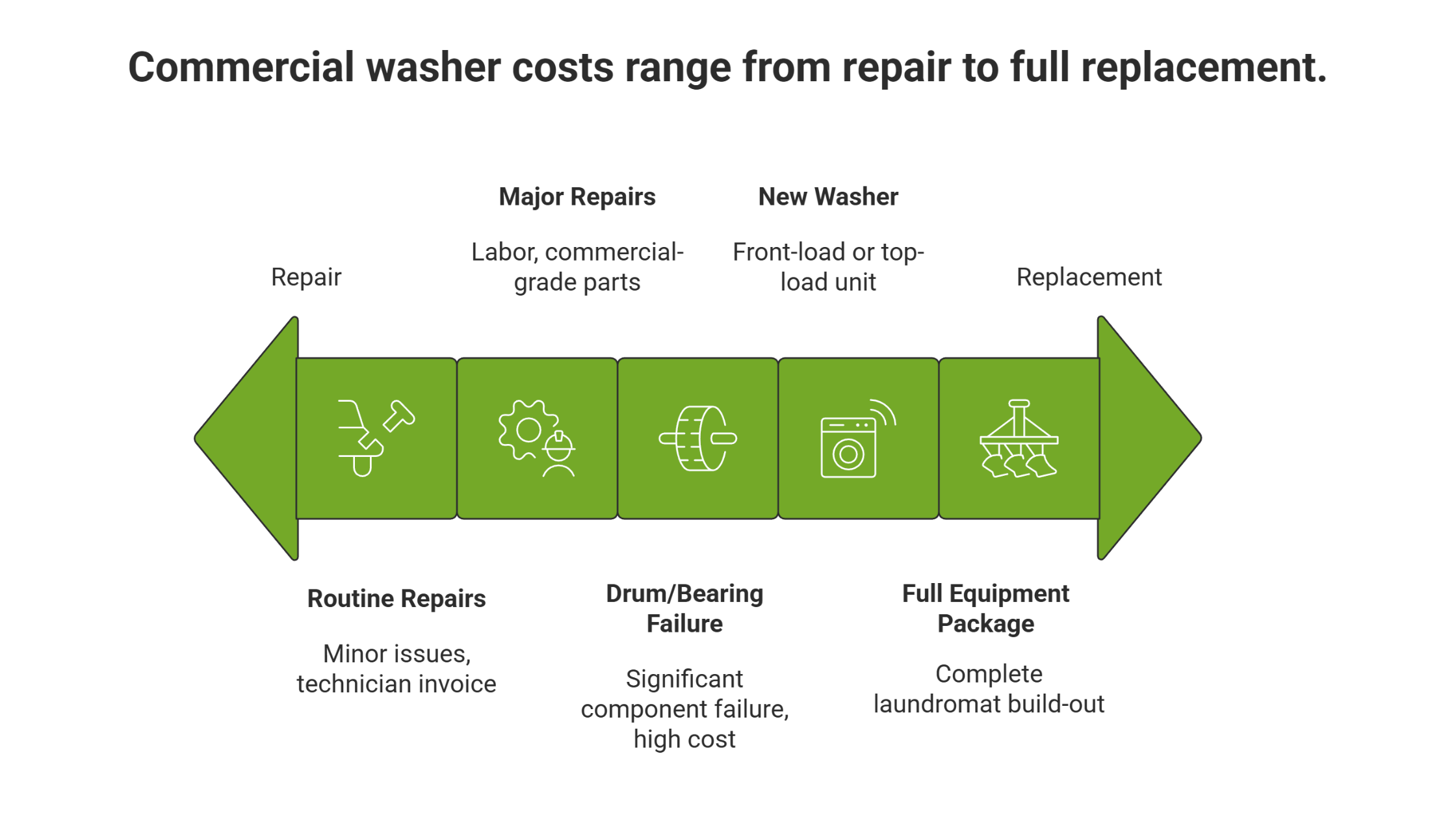
Not every breakdown needs a fix. Use these factors to decide.
Repair If:
- Machine is under 7 years old
- Problem is isolated (belt, pump, or similar)
- OEM parts are available
- Recent repair cost is less than 50% of new unit price
Replace If:
- Frequent breakdowns (3 or more per year)
- Age over 10 years
- Parts no longer made
- New model saves more than 20% on water/energy
Example: A 12-year-old top-loader with repeated motor issues should be replaced even if repair seems cheaper short-term
Bonus: New Energy Star models cut utility bills by up to 30%
Maximizing Uptime and Performance
Maximize uptime with smart operational habits.
Load Management Best Practices
- Do Not Overload: Reduces strain on motor and bearings
- Balance Loads: Prevents drum wobble and vibration
- Sort by Fabric Type: Prevents lint transfer and wear
Pro Tip: Train staff to distribute clothes evenly, especially in front-loaders
Common Error Code Reference
| Code | Likely Issue | Action |
|---|---|---|
| F01 | Control board failure | Call technician |
| F02 | Drain problem | Clean pump filter |
| F05 | Water temperature sensor | Test and replace |
| E01 | Lid switch fault | Inspect or replace switch |
Note: Codes vary by brand; always check the manual
Response Time Goals for Your Business
- Target: Repair within 24 to 48 hours
- Emergency: Same-day service for multi-machine sites
- Preventive: Schedule maintenance during low-use periods
Success Metric: High first-time fix rate equals less downtime
Frequently Asked Questions About Commercial Washing Machine Repair
How long does typical commercial washer repair take?
Most commercial washing machine repairs are completed within 24 to 48 hours, depending on parts availability. Emergency calls often receive same-day service, especially from regional providers like H-M Laundry operating in the Midwest.
What causes commercial washing machines to stop spinning?
Common causes include overloaded machines, failed drive belts, worn motor capacitors, damaged pulleys, or bearing failure. Front-loaders may also have door seal issues that trigger safety interlocks preventing spin cycles.
Should I repair or replace my commercial washer?
Replace if the machine is over 10 years old, has frequent breakdowns exceeding three per year, or if repair costs exceed 50% of a new unit price. Newer models also offer significant energy savings, with Energy Star units reducing utility costs by up to 30%.
How often should I schedule preventive maintenance for commercial washers?
Monthly inspections are recommended for hoses, seals, and unusual noises. Quarterly tasks include drain pump cleaning and belt tension checks. Professional annual service should include sensor calibration, motor inspection, and component replacement.
Where can I find reliable commercial washer repair near me?
National networks like Alliance Laundry Systems offer coverage across most U.S. regions with over 85 technicians. Regional providers like H-M Laundry serve the Midwest with faster local response times. Check for factory-trained technicians with brand-specific certifications.
What brands do commercial repair technicians service?
Most professional services are brand-agnostic and service all major commercial brands including Speed Queen, UniMac, Huebsch, Electrolux, and Whirlpool. Factory-trained technicians from networks like Alliance can repair equipment to original manufacturer standards regardless of brand.
Key Takeaways for Commercial Washing Machine Repair Success
Commercial washing machine repair is not just about fixing broken parts; it is about protecting your business operations and bottom line. Fast diagnosis using error codes and visual inspection helps identify issues before they cause complete breakdowns. Partnering with reliable service providers like H-M Laundry for regional speed or Alliance for nationwide coverage ensures you have expert technicians with OEM parts when you need them most.
Implement a consistent preventive maintenance schedule including monthly hose inspections, quarterly filter cleaning, and annual professional servicing to extend equipment life and reduce repair costs by up to 40%. Train your staff on proper load management and early problem recognition to catch issues before they escalate. Whether you handle minor fixes in-house or rely on professional repair partners, acting quickly and maintaining proactively keeps your commercial laundry operations running smoothly while protecting your investment.