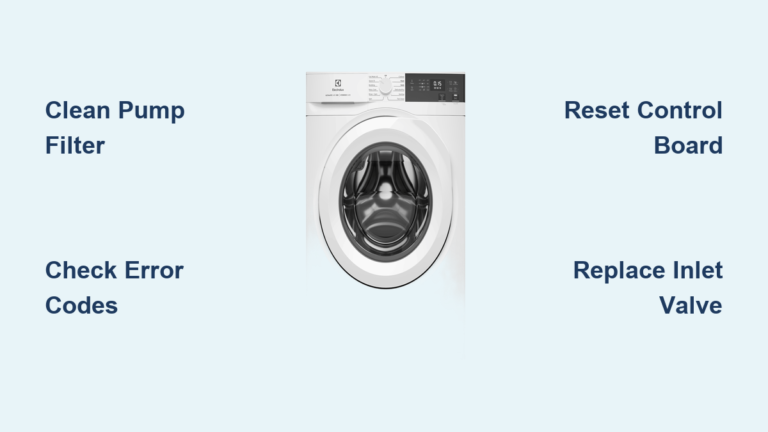

Hotpoint Washing Machine Repair Guide
Is your Hotpoint washing machine failing to spin, leaking water, or refusing to start? You’re not alone—thousands of homeowners face similar issues every year. With the right guidance, many of these problems can be diagnosed and repaired in under an hour, saving you costly service calls. This guide delivers step-by-step repair solutions for the most frequent Hotpoint washer faults, from error codes to mechanical failures. Whether you’re troubleshooting a F05 drain timeout or replacing a worn drive belt, this resource combines technical precision with DIY accessibility. You’ll learn how to use basic tools, interpret error codes, and source OEM parts, empowering you to restore full function to your washer safely and efficiently.
Decode Hotpoint Error Codes

Hotpoint washers display specific error codes to identify internal faults. Understanding these codes helps you pinpoint the exact problem quickly.
Understand F01, F05, and F06
The most common error codes point directly to components needing attention.
F01 indicates a control board failure. If the display is blank or frozen and no buttons respond, this is likely the culprit. First, unplug the machine for two minutes to reset the board. If the code returns, replace the OEM control board.
F05 signals a drain timeout. The washer cannot empty water within ten minutes. This usually means a clogged pump filter, blocked drain hose, or failed drain pump. Clean the filter first before testing further.
F06 points to a motor tachometer error. The speed sensor is not detecting drum rotation. Check the motor capacitor, wiring connections, and tachometer itself. A humming motor with no spin is a classic sign.
Run Diagnostic Mode Correctly
Access diagnostic mode by pressing and holding Spin + Options + Power for three to five seconds. The machine will run self-tests and display stored codes.
Not all models use the same key combination. If Spin+Options+Power does not work, try Hold Rinse + Delay + Power for five seconds, or press and hold Soil Level + Temp + Start briefly.
Once in diagnostic mode, the washer fills, spins, and drains automatically. Watch for pauses or failures at specific stages and note any flashing lights or repeated error codes. Exit by pressing Power or waiting ten minutes.
Fix Washer Won’t Spin
A washer that hums but won’t spin often has a tachometer failure. Confirm this using the spin test mode.
Test for F06 Tachometer Error
To perform the spin test, plug in the washer with the lid open. Hold the Start button and turn the dial seven clicks clockwise. Release Start, then close the lid.
If the drum starts spinning and then abruptly stops, the speed sensor is faulty. Replace the OEM tachometer, a $22–$34 part located near the motor.
Inspect Lid Lock and Switch
A failed lid switch prevents spinning for safety. If the machine does not attempt to spin at all, listen for a click when closing the lid. Check for visible damage to the plastic striker on the lid. Test continuity with a multimeter.
If the lock does not engage, replace both the lid lock assembly and striker as a set. Use OEM parts, as aftermarket versions often fail prematurely.
Replace Drive Belt or Capacitor
If the drum does not move but the motor hums, open the back panel and inspect the drive belt. A snapped or loose belt is easy to spot and replace.
Also check the motor capacitor. If it is bulging, leaking, or burnt, replace it immediately. Always discharge the capacitor with an insulated screwdriver before handling.
Stop Mid-Cycle Shutdowns
Newer Hotpoint models halt mid-cycle if the cold water tap is off or restricted.
Check Cold Water Supply
Look for a tap symbol flashing on the display. Ensure the cold water valve behind the machine is fully open. Inspect inlet hoses for kinks or blockages. Clean the inlet screen filter inside the hose connection.
Even a partially restricted flow can trigger a cycle stop.
Clear Drain Hose Siphoning
If the drain hose is installed above 100 cm, it can siphon water continuously, tricking the pressure switch.
Confirm drain hose peak height is 60–100 cm above the floor. Use a standpipe with an air gap. Ensure the hose is not pushed too far into the drain.
Eliminate Loud Noise and Vibration
Unremoved transit bolts are a top cause of violent shaking.
Remove Transport Bolts
These metal rods secure the drum during shipping and must be removed before first use. Look at the back of the washer and locate two to four large bolts with yellow handles. Remove them completely and plug the holes with provided caps.
Failure to remove these can destroy suspension rods and void warranties.
Balance Load and Level Machine
Uneven laundry distribution causes loud thumping. Pause the cycle and redistribute clothes evenly.
Adjust the front leveling feet. Use a bubble level to ensure the washer is flat. Place anti-vibration pads under the feet.
If vibration persists, inspect suspension rods and replace if broken or missing.
Clean Drain Pump of Debris
Coins, socks, and hair ties can rattle inside the pump. Place towels under the front filter. Twist the pump filter cap counterclockwise. Remove debris and check the impeller for damage.
Clean the pump filter every one to three months to prevent noise and clogs.
Repair Water Leaks

Loose or cracked fill and drain hoses are common leak sources.
Inspect Hose Connections
Turn off the water supply. Check both hot and cold hose fittings at the wall and machine. Tighten by hand, then one-quarter turn with pliers. Do not over-tighten.
Replace hoses if cracked, bulging, or more than five years old.
Replace Failed Door Gasket
Front-load models often leak due to a torn or moldy door seal. Inspect the rubber gasket weekly.
Open the door and peel back the gasket edge. Remove the retaining wire hoop. Pull the old gasket out from the groove. Lubricate the new gasket with soapy water and press into place.
Leave the door open after use to prevent mold and seal degradation.
Restore Drainage Function
A clogged filter is the number one cause of F05 errors and standing water.
Clean Pump Filter Regularly
Unplug the washer. Open the lower front access panel if present. Place a tray underneath. Twist the filter one-quarter turn counterclockwise and pull out. Remove lint, coins, and small garments. Reinstall and tighten securely.
Clean the pump filter every two to three months to prevent 80% of drain issues.
Test and Replace Drain Pump
If cleaning does not help, the pump may be dead.
Test with a multimeter by disconnecting power and removing the three 10-mm screws holding the pump. Disconnect the wiring harness. Set multimeter to continuity mode and probe the terminals. If no beep, the pump is open circuit.
Replace with an OEM drain pump and new harness holder.
Fix Agitation Failures
If the washer spins but won’t agitate, the shift actuator is likely faulty.
Diagnose Shift Actuator Problems
This component engages the clutch for wash mode. Signs of failure include grinding noise during cycle transition, drum turning freely by hand when it should not, and F06 code appearing intermittently.
Disconnect power, remove two 10-mm bolts, unplug the wiring connector, and install a new OEM actuator. Cost is $38–$50.
Unlock Stuck Door or Lid
If the door remains locked after a cycle, unplug the washer for five minutes to reset the lock. Try opening again.
If still locked, manually release via the emergency pull cord usually behind the kickplate. Remove the lower front panel, locate the red pull tab, and gently tug downward.
Never force the door, as it can damage the latch mechanism.
Clear Dispenser Clogs
Detergent buildup blocks siphon tubes, preventing proper dispensing.
Remove and Clean Detergent Drawer
Pull the drawer out until it stops. Lift the front after releasing the latch. Soak in warm water for ten minutes. Use a detailing brush to clean nozzles and siphon tubes. Dry completely before reinserting.
Avoid pods, as they often do not dissolve fully and cause repeated clogs.
Frequently Asked Questions About Hotpoint Washing Machine Repair
How do I reset my Hotpoint washing machine?
Unplug the washer for two minutes, then reconnect. This resets the control board and often clears minor error codes. If the display remains blank or buttons do not respond, the control board may need replacement.
What does F05 mean on my Hotpoint washer?
F05 indicates a drain timeout. The washer cannot empty water within ten minutes. Check the pump filter for clogs, inspect the drain hose for kinks or blockages, and test the drain pump with a multimeter for continuity.
Why is my Hotpoint washer making loud banging noises?
Loud noise usually stems from unbalanced loads, unremoved transit bolts, or debris in the drain pump. Redistribute laundry evenly, remove all transit bolts from the back of the machine, and clean the pump filter regularly.
How much does it cost to repair a Hotpoint washing machine?
Average repair costs range from $150 to $300, depending on the component. Control board replacements cost more, while pump filters and belts are less expensive. Using OEM parts ensures reliability and prevents premature failures.
Can I replace the lid lock myself?
Yes, lid lock replacement is a straightforward DIY repair. Remove the top panel, disconnect the wiring harness, and swap the old lock for an OEM replacement. Always replace both the lock and the striker together.
When should I replace my Hotpoint washing machine instead of repairing it?
Replace if the machine is over ten to twelve years old, has major component failures like a cracked drum or failed control board, or if repair costs exceed 70% of replacement cost.
Key Takeaways for Successful Hotpoint Washing Machine Repair

Regular maintenance extends your Hotpoint washer’s life to twelve or more years. Clean the pump filter every two to three months, leave the door open after cycles to prevent mold, and run monthly hot water cycles with vinegar to dissolve residue.
When repairs are necessary, always use OEM parts for reliability. Aftermarket components often fail prematurely and can void warranties. Key error codes to know include F01 for control board issues, F05 for drain problems, and F06 for motor tachometer failures.
Before starting any repair, unplug the machine and, for capacitor work, discharge the component safely. Consult your model-specific manual and the official Hotpoint support portal for recall information and detailed guides.