How to Fix a Jammed Washing Machine
You start a load of laundry, walk away, and return to find your washing machine jammed, door sealed shut, clothes trapped inside, and no obvious way to open it. It is frustrating, especially when you are in a hurry or notice dampness starting to build. A jammed washing machine door is one of the most common appliance issues, especially in front-loading models, and while it can feel like a crisis, most cases are fixable in minutes without calling a technician.
The problem usually is not a broken machine, but a safety lock doing its job under the wrong conditions. Modern washers use electronic, thermal, or mechanical interlocks to prevent accidental opening during cycles. But when power cuts, drainage fails, or parts wear out, that safety feature can turn into a persistent lock. This guide walks you through proven methods to unlock a jammed washing machine, from simple resets to advanced manual release techniques.
Wait for Safety Lock Release
Most jammed doors are not broken. They are just waiting for the safety system to disengage.
Why the Door Will Not Open Immediately
After a cycle ends, your washing machine may keep the door locked for 1 to 5 minutes due to a built-in thermal or timed safety delay. This prevents opening during high pressure, heat, or residual spin. The lock disengages only after internal systems stabilize.
The standard delay is approximately 2 minutes. Extended cooling can last up to 5 to 10 minutes on hot cycles. This is common in Bosch, Miele, LG, Samsung, and Whirlpool models.
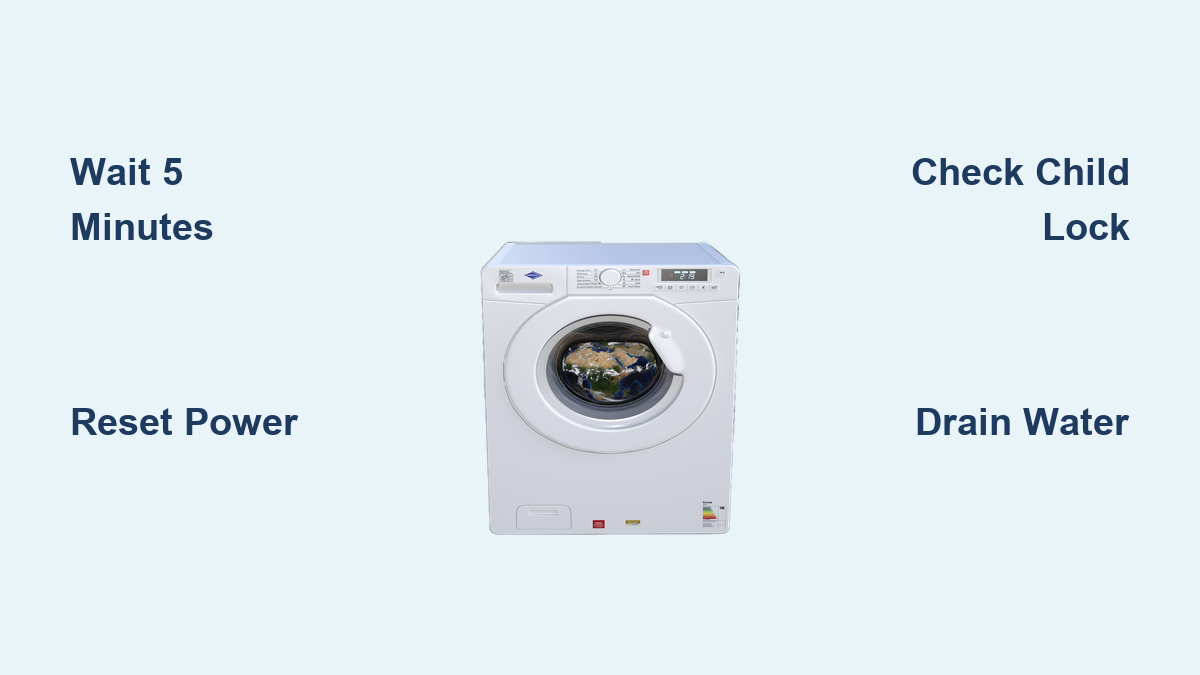
If you try opening the door right after the cycle stops, wait 5 minutes before taking further action. This simple pause resolves the issue in over 30 percent of reported cases.
How to Reset the Lock System
If waiting does not work, perform a full power reset.
Turn off the machine using the control panel if it is responsive. Unplug the machine from the wall. Do not rely on the power button alone. Wait 5 to 10 minutes to fully de-energize the lock and control board. Plug back in and test the door.
This reset clears software freezes, especially in GE, Samsung, and LG models, and often restores normal function.
Check for Child Lock Activation
A locked door might actually be a locked control panel preventing any response.
Is the Control Lock Engaged
Many machines have a child safety lock that disables all buttons and sometimes prevents door opening. It activates accidentally when wiping the panel or pressing buttons mid-cycle.
Look for a padlock symbol or CL indicator on the display. This is common on GE, Hotpoint, LG, Indesit, and Whirlpool models.
How to Disable Control Lock
Try these universal button combinations. Hold for 3 to 5 seconds until the lock icon disappears.
• GE and Hotpoint: Spin plus Rinse
• Samsung: Options plus Start
• LG: Temp plus Dry
• Indesit: Rinse plus Spin
If unsure, consult your model manual or search online using the model number, which is usually on the door rim or back panel.
Drain Residual Water First

Water remaining in the drum keeps the door locked by triggering the safety interlock.
Why Water Triggers the Safety Lock
Even 1 to 2 inches of water can prevent unlocking. The pressure switch detects fluid and assumes the cycle is active. If your machine did not fully drain, the door stays sealed.
Signs of water blockage include sloshing or gurgling sounds, no spin cycle completed, and error codes like E10 on Indesit or F02 on GE models.
Run a Drain or Spin Cycle
Select Drain Only or Spin/Drain mode. Press Start/Pause. Wait 2 to 3 minutes after completion before opening.
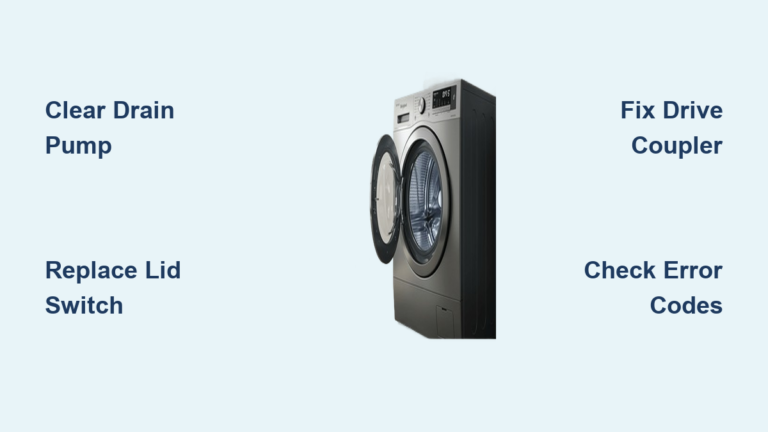
If the machine will not start, manually drain the water. Place a bucket under the drain hose, which is usually behind a small flap at the bottom front. Lower the hose below drum level to siphon water out. Alternatively, remove the pump filter to release water slowly.
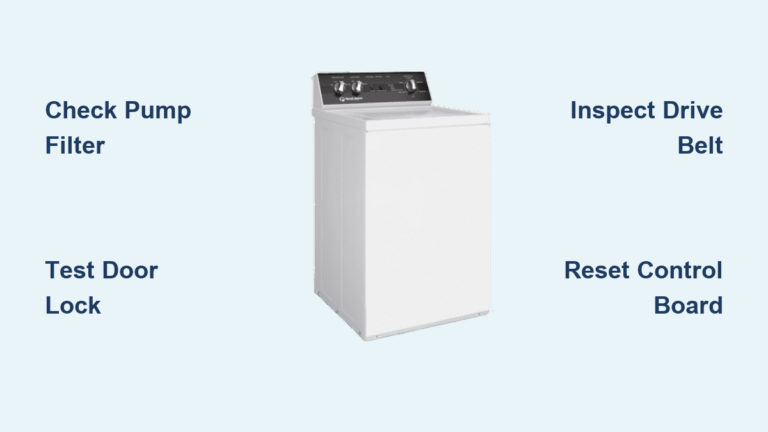
Clean the Pump Filter
Clogs stop drainage and lock the door as the system thinks water cannot exit.
Locate and Open the Filter
Most front-loaders have a drain pump filter at the lower front panel.
Place towels or a shallow tray underneath. Unscrew the circular filter cap counterclockwise. Pull it out slowly, as water will drain. Remove debris such as coins, hair, lint, and socks.
Recommended cleaning frequency is every 1 to 3 months. Brands prone to clogs include Indesit, Hotpoint, Zanussi, and Beko.
Reassemble and Test
After cleaning, reinsert the filter securely. Screw the cap back in. Run a short cycle to test drainage.
Inspect the Pressure System
False water readings cause phantom locks that will not release.
How the Pressure Switch Works
A small hose runs from the drum to a pressure switch that senses water level via air pressure. If the hose is kinked, blocked, or disconnected, the system thinks the drum is full.
Symptoms include no spin cycle, door locked despite dry drum, and machine stuck on the washing phase.
Fix a Blocked Pressure Hose
Unplug the machine. Remove the top panel, which is secured by 2 to 3 screws at the back. Locate the thin plastic tube connected to the drum housing. Disconnect and blow through it to clear blockages. Reconnect securely.
Brands with common issues include Zanussi, Beko, and some Whirlpool models.
Use Manual Release Methods
When electronics fail, go mechanical. These techniques work when standard methods do not.
Tap the Door to Free the Latch
A quick tap can dislodge a stuck mechanism. Tap the lower right side near the latch using the heel of your hand. Apply firm but not forceful pressure. The purpose is to jolt a seized actuator or hook into releasing.
This works best on older machines, specifically those 8 years or older with worn latches.
Try the Credit Card Method
For models with accessible latches, use an old credit card or stiff plastic. Insert into the door seal gap at the top center or latch side. Slide down while pulling the handle outward.
This method is ineffective on newer LG, Samsung, or Miele models with recessed locks.
Use a Nylon Cord Fishing Line Trick
One of the most reliable non-invasive methods requires 1 to 2 meters of nylon cord, such as fishing line or weed trimmer line, plus gloves to prevent rope burn.
Unplug the machine. Feed the cord over the top edge of the door, just inside the rubber seal. Guide it around the entire perimeter, keeping it taut. Once fully looped, pull both ends downward in a sawing motion. The cord should catch the internal hook and pull it inward.
This technique has a high success rate on Miele, Zanussi, Samsung, and some LG models.
Activate the Emergency Pull Tab
Many brands include a built-in release mechanism designed for emergency situations.
For Bosch, Siemens, Neff, and Whirlpool, open the small plastic flap at the bottom front of the door frame. Insert a screwdriver or bent wire into the slot. Pull down on the white plastic tab while pulling the door handle at the same time. This is a manufacturer-approved method that is safe and damage-free.
For Indesit and Hotpoint, locate two small plastic tabs at the top of the door frame. Press both down simultaneously with your thumbs. Pull the door open as you press. Apply even pressure to avoid cracking the plastic.
Perform Internal Manual Release

For complete lock failures, an advanced approach may be necessary.
When to Attempt This
Only attempt this if all other methods fail, you are comfortable with basic disassembly, and the machine is out of warranty.
Step-by-Step Access
Unplug the washer for safety. Remove the top panel by unscrewing 2 to 3 screws at the back, sliding the panel backward, and lifting it off. Locate the door lock assembly, which is a plastic housing near the door latch. Find the metal hook or lever connected to the lock. Use a screwdriver to push the hook toward the center of the machine. Have someone pull the door handle while you actuate the lock.
Gently push the drum rearward if space is tight. Risk includes possible damage to wiring or components, so avoid contact with electrical parts.
Diagnose the Real Cause
Use symptoms to pinpoint the exact problem.
Door locked after power cut indicates the lock is stuck in an energized state. Fix it with a power cycle, leaving the machine off for 5 to 10 minutes.
Lights on but unresponsive means a control board freeze. Fix it with a reset or hard reboot.
Burning smell or sparks indicates an electrical fault. Stop use immediately and call a technician.
Repeats after fixing means a worn lock or board failure. Replace the assembly.
Water will not drain indicates a clogged filter or pump. Clean the filter or replace the pump.
Prevent Future Jams
Avoid repeat issues with simple habits and regular care.
Clean the Door Seal Weekly
Wipe the rubber gasket with a damp cloth. Remove trapped debris including coins, buttons, and pet hair. This prevents mold and seal swelling that can cause sticking.
Use HE Detergent Only
High-efficiency washers require low-suds detergent. Excess suds confuse sensors and impair drainage, leading to jammed door scenarios.
Level the Machine
Use a spirit level on top of the washer. Adjust the front feet until stable. This prevents vibration and latch misalignment that can cause door sticking.
Do Not Overload
Maximum fill is two-thirds full for regular loads. Bulky items should fill only one-half of the drum, such as comforters and towels.
When to Call a Technician
Some problems need expert help rather than DIY approaches.
Seek Professional Service If
Door remains locked after all attempts. Error codes persist, such as H2O, E10, or F02. You notice a burnt smell, sparks, or loud grinding noises. The door handle is broken or detached. The machine is over 10 years old with recurring issues. Internal parts were damaged during DIY attempts.
Authorized repair is recommended for under-warranty units, complex electrical faults, and control board replacement.
Brand-Specific Fixes at a Glance
Bosch, Siemens, Neff
Use the bottom emergency flap. Wait 5 to 10 minutes after power-off for thermal lock release. Check the pressure hose if water is not draining.
Indesit, Hotpoint, Whirlpool
Try the top-frame tabs or front flap release. Clean the filter monthly, as this is a common clog point. Replace the door lock if the machine is over 8 years old.
GE
GE models are prone to control board lockups. There is no external release, so power cycling is the primary fix. Consider replacement if the unit is older than 10 years.
LG, Samsung
The card method rarely works because locks are recessed. The nylon cord technique is most effective. Mid-cycle pause usually allows access.
Miele
Miele locks are durable, so jams are rare. If stuck, the cause is likely filter blockage or electronics. Internal release may be needed.
Zanussi, Beko
These brands are susceptible to pressure switch faults. Inspect the air hose for kinks or disconnections.
Key Takeaways for Unlocking a Jammed Washing Machine
A jammed washing machine does not have to mean a service call. With the right knowledge, 9 out of 10 lockouts can be resolved in under 20 minutes. The key is staying calm, following the correct order of operations, and knowing when to stop and call for help.
Always start simple. Wait for the thermal delay, then try a power reset. Check for child lock activation. Drain any remaining water. Clean the pump filter if needed. Only move to manual release techniques like the nylon cord or emergency pull tab if simpler methods fail.
By practicing regular maintenance, especially filter cleaning and seal care, you will keep your washer running smoothly and avoid most jams before they start. Keep basic tools ready, including a screwdriver, bucket, gloves, and nylon cord. Record your model number for future troubleshooting.
Frequently Asked Questions About Washing Machine Jammed Issues
Why will my washing machine door not open after the cycle finishes?
The most common reason is the thermal or timed safety lock. Most front-loading washers keep the door locked for 1 to 5 minutes after a cycle ends to allow internal temperature and pressure to stabilize. Wait at least 5 minutes before attempting further action.
How do I unlock my washing machine if the child lock is on?
Look for a padlock symbol or CL on the display. Press and hold the appropriate button combination for 3 to 5 seconds. Common combinations include Spin plus Rinse for GE and Hotpoint, Options plus Start for Samsung, and Temp plus Dry for LG.
Can I open my washing machine mid-cycle to add a forgotten item?
Press the Start/Pause button to stop the cycle. The machine will stop spinning and begin draining water. Wait 2 to 5 minutes for drainage and lock disengagement. Open the door, add your item, close the door, and press Start/Pause again to resume.
What should I do if water is still in the drum and the door will not open?
Select the Drain Only or Spin/Drain cycle and let it complete. If the machine will not start, manually drain by lowering the drain hose into a bucket below the drum level. Alternatively, remove the pump filter to release water.
Is it safe to force the washing machine door open?
Forcing the door open risks damaging the door gasket, latch, or outer casing. Try the manual release methods first, such as the nylon cord technique or emergency pull tab. Only force the door as a last resort if the machine is beyond repair or professional help is unavailable.