How to Use Detergent in a Pressure Washer
You’ve just finished blasting dirt off your driveway, but stubborn oil stains and mildew patches remain stuck to the concrete. Water pressure alone often isn’t enough to break down grease, algae, and embedded grime. That’s where detergent comes in. Knowing how to use detergent in a pressure washer transforms a basic cleaning tool into a powerful restoration system that handles jobs water alone cannot touch.
This guide covers everything you need to know about pairing soap with your pressure washer. You’ll learn how to identify your machine’s detergent system, apply cleaner correctly, troubleshoot common issues, and protect both your equipment and the surfaces you’re cleaning.
Identify Your Pressure Washer’s Detergent System
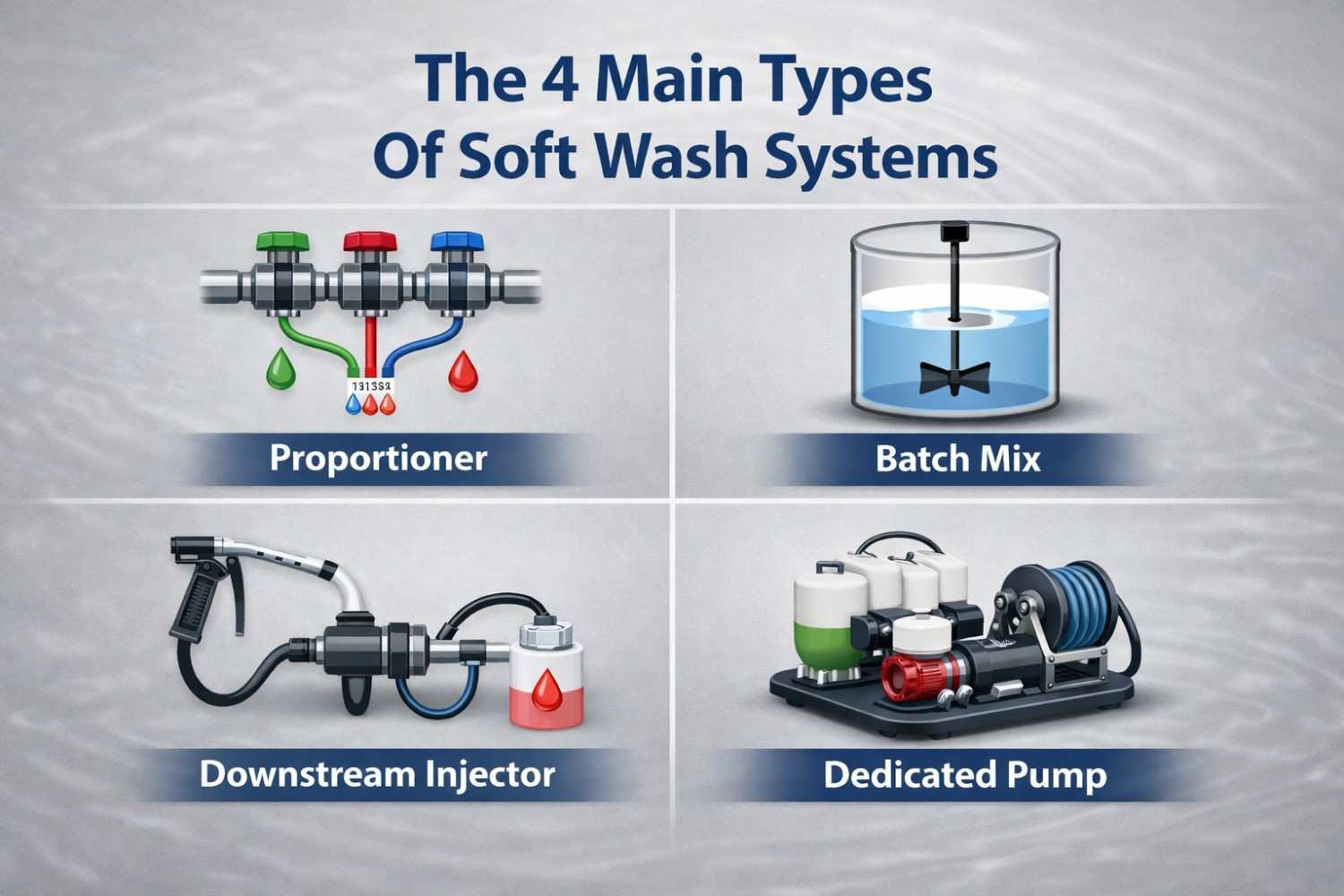
Before adding any soap, you need to know which type of system your machine uses. Each setup works differently, and using the wrong method can damage your equipment or prevent soap from flowing properly.
Detergent Bottle Attached to the Spray Gun
Some electric models, including the Qualcast Q1W-SP09-1450, feature a removable bottle that connects directly to the spray gun. This system draws detergent automatically as you pull the trigger. You simply fill the bottle with diluted cleaner, snap it onto the gun, and select a low-pressure nozzle. No extra hoses or tanks are required.
Built-In Detergent Tank
Many mid-range and gas-powered units include an integrated tank near the pump. To use this setup:
• Fill the tank with properly diluted detergent
• Engage the spray gun safety lock
• Pull out the feed hose and submerge its tip in the tank
• Replace the cap securely
• Set the variable nozzle to low pressure
• Release the safety lock and pull the trigger
Detergent only flows when the nozzle is in low-pressure mode. Always confirm the cap is sealed and the hose is properly seated to avoid airlocks.
Downstream Injection Compatibility
Higher-end and soft-wash setups use downstream injection. This method pulls detergent from an external 1-gallon bottle through a dedicated injector valve on the pump. It’s ideal for low-pressure cleaning of delicate surfaces like vinyl siding or roofs. Check your manual for an injection port near the water inlet, since not all pressure washers support this feature.
Choose the Right Detergent for the Job
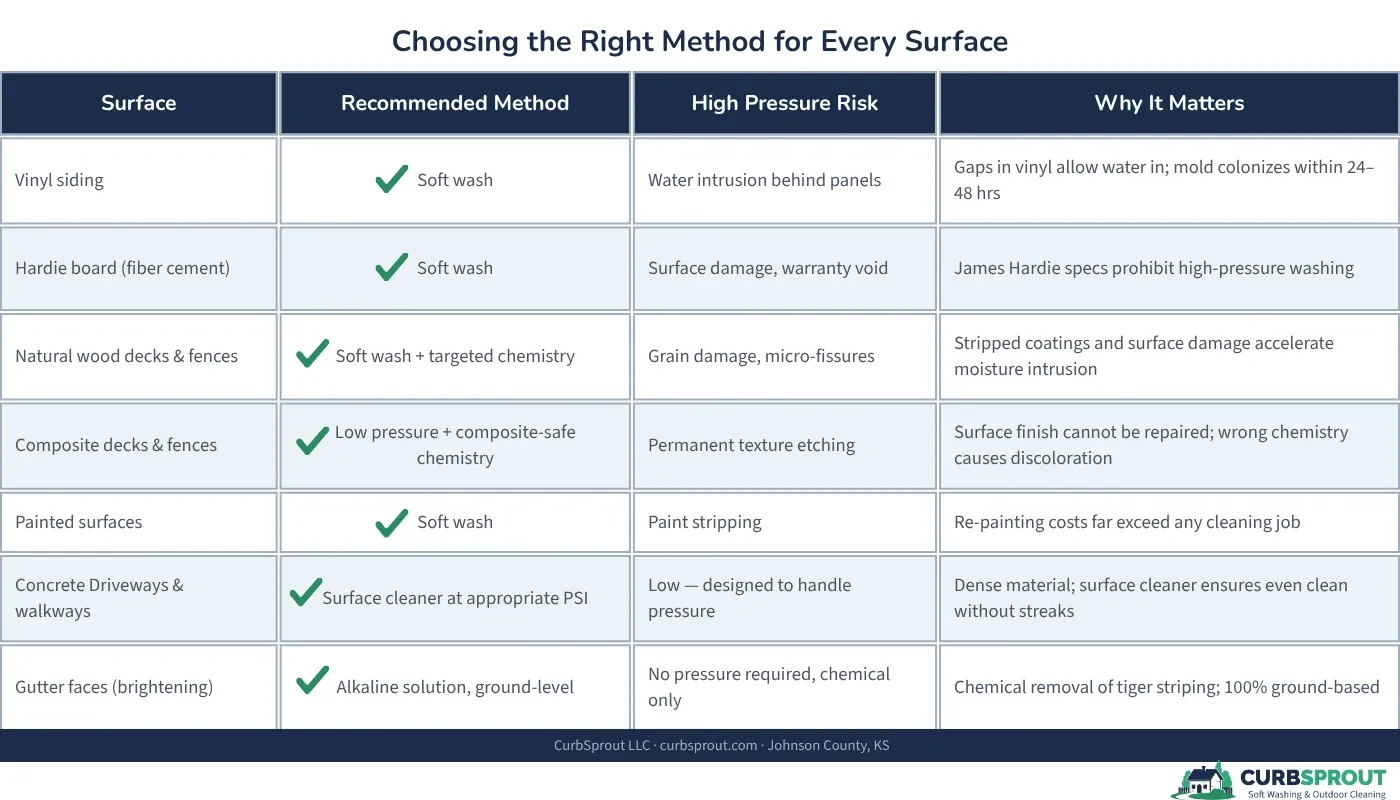
Using the wrong cleaner can damage your machine, harm surfaces, or leave harmful residue behind. Selection matters as much as technique.
Use Pressure Washer-Safe Products Only
Always choose detergents specifically labeled for pressure washer use. Biodegradable, low-alkaline formulas work best for residential cleaning. Household cleaners, bleach, and dish soap can corrode seals, damage pumps, or leave streaks unless explicitly approved by your machine’s manufacturer.
Match Detergent to the Surface
Different surfaces require different formulations:
• Vinyl siding: mild, non-caustic cleaners
• Wood decks: oxygen-based or wood-safe detergents
• Concrete driveways: degreasers or heavy-duty cleaners
• Roofs: soft-wash solutions with algaecides, never high pressure
Always read the product label before applying anything to your home’s exterior.
Follow Dilution Ratios Precisely
Most detergents require dilution before use. Common ratios include:
• 1:10 for general cleaning
• 1:20 for soft washing applications
Over-concentrating causes foaming, streaks, or surface etching. Under-diluting reduces cleaning power. Use a mixing bottle with measurement lines for accuracy.
Set Up Your Equipment for Detergent Application

Proper setup ensures consistent soap flow and prevents equipment damage during use.
Attach the Low-Pressure Nozzle
Detergent only flows under low pressure. Use the black or blue nozzle designed for soap application. On Ryobi models, the blue nozzle is specifically for detergent. High-pressure tips prevent soap draw because they don’t create the vacuum needed to pull detergent into the water line.
Pro Tip: Always turn off the water supply before switching nozzles. On Ryobi units, press the gold release clip to remove the current tip and snap in the low-pressure nozzle.
Submerge the Detergent Pickup Hose
For systems with a pickup hose:
• Insert the clear hose into the detergent bottle
• Ensure the tip stays fully submerged during use
• Elevate the bottle slightly above the pump for gravity-assisted flow
If the hose isn’t submerged, air enters the system, breaking the siphon and stopping soap flow entirely.
Apply Detergent Using the Correct Technique
How you apply cleaner affects both cleaning results and surface safety.
Spray on a Dry Surface
Applying detergent to a dry surface maximizes cling time and cleaning efficiency. Wet surfaces dilute the soap on contact, reducing its effectiveness. Skip pre-rinsing unless protecting nearby plants or loose debris is a concern.
Start from the Bottom on Vertical Surfaces
To prevent streaks from runoff, begin applying detergent at the bottom of siding, walls, or fences and work upward. This keeps cleaner from dripping over already-treated areas. For soft washing with downstream injection, some recommend starting at the top. Always follow your detergent’s specific instructions.
Allow Proper Dwell Time
Let the detergent sit for 3 to 10 minutes, depending on the product and grime level. This gives the chemical time to break down oils, algae, and mold. Never let it dry, since residue can etch surfaces or leave white streaks.
Warning: On hot, sunny days, dwell time shortens quickly. Mist the area lightly before applying soap to slow drying.
Rinse Thoroughly After Detergent Application
Rinsing removes loosened debris and leftover soap that could damage surfaces if left behind.
Switch to a High-Pressure Nozzle
After dwell time:
- Remove the detergent pickup hose from the bottle
- Replace the low-pressure nozzle with a 15° or 0° tip
- Start rinsing from the top down to wash away all soap and grime
This prevents dirty water from streaking over clean areas.
Avoid Common Rinsing Mistakes
Several errors can ruin your results:
• Don’t use the soap nozzle for rinsing. It won’t generate enough pressure.
• Never let detergent dry on the surface. It can stain wood, concrete, or siding.
• Keep the spray fan wide to avoid gouging surfaces with concentrated pressure.
Troubleshoot Detergent Flow Problems
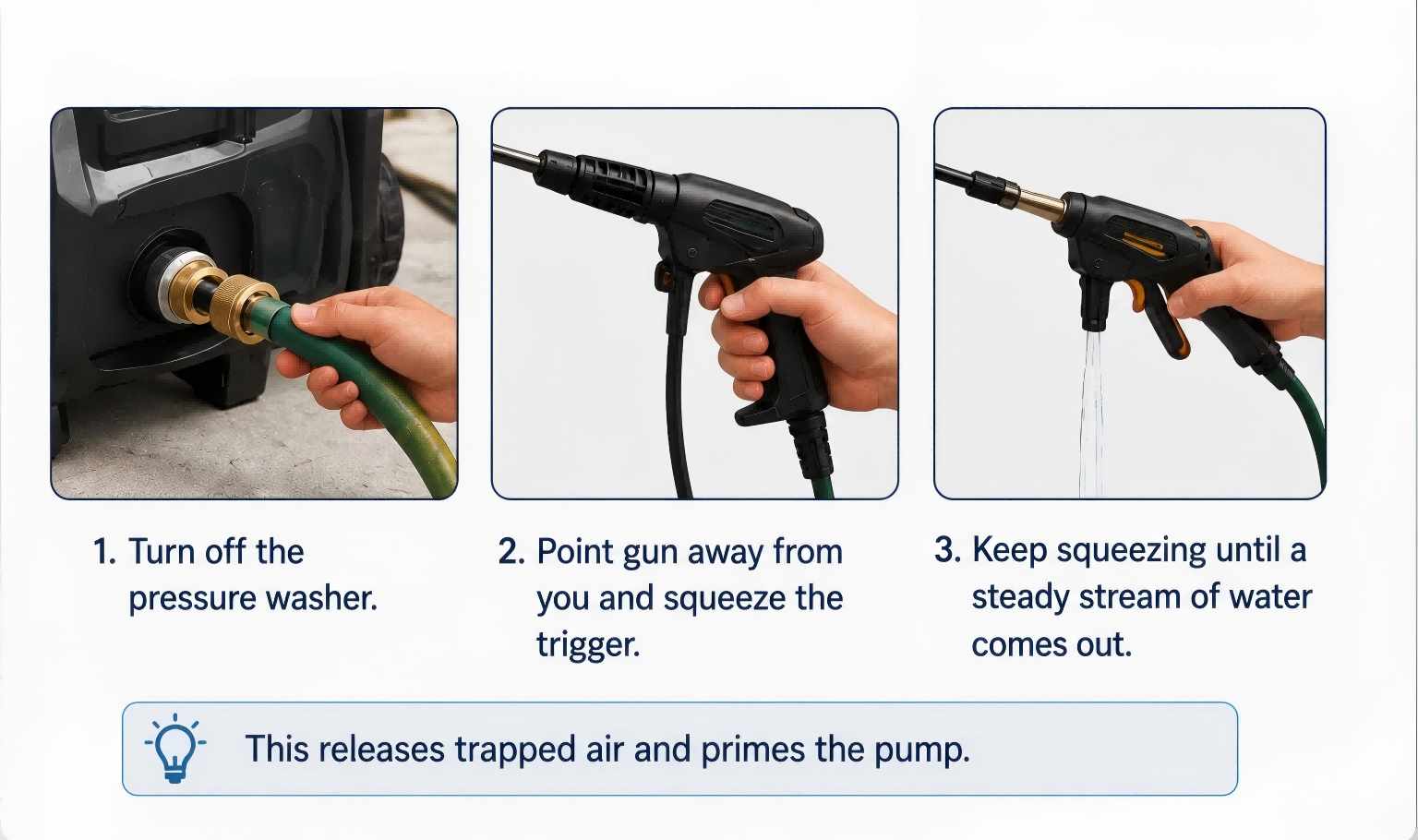
If soap isn’t coming out of your pressure washer, check these common causes before assuming something is broken.
Nozzle Not Set to Low Pressure
The most frequent issue is that the variable nozzle isn’t in low-pressure mode. Twist or slide it to the soap setting, often marked with a soap icon or color-coded blue or black. High pressure prevents detergent draw entirely.
Clogged or Air-Locked Hose
Inspect the pickup tube for these issues:
• Is it fully submerged?
• Is the filter at the end clogged with debris?
• Is there an air bubble in the line?
Flush the hose with water and re-submerge it to restore flow.
Empty or Incorrectly Mixed Detergent
Verify the bottle or tank contains enough properly diluted solution. Thick, undiluted soap can clog lines. If using a downstream injector, ensure the chemical valve is fully open.
Protect Surfaces and Equipment from Damage
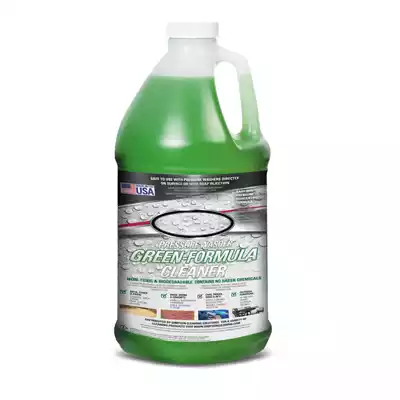
Using detergent incorrectly can harm both your home and your pressure washer over time.
Never Use Bleach or Acid
Household bleach, muriatic acid, or oven cleaners corrode seals, pumps, and hoses. They also harm plants and surrounding surfaces. Stick to pressure washer-specific, biodegradable options for safe operation.
Flush the System After Every Use
Flushing the detergent system after cleaning removes residual soap that could crystallize and clog internal components. To flush:
- Remove the pickup hose from the detergent bottle
- Place it in a bucket of clean water
- Run the pressure washer for 30 to 60 seconds
- Spray until only clear water comes out
This simple step extends your machine’s life significantly.
Alternative: Use a Pump-Up Sprayer for Direct Application
If your pressure washer doesn’t support detergent injection, a pump-up sprayer offers a reliable workaround.
Apply Soap Separately
- Fill a pump-up sprayer with diluted detergent
- Spray the solution evenly on the surface
- Wait 5 to 10 minutes for dwell time
- Rinse with the pressure washer using a 25° or 40° nozzle
This method works well for small jobs or delicate surfaces and avoids introducing chemicals into your pressure washer’s internal system.
Frequently Asked Questions About Using Detergent in a Pressure Washer
What kind of detergent can I use in a pressure washer?
Use only detergents specifically labeled for pressure washer use. Biodegradable, low-alkaline formulas are safest for residential surfaces. Avoid household cleaners, bleach, and dish soap unless your machine’s manufacturer explicitly approves them.
Why is my pressure washer not dispensing soap?
The most common cause is using a high-pressure nozzle. Detergent only flows when the nozzle is set to low pressure. Other causes include an empty tank, a clogged pickup hose, or air entering the line through an improperly submerged hose.
Can I use dish soap in a pressure washer?
Gentle dish soap like Dawn can work in some situations, but most professionals recommend pressure washer-specific detergents. Dish soap may produce excessive foam and can leave residue on certain surfaces. Always check your owner’s manual first.
Do you apply soap at high or low pressure in a pressure washer?
Always apply soap at low pressure. High-pressure settings prevent the vacuum needed to draw detergent into the water stream. Use the dedicated soap nozzle, typically black or blue depending on your brand.
How long should detergent sit before rinsing?
Dwell time depends on the product and application. General cleaning requires 3 to 5 minutes, while soft washing with downstream injection typically needs 5 to 10 minutes. Never let detergent dry on the surface, as this can cause staining or damage.
Can you use bleach in a pressure washer?
Never use household bleach in a pressure washer. Bleach corrodes seals, damages pumps, and harms surrounding plants. If you need chlorine-based cleaning, use a downstream injector with a bleach-compatible solution designed for soft washing applications.
Key Takeaways for Using Detergent in a Pressure Washer
Using detergent correctly turns an ordinary pressure washer into a professional-grade cleaning system. Always use approved cleaners matched to your surface, apply soap at low pressure, and let the solution dwell long enough to break down grime. Rinse thoroughly from top to bottom with high pressure, and never let detergent dry on the surface.
Flush your system with clean water after every use to prevent clogs and extend equipment life. Start with a small test area on any new surface to confirm compatibility before tackling the full job. With these techniques, you’ll achieve cleaner results while protecting both your home and your machine for years of reliable service.