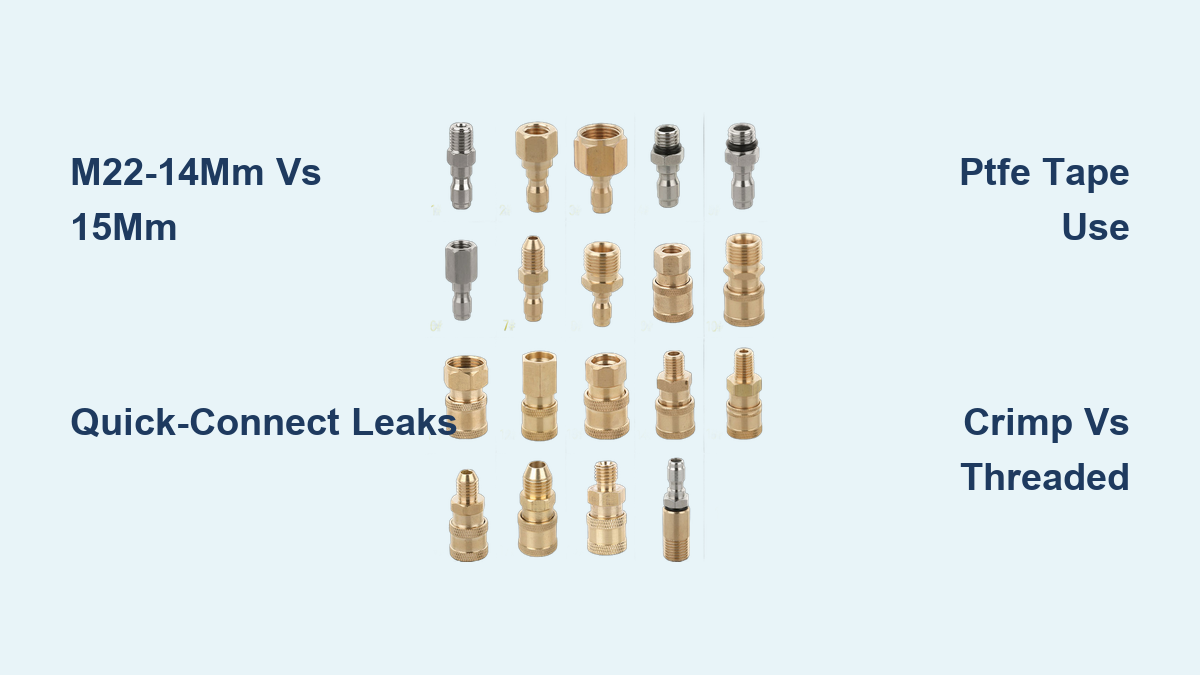
Pressure Washer Hose Connector Types Guide
You bought a new hose or spray gun only to find it won’t fit your machine despite looking identical to the old part. This frustrating mismatch happens because pressure washer hose connector types vary significantly between gas and electric models. Using the wrong fitting causes leaks, pressure loss, and dangerous blowouts under high pressure.
This guide helps you identify every major connector style from M22 to quick-connects so you can choose the right parts. You will learn how to distinguish between gas and electric fittings, install components safely, and troubleshoot common leaks without wasting money on incompatible accessories.
Quick-Connect Couplings for Fast Swaps
Quick-connect couplings are the best choice if you frequently change nozzles, wands, or spray guns during cleaning sessions. They allow tool-free attachment and detachment with a simple push and click mechanism. These systems are ideal for dynamic tasks where speed and convenience matter most.
How the Ball Bearing Lock Works
These couplings consist of a male plug and a female socket that lock together securely. The socket contains a spring-loaded sleeve with internal ball bearings that snap into a groove on the plug. You simply pull back the sleeve, insert the plug, and release it to hear a distinct click confirming engagement. Pulling the sleeve back again releases the bearings for instant removal.
Material Choices and Durability
You can find these connectors in brass, stainless steel, and high-grade plastic to suit different budgets. Brass and stainless steel resist corrosion well and handle harsh cleaning chemicals effectively. Plastic versions are lighter and cheaper but may degrade over time with UV exposure or frequent chemical contact.
- 1/4 inch: Most common in residential and light commercial units.
- 3/8 inch: Used in higher-flow commercial systems requiring more volume.
Pro Tip: Carry spare O-rings in your toolkit because a worn or missing O-ring is the number one cause of leaks in quick-connect systems.
Threaded Connectors for Secure Fixed Lines
Threaded connectors serve as the traditional workhorses of pressure washer systems, especially in industrial settings. They are perfect for fixed installations where frequent disassembly is not required and maximum reliability is essential.
Common Thread Standards Explained
Three primary thread types dominate the market, and knowing the difference prevents costly damage. BSP (British Standard Pipe) is widely used in Europe and many international models. NPT (National Pipe Taper) is the standard in North America for industrial and some residential units. Metric threads appear on certain brands and specific regional models.
Warning: BSP and NPT threads look similar but are not interchangeable due to differences in thread angle and pitch. Forcing mismatched threads can damage both the fitting and the pump outlet permanently.
Installation Best Practices
Proper installation requires a wrench and careful application of sealing materials to prevent leaks. Apply two to three wraps of PTFE tape clockwise around the male threads before assembly. Hand-tighten the connection first, then finish with a wrench, but do not overtighten as this can strip threads or crush internal O-rings.
M22 Connectors: Gas vs Electric Differences

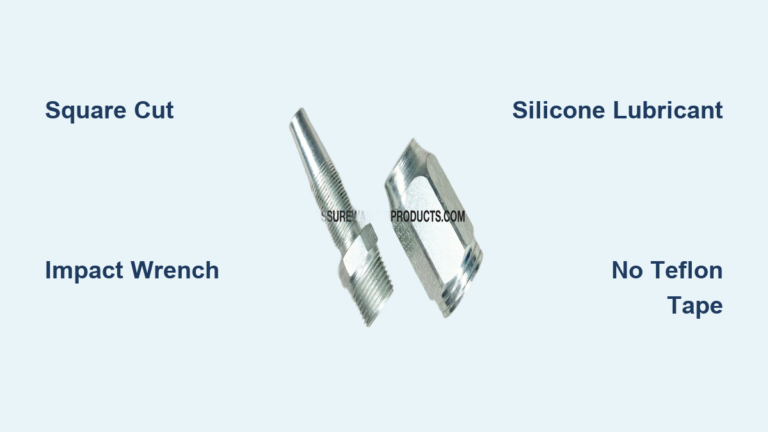
M22 connectors are the most widespread high-pressure interface in consumer and commercial pressure washers today. However, a critical distinction between gas and electric models often causes significant confusion for buyers.
M22 × 1.5 Specification Details
The M22 designation refers to a 22mm diameter metric thread with a 1.5mm pitch. Sealing is achieved via an internal O-ring rather than thread friction. This means the threads themselves do not need to be perfectly tight to prevent leaks, relying instead on the compression of the ring.
M22-14mm vs M22-15mm Compatibility
Despite identical threading, these two sizes are not interchangeable and mixing them causes major issues. M22-14mm is the standard on gas-powered pressure washers and is nearly universal across brands. M22-15mm is common on electric pressure washers and is often brand-specific to lock users into proprietary accessories.
Attempting to connect a 15mm hose to a 14mm port may seem to fit initially but will likely result in leaks or O-ring damage.
Pro Tip: Measure the protrusion length of the male fitting because a 14mm pin is shorter than a 15mm pin, making this the easiest way to tell them apart visually.
Compression Fittings for Precision Sealing
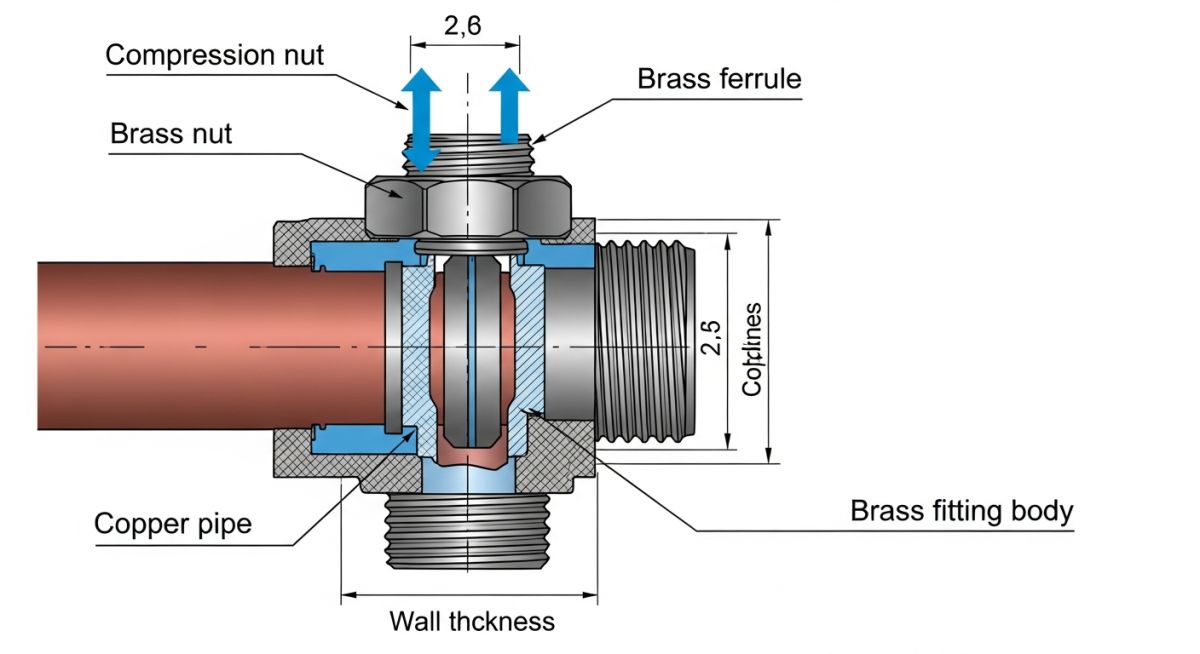
Compression connectors are frequently used on wands, extensions, and high-pressure joints where vibration resistance is critical. They provide a reliable seal that does not rely on thread interference alone.
How Compression Seals Function
Unlike threaded fittings, compression connectors use mechanical compression to create a watertight seal. The male end has external threads while the female nut tightens over a compression ring and O-ring. This forces the ring against a tapered seat inside the fitting to form a seal independent of thread tightness.
Many of these fittings feature dual O-rings for redundancy so if one fails, the second prevents immediate leakage.
Installation Tips for Success
Slide the nut and ferrule onto the tube before insertion to ensure proper alignment. Insert the tube fully until it hits the internal backstop, then tighten the nut with a wrench. No PTFE tape is required on the threads, but applying a thin layer is a smart backup in case the O-ring fails later.
Warning: Over-tightening can deform the ferrule or crack the fitting, especially on plastic models, so stop once the seal is secure.
Crimped Connectors for Heavy Duty Use

Crimped connectors represent the gold standard for professional and industrial pressure washer hoses. They offer unmatched durability and safety for demanding environments.
Permanent High-Pressure Bond
The fitting is hydraulically crimped onto the hose using a specialized machine to compress the outer sleeve tightly. This creates a monolithic, leak-proof union over the reinforced hose layers including the inner tube and steel braid.
Key advantages include the highest pressure and fatigue resistance available. They are immune to loosening from vibration or thermal cycling and have a minimal risk of blowout under extreme conditions.
Not Field-Serviceable
Unlike threaded or quick-connect fittings, crimped ends cannot be replaced in the field. If the fitting or hose end is damaged, you must replace the entire assembly. This makes them best for commercial car washes and industrial cleaning where downtime is unacceptable.
Barbed Connectors for Low-Pressure Lines
Barbed connectors are designed strictly for low-pressure applications and are not suitable for high-pressure water delivery. Using them incorrectly can lead to catastrophic failure.
Design and Function
These push-in fittings feature angled ridges called barbs that grip the inner wall of soft tubing. When inserted, the barbs resist pull-out forces effectively. For added security, a hose clamp is often used to hold the tubing in place.
Primary uses include connecting the garden hose to the pump inlet. They are also used for attaching chemical siphon lines that draw detergent into the high-pressure stream.
Easy Installation and Removal
No tools are required for installation as you simply push the tubing onto the barb. To remove, wiggle and pull the hose off gently. Avoid using these on rigid or thick-walled hoses as they won’t compress enough to seal properly.
Caution: Never use barbed connectors on high-pressure lines because they will fail catastrophically under pressure.
Hose Bib Fittings for Inlet Protection
The hose bib fitting is the crucial link between your tap water supply and the pressure washer inlet. It acts as more than just a connector and serves as a first line of defense for your pump.
Built-In Filter Screen
Every hose bib includes a removable filter screen that traps sand, debris, insects, and sediment. This prevents debris from entering the pump, which could lead to pump damage or cavitation issues.
Sealing and Threads
Male threads on the fitting connect to the female end of the garden hose securely. A rubber O-ring ensures a watertight seal without the need for tape. These are standardized across most U.S. models, making replacements easy to find.
Maintenance Tip: Clean the filter screen before every use because a quick rinse removes buildup that could restrict water flow and reduce cleaning performance.
Choosing the Right Connector Type
Selecting the correct connector isn’t just about physical fit but matching pressure ratings and machine types. Making the wrong choice can compromise safety and efficiency.
Match Pressure Ratings
Low-pressure zones like the inlet can use barbed, standard threaded, or compression fittings safely. High-pressure zones from the pump to the gun must only use M22, NPT, BSP, crimped, or high-pressure-rated quick-connects. Never use a low-pressure fitting in a high-pressure application as it is a serious safety hazard.
Gas vs Electric Machine Compatibility
Gas pressure washers are highly standardized and most use M22-14mm, 3/8 inch quick-connect, or NPT threads. Electric pressure washers are often brand-locked and many use M22-15mm or proprietary quick-connects. Always verify compatibility before purchasing new hoses or guns to avoid voiding warranties.
Flow Rate and Hose Diameter
Connector size must support your machine flow rate to prevent bottlenecks. 1/4 inch quick-connects are suitable for up to 3.5 GPM while 3/8 inch connectors are recommended for 4+ GPM systems. Even if the fitting attaches, undersized connectors can bottleneck performance significantly.
Frequency of Use Determines Type
Occasional DIY users benefit from threaded or quick-connects that offer ease of storage and setup. Commercial daily users should choose crimped hoses with M22 or NPT fittings for superior durability and safety.
Installation Steps to Prevent Leaks
Proper installation prevents leaks, extends component life, and ensures safe operation of your equipment. Follow these steps to connect your system correctly.
Step-by-Step Connection Guide
- Power Off: Unplug electric units or turn off gas engines completely.
- Water Off: Shut off the tap before connecting or disconnecting any hoses.
- Inspect Components: Check for cracks, worn O-rings, or damaged threads on all parts.
- Inlet Connection: Attach the garden hose to the hose bib and hand-tighten to avoid crushing the O-ring.
- High-Pressure Connection: Ensure clean surfaces for quick-connects or apply PTFE tape for threaded joints.
- Test Safely: Turn on water first to purge air, then start the machine and check all connections for leaks.
Troubleshooting Common Connection Issues
Even with the right parts, problems can occur, but most are easy to diagnose and fix with the right approach.
No Pressure or Intermittent Flow
This issue often stems from low water supply, a kinked inlet hose, or a clogged filter. Check garden hose flow, clean the inlet filter, and ensure the water valve is fully open to restore pressure.
Leaks at Connections
Leaks at threads usually mean missing or damaged PTFE tape or O-rings. Leaks at quick-connects indicate a worn or missing O-ring that needs immediate replacement. Leaks at compression fittings suggest a loose nut or damaged ferrule that requires retightening.
Fitting Won’t Connect
Confirm you are not mixing M22 sizes like 14mm for gas and 15mm for electric. Check for thread standard mismatches like NPT versus BSP and use a proper adapter. Ensure you are not trying to connect two male or two female ends without an adapter coupling.
Maintenance Tips for Longevity
Proper care keeps your pressure washer running efficiently and safely for years. Regular inspections prevent small issues from becoming major failures.
O-Ring Inspection Routine
Check O-rings in quick-connect and compression fittings before each use. Replace them immediately if they are cracked, flattened, missing, or brittle. Keep a spare O-ring kit in your cleaning toolkit for emergencies.
Filter Cleaning Schedule
Clean the inlet filter screen every time you use the machine. A clogged filter reduces flow and can damage the pump over time.
Storage Best Practices
Coil hoses loosely and never kink or twist them during storage. Protect connectors from UV exposure and freezing temperatures. Hang or store hoses off the ground to prevent abrasion and extend their lifespan.
Warning: Do not attempt to patch or splice a high-pressure hose because the risk of rupture is too high. Replace the entire hose assembly if damaged.
Rubber vs PVC Hoses: Which to Choose
The hose material affects performance, durability, and suitability for your specific cleaning tasks.
Rubber Hoses: Professional Grade
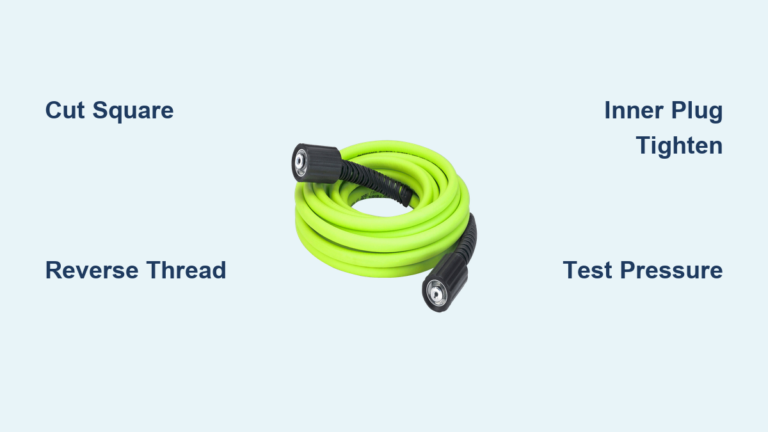
Rubber hoses offer flexibility in cold weather, kink resistance, and high burst pressure ratings. They are heavier and more expensive but are best for high-pressure output lines and commercial use.
PVC Hoses: Budget-Friendly but Limited
PVC hoses are lightweight and low cost but stiffen in cold weather and degrade under UV light. They have lower pressure ratings and are best for low-pressure inlet connections only.
Warning: Never use a PVC hose on the high-pressure side because it can burst under load.
Optimal Hose Length and Diameter
Balancing reach and performance is key to effective cleaning without sacrificing pressure.
Recommended Lengths
Residential users typically need 25 to 33 feet while commercial users often require 50 feet. Longer hoses increase friction loss, which reduces effective pressure at the nozzle.
Modular Hose Strategy
Using two 50-foot hoses instead of one 100-footer allows you to replace only the damaged section if wear occurs. While you can connect different diameters, it creates a bottleneck, so match diameters throughout the system for best performance.
Frequently Asked Questions About Pressure Washer Hose Connector Types
Can I use an M22-14mm fitting on an M22-15mm pressure washer?
No, you cannot use these fittings interchangeably even though they look similar. The 14mm size is for gas machines and the 15mm size is for electric models. Mixing them will cause leaks, pressure loss, or damage to the O-ring and threads.
How do I stop my quick-connect coupling from leaking?
Most leaks in quick-connect systems are caused by a worn or missing O-ring. Inspect the O-ring inside the female socket and replace it if it is cracked or flattened. Ensure the male plug is clean and free of debris before reconnecting.
Do I need Teflon tape for compression fittings?
Compression fittings seal via an O-ring and tapered seat, so tape is not strictly required. However, applying a thin layer of PTFE tape to the male threads is recommended as a backup measure in case the O-ring fails.
What connector type is best for frequent nozzle changes?
Quick-connect couplings are the best choice for frequent nozzle changes. They allow tool-free attachment and detachment with a simple push and click mechanism. This saves time and effort compared to threaded connections.
Why won’t my new hose fit my pressure washer?
Your new hose likely has a different connector type or size than your machine requires. Check if your unit is gas or electric to determine if you need M22-14mm or M22-15mm fittings. Also verify if your machine uses NPT, BSP, or quick-connect standards.
Key Takeaways for Selecting Pressure Washer Hose Connector Types
Choosing the right pressure washer hose connector types ensures safety, efficiency, and longevity for your equipment. Always verify whether you need M22-14mm for gas or M22-15mm for electric models to avoid compatibility issues. Use crimped hoses for heavy-duty work and quick-connects for convenience when swapping accessories frequently.
Carry spare O-rings and inspect them regularly since they are the most common cause of leaks. Never attempt to repair a damaged high-pressure hose and always replace the entire assembly if you see signs of wear. With the right connectors and proper maintenance, your pressure washer will deliver consistent performance for years.