Smeg Washing Machine Repair Guide
If your Smeg washing machine won’t start, won’t drain, or is making loud grinding noises, you are not alone. Smeg appliances are premium machines built to last 15 to 20 years, but even these durable units eventually face mechanical or electrical issues that require professional attention. Common problems like failed drainage, spinning malfunctions, error codes, and water leaks can disrupt your routine and risk water damage if ignored. The good news? Most Smeg washing machine repairs can be completed in under 90 minutes by certified technicians using OEM parts, and reputable providers back their work with a 6 month warranty on labor and components.
This guide walks you through diagnosing common faults, understanding error codes, finding trusted repair services, and preventing future breakdowns. Whether you are dealing with a stubborn drain pump, a noisy drum, or a machine that simply will not power on, you will find actionable steps to get your Smeg washer running again.
Decode Smeg Error Codes

Modern Smeg washers display digital error codes that pinpoint exact system failures. Knowing what these codes mean helps speed up diagnosis and gets your machine repaired faster.
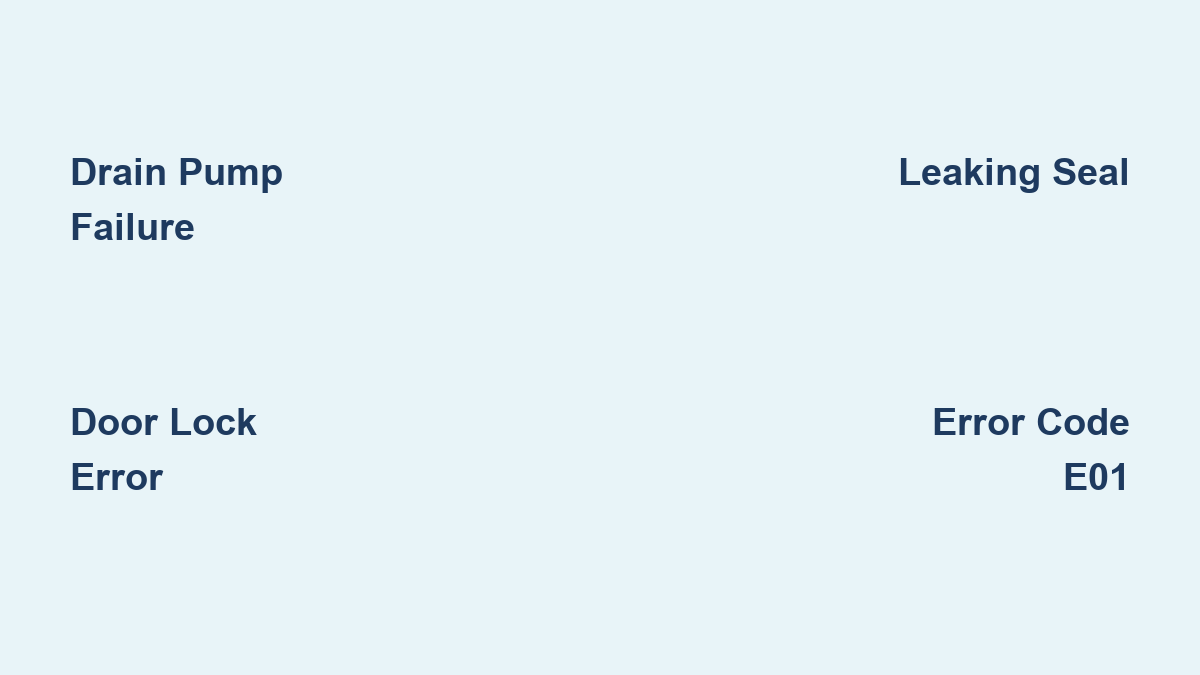
E01: Door Lock Failure
The machine will not start because the door is not locking properly. This issue stems from a worn door latch, a misaligned door seal, or a faulty door lock sensor. Technicians test continuity in the lock mechanism and replace the entire assembly if needed. You may hear a faint click, but the lock never fully engages.
E02: Drain Timeout
The washer fails to empty water within the standard 10 minute window. Likely causes include a clogged drain pump, a blocked drain hose, or a defective pump motor. A technician clears obstructions or replaces the pump entirely. This is one of the most common service calls for Smeg washers.
E04: Overfilling or Pressure Switch Fault
Water continues filling past normal levels, sometimes overflowing the drum. This indicates a failed pressure switch, an air tube leak, or a control board error. The fix involves testing the switch, checking tubing for cracks, or replacing the main PCB. Do not ignore this code, as water damage can occur quickly.
E05: Motor or Tachometer Error
The drum spins erratically or stops mid cycle. This points to motor winding failure, a broken tach sensor, or drive belt slippage. Diagnosis includes resistance checks and visual inspection of drive components. You may notice the drum struggling to rotate or making unusual whining sounds.
E07: Heating Element or NTC Sensor Issue
Water is not heating properly during wash cycles. This could be a faulty heating element, a bad thermistor (NTC sensor), or a failed relay on the control board. Technicians use multimeters to isolate the failed part. Your clothes may come out feeling less clean than usual.
Pro Tip: Write down any error code before unplugging the machine. Smart models may store logs, but power loss can erase transient fault records.
Fix Common Drainage Problems
A Smeg washer that will not drain is one of the most frequent service calls. Standing water poses slip hazards and mold risks, so act fast when you notice this problem.
Clear the Pump Filter
- Turn off power and unplug the unit
- Place towels under the front access panel to catch water
- Locate the filter cap (usually bottom front right)
- Open carefully and remove debris such as coins, hair, and small items
- Reinstall securely and run a short drain cycle to test
This simple step resolves over 40 percent of drainage issues. Perform this monthly as preventive maintenance to keep your drain system flowing freely.
Check the Drain Hose
Inspect the drain hose carefully for these common problems. Ensure the hose is not kinked or crushed behind the machine. Verify it is not inserted more than 4 inches into the standpipe, as this prevents proper drainage and causes siphoning. Look for internal clogs by disconnecting and flushing with hot water. Replace the hose if you notice cracks or persistent blockages.
Replace a Failed Drain Pump
If the pump motor hums but no water moves, the impeller may be broken. If the pump is completely silent during the drain cycle, the motor has likely failed. A technician tests voltage at the pump terminals and listens for operation during the drain cycle. OEM replacement pumps typically cost 80 to 150 dollars plus labor.
Warning: Never bypass the pump safety switch. This can cause overflow and serious floor damage that may not be covered by insurance.
Restore Spinning and Agitation

When your Smeg washer fills but does not spin, clothes come out soaked and your laundry routine grinds to a halt. Several components could be at fault, and diagnosing the issue correctly saves time and money.
Inspect the Drive Belt (Top Load Models)
Access the drive belt by removing the rear panel with the machine unplugged. Look for visible cracks, fraying, or excessive looseness. A loose belt slips during operation, while a snapped belt stops all drum motion completely. Replacement typically takes 30 to 45 minutes, and technicians often carry common belts for immediate installation.
Test the Motor Coupling (Older Models)
Worn couplings between the motor and transmission cause no spin conditions. These components absorb vibration but degrade over time from normal use. A failed coupling shows shredded rubber center material or visible misalignment when you try to spin the drum by hand. Replacement is straightforward but requires drum removal, so leave this to a professional.
Diagnose Direct Drive Systems (Front Load)
Many Smeg front loaders use direct drive motors without belts. Issues in these systems often involve broken motor brushes that wear out every 8 to 10 years, failed hall sensors that disrupt rotor position feedback, or burnt windings detected via resistance testing. Technicians use diagnostic mode to run motor tests and read error logs for accurate identification.
Time Estimate: Plan for 60 to 90 minutes for motor related repairs involving these components.
Stop Leaks and Water Damage
Water pooling under your Smeg washer demands immediate attention. Leaks can ruin flooring, damage subfloors, and lead to expensive mold remediation.
Replace the Door Seal (Front Load Units)
The rubber gasket around the door commonly fails after 7 to 10 years of use. Watch for these warning signs. Mold or mildew buildup in the folds of the seal indicates trapped moisture. Cracks or splits near the bottom allow water to escape during fill and spin cycles. Water dripping onto the floor during operation confirms the seal is compromised. Technicians remove the outer clamp, peel out the old seal, and press in a new one. Always inspect the tub surface for sharp edges that could damage the new seal.
Tighten Inlet Hoses
Loose hot and cold supply lines cause fast leaks that can flood your laundry room. During service, technicians check for proper tightness without over tightening, which can crack fittings. Replace braided hoses every 5 years as preventive maintenance. Ensure the washer is positioned properly behind the unit so hoses are not compressed or bent.
Fix Pump Gasket Leaks
A slow drip from the drain pump often means a degraded internal gasket. The pump must be removed and disassembled to replace this seal. Most technicians recommend full pump replacement instead of attempting a patch repair, as gaskets alone rarely solve the problem long term.
Visual Cue: A brownish water stain under the machine indicates a long term leak. Address this immediately before the problem worsens.
Reduce Vibration and Noise
Excessive shaking during spin cycles can damage floors, walls, and the washer itself. This is especially problematic in apartments, stacked units, or homes with delicate flooring.
Level the Machine
Use a bubble level placed on top of the washer to check alignment. Adjust front feet clockwise to raise and counterclockwise to lower. Rock the machine gently to ensure all four feet touch the floor and distribute weight evenly. Lock the jam nuts once level is achieved. Even a 1 degree tilt causes significant imbalance during high speed spins.
Replace Shock Absorbers or Dampers
These components control drum movement and prevent violent shaking. Worn shocks lead to loud thumping during high speed spin. You may also notice visible drum wobble when rotating the drum manually. Replacement requires drum support and partial disassembly, but most technicians carry dampers for same day fixes.
Inspect Drum Bearings
A grinding noise often means failing bearings that have worn out over time. Water intrusion from a bad seal accelerates this wear significantly. Once bearings fail, the entire outer tub may need replacement, which is a costly repair. Early seal repair prevents this expensive problem.
Expert Note: If you hear a screech only when starting the spin cycle, it is likely the brake pad sticking, not a motor problem. This is a much simpler fix.
Troubleshoot Power and Startup Failures
When your Smeg washer will not turn on, do not assume the machine is dead. Several components could be blocking startup, and some are easy to fix.
Verify Power Supply
Before calling a technician, run through these quick checks. Test the outlet with another device to confirm it has power. Check the circuit breaker and reset if tripped. Confirm GFCI outlets have not been triggered, which is common in laundry rooms. Many dead washers are simply unplugged or have a tripped breaker.
Test the Door Lock
Even slight misalignment prevents the lock from engaging properly. Technicians inspect the strike plate alignment, test solenoid resistance, and replace the lock assembly if no click is heard. A faulty lock triggers error code E01 and stops all operation until repaired.
Diagnose Control Board Failure
If the lights flicker or the display shows nothing, the main PCB may be damaged. Common causes include power surges, moisture exposure, and failed relays. Technicians use diagnostic modes and multimeters to test output signals. Replacement boards must be programmed to match your specific model number.
DIY Risk: Opening the control panel without disconnecting power risks shock or shorting the board. Leave this to trained professionals.
Choose Factory Authorized Repair
For reliable Smeg washing machine repair, factory authorized service providers offer distinct advantages over general appliance repair shops.
Why Authorization Matters
Factory authorized technicians receive direct training from Smeg and have access to proprietary diagnostics. They use OEM parts that match your exact model specifications. Repairs performed by authorized providers preserve any remaining factory warranty on your appliance. You may also become eligible for extended service plans that generic repair shops cannot offer.
Software Compatibility
Smart models with WiFi connectivity require correct firmware on replacement control boards. Authorized technicians have access to the latest software updates and can program new boards properly. Generic repair shops may install a functioning but incorrectly programmed board that causes new problems.
Parts Availability
Authorized service providers order directly from Smeg’s parts distribution network. This ensures you receive genuine components rather than aftermarket alternatives that may not fit perfectly. For built in and integrated models, correct parts are especially critical due to unique configurations.
Tip: Ask if the technician carries Smeg branded parts or has access to official service manuals before scheduling.
Understand Repair Costs and Warranty
Knowing what you are paying for helps you make informed decisions about repair versus replacement.
Diagnostic Fees
Most providers charge a small service call fee that is credited toward repair costs if work proceeds. Some waive the fee entirely for booked repairs. Expect to pay between 0 and 50 dollars for diagnosis, with the amount applied to your final bill.
Average Repair Prices
Here is a breakdown of common repair costs for parts and labor.
Drain pump replacement typically costs 160 to 230 dollars total, with the part ranging from 80 to 120 dollars. Door lock assembly runs 140 to 190 dollars total, with the part between 60 and 90 dollars. Drive belt replacement costs 110 to 150 dollars total, with the part at 30 to 50 dollars. Control board replacement is the most expensive at 280 to 450 dollars total, with the part ranging from 180 to 300 dollars. Drum bearing replacement can cost 450 to 700 dollars total when you factor in the 250 to 400 dollar part plus 200 to 300 dollars in labor.
Note that older or built in models may cost more due to access difficulty during repair.
Warranty Coverage
All reputable providers offer 6 month coverage on parts and labor. If the same issue returns within the warranty period, the repair is redone at no cost. Always keep your invoice for warranty claims and future reference.
Schedule Fast Service in Your Area
Response time depends on your location. Here is where to call based on your region.
New York Service Areas
Appliance Services Queens serves Queens, Brooklyn, Manhattan, and Nassau County with same day and next day availability. They offer 24 hour emergency repairs and have a 4.9 star rating from 794 reviews. Their service call fee is 19 dollars, credited toward repair costs. Contact them at 646 692 0526.
The Appliance Repairmen in Hempstead provide 50 mile radius coverage with 24 hour emergency service, 7 days a week. Their diagnostic fee is credited toward your repair. Call 516 403 9902.
California Service Areas
The Appliance Repairmen in Irvine serves Orange County and over 180 ZIP codes including Anaheim, Santa Ana, and Irvine. They offer same day service and 24 hour emergency repairs. Call 949 536 7243.
Florida Service Areas
AG Appliance Service in Miami is a factory authorized Smeg repair provider. They offer same day service and a 20 dollar discount for first time customers. Contact them at 305 552 6979.
Express Repair Florida provides statewide coverage with 24 hour service, 7 days a week. They guarantee satisfaction on all repairs. Call 866 545 7755.
Prevent Future Breakdowns
Extend your Smeg washer is life with simple habits that catch small problems before they become expensive repairs.
Monthly Maintenance Checklist
Clean the detergent drawer by pulling it out and rinsing with warm water. Wipe the door seal to prevent mold and leaks that can damage bearings. Run an empty hot cycle with Smeg approved cleaner to remove residue buildup. Check inlet hoses for bulges or leaks that could cause flooding. Clear the drain filter to maintain proper drainage.
Annual Professional Tune Up
Schedule a technician visit every 12 to 18 months to inspect motor brushes and belts for wear. They will test pump efficiency and calibrate sensors for accurate operation. For smart models, firmware updates ensure your washer runs the latest software. Catching small issues early prevents them from becoming 400 dollar repairs.
Usage Best Practices
Avoid overloading the machine, as excess weight strains the motor and suspension. Use HE detergent specifically formulated for high efficiency models. Leave the door open between loads to prevent mold growth in the damp interior. Level the machine annually to maintain proper balance during spins.
Final Thoughts on Smeg Washing Machine Repair
Your Smeg washing machine is a premium appliance built to deliver decades of reliable performance. When problems arise, understanding common issues like drainage failures, error codes, and worn components helps you communicate effectively with technicians and make informed repair decisions.
The most important takeaways are these. Address drainage problems immediately to prevent water damage and mold. Learn your error codes to speed up diagnosis and reduce service costs. Choose factory authorized repair when possible to preserve your warranty and ensure OEM parts. Perform monthly maintenance to extend the life of your machine and avoid costly breakdowns.
At the first sign of trouble, whether it is a strange noise, an error code, or a leak, call a certified technician. Same day repairs, transparent pricing, and 6 month warranties make professional Smeg washing machine repair the smart, safe choice for protecting your investment.
Frequently Asked Questions About Smeg Washing Machine Repair
How long do Smeg washing machines last?
Smeg washing machines are built to last 15 to 20 years or more with proper maintenance. Regular cleaning, timely repairs, and annual professional tune ups can extend this lifespan significantly.
Can I repair my Smeg washing machine myself?
DIY repairs on Smeg washers are not recommended due to risks of electrical shock, water damage, and voided warranties. Many technicians also refuse to service machines that have been previously tampered with by unqualified individuals.
How much does Smeg washing machine repair cost?
Repair costs vary by issue. Simple fixes like drain pump replacement run 160 to 230 dollars, while complex repairs like control board replacement can reach 280 to 450 dollars. Diagnostic fees typically range from 0 to 50 dollars and are credited toward repair costs.
What is the most common Smeg washing machine problem?
Drainage issues are the most frequent service call, with clogged drain pumps and blocked filters accounting for over 40 percent of problems. Regular filter cleaning prevents most of these issues.
Does Smeg washing machine repair come with a warranty?
Reputable repair providers offer a 6 month warranty on both parts and labor. This covers recurrence of the same issue and provides peace of mind after the repair is complete.
How do I find a factory authorized Smeg repair service near me?
Contact Smeg customer service for a list of authorized providers in your area. Alternatively, search for providers with documented factory authorization, such as AG Appliance Service in Miami, which partners directly with Smeg for repairs.