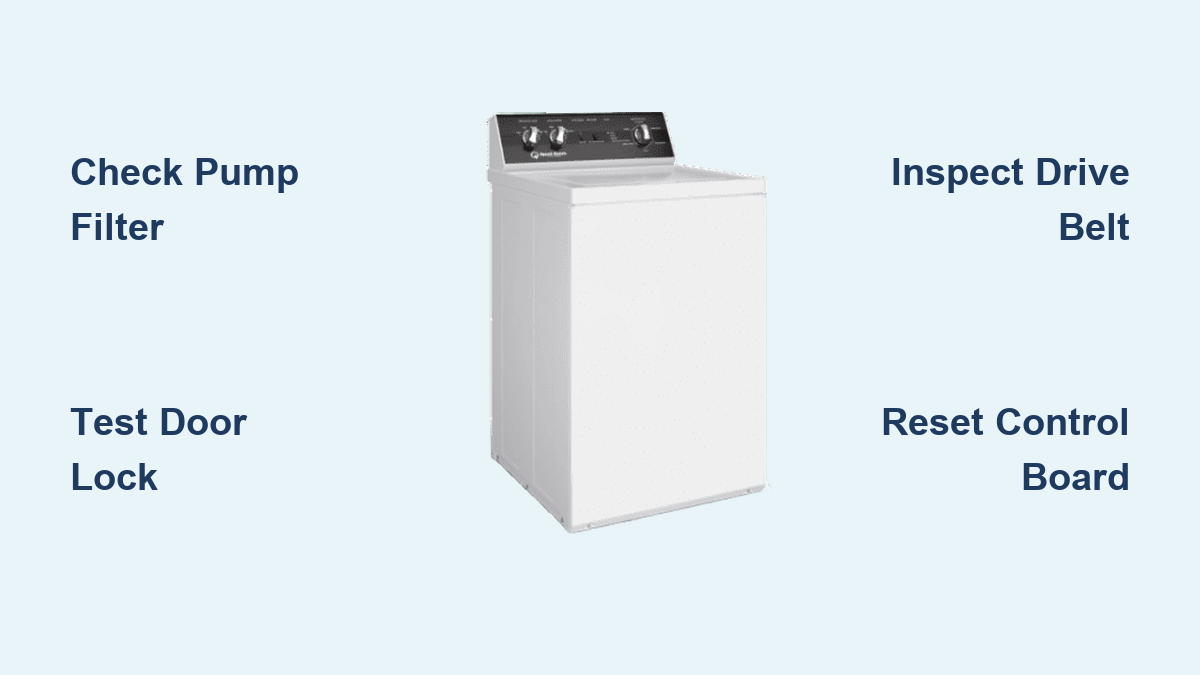
Speed Queen Washing Machine Repair Guide
If your Speed Queen washing machine has stopped spinning, won’t drain, or is leaking, you are not alone. Even these legendary workhorses need repair eventually. Built to last up to 25 years with proper care, Speed Queen washers are engineered for durability, but normal wear, water quality issues, and electrical problems can still lead to breakdowns. The good news? Most problems are fixable, especially when addressed quickly and correctly. This guide breaks down the most common failures, how to identify them, and where to get reliable repair service using genuine parts and certified technicians.
You will learn how to restore performance, avoid costly mistakes, and keep your machine running like new for decades. From diagnosing error codes to finding authorized service providers, we cover everything you need to know about Speed Queen washing machine repair.
Decode Common Speed Queen Washer Failures

Speed Queen models, both front-load and top-load, are known for robust construction, but certain components wear out over time. Recognizing early signs of trouble helps prevent minor issues from turning into major repairs.
Motor and Drive System Breakdowns
When your washer will not start or makes a humming noise without agitating, the motor or drive system may be failing. Common culprits include worn drive belts in belt-driven models, which show fraying, cracking, or looseness. Failed motor control boards often trigger error codes or total shutdown, sometimes caused by power surges. Faulty direct-drive clutches or transmissions in older models can cause weak agitation or no spin.
Pro Tip: If the drum spins freely by hand but the machine will not agitate, suspect the motor coupling or clutch before replacing the entire motor.
Pump Failure and Drainage Issues
A washer that will not drain or leaves clothes soaking wet likely has a pump problem. Speed Queen pumps are durable, but clogs from lint, socks, or coins can cause overheating and failure.
What to check:
- Listen for a humming pump that does not move water.
- Inspect the drain hose for kinks or blockages.
- Remove the pump filter if accessible and clean debris.
Warning: Running the machine with a clogged pump can burn out the motor. Always clear blockages before restarting.
Door Lock and Lid Switch Failures
Front-load models rely on a door lock mechanism to prevent opening during spin cycles. If the door will not lock or the cycle will not start, the lock assembly may be faulty.
Common symptoms:
- Error code “DL” or “F1” on display.
- Clicking sound but no engagement.
- Door appears closed but machine will not start.
DIY Check: Unplug the machine, then test continuity with a multimeter. No continuity means replacement is needed.
Access Genuine Parts and Expert Service

Using the right parts and trained technicians ensures your repair lasts. Generic replacements may fit but often fail prematurely under heavy use.
Use OEM Parts for Long-Term Reliability
Original Equipment Manufacturer parts are engineered to match the exact specifications of your Speed Queen washer. Benefits include perfect fit and function, compatibility with control systems, and longer lifespan than aftermarket alternatives.
Where to buy:
- Speed Queen “Find Parts Near Me” tool on their website.
- Authorized dealers like St. Louis Appliance Repair.
- Online OEM parts portals with your model number ready.
Expert Note: Always provide your full model and serial number when ordering parts. Small design changes occur even within the same model line.
Find Certified Speed Queen Repair Technicians
For warranty-covered units or complex repairs, use a certified service dealer. These technicians meet Speed Queen strict standards for training and parts sourcing.
St. Louis Appliance Repair: Factory-Trained Experts
As one of only 11 certified dealers in the St. Louis area, St. Louis Appliance Repair offers direct factory training from Speed Queen engineers, access to genuine OEM parts, and service for all models including front-load, top-load, and stacked units. They provide upfront pricing and online scheduling.
Service Area: Metro St. Louis
Contact: (636) 389-9851 or schedule online
AAA Service Network: Southeast Michigan Specialists
Serving Brighton, Plymouth, Howell, and surrounding areas, AAA Service Network provides fast, reliable repairs for residential and commercial Speed Queen units. Their technicians are experienced with high-end laundry equipment and offer emergency service for leaks or complete failures.
Contact: (810) 692-1371
Prevent Costly Repairs with Annual Maintenance
Speed Queen recommends annual maintenance for both washers and dryers, similar to an oil change for your car. Skipping these checkups increases the risk of sudden failure and shortens the lifespan of your machine.
Perform Key Maintenance Tasks Yearly
Regular upkeep catches small issues before they become big problems.
Clean Pump and Drain Filters
Clogged filters reduce drainage efficiency and strain the pump.
Steps:
- Turn off power and water supply.
- Locate the filter, usually behind the front-bottom panel.
- Place a towel underneath and open the access cap.
- Remove debris and reassemble.
Frequency: Every 6 to 12 months, more often with heavy use.
Inspect Belts and Hoses
Check drive belts for tension and wear. Look at water inlet and drain hoses for bulges, cracks, or leaks. Replace hoses every 5 years, even if they appear fine, because rubber degrades over time.
Test Door Seals and Gaskets
A damaged door seal causes leaks and mold buildup. Look for cracks, tears, or stiffness in the rubber. Musty odor from trapped moisture and water pooling around the door are warning signs. Clean monthly with mild soap and water to extend life.
Lubricate Moving Parts Where Applicable
Some older models require lubrication of suspension rods or pivot points. Refer to your Use and Care Manual for specifics. Never lubricate bearings or motors because these are sealed units.
Diagnose Control Board and Sensor Errors
Modern Speed Queen washers use digital controls that can fail due to moisture, power surges, or age.
Recognize Common Error Codes
While exact codes vary by model, common indicators include F1 or E1 for lid or door switch issues, F2 or E2 for drain timeout indicating pump or clog problems, F3 or E3 for temperature sensor failure, and F4 or E4 for overfill or pressure switch faults.
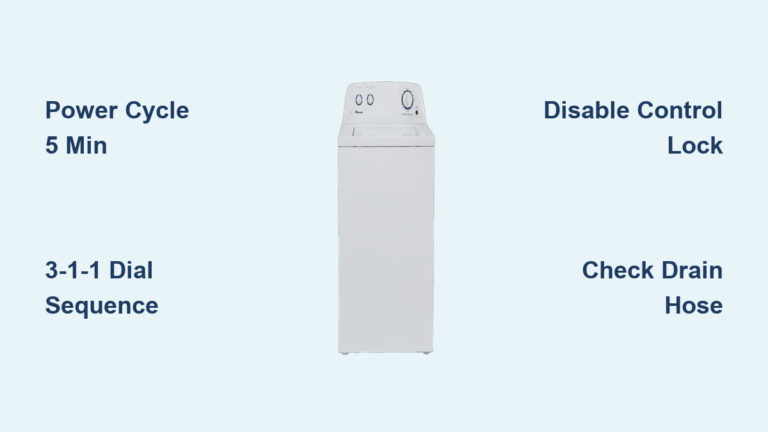
Quick Fix: Try a hard reset by unplugging the washer for 5 minutes, then restart.
Replace Faulty Sensors Safely
Water level, temperature, and lid sensors wear out over time.
Diagnosis steps:
- Unplug the machine.
- Locate the sensor using your manual for access instructions.
- Test with a multimeter for continuity.
- Replace if readings are outside specifications.
Warning: Never bypass a sensor, even temporarily. This can damage the control board or create safety hazards.
Fix Leaks and Vibration Problems Fast
Water on the floor or violent shaking during spin cycles means immediate attention is needed.
Stop Leaks at the Source
Common leak points include inlet valve connections where fittings may need tightening or hoses may need replacing, tub-to-pump hose where clamps can loosen and cracks can form, door boot seal which often leaks if the seal is torn on front-loaders, and outer tub seal which requires drum removal and is best handled by professionals.
DIY Tip: Dry all surfaces, run a short cycle, and watch closely to pinpoint the leak location.
Reduce Excessive Vibration
Even minor imbalance can cause loud shaking.
Solutions:
- Level the machine using a bubble level and adjust the feet.
- Check suspension springs or shocks because worn mounts cause drum wobble.
- Inspect drum bearings because grinding noise during spin indicates likely bearing failure.
Expert Note: Bearing replacement on Speed Queen front-loaders often requires drum removal, a 2 to 3 hour job best done by technicians with OEM tools.
Replace Clutch and Transmission in Older Models
Direct-drive top-load washers from the 1990s and 2000s use a clutch and transmission system. When these components wear, agitation slows or stops entirely.
Spot Clutch Failure Early
Symptoms:
- Drum spins slowly or not at all during wash cycle.
- Burning smell during operation.
- Clothes come out unwashed.
Repair Options:
- Rebuild kit available for some models.
- Full transmission replacement for severe wear.
Time Estimate: 3 to 5 hours for experienced technicians.
Cost-Saving Tip: If the machine is over 20 years old, weigh repair cost against replacement. Many vintage units are still repairable and worth saving.
Maximize Lifespan with Smart Habits
Even the toughest washer fails early without proper use and care.
Avoid Overloading and Imbalance
Overloading strains the motor, belt, and suspension.
Load Guidelines:
- Fill the drum three-quarters full, never pack tightly.
- Distribute large and small items evenly.
- Pause mid-cycle to redistribute if shaking starts.
Use the Right Detergent
High-efficiency models require HE detergent only. Regular detergent creates excess suds that can trigger error codes, overflow and damage electronics, and leave residue in the pump and tub.
Pro Tip: Use half the amount recommended on the bottle. Most people overdose with detergent.
Schedule Professional Tune-Ups
Annual professional maintenance includes full system diagnostics, belt tension adjustment, pump and filter cleaning, electrical connection check, and calibration of sensors. This catches hidden wear before failure, extends life, and saves money long-term.
Know When to Repair vs Replace
With a 25-year potential lifespan, most Speed Queen washers are worth repairing even after 15 years or more.
Repair If
- Machine is under 20 years old.
- Frame and drum are rust-free.
- You can source OEM parts.
- Repair cost is under 50 percent of replacement value.
Consider Replacement If
- Drum bearings or outer tub are corroded.
- Control board is obsolete and unavailable.
- Frequent breakdowns occur despite maintenance.
- You want newer efficiency features.
Rule of Thumb: If your washer has lasted 15 years or more, a 300 dollar repair is an investment, not an expense.
Frequently Asked Questions About Speed Queen Washing Machine Repair
How long do Speed Queen washing machines typically last?
With proper maintenance and care, a Speed Queen washing machine can reliably operate for up to 25 years. These machines are tested to withstand 10,000 or more wash cycles, significantly exceeding typical consumer models.
What are the most common Speed Queen washer problems?
The most frequent issues requiring repair include motor and drive system problems such as worn belts or failed motor control boards, pump failures causing drainage issues, door lock mechanism failures in front-load models, and control board or sensor errors displaying specific error codes.
How much does Speed Queen washing machine repair cost?
Repair pricing varies by location, model, and issue complexity. Certified dealers typically provide upfront estimates after diagnosis. Simple repairs like pump or belt replacement may cost a few hundred dollars, while complex repairs involving control boards or transmissions can exceed that amount.
Can I repair my Speed Queen washer myself?
Simple maintenance tasks like cleaning filters, checking hoses, and testing door seals are doable for DIYers. However, complex repairs involving control boards, motors, transmissions, or drum bearings should be left to certified technicians with OEM tools and genuine parts.
Where can I find authorized Speed Queen repair service?
Speed Queen provides a Find Service feature on their website to locate nearby authorized technicians. You can also use the Find Parts Near Me tool for DIY repairs. Regional certified dealers like St. Louis Appliance Repair and AAA Service Network offer specialized Speed Queen repair services.
Does annual maintenance really extend the life of my washer?
Yes. Speed Queen recommends annual maintenance to achieve the full 25-year lifespan potential. Regular inspection and servicing catch small issues before they escalate into costly repairs and ensure the machine operates at peak efficiency, reducing energy and water consumption.
Key Takeaways for Speed Queen Washing Machine Repair
Speed Queen washing machines are built to endure, but no appliance lasts forever without proper care. By addressing issues early, using certified technicians with genuine OEM parts, and sticking to annual maintenance, you can keep your washer running efficiently for decades. The most common problems involve motors, pumps, door locks, and control systems, but most of these are repairable when caught early.
When seeking repair service, prioritize certified dealers who receive factory training and use original equipment manufacturer parts. This ensures compatibility, maintains warranty coverage, and extends the life of your machine. Whether you are in St. Louis, Southeast Michigan, or elsewhere, help is available from trusted, trained sources.
If your machine is over 15 years old and facing a repair, weigh the cost against replacement. A few hundred dollars invested in repair often makes sense for these durable machines that can potentially run another decade or more. Your machine longevity depends on getting it right the first time with quality parts and professional service.