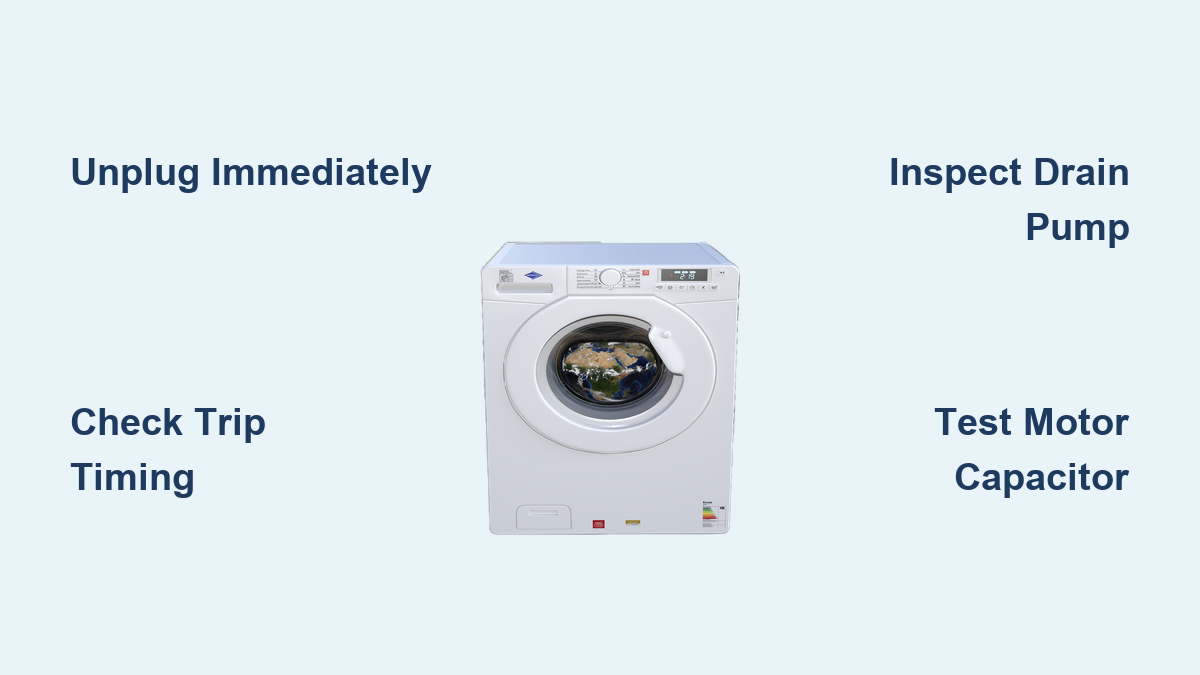
Washing Machine Tripping Breaker: Quick Fix Guide
Your washing machine trips the breaker every time you start it. You reset the switch once, twice, only for it to happen again during the spin cycle. This is not just annoying, it is a red flag signaling a potentially dangerous electrical fault, from a failing motor to water leaking into critical components. Ignoring it risks fire, appliance damage, or even electrocution. But before you call for a replacement, the cause can often be pinpointed and fixed, sometimes with simple checks you can do yourself. This guide breaks down exactly why your washer trips the breaker, how to identify the root cause by timing and symptoms, and what steps to take safely to resolve it.
Immediate Safety Actions for Tripping Breakers
If your washing machine repeatedly trips the circuit breaker, stop using it now. Continuing to reset the breaker and restart the machine increases the risk of fire, permanent electrical damage, or personal injury.
Unplug and Isolate the Appliance
Disconnect the washer from power at the outlet. This eliminates live voltage and prevents accidental restarts during inspection. Never work on or near electrical components while the machine is plugged in.
Never Repeatedly Reset the Breaker
Each time you reset a tripped breaker, you risk overheating wiring, degrading the breaker’s internal mechanism, or worsening an existing fault. If it trips more than once, assume a serious issue exists.
Check for Danger Signs
Look and listen for burning smells or plastic odors. Watch for visible sparks from the outlet or plug. Feel for discoloration or warmth at the outlet, plug, or breaker panel. Listen for buzzing sounds from the wall or electrical panel. If any of these are present, do not attempt further diagnosis. Turn off the main power and contact a licensed electrician immediately.
Determine When the Breaker Trips
The timing of the trip reveals the likely culprit. Note the exact phase when the breaker fails.
Trips at Startup
Breaker trips the moment you press Start? This suggests a short circuit, ground fault, or high inrush current. Common causes include shorted motor windings, failed start capacitor, control board short, or damaged power cord. This is often the most serious type of trip, indicating an immediate electrical fault.
Trips During Spin Cycle
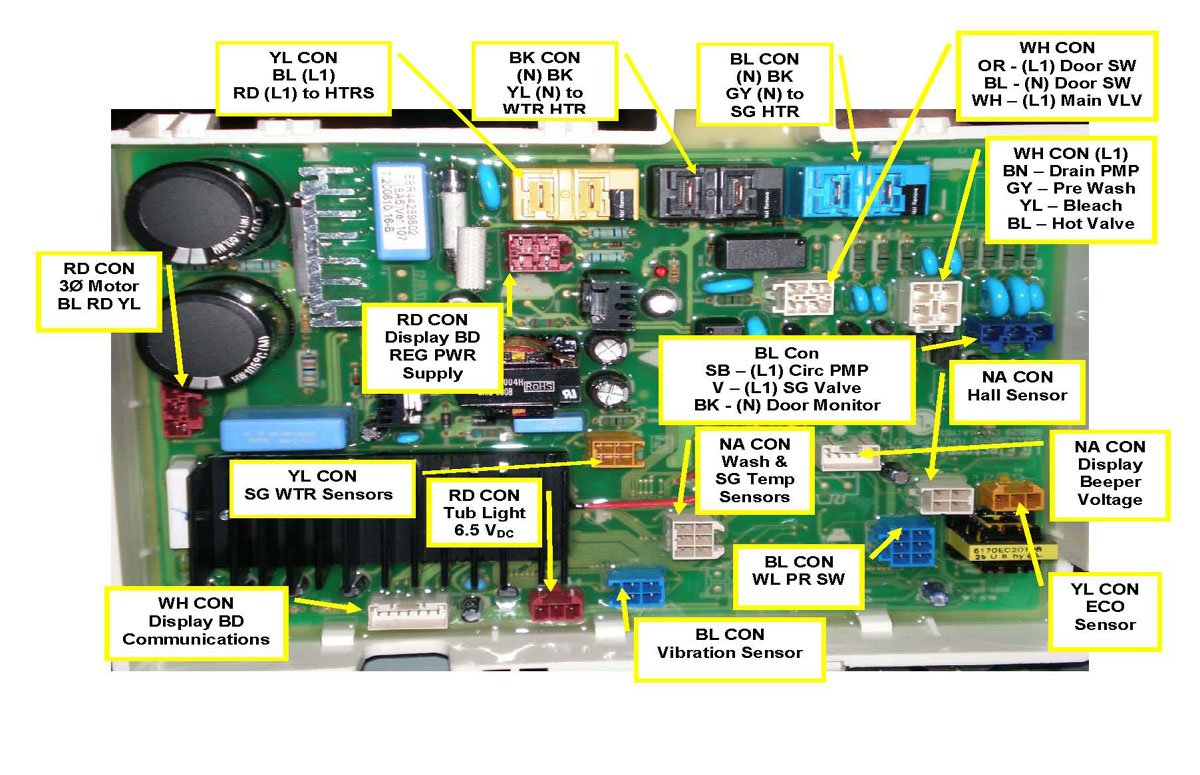
If the breaker trips only during high-speed spinning, the inverter board, motor, or mechanical load is likely at fault. The spin cycle demands peak power. Issues include inverter board failure common in GE models, worn motor bearings, unbalanced or overloaded drum, or weak circuit breaker unable to handle surge. GE front loaders like the GFW550SSN1WW often show error code 39, a confirmed sign of inverter board failure.
Trips During Drain Phase
Breaker trips when draining? The drain pump is the prime suspect. A clogged impeller or shorted motor forces excessive current draw. Remove the front access panel. Inspect the pump for foreign objects like socks or coins. Spin the impeller by hand. If it does not turn freely, clean or replace the pump.
Delayed or Intermittent Tripping
Breaker trips minutes into the cycle or only occasionally? This points to thermal buildup in motor or wiring, moisture intrusion causing intermittent shorts, or failing breaker that trips under sustained load. Intermittent faults are harder to diagnose but no less dangerous.
Rule Out Circuit and Outlet Issues
Before opening the washer, verify the electrical supply is stable.
Confirm Dedicated Circuit
Washing machines require a dedicated 120V, 20 amp circuit per NEC code. If it shares power with a dryer, microwave, or space heater, the combined load can trip the breaker, especially during motor startup. Check your breaker panel to see if the washer is on its own 20A breaker. Unplug other devices on the same circuit and test. Motor inrush current can be 2 to 3 times normal draw, up to 25 plus amps briefly. A shared 15A circuit may not handle this surge.
Test the Outlet
A loose or damaged outlet can overheat and trip the breaker. Inspect for discoloration, melting, or wobbling. Plug in another high draw device like a space heater. If it trips too, the outlet or circuit is faulty. Use a circuit tester to confirm proper grounding and wiring. Replace worn outlets with a commercial grade receptacle rated for frequent use.
Inspect Power Cord and Plug
Damage here can cause short circuits or ground faults.
Look for Visible Damage
Check the entire cord length for fraying or cuts, crushed sections, burn marks or melted insulation, and bent or corroded prongs. Even minor internal wire damage can intermittently short to ground.
Ensure Secure Connection
A loose plug in the outlet creates arcing and resistance, generating heat and tripping the breaker. The plug should fit snugly with no wobble. Never use an extension cord or power strip. They are not rated for continuous 15 to 20A loads and can overheat.
Drain Pump Failure
A jammed or electrically failed pump is a top cause of drain phase tripping.
Test the Pump
Unplug the washer. Remove the front lower panel. Locate the drain pump, usually bottom right. Spin the impeller. It should rotate freely. Check for debris like coins, hair, or fabric.
Electrical Test with Multimeter
Disconnect pump wires. Set multimeter to ohms. Measure resistance. 10 to 30 ohms is normal. Test for ground fault by placing one probe on terminal and one on chassis. Should read infinite, shown as OL. Any continuity means replace the pump.
Diagnose Motor and Start Capacitor
The motor draws high current. Any strain or fault increases load.
Listen for Humming
A humming sound without starting often means a failed start capacitor.
Test the Capacitor

Unplug washer. Discharge capacitor by shorting terminals with insulated screwdriver. Remove wires. Set multimeter to capacitance mode. Measure. Should match label plus or minus 10 percent. Typical range is 15 to 30 microfarads. A bulging, leaking, or out of spec capacitor must be replaced.
Check Motor Windings
Use multimeter to test for open circuit showing infinite resistance, or short to ground showing any continuity between terminal and chassis. Both indicate motor failure. Replace or rebuild the motor.
Test the Heating Element
A grounded heating element is a frequent cause of GFCI trips, especially during hot wash cycles.
Disconnect and Test
Unplug washer. Access heater, usually behind lower back panel. Disconnect both wires. Set multimeter to ohms.
Resistance Test
Measure across terminals. Should read 10 to 30 ohms. If infinite, OL, the element is open and needs replacement. If 0 ohms, it is shorted and needs replacement.
Ground Fault Test
Place one probe on terminal and one on metal chassis. Should read infinite, OL. Any continuity means the heater is grounded. Replace immediately.
Diagnose Control and Inverter Boards
Modern washers use boards to control motor speed and cycle logic. A failed board can send uncontrolled power, tripping the breaker.
Inverter Board Failure During Spin
Symptoms include trips only during spin, no spin or erratic speeds, and error codes like 39 on GE models. Inverter boards fail under high load. The spin cycle is the stress test.
Retrieve Error Codes on GE Models
Turn off power for 3 minutes. Restore power. Press and hold Start for 12 seconds. Watch display. 39 means inverter board failure. The part number is WH22X35837, available at RepairClinic, PartSelect, and PartsDr.
Replace the Board
Unplug washer. Remove top or rear panel. Label and disconnect harnesses. Unscrew old board. Install new one. Avoid static discharge. This is moderate difficulty and DIY friendly with video guides.
Evaluate Mechanical Load Issues
Even mechanical problems can trip the breaker by increasing motor strain.
Check Drum for Binding
Unplug washer. Open lid or door. Rotate drum by hand. It should turn smoothly with slight resistance. Grinding, scraping, or locking indicates worn bearings, foreign object, or failed suspension. A seized drum forces the motor to draw excess current.
Balance the Load
An unbalanced drum during spin creates violent vibrations and high current draw. Redistribute heavy items like towels and jeans. Never overload. Fill no more than three quarters full. Test with a small balanced load. If it runs, the issue is mechanical, not electrical.
Assess the Circuit Breaker Itself
Breakers wear out. A weak or failing breaker trips below its rated load.
Signs of Breaker Failure
The breaker trips under normal use. It feels loose when switched. It is warm to touch. It is older than 10 to 15 years for GFCI or 25 to 40 years for standard breakers.
Test with Another Appliance
Plug a known high draw device like a space heater into the same circuit. If it trips too, the breaker or circuit is faulty. If it does not, the problem is likely the washer. Replace breaker with same amperage and type. Hire a licensed electrician for panel work.
Prevent Future Breaker Trips
Avoid repeat issues with these best practices.
Use a Dedicated Circuit
Install a 20A, 120V dedicated circuit for the washer. This is required by NEC. No other outlets or devices on the same line.
Fix Leaks Immediately
Water and electricity do not mix. Repair door seals, hoses, pump filters, and tub gaskets. Prevent moisture from reaching motors, pumps, and boards.
Schedule Maintenance
Monthly, inspect cord, plug, and outlet. Annually, clean pump filter, check door gasket, and verify outlet tightness. Every 3 to 5 years, test GFCI outlet by pressing the Test button.
Avoid Overloading
Overfilled drums strain the motor. Stick to manufacturer load limits.
When to Call a Professional
Stop DIY if you see burn marks inside the washer, corrosion on control board, persistent tripping after basic fixes, or no error codes but repeated failure. Electrical repairs inside the machine or panel should be handled by a licensed technician.
Repair vs Replace Decision Guide
Consider these factors before investing in repairs. Repair is recommended if the washer is less than 7 years old, repair cost is less than 50 percent of new unit price, or the issue is a single component like a pump or board. Replace if the washer is over 10 years old, repair cost exceeds 50 percent of new price, or multiple parts are failing. Average washer lifespan is 10 to 13 years. Breaker lifespan is 25 to 40 years for standard and 10 to 15 years for GFCI.
Final Checklist for Washer Tripping Breaker
Stop using the machine. Unplug and isolate it. Note trip timing, whether startup, spin, or drain. Check for shared circuit. Inspect cord, plug, and outlet. Test with light load. Look for leaks or moisture. Retrieve error codes if applicable. Call a professional if the issue persists.
Frequently Asked Questions About Washing Machine Breaker Tripping
Why does my washer trip the breaker only during the spin cycle?
The spin cycle demands the highest motor load. If the breaker trips only during spin, possible causes include worn motor bearings or seized drum, failing motor windings, weak circuit breaker unable to handle inrush current, unbalanced load increasing mechanical resistance, or inverter board failure common in GE models.
Can a bad outlet cause the washing machine to trip the breaker?
Yes. A loose, corroded, or heat damaged outlet can create high resistance, arcing, and overheating, causing the breaker to trip even under normal load. Replace damaged outlets promptly.
Is it safe to keep resetting the breaker and using the washer?
No. Repeated tripping indicates a serious electrical issue. Continuing to reset and use the machine risks fire, component damage, or personal injury. Stop use and call a professional.
Can a leaking washer cause breaker trips?
Yes. Water leaks can introduce moisture into electrical components like the motor, pump, or control board, leading to short circuits or ground faults. Address leaks immediately.
Can an overloaded circuit cause washer breaker trips?
Absolutely. If the washer shares a circuit with other high draw appliances, the combined load, especially during motor startup, can exceed the breaker capacity. Use a dedicated circuit.
Does humidity cause washing machine breaker trips?
Humidity alone is unlikely to trip a breaker, but in combination with poor ventilation or condensation, it can contribute to moisture buildup on electrical parts. In damp environments like basements, ensure proper sealing and ventilation.
Key Takeaways for Fixing Your Tripping Washer
A tripping breaker is a safety feature, not a nuisance. It is telling you something is wrong. Address it early, fix the root cause, and restore safe, reliable laundry operation. The most common causes are overloaded circuits, failing pumps, grounded heating elements, and inverter board failures. Timing matters. Trips at startup indicate short circuits, while spin cycle trips point to motor or inverter issues. Always prioritize safety by unplugging the machine before inspection, and call a licensed electrician for panel work or internal repairs beyond basic troubleshooting.