
Washing Machine Won’t Start: Quick Fix Guide
You press the start button, but nothing happens. No lights, no spin, no sound. Your washing machine won’t start, and you’re facing a pile of dirty laundry with no solution in sight. This is one of the most common appliance problems homeowners encounter, and the frustrating part is that the cause isn’t always obvious.
The good news is that most washing machines won’t start due to a handful of recognizable issues. By following a systematic diagnostic approach, you can identify the problem and often fix it yourself without waiting for a repair technician. This guide walks you through the exact troubleshooting steps professionals use, from checking the simplest causes like power supply and door locks to diagnosing more complex issues like motor capacitors and control boards.
Check Power Supply First
Before assuming your washing machine won’t start due to a mechanical failure, verify that power is actually reaching the machine. Many “no start” problems turn out to be simple electrical issues that take minutes to resolve.
Test the Outlet and Circuit Breaker
Start by plugging a working device like a lamp or phone charger into the same outlet your washing machine uses. If the device doesn’t power on, the issue is your electrical supply, not the washer. Head to your home’s circuit breaker panel and look for a tripped switch. If you find one in the middle position, flip it fully off and then back on to reset it.
Many washing machines require a dedicated 120V circuit. If the breaker trips repeatedly after resetting, there may be a short somewhere in the machine’s wiring. Also inspect the power cord visually for any fraying, burns, or bent prongs that could interrupt power flow.
Check for GFCI Trips
Some homes use GFCI outlets in laundry areas, and these can trip due to moisture exposure. Look for a GFCI outlet near your washer or in the laundry room. If you find one, press the “Reset” button to restore power. This simple step resolves more “washing machine won’t start” calls than you might expect.
Diagnose Door Lock Failure
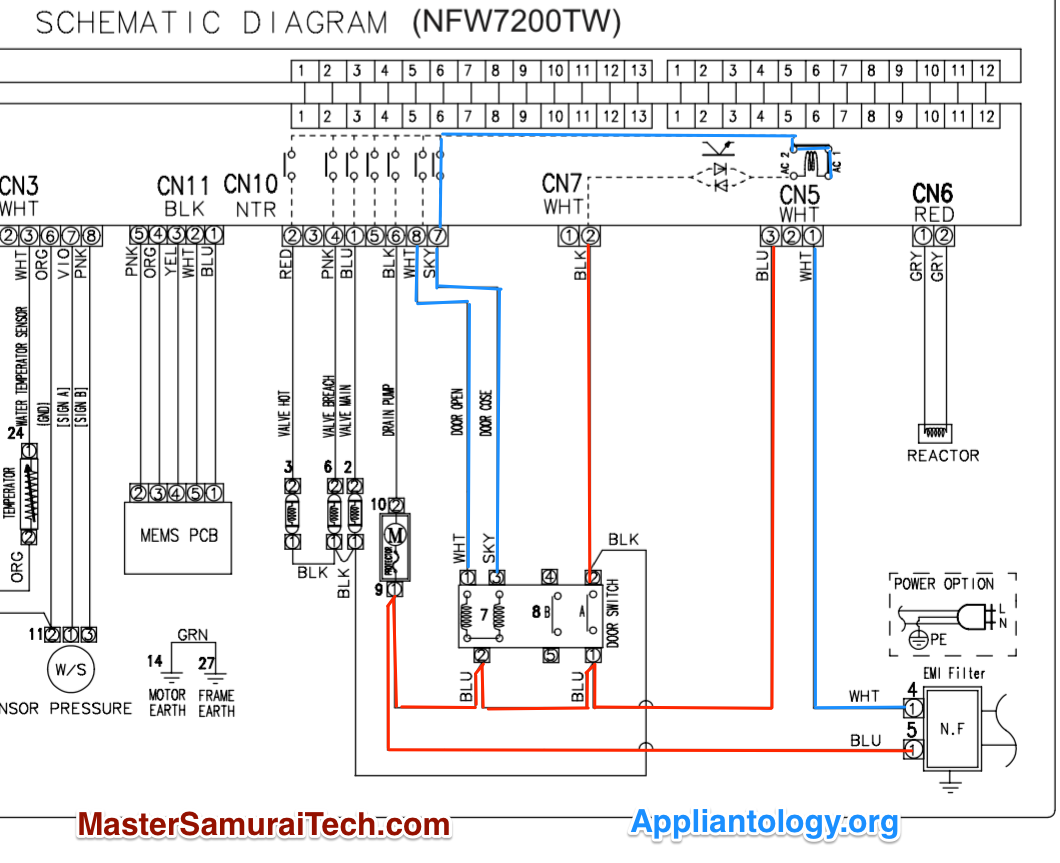
A faulty door lock is one of the most common reasons a washing machine won’t start, especially in front-load models. Modern machines won’t begin any cycle unless they confirm the door is securely locked.
Listen for the Lock Click
Close the door firmly and press start. Most machines make an audible click as the lock engages. If you hear nothing, the lock mechanism may be broken. Even if display lights illuminate, the control board won’t start the cycle without confirmation that the door is secure.
Test the Door Switch with a Multimeter
Unplug the machine and locate the door lock assembly, typically near the door frame. Remove the door gasket or control panel to access it. Disconnect the wiring harness and set a multimeter to continuity mode. Touch the probes to the switch terminals while the door is closed. No continuity means the switch is dead and needs replacement.
Never bypass the door lock as a shortcut. This is a critical safety feature that prevents the drum from spinning while the door is open.
Inspect the Drain Pump Filter
A clogged drain pump can stop your washing machine won’t start before the cycle even begins. Most machines run a pre-cycle drain check. If water can’t exit, the system halts as a protective measure.
Clean the Pump Filter Monthly
Place towels and a shallow pan under the front lower access panel, usually located at the bottom right. Open the panel and slowly unscrew the filter cap, allowing water to drain. Pull out the filter and remove all debris such as coins, hair, socks, or small items. Rinse thoroughly and wipe the housing clean before reinstalling securely. Performing this every three months prevents most drain-related startup failures.
Check the Drain Hose for Kinks
Inspect the drain hose for any bends, crushing, or improper insertion into the standpipe. A kink blocks drainage and triggers safety lockouts. Also ensure the hose has a high loop rising above the drum before connecting to the drain. This prevents siphoning and backflow that can confuse the machine’s sensors.
Verify Water Supply and Fill System
Your washing machine won’t start if it can’t confirm water is entering the drum properly. This system has several components that can fail.
Confirm Water Valves Are Open
Check both hot and cold shut-off valves behind the machine. Turn them fully counterclockwise to ensure they’re completely open. Even a partially closed valve can reduce water pressure below what the machine requires to start.
Clean Inlet Valve Screens
Mineral buildup can clog the tiny filters inside water inlet hoses. Shut off the water supply and disconnect the hoses from the back of the washer. Use pliers to remove the small mesh screens and soak them in vinegar for ten minutes. Scrub with a toothbrush and reinstall. This quick task takes under ten minutes and prevents fill-related startup failures.
Test the Pressure Switch
The pressure switch tells the control board when the drum is full. If the air tube is cracked or disconnected, the board thinks the tub is empty and won’t start. Locate the tube running from the tub to the switch, usually on the top or side. Remove it and blow through to check for blockages, then reattach securely. A faulty pressure switch typically costs under $30 to replace.
Diagnose Motor and Capacitor Issues
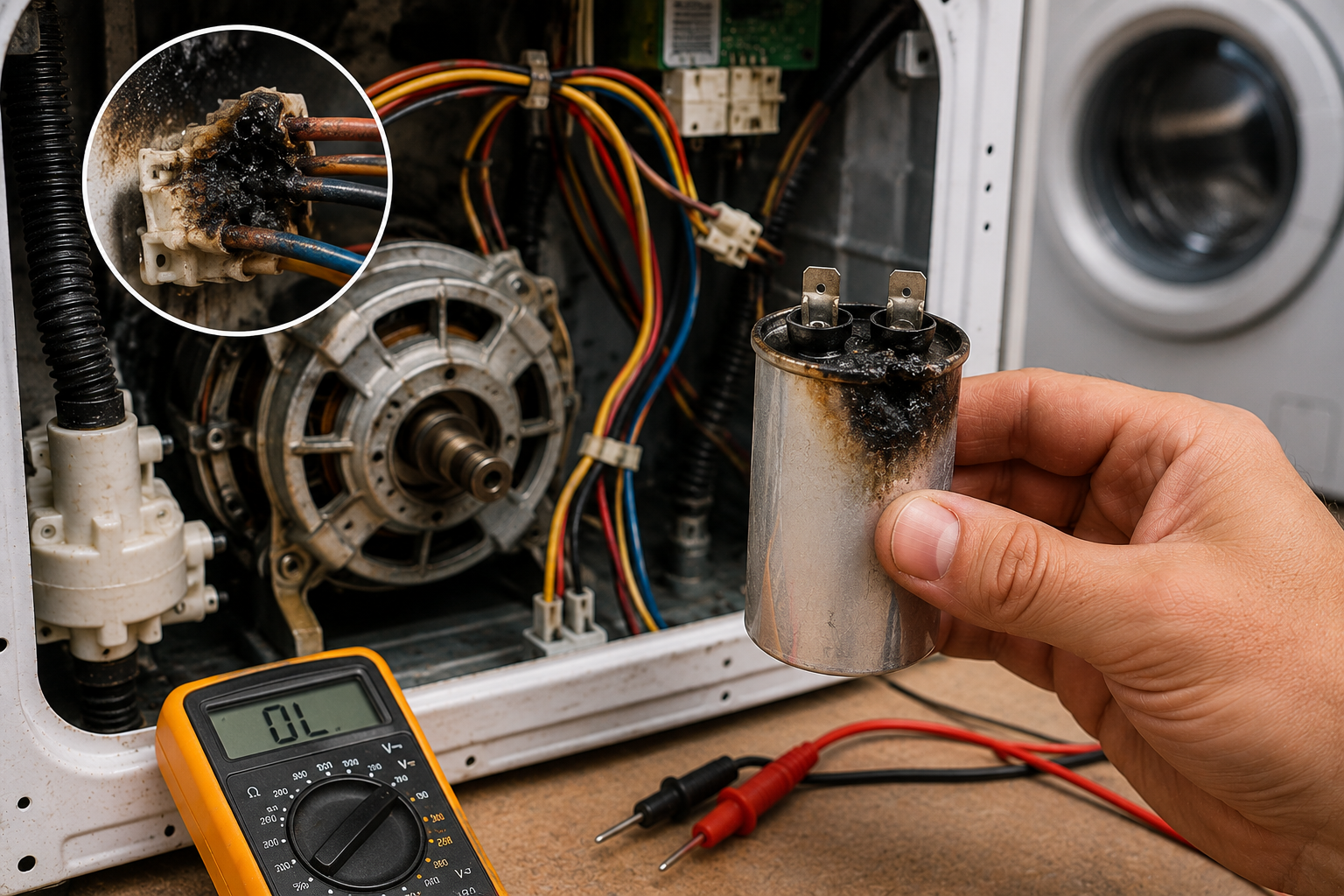
If your washing machine won’t start but makes a humming noise, the motor may be trying to run but failing to engage. This often points to a failed start capacitor.
Test the Capacitor with a Meter
The capacitor gives the motor a power boost at startup. If it’s swollen, leaking, or out of spec, the motor stalls. Unplug the washer and discharge the capacitor by touching both terminals with an insulated screwdriver. Set a multimeter to microfarads mode and touch the probes to the terminals. Compare the reading to the value printed on the capacitor. If it’s off by more than ten percent, replace it.
Some modern washers use inverter-driven direct-drive motors that lack belts and pulleys but are much harder to repair. Error codes like “ND” or “UE” may point to motor or inverter failure requiring professional service.
Rule Out Control Board Failure
The control board is the brain of your washing machine, but don’t replace it first. It’s often misdiagnosed, and board failures are actually rare compared to mechanical issues.
Confirm Power Reaches the Board
Unplug the machine and remove the rear or top panel to access the main PCB. Plug the washer back in and use a multimeter to test for 120V at the board’s input terminals. No voltage means the issue is upstream, likely a broken wire or faulty door lock. If voltage is present but there’s no response, the board may be dead.
Run Built-In Diagnostic Mode
Most modern washers have self-test functions that display error codes. Common entry sequences include pressing “Rinse” and “Spin” five times on Whirlpool models, holding “Signal” and “Temp” for three seconds on LG, or holding “Delay Start” and “Power” for five seconds on Samsung. Common startup-related codes include F1 or E1 for control board faults, LF for long fill issues, ND for no drain, and CL for active child lock.
Only replace the control board after all other components have been tested and confirmed functional.
Reset the Washer After Failed Attempts
Repeated failed start attempts can cause your washing machine won’t start due to entering lockout mode. This is more common than you might think.
Perform a Hard Reset
Unplug the washing machine or turn off the breaker. Wait five to ten minutes. Plug it back in and try starting a new cycle. This clears temporary faults and resets sensors. Many users report this simple step resolving issues that seemed serious. One Samsung owner found their machine wouldn’t start for days until they unplugged it overnight, and it worked perfectly the next morning.
Avoid Common Repair Mistakes
Even experienced DIYers make errors that prolong the troubleshooting process. Avoid these common pitfalls.
Don’t Skip the Tech Sheet
Every washer has a model-specific service manual tucked behind the rear panel or inside the top console. This document contains wiring diagrams, error code definitions, diagnostic test modes, and component test points. Using this resource dramatically improves your diagnostic accuracy.
Don’t Assume It’s the Board
Control boards are expensive and rarely the root cause. Test mechanical parts first, including the door lock, pump, motor, and valves. This approach saves both time and money.
Don’t Overlook the Obvious
Before disassembling anything, check simple things first. Is the Child Lock on, indicated by a “CL” light or symbol? Is Delay Start enabled? Is the machine overloaded with too much laundry? These settings can prevent startup even when everything else works perfectly.
Prevent Future Startup Failures
Regular maintenance prevents most washing machine won’t start issues from occurring in the first place.
Monthly and Quarterly Tasks
Run a washer cleaner cycle monthly using products like Affresh or Tide Washing Machine Cleaner. This removes soap scum and mildew that can clog pumps and confuse sensors. Set a phone reminder to clean the pump filter every three months. This single task prevents approximately ninety percent of drain-related lockouts.
Annual Inspections
Replace rubber water hoses every five years. Check for bulges, cracks, or leaks. Consider upgrading to braided stainless steel hoses for better durability and peace of mind.
When to Call a Professional
Some repairs require expert help rather than DIY attempts.
Seek Professional Help If
The inverter or direct-drive motor needs replacement. You see burn marks on the control board. Soldering or wiring repair is required. You’ve tested all components and still can’t find the fault. Most appliance repair services offer flat-rate pricing, with labor typically costing $150 to $300.
Key Takeaways for Fixing a Washing Machine That Won’t Start

A washing machine that won’t start is usually fixable with basic tools and a methodical approach. Follow this priority order when troubleshooting. First, check the power supply including the outlet, breaker, and cord. Second, inspect the door lock by listening for clicks and testing with a multimeter. Third, verify the drain system by cleaning the filter and checking the hose. Fourth, examine the water supply by opening valves and cleaning filters. Fifth, test the motor and capacitor by listening for humming and using a meter. Sixth, assess the control board by testing voltage and running diagnostics, replacing it only if all other components test good.
Remember that most washing machine won’t start issues aren’t electronic. They’re clogs, switches, or simple power problems that you can resolve yourself. With this guide, you have the same diagnostic process that professionals use. Now go fix that washer and get your laundry moving again.
Frequently Asked Questions About Washing Machine Won’t Start Issues
Why does my washing machine won’t start but has power?
If lights or display elements illuminate but the machine won’t start, the issue is likely the door lock, drain pump, or control board. Check if the door is fully closed and listen for a locking click. Clean the drain pump filter and verify water supply valves are open. Run diagnostic mode to check for error codes.
Can a tripped circuit breaker cause this problem?
Yes. A tripped or partially tripped circuit breaker is one of the most common causes. Check your home’s electrical panel for any breakers in the middle position. Flip them fully off and back on to reset. If the breaker trips again immediately, there may be a wiring issue in the machine.
How do I know if the door lock is faulty?
Listen for an audible click when closing the door and pressing start. No click suggests the lock isn’t engaging. Use a multimeter to test for continuity across the door lock switch contacts. No continuity means the lock needs replacement.
Does a washing machine won’t start always mean expensive repairs?
No. Most causes are simple fixes like a tripped GFCI outlet, closed water valve, or clogged pump filter. These take minutes to address and cost nothing or very little. Only a small percentage of cases require expensive component replacement.
Should I replace the control board myself?
Only if you’ve verified all other components are working correctly. Control boards are expensive and often misdiagnosed. Test the door lock, drain pump, motor, capacitor, and water valves first. Replace the board only after eliminating all other possibilities.
How often should I clean my washer to prevent startup issues?
Clean the pump filter every three months. Run a cleaning cycle monthly with washer-safe cleaner. Inspect and clean inlet valve screens annually. This maintenance prevents the majority of startup-related problems.