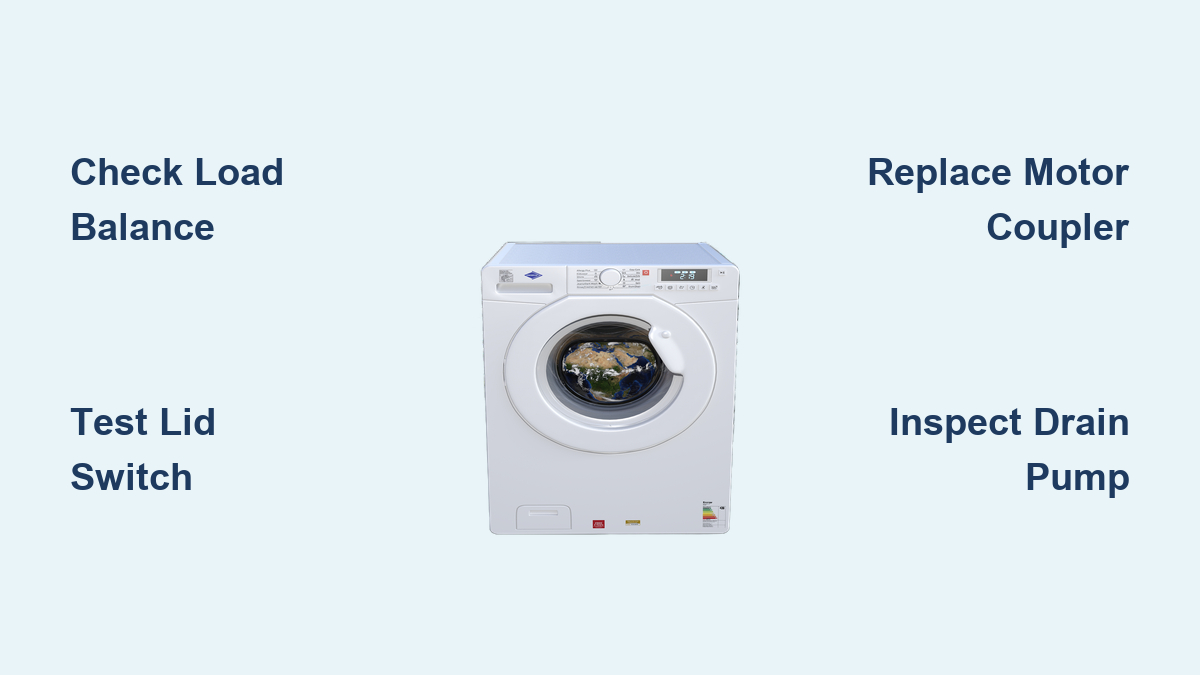
Washing Machine Not Spinning But Making Noise? Fix It Fast
You load the laundry, press start, and everything seems normal until the spin cycle begins. Instead of the usual humming sound, your washing machine makes a loud buzzing, grinding, or rattling noise, yet the drum refuses to spin. Water may drain and agitation might work fine, but when it comes time to wring out your clothes, nothing happens. This frustrating scenario affects both top-loading and front-loading models, and while it seems alarming, the solution is often simpler than you think.
This guide walks you through diagnosing and fixing a washing machine that makes noise but doesn’t spin. You’ll learn the most common causes, step-by-step repair procedures, and when it’s time to call a professional or replace the machine entirely.
Why Your Washer Makes Noise But Won’t Spin
The combination of noise without spinning typically points to a mechanical failure in the drive system. Your machine can fill with water, run the motor, and even agitate clothes, but something is preventing torque from reaching the drum. The noise you hear is the motor working against a broken component rather than spinning the tub.
Understanding which part has failed helps you determine whether this is a DIY repair or a job for a technician. Most spin failures stem from a handful of components that wear out over time.
Check Load Balance First
An unbalanced load tricks your washer into thinking spinning could cause damage. Modern machines have sensors that detect excessive vibration and will reduce speed or halt spinning entirely to protect the appliance.
Open the lid and redistribute clothing evenly around the drum. Heavier items should be paired with lighter garments rather than washed alone. Restart the spin cycle and see if the machine now spins properly. If redistributing the load solves the problem, your washer is functioning normally and the issue was simply load distribution.
Test the Lid Switch Function
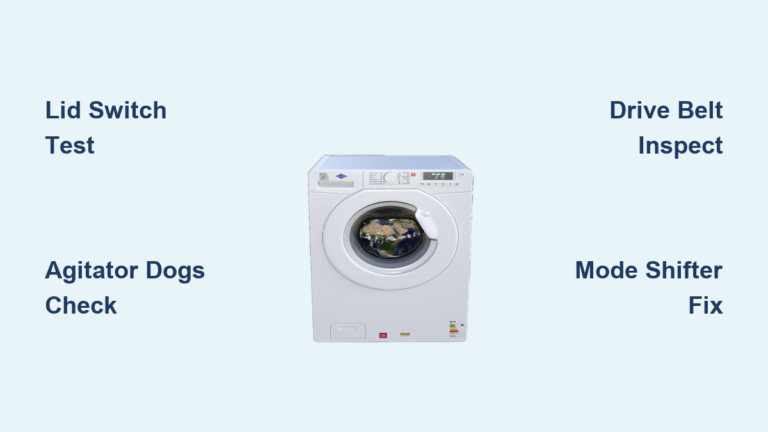
The lid switch prevents spinning when the lid is open. If this safety mechanism fails, your washing machine not spinning but making noise becomes the result because the control board thinks the lid is still open even when closed.
To test the lid switch, start a spin cycle and use a flathead screwdriver to press the switch plunger located near the lid opening. Listen carefully. If the tub tries to spin while you press the switch, the lid switch is faulty and needs replacement.
Replacing the lid switch is a straightforward repair. Remove the two screws on each side of the console, lift the console panel up and over the washer, and pry out the retaining brackets with a flathead screwdriver. Disconnect the wiring harness, remove the old switch, and install the new one. This repair takes approximately 20 minutes and costs between $10 and $25.
Diagnose OE Error on LG Washers
If you own an LG washer displaying the OE error code, this does not mean your drain is clogged. The OE code combined with noise indicates the drain pump impeller has shattered off the motor shaft. This is a mechanical failure, not a blockage issue.
Run a drain-only cycle and listen closely. If you hear grinding or buzzing and water doesn’t drain completely, the pump is mechanically broken. Even with a clean filter, the OE error with noise means the pump requires replacement.
Replace the Drain Pump
For LG models and some Samsung washers, a broken pump stops the spin cycle and creates loud grinding noises. This repair requires some disassembly but can be done as a DIY project.
First, drain remaining water by pulling the washer forward, placing a pan underneath, and opening the drain hose at the bottom front. Remove the front lower panel by unscrewing the bottom screws. Tip the washer backward using wood blocks for stability, then locate the pump near the bottom rear.
Remove the three mounting screws. Two are visible from below, while one is hidden behind a metal shield. You may need to drill a small hole to access this hidden screw. Disconnect the wiring connector, then transfer the plastic shroud from the old pump to the new unit. Secure everything with screws, reconnect the wires, and reassemble the panel.
Run the washer on an extra high spin setting to confirm the noise is gone and water drains completely. This repair costs $40 to $80 and takes 60 to 90 minutes.
Inspect the Motor Coupler

The motor coupler is the most common cause of washing machine not spinning but making noise in Whirlpool, Kenmore, Maytag, and Amana models. This small component connects the motor shaft to the transmission and acts as a shock absorber.
When the coupler fails, the motor runs but the tub doesn’t turn. You may hear a clicking or buzzing noise during spin attempts. Agitation might still work if driven separately, but the spin function stops completely.
To diagnose the coupler, unplug the washer and remove the console and brackets to access the motor area. Look at the coupler for cracks, deformation, or missing pieces. A disintegrated coupler looks like black rubber chunks near the motor.
Replace the Motor Coupler
Replacing the motor coupler is a fast, inexpensive fix with a success rate exceeding 90%. This is often the first component to check when your washing machine makes noise but won’t spin.
Remove the old coupler by pulling apart the rubber gasket and plastic clips. Clean the shaft ends thoroughly. Install a new metal-sleeved coupler by sliding one half onto the motor shaft and the other onto the transmission shaft. Tap both halves flush using a hammer and a small plastic sleeve to protect the shaft from damage.
Realign the motor so it sits flat, then reattach the mounting brackets. Reconnect all harnesses and run a spin cycle to test. The part costs approximately $15 and the repair takes about 30 minutes.
Examine the Drive Belt
Some models use a belt to connect the motor to the drum pulley. A worn or broken belt prevents spinning and causes squealing, screeching, or slapping sounds.
Inspect the belt by tilting the washer backward and looking underneath. Check for cracks, fraying, glazing (a shiny surface), or separation. Also verify proper tension. The belt should deflect about half an inch when pressed down.
Replace the drive belt by removing it from the motor and pulley, then routing the new belt correctly. Ensure proper tension during installation. This repair applies to GE, Hotpoint, and some front-loading models. The cost ranges from $15 to $30 and takes 30 to 45 minutes.
Tighten the Drive Pulley Bolt
On specific Whirlpool models like the MVWC565FW0, a loose central bolt on the drive pulley causes noise and prevents spinning. This is an easy fix to check before moving to more complex repairs.
Tilt the washer backward and locate the large pulley connected to the transmission. Check the center bolt with a wrench. If it’s loose, tighten it securely. Run the spin cycle to see if this resolves the problem.
Inspect the Splutch Assembly
The splutch, or special clutch, engages spin mode in Whirlpool direct-drive top-loaders. When this component fails, you may hear grinding noise during spin attempts and the transmission doesn’t shift into spin mode.
After removing the pulley, inspect the splutch above the transmission. Look for worn teeth, cracks, or a loose fit on the shaft. If the splutch shows visible damage, it needs replacement. If the splutch is intact, the issue may be internal transmission failure.
Replacing the splutch costs $50 to $100 and takes one to two hours. You may need a socket set and pry bar for this repair.
When Transmission Replacement Is Necessary

If you’ve checked the motor coupler, belt, pulley, and splutch and all appear intact, the transmission itself may be internally damaged. This is the least common but most expensive cause of a washing machine not spinning but making noise.
Signs of transmission failure include loud grinding from the base of the machine with no agitation or spin despite the motor running. Transmission replacement costs $150 to $300 for parts plus $400 to $600 in labor, totaling 2 to 3 hours of work.
For machines over 8 years old, replacing the entire washer is often more cost-effective than transmission repair. Consider a new unit if repair costs exceed half the price of a new model.
Diagnostic Flow: What to Check First
Following the right order saves time and prevents unnecessary disassembly. Start with simple fixes before moving to complex repairs.
First, verify load balance by redistributing clothes and restarting. Second, test the lid switch by bypassing it with a screwdriver. Third, if you have an LG model with OE error, replace the pump. Fourth, inspect the motor coupler, which is the most common failure point. Fifth, check the drive belt for wear. Sixth, tighten the pulley bolt on applicable models. Finally, inspect the splutch and transmission only if all previous steps yield no results.
Prevent Future Spin Failures
Regular maintenance prevents the frustration of a washing machine not spinning but making noise. Balance every load by mixing heavy and light items, and avoid overloading the machine.
Clean the pump filter monthly, especially on front-loading models. Use HE detergent to reduce suds that stress the pump and motor. Inspect the coupler annually during routine cleaning. Replace worn parts early rather than waiting for complete failure.
Key Takeaways for Fixing Your Noisy Washer
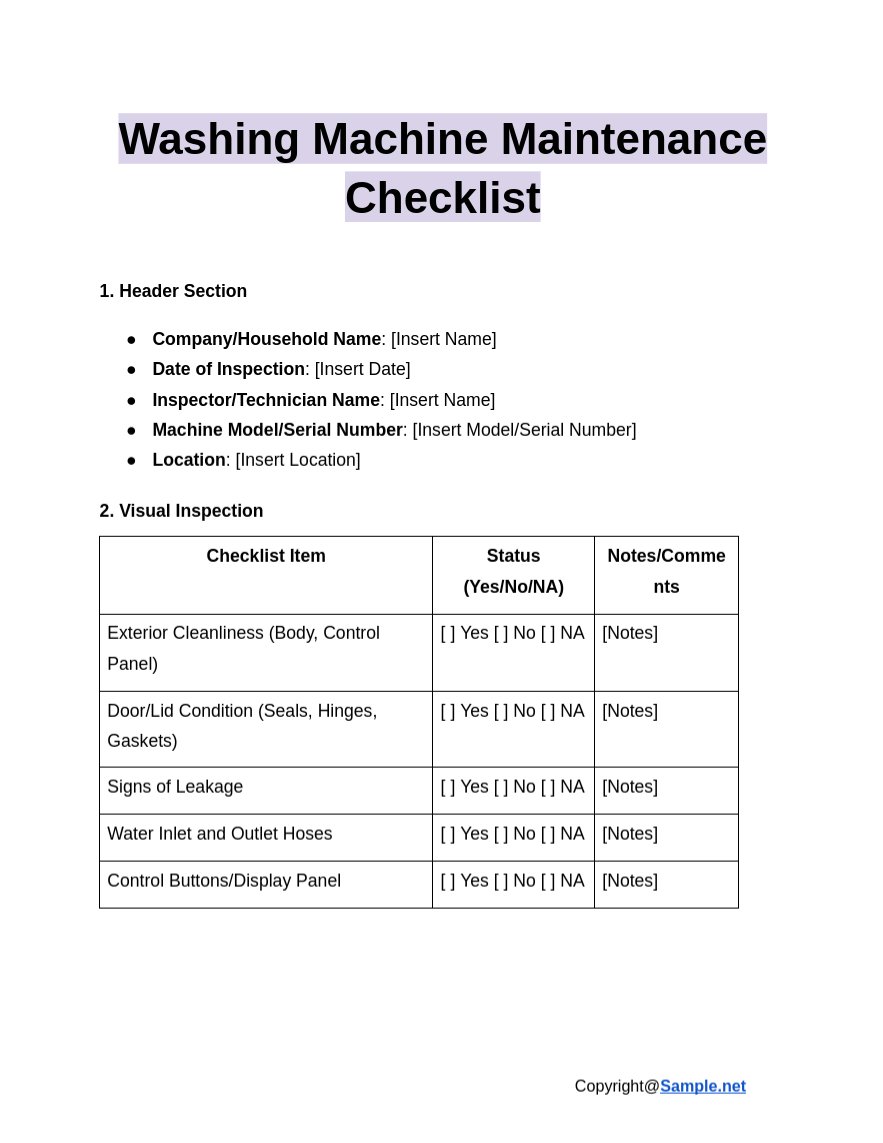
A washing machine that makes noise but doesn’t spin is usually fixable. Start with the lid switch and motor coupler, which are the quickest and cheapest solutions. For LG users, the OE error code means replace the pump, not clean the filter. The motor coupler accounts for over 90% of cases where the motor runs but the tub doesn’t turn.
Call a professional if transmission replacement is needed, if you suspect electrical faults like motor burnout, or if you’re uncomfortable disassembling internal components. Consider replacing the washer if it’s over 8 to 10 years old, multiple components are failing, or repair costs exceed half the price of a new model.
Frequently Asked Questions About Washing Machine Not Spinning But Making Noise
Why does my washing machine make a buzzing sound but won’t spin?
A buzzing sound typically indicates the motor is running but can’t transfer power to the drum. This usually points to a failed motor coupler or a faulty lid switch. The motor is working, but a broken component is preventing rotation.
Can I use my washer if it won’t spin but makes noise?
It’s not recommended. Continuing to run the machine with a broken component can cause further damage. The noise indicates mechanical failure that should be diagnosed before the next load.
How much does it cost to fix a washing machine that won’t spin?
Costs vary by issue. A lid switch costs $10 to $25. A motor coupler runs $15. A drain pump costs $40 to $80. Transmission replacement can cost $400 to $600. Compare repair costs to the price of a new machine.
Is it worth repairing a 10-year-old washing machine?
Generally no. If your washer is over 8 to 10 years old and needs major repairs like transmission replacement, purchasing a new model is more cost-effective. New machines are more energy-efficient and come with warranties.
Does OE error mean my LG washer drain is clogged?
No. Despite common misconception, the OE error on LG washers indicates a mechanically broken pump impeller, not a clog. Even with a clean filter, this error requires pump replacement.