Types of Washing Machines Explained
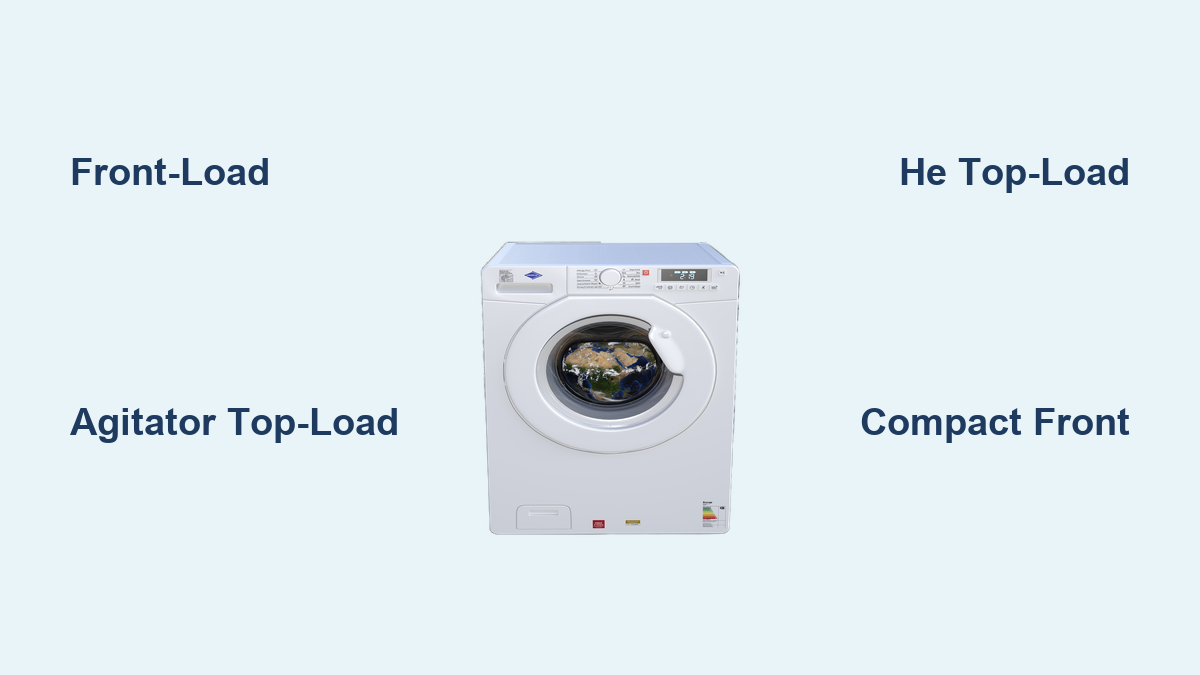
Shopping for a new washing machine can feel overwhelming with so many options available. From front-load washers with superior cleaning performance to top-load agitator models that prioritize budget and simplicity, each of the different types of washing machine serves distinct needs. Understanding how each type works, their efficiency ratings, and who they benefit most will help you make an informed choice. In this guide, you’ll discover the five main washer categories, compare their performance, and learn exactly which type fits your home, budget, and lifestyle.
Front-Load Washers: Superior Cleaning Performance
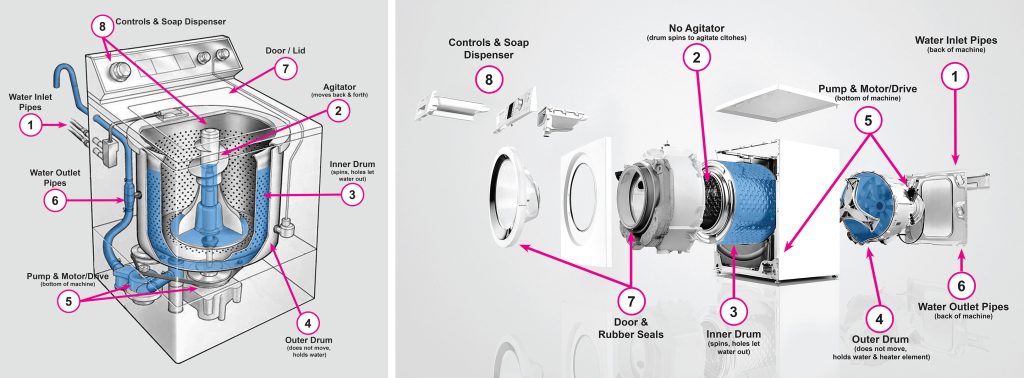
Front-load washers dominate the high-efficiency market for good reason. They deliver exceptional cleaning while using significantly less water and energy than other options.
How Front-Loaders Achieve Better Cleaning
These machines use a horizontally mounted drum that rotates, lifting clothes and dropping them into a small pool of water at the bottom. This tumbling action creates friction between garments without harsh scrubbing, making it highly effective at removing stains and odors. Because they only fill to about one-third of the drum, they use 40% less water than traditional agitator models. Most spin at 1,200 to 1,400 RPM, extracting more moisture and reducing drying time significantly.
Front-Loader Pros and Cons
Front-loaders offer the best cleaning performance across all types and are Energy Star certified for energy efficiency. They feature larger capacities up to 5.8 cubic feet, handling king-size comforters with ease, and their stackable design saves valuable floor space. However, they require bending to load and unload, carry higher upfront costs ranging from $730 to $2,200, and present mold and mildew risks around the rubber door seal if not properly maintained. Cycle times run longer at 65 to 120 minutes, and overloading reduces effectiveness.
Who Should Choose a Front-Loader
These washers ideal for large families with heavy laundry loads, eco-conscious users seeking lower water and energy consumption, apartment dwellers using stackable units, and anyone prioritizing long-term savings and fabric care. Leave the door open after each use to prevent musty odors, and run a monthly cleaning cycle with bleach or manufacturer-approved cleaner.
Top-Load Agitator Washers: Budget-Friendly Simplicity
These classic washers remain popular for their straightforward operation and affordable price tags.
The Agitator Mechanism Explained
A central spinning agitator twists back and forth, forcing clothes through water similar to hand-washing on a washboard. This mechanical scrubbing action handles lightly soiled laundry effectively but can be tough on fabrics over time. Cycles complete quickly, often in as little as 35 minutes, and top-loading eliminates the need for bending.
Trade-Offs in Efficiency and Fabric Care
The lowest initial investment ($450 to $1,500) makes agitator washers accessible, with fast cycles and easy operation. However, they use 25 to 40 gallons per load, the highest water consumption among all types. The aggressive agitation roughs on clothes, shortening garment lifespan, and they’re noisier with more vibration. Most lack Energy Star certification and cannot be stacked.
Long-Term Costs to Consider
While cheap to purchase, these models cost more over time through higher water and electricity bills, increased detergent consumption, and more frequent clothing replacement due to wear. Choose this type if you’re on a tight budget, have lightly soiled laundry, value speed and simplicity, or live in an area with soft water.
High-Efficiency Top-Load Washers: The Impeller Alternative

These modern machines ditch the agitator for a smarter design that balances performance and convenience.
Impeller vs. Agitator: Understanding the Difference
Instead of a central post, a low-profile cone or disc at the drum base creates a swirling water current. Clothes move in a donut-shaped flow, rubbing against each other gently while using only 20 to 25 gallons per cycle. This approach cleans better than agitators with less fabric damage.
Features and Common Mistakes
HE top-loaders offer water and energy efficiency with gentler fabric care than agitator models. They provide top-loading convenience without bending and cycle faster than front-loaders at 35 to 105 minutes. However, they struggle with heavy stains and bulky items, and performance drops significantly if overloaded. Many users make the mistake of packing these machines to the brim, which defeats the design principle requiring a central void for water circulation.
Best Suited Households
These models work well for households wanting efficiency without switching to front-load, users who prefer top access, and medium-sized families with mixed laundry needs. Use HE detergent only and leave space in the center for optimal results.
Compact Front-Load Washers: Big Performance in Small Spaces
When square footage is limited, these space-saving machines deliver full-featured cleaning in a smaller footprint.
Space-Saving Design Features
Measuring just 24 inches wide compared to 27 inches for standard models, compact front-loaders fit in closets, under counters, or in RVs. Despite their size, they retain core front-loader advantages including high cleaning performance, water and energy efficiency, gentle fabric care, and stackability with compatible dryers. Capacity ranges from 1.9 to 2.8 cubic feet, suitable for one to two people.
Limitations and Ideal Users
These machines work best for singles or couples, urban apartments with no dedicated laundry room, secondary laundry setups like guest houses, and RVs or tiny homes. They cannot handle large family loads, and long cycle times (45 to 125 minutes) remain despite smaller capacities. The cost per cubic foot is significantly higher at $880 to $2,900.
All-in-One Washer-Dryers: Single-Unit Convenience
One machine handles both washing and drying without requiring a separate dryer or external vent.
How Condenser Drying Works
These units use condenser drying technology, either electric or heat pump, to evaporate moisture and condense it into water that drains away. No external vent is required, only a power outlet, water supply, and drain. This makes them perfect for rentals, condos, or small spaces where installing a dryer vent isn’t possible.
Advantages and Significant Drawbacks
All-in-ones save space with no separate dryer needed and can be installed almost anywhere without gas line requirements. However, total cycles can exceed three hours for wash and dry combined, and they effectively dry only half the wash load. Higher risks of wrinkling, prices from $1,400 to $3,000, and increased energy use during drying (unless heat pump equipped) are major considerations. These work best as secondary units or occasional-use machines.
Performance Comparison: How They Stack Up

| Feature | Front-Load | Agitator Top-Load | HE Top-Load | Compact Front | All-in-One |
|---|---|---|---|---|---|
| Cleaning Power | Excellent | Good | Fair to Good | Good | Moderate |
| Water Use | Lowest | Highest | Medium | Lowest | Medium |
| Energy Efficiency | Best | Poor | Good | Best | Varies |
| Fabric Care | Best | Worst | Moderate | Best | Moderate |
| Cycle Speed | Slow | Fast | Medium | Slow | Very Slow |
| Capacity | Up to 5.8 cu ft | Up to 5.4 cu ft | Up to 5.5 cu ft | Up to 2.8 cu ft | Up to 5.3 cu ft |
| Upfront Cost | High | Low | Medium | High | Highest |
| Operating Cost | Lowest | Highest | Medium | Low | Medium-High |
Choosing the Right Size: Capacity Guidelines
Matching capacity to household size prevents wasted energy and ensures effective cleaning. For one to two people, 1.9 to 2.8 cubic feet handles daily loads efficiently. Average families need 3.0 to 4.4 cubic feet, which accommodates queen bedding and mixed loads. Large families requiring king comforters should look for 4.5 cubic feet or larger. Front-loaders offer the largest capacities, followed closely by HE top-loaders.
Measuring Your Space Before Buying
Standard washers measure 27 inches wide while compact models are 24 inches. Front-loaders are deeper, so check clearance carefully. Top-loaders tend to be taller, so consider ceiling or cabinet clearance. Allow six inches behind the unit for hoses and drainage. For stacking, ensure 50 to 54 inches of vertical space including hardware.
Smart Features Worth the Investment
WiFi connectivity enables remote start and stop via smartphone, cycle completion alerts, maintenance reminders like clean filter notifications, and real-time energy tracking. Extra rinse cycles remove detergent residue ideal for sensitive skin, baby clothes, and pet bedding. Automatic dispensers store several months of detergent and dispense the right amount per load, preventing waste and ensuring consistent cleaning.
Maintenance Requirements by Type
All machines benefit from using HE detergent, avoiding overloading, leveling the machine to prevent vibration, and cleaning the drain pump filter every few months. Front-loaders require weekly gasket wiping and monthly cleaning cycles to prevent odor. All-in-one units need regular condenser filter cleaning to maintain drying efficiency. Compact models have smaller filters that can clog faster in tight spaces.
Reliable Brands Based on Performance Data
Consumer Reports data indicates LG, Whirlpool, and Maytag as the most reliable brands. Samsung offers good performance with some variability. Budget or imported brands tend to have lower reliability ratings. Remember that reliability varies by model, not just brand, so always check current ratings before purchasing.
When to Find the Best Deals
The best prices appear during major holidays including Memorial Day, Fourth of July, Labor Day, and Black Friday/Cyber Monday. Retailers like Home Depot, Best Buy, and Amazon often offer bundle discounts when buying washer and dryer together, free delivery and installation, and trade-in rebates. Purchasing a set makes sense when you want matching design, need stacking capability, can save money with a package deal, or use smart features that sync between washer and dryer.
Final Recommendations by Priority
For best overall performance, front-load washers deliver top-tier cleaning, efficiency, and capacity worth the higher price for most households. HE top-load impeller models provide the best value, balancing cost, performance, and ease of use as a great middle ground. Top-load agitator washers offer the lowest upfront cost ideal for tight budgets and light laundry needs. Compact front-loaders fit smallest spaces efficiently and stack perfectly for apartments. All-in-one units are the only practical choice when dryer vent installation isn’t possible.
Frequently Asked Questions About Different Types of Washing Machine
What is the main difference between front-load and top-load washers?
Front-loaders use a tumbling drum action that lifts and drops clothes through water, while top-loaders either use a central agitator that scrubs clothes or an impeller that creates swirling water currents. Front-loaders clean better and use less water, while top-loaders are more convenient to load without bending.
Which washing machine type uses the least water?
Front-load washers use the least water, typically 40% less than traditional agitator top-loaders. HE top-load impeller models use moderate amounts around 20 to 25 gallons per cycle, while agitator top-loaders use the most at 25 to 40 gallons per load.
Are front-load washers worth the higher price?
For most households, front-load washers are worth the investment due to superior cleaning performance, lower operating costs, better fabric care, and larger capacities. The initial higher cost ($730 to $2,200) pays off through annual savings on utilities and longer-lasting clothing.
Can I install a washing machine in a small apartment without ventilation?
Yes, compact front-load washers and all-in-one washer-dryers work well in small spaces. All-in-one units use condenser drying technology that requires no external vent, making them ideal for apartments, condos, or rentals where venting isn’t possible.
How do I prevent mold smell in my front-load washer?
Leave the door open after every load to allow the drum and seal to dry completely. Wipe the rubber gasket weekly and run a monthly cleaning cycle using bleach or manufacturer-approved cleaner. Avoid overloading and use the recommended amount of HE detergent.
What size washing machine do I need for a family of four?
A family of four typically needs 3.0 to 4.4 cubic feet of capacity to handle daily laundry efficiently. This size accommodates mixed loads, queen bedding, and moderate amounts of towels. Larger families or those washing bulky items regularly should consider 4.5 cubic feet or larger.
Key Takeaways for Choosing Different Types of Washing Machine
The best washing machine depends entirely on your specific situation. Front-load washers excel in cleaning performance and efficiency but require bending and careful maintenance. Top-load agitator models offer the lowest cost but cost more long-term through utilities and fabric wear. HE impeller top-loaders provide a balanced middle ground with top-loading convenience and improved efficiency. Compact models serve small spaces well despite limited capacity, while all-in-ones solve ventless installation challenges. Measure your space, consider your laundry volume, and prioritize what matters most to you, whether that’s cleaning power, budget, convenience, or space savings. Investing time in understanding the different types of washing machine ensures you make a smart, lasting choice that fits your home perfectly.