How to Wash Bath Mats in Washing Machine
Bath mats sit in one of the most humid spots in your home, soaking up water, skin cells, and bacteria with every use. Over time, that soft, cozy mat can become a breeding ground for mold, mildew, and odors, especially if it is not washed regularly. The good news is that most bath mats can be safely cleaned in the washing machine, saving you time and effort compared to hand scrubbing. But washing them the wrong way can damage the fibers or ruin the non-slip backing.
Knowing how to wash bath mats in the washing machine the right way, based on material, backing type, and care labels, keeps them fresh, functional, and safe. This guide breaks down the complete process from pre-wash prep and stain treatment to cycle settings, drying methods, and long-term maintenance.
How Often to Wash Bath Mats Based on Your Household
How often you should wash your bath mat depends on who uses it and how quickly it dries.
Single-User Bathroom
For one person using the bathroom daily, wash your bath mat every 14 days. One daily shower generates enough moisture and skin debris to support microbial growth, but with good airflow, biweekly washing is sufficient.
Shared or High-Traffic Bathroom
Wash your bath mat every 3 to 5 days, or at minimum once per week. Multiple users increase exposure to oils, hair, and bacteria, which accelerates grime buildup significantly.
Humid Climates or Poor Ventilation
Wash weekly regardless of use. High humidity slows drying and creates ideal conditions for mold and mildew even with light use.
Pro Tip: Hang your mat over the shower rod after each use. This simple habit cuts drying time in half and reduces washing frequency.
Pre-Wash Preparation Steps
Before tossing your mat in the machine, proper prep ensures better cleaning and prevents damage.
Remove Loose Debris
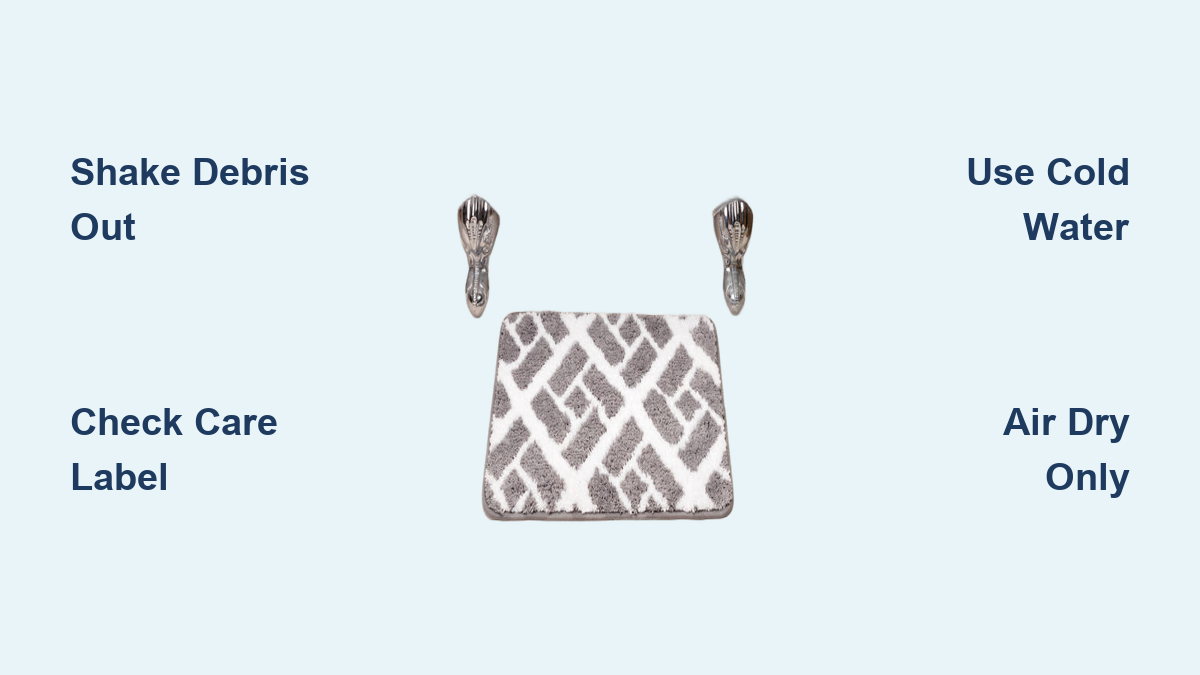
Shake the mat vigorously outside or over the bathtub. Target hair, dust, and lint trapped in fibers. Skipping this step risks clogging your washer is filter or redepositing dirt during the cycle.
Inspect for Damage
Check the backing closely for cracks, peeling rubber, warped edges, or missing suction cups.
Warning: Do not machine wash damaged mats. Agitation can worsen structural issues and reduce slip resistance. Replace the mat if the backing is compromised.
Read the Care Label
Always check the manufacturer is tag for maximum water temperature, detergent restrictions, dryer safety, and recommended cycle. Most cotton, microfiber, and rubber-backed mats are machine washable unless labeled otherwise.
Treating Stains and Odors Before Washing

Even regular washing will not fix stubborn stains or lingering smells without pre-treatment.
Remove Common Stains
Target spots from toothpaste, makeup, and mildew. Pre-treat with oxygen-based bleach, a baking soda paste made from 2 parts baking soda and 1 part water, or a commercial stain remover. Scrub gently with a soft brush or cloth before loading into the washer.
Eliminate Musty Smells
For odor caused by trapped moisture and bacteria, add one-half cup of baking soda to the detergent drawer or use soda crystals for deeper deodorizing.
Avoid vinegar in the wash: While great for cleaning, it can degrade rubber backings over time.
Alternative Method: Soak rubber mats in equal parts vinegar and water for 30 minutes, then rinse and air dry. Only do this if machine washing is not planned and vinegar is allowed.
Best Washing Machine Settings for Bath Mats

Using the right settings protects your mat and maximizes cleaning power.
Load the Machine Correctly
Wash the mat alone or with towels. Avoid pairing with heavy items like jeans or clothes with zippers. Towels help balance the load and reduce drum vibration.
Choose the Right Detergent
Use standard liquid or powder detergent, but match it to your mat. White mats can use bleach if the label allows. Colored mats need color-safe detergent. Rubber-backed mats require avoiding chlorine bleach because it degrades rubber.
Best choice: Mild, bleach-free detergent for most non-slip mats.
Set Water Temperature and Cycle
Cold water is safest for all mats, especially colored or synthetic ones. Use warm water only if the care label permits. Hot water can melt rubber or cause shrinkage.
Select delicate or gentle cycle with reduced or low spin speed. Enable extra rinse to flush out detergent residue. Leftover soap attracts dirt and causes odors over time. Cycle time should be 30 to 45 minutes on delicate settings.
Air Dry vs Tumble Dry: What Works Best
Drying is just as important as washing because improper drying leads to mold regrowth.
Air Dry Your Bath Mat
Lay flat on a drying rack, shower curtain rod, or clothesline. Flip halfway through to dry both sides. Keep out of direct sunlight if the mat is dyed to prevent fading.
Drying time is typically 6 to 12 hours depending on thickness and humidity.
Critical rule: Never store a damp mat because mold can form in under 48 hours.
Tumble Dry Only When Safe
Only tumble dry if the care label says yes. Use low heat or air fluff only. High heat melts rubber and warps backing. Remove immediately to prevent creasing.
Warning: Memory foam, rubber, and non-slip mats should never go in the dryer unless explicitly approved.
Material-Specific Washing Instructions
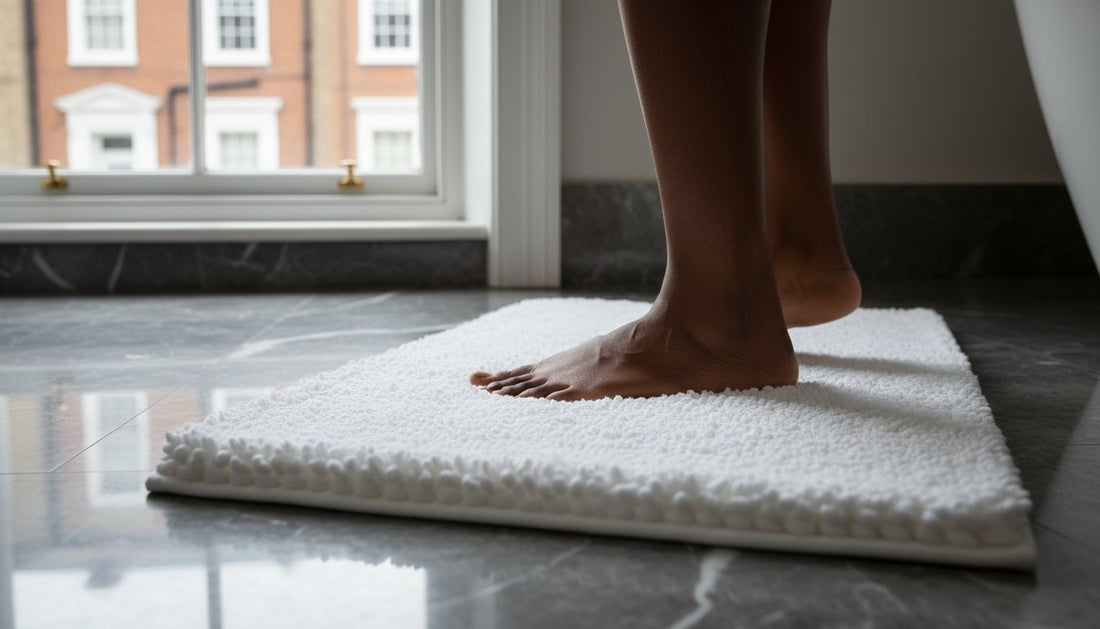
Different materials need different care. Follow these guidelines to avoid damage.
Cotton and Microfiber Mats
Machine washable: Yes. Water temperature: Cold to warm. Cycle: Gentle. Dry: Air dry preferred, low heat okay if labeled. These materials are highly absorbent, so dry fully to prevent mildew.
Memory Foam Mats
Machine washable: Check label first because often not recommended. If allowed, use cold water only, gentle cycle, and never machine dry. Air dry flat for 24 or more hours. Hand washing with mild soap and air dry is the best method.
Rubber or Non-Slip Backed Mats
Machine washable: Yes unless weighted or specialty design. Water temperature: Cold or lukewarm. Cycle: Delicate. Detergent: Mild, bleach-free. Dry: Air dry only, hang or lay flat. Never fold or roll while wet because this causes permanent creases.
Brand Example: SlipX Solutions rubber mats are machine washable except for weighted models.
Prevent and Remove Mold and Mildew
Even clean mats can develop black spots in humid bathrooms.
Prevent Mold Growth
Run the bathroom fan during and after showers. Hang the mat after each use. Wash weekly in shared bathrooms. Choose mats with antimicrobial treatments or quick-drying materials.
Remove Existing Mold
If you see black or green spots, soak in one-to-one white vinegar and water for 30 minutes. Scrub with a soft brush. Add 5 to 10 drops of tea tree oil for stronger cleaning. Rinse thoroughly with cold water. Air dry in sunlight because UV rays kill remaining spores.
Sunlight Tip: One to 2 hours in direct sun disinfects without significant fading.
Caring for SlipX Solutions Bath Mats
SlipX is a leading brand of machine-washable non-slip mats. Here is how to care for their products.
General Care Rules
Machine washable: Yes excluding weighted mats. Use mild, bleach-free detergent. Avoid bleach or Clorox because it weakens rubber over time. Air dry only to protect suction cups. Roll, do not fold, and store in a dry place.
Product Line Guidance
Weighted mats require hand wash only. Rubber, cushioned, extra-large, and stall-size mats are all machine washable. Pebble texture and micro-drainage holes improve drying and grip.
Hygiene Benefit: Regular washing prevents soap scum, mold, and odor buildup.
What Happens When You Wash Bath Mats Correctly
Real-world data shows the impact of proper washing.
Cleaning Effectiveness
Machine washing removes up to 98% of surface bacteria when paired with detergent and extra rinse. Baking soda boosts odor removal by neutralizing acids in sweat and oils.
Durability Results
Mats washed correctly last 2 to 3 years. High heat, bleach, or aggressive cycles can cut lifespan by 50%.
User Feedback
Verified buyers report fresher smell and cleaner appearance with weekly washes. Better slip resistance comes when backing is maintained. Longer life results when air-dried and rotated.
Top Complaint: Musty odors from mats left damp, which emphasizes the need for full drying.
10-Step Washing Checklist for Clean Bath Mats
Follow this routine for consistently clean, safe bath mats.
Shake out debris outdoors or over the tub. Inspect backing and replace if cracked or peeling. Check care label for limits. Pre-treat stains with baking soda paste or stain remover. Load washer alone or with towels. Add mild detergent plus one-half cup baking soda for odor. Set cold water, delicate cycle, extra rinse. Remove promptly after cycle ends. Air dry flat or hung, never in dryer unless labeled. Fluff and reinstall once fully dry.
Bonus Tip: Rotate two mats to extend wear and allow full drying between uses.
Key Takeaways for Washing Bath Mats in Your Machine
Keep your bath mats fresh and safe with these long-term habits.
Wash Schedule: Shared bathroom requires weekly washing. Single user needs washing every 2 weeks.
Drying Priority: Always air dry because it is safer for materials. Hang over the tub or shower rod after each use.
Prevent Damage: Avoid chlorine bleach and vinegar in the wash. Never use high heat in washer or dryer.
Replace on Schedule: Change mats every 2 to 3 years or sooner if backing shows wear, odors persist, or fibers degrade.
Smart Upgrade: Invest in mats with antimicrobial fibers or quick-dry technology for low-maintenance hygiene.
By following this complete guide, you will keep your bath mats clean, safe, and long-lasting. Regular machine washing is not just about freshness, it is a critical step in maintaining a healthy bathroom environment. With the right prep, settings, and drying habits, your bath mat can stay soft, slip-resistant, and odor-free for years.
Frequently Asked Questions About Washing Bath Mats in Washing Machine
Can all bath mats be washed in the washing machine?
Most cotton, microfiber, and rubber-backed mats are machine washable, but always check the care label first. Memory foam and weighted mats often require hand washing or air drying only.
What temperature should I use to wash bath mats?
Cold water is safest for all bath mats, especially colored or synthetic ones. Use warm water only if the care label explicitly permits it. Hot water can melt rubber or cause shrinkage.
How do I prevent my bath mat from getting moldy?
Hang the mat after each use to allow it to dry faster. Wash weekly in shared bathrooms or every 2 weeks in single-user bathrooms. Improve bathroom ventilation by running the fan during and after showers.
Can I use bleach on my bath mat?
You can use bleach on white mats if the care label allows it. However, avoid chlorine bleach on rubber or synthetic mats because it degrades the material and weakens non-slip properties.
Why does my bath mat still smell after washing?
The smell usually comes from leftover detergent residue or a damp mat that was not fully dried. Use an extra rinse cycle to remove soap residue and ensure the mat is completely dry before storing or reinstalling it.
How do I clean a bath mat with a rubber backing?
Machine wash rubber-backed mats in cold water on the delicate cycle using mild, bleach-free detergent. Air dry only by hanging or laying flat. Never put rubber-backed mats in the dryer.