How to Wash Bed Pillows in the Washing Machine
You rest your head on them every night, yet most people forget to clean their bed pillows for months, sometimes years. Over time, pillows accumulate sweat, oils, dead skin cells, dust mites, and even mold, all hidden beneath the surface. The good news? Most bed pillows can be safely washed in the washing machine, restoring freshness and extending their life. This guide walks you through exactly how to wash bed pillows in the washing machine without causing damage, clumping, or mildew issues.
Check If Your Pillow Is Machine Washable
Before washing, confirm your pillow can handle water immersion. Not all pillows survive machine laundering.
Pillow Types You Can Wash
The following pillows are safe for machine washing:
- Polyester and fiberfill
- Down and feather fills
- Synthetic down alternatives
- Cotton or bamboo-filled pillows
- Microfiber pillows
Pillow Types to Never Machine Wash
These materials absorb water like sponges and will be ruined by machine washing:
- Memory foam
- Latex
- Buckwheat hulls
- Pillows with electronics or heating elements
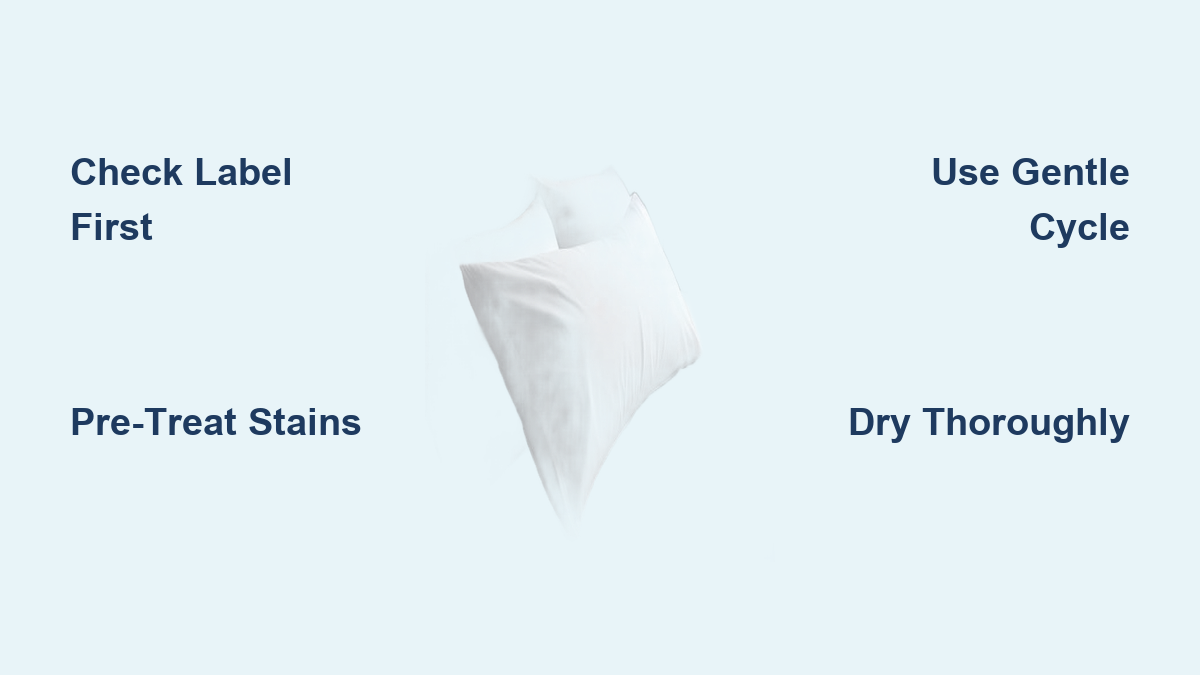
Always check the care label for specific washing instructions. Look for symbols indicating machine washability, water temperature limits, and drying restrictions. When in doubt, spot clean or test with one pillow first.
Pre-Treat Stains Before Running the Wash
Sweat, saliva, and facial oils create yellow stains that set permanently if not treated first. Pre-treating ensures a deeper clean.
Effective Stain Removal Methods
- Hydrogen peroxide (3%): Spray on stained areas, wait 30 minutes, then wash.
- Oxygen-based stain remover: Apply directly, gently scrub with a soft brush, and wash.
- Homemade paste: Mix washing soda, dishwasher detergent, and Borax. Apply to tough spots and let sit for 30 minutes.
- Mild liquid detergent: Dab on stains and lightly rub before washing.
Never soak memory foam or latex pillows. For these types, spot clean with a damp cloth and mild soap instead.
Remove All Covers and Protectors First
Take off pillowcases, decorative covers, and protective encasements before washing the pillow itself. Wash these separately, ideally every 1 to 2 weeks, to reduce how often you need to deep clean the pillow.
Using a washable pillow protector is one of the best ways to extend time between deep cleans. It blocks oils, allergens, and microbes from penetrating the pillow core.
Load the Washing Machine Correctly

Improper loading damages your washer or leaves pillows poorly cleaned. Balance is critical for safe machine washing.
Balancing Your Load
- Always wash two pillows at once, placing them on opposite sides of the drum.
- If washing only one pillow, add towels or large items to balance the load.
- For top-loaders with an agitator, position pillows vertically around the center post.
- Leave space for water circulation and movement. Do not overload.
Front-loading or high-efficiency top-loading machines are safest. Agitators in older models can damage down or fiberfill clusters.
Choose the Right Wash Settings
Using incorrect settings ruins pillow fill or leaves residue. Follow these recommendations:
Recommended Machine Settings
| Setting | Ideal Choice |
|---|---|
| Cycle | Gentle, delicate, or wool |
| Water Temperature | Cold or warm (hot only if label allows) |
| Detergent | Mild, low-sudsing liquid (half the normal amount) |
| Extra Rinse | Always add one to flush out soap |
Cold water prevents fiber degradation, shrinking, and clumping. This is especially important for down and synthetic fills.
Add Cleaning Boosters for Better Results
Enhance cleaning power naturally or for tough buildup.
Optional Add-Ins
- For deep cleaning: 1 cup powdered dishwasher detergent plus 1/2 cup Borax.
- For sanitizing: 1/2 cup white vinegar (kills bacteria and neutralizes odors).
- For dust mites: Wash in hot water around 140°F if your care label permits.
Vinegar acts as a natural disinfectant and softener without harsh chemicals.
Dry Pillows Thoroughly to Prevent Mold
Incomplete drying is the number one cause of musty odors and mold growth. Never skip manual checks.
General Drying Rules
- Dry in 45 to 60 minute cycles.
- Stop and squeeze the center to test for dampness.
- Fluff by hand between cycles.
- Use 3 to 5 dryer balls or clean tennis balls to break up clumps and speed drying.
Never trust auto-dry sensors. They detect surface dryness only. Always verify the core is completely dry before using the pillow.
Dry According to Your Pillow Type
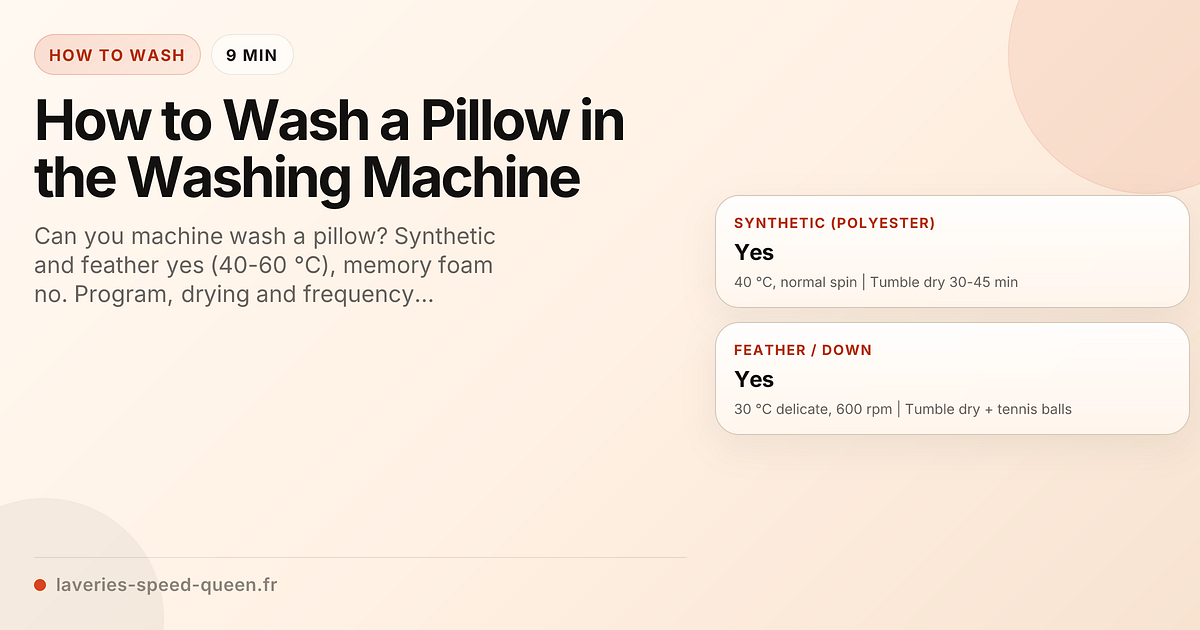
Different fills require specific drying methods.
Polyester and Fiberfill Pillows
- Dryer setting: Low heat
- Time: 45 to 65 minutes (may need multiple cycles)
- Add tennis balls to restore fluffiness
- Optional: Use color-safe bleach for white pillows
These are the most durable and easiest to maintain.
Down and Feather Pillows
- Dryer setting: Air-fluff or no-heat with dryer balls
- Time: Up to several hours (multiple cycles)
- Post-dry: Shake vigorously and hand-fluff
Use only front-loading machines. Agitators can damage feather clusters and cause permanent clumping.
Memory Foam and Latex Pillows
- Never machine dry.
- Air dry only: Lay flat in a well-ventilated area.
- Avoid direct sunlight (can degrade latex).
- Drying time: 12 to 24+ hours.
Foam holds water internally. Incomplete drying leads to mold and structural breakdown.
Sanitize Pillows Naturally
Keep pillows germ-free without harsh chemicals.
Effective Natural Methods
- White vinegar wash: Add 1/2 cup to detergent cycle. Kills bacteria and odors.
- Baking soda treatment: Sprinkle, wait 30+ minutes, vacuum with upholstery tool. Neutralizes smells.
- Sunlight exposure: 2 to 4 hours in direct sun. UV rays kill dust mites and freshen fabric.
- Fabric disinfectant spray: Lightly mist non-washable pillows between cleanings.
Combining baking soda and sun exposure can reduce odors by up to 90%.
How Often Should You Wash Pillows
Frequency depends on use and health needs.
Recommended Cleaning Schedule
| Pillow Type | Wash Frequency | Notes |
|---|---|---|
| Polyester, down, feather | Every 3 to 6 months | Every 3 months if you sweat heavily or have pets |
| Memory foam, latex | Spot clean monthly; deep clean 1 to 2 times per year | Use protector to minimize effort |
| Allergy sufferers | Every 1 to 3 months | Hot water kills dust mites effectively |
Clean every three months for optimal hygiene. Humans spend about 56 hours per week in contact with pillows. Regular cleaning supports skin and respiratory health.
Maintain Freshness Between Washes
Extend pillow life with simple daily habits.
Daily and Weekly Maintenance
- Use a pillow protector. Wash every 1 to 2 weeks.
- Change pillowcase weekly. Prevents oil and bacteria transfer.
- Fluff and rotate daily. Maintains shape and support.
- Air out monthly. Place near open window or in sunlight for 1 to 2 hours.
- Vacuum monthly. Use upholstery attachment to remove dust and dander.
Store spare pillows in breathable cotton bags in dry areas. Never use plastic or store in damp basements.
Avoid Common Washing Mistakes
Prevent damage and ensure effective cleaning.
Top Mistakes and Fixes
| Mistake | Risk | Solution |
|---|---|---|
| Using too much detergent | Soap buildup, skin irritation | Use half the normal amount |
| Washing only one pillow | Washer imbalance | Always wash two or add towels |
| Ignoring care labels | Permanent damage | Check symbols first |
| Using hot water on sensitive fills | Shrinkage, clumping | Stick to cold unless approved |
| Skipping pre-treatment | Set-in stains | Treat spots before washing |
| Overloading washer | Poor cleaning, machine stress | Maximum 1 to 2 pillows per load |
| Relying on auto-dry | Damp core, mold risk | Manually check every cycle |
| Machine drying memory foam | Fire hazard, degradation | Air dry only |
| Incomplete rinsing | Residue, irritation | Add extra rinse cycle |
Remove Stubborn Yellow Stains
Yellowing is caused by sweat, oils, and dead skin. It is common but fixable.
Deep-Cleaning Remedies
- OxiClean soak: Submerge in warm OxiClean solution for 3 to 4 hours, then rewash.
- Hydrogen peroxide spray: Apply, wait 30 minutes, wash as usual.
- Sun bleaching: After washing, lay in direct sunlight to naturally lift discoloration.
Prevention is key. Use a pillow protector and wash regularly to avoid buildup.
Know When to Replace Your Pillow
Even well-maintained pillows wear out.
Signs It Is Time for a New One
- Flat or lumpy. No longer regains shape when folded.
- Persistent odor. Smell remains after washing.
- Neck or back pain. Lacks proper support.
- Allergy flare-ups. Sneezing, itchy eyes indicate dust mite infestation.
- Visible stains. Brown or yellow patches will not come out.
- Age. Over 1 to 2 years for most types.
Replacement Intervals by Type
| Type | Replace Every |
|---|---|
| Standard bed pillow | 1 to 2 years |
| Memory foam | 2 to 3 years |
| Down/feather | 2 to 4 years |
| Specialty (cooling, orthopedic) | 1 to 2 years |
Replace every 1 to 2 years for hygiene and comfort, even if the pillow looks fine.
Frequently Asked Questions About Washing Bed Pillows
Can all pillows be washed in the washing machine?
No. Memory foam, latex, buckwheat hulls, and pillows with electronics should never be machine washed. These materials absorb water and can be damaged or develop mold. Always check the care label first.
Why do my pillows still smell after washing?
Incomplete drying is the most common cause. Pillows can feel dry on the surface while remaining damp inside. Run additional drying cycles and manually squeeze the center to check for moisture. Using dryer balls helps ensure thorough drying.
How do I prevent my down pillows from clumping?
Use a front-loading machine without an agitator. Wash on gentle cycle with cold water. Add dryer balls during drying to break up clumps. Fluff by hand between drying cycles and shake vigorously once fully dry.
Can I use bleach on my pillows?
Avoid bleach unless necessary. It weakens fibers over time. For white polyester pillows, use color-safe bleach if needed. Never use standard bleach on down or feather pillows.
What is the best way to dry pillows without a dryer?
Air drying works well. Lay pillows flat in a well-ventilated area, flipping periodically. For best results, place in sunlight for 2 to 4 hours. UV rays kill bacteria and dust mites while naturally freshening the fabric.
How do I get yellow stains out of pillows?
Pre-treat with hydrogen peroxide or oxygen-based stain remover before washing. Spray hydrogen peroxide on stains, wait 30 minutes, then wash normally. For stubborn yellowing, soak in OxiClean solution for 3 to 4 hours before rewashing.
Key Takeaways for Washing Bed Pillows in the Washing Machine
Properly washing bed pillows in the washing machine keeps your sleep environment clean, hygienic, and comfortable. Start by checking the care label to confirm machine washability. Pre-treat any stains, balance your load with two pillows, and use gentle cycles with cold water. Dry thoroughly using dryer balls, and always verify the core is dry before use.
Maintain freshness between washes by using pillow protectors, changing pillowcases weekly, and airing pillows monthly. Clean pillows every three months for optimal hygiene. Replace pillows every 1 to 2 years to ensure proper support and to avoid allergen buildup.
By following these steps, you protect your health and get the most from your pillows. Make pillow care part of your routine, and wake up to fresher, healthier sleep.