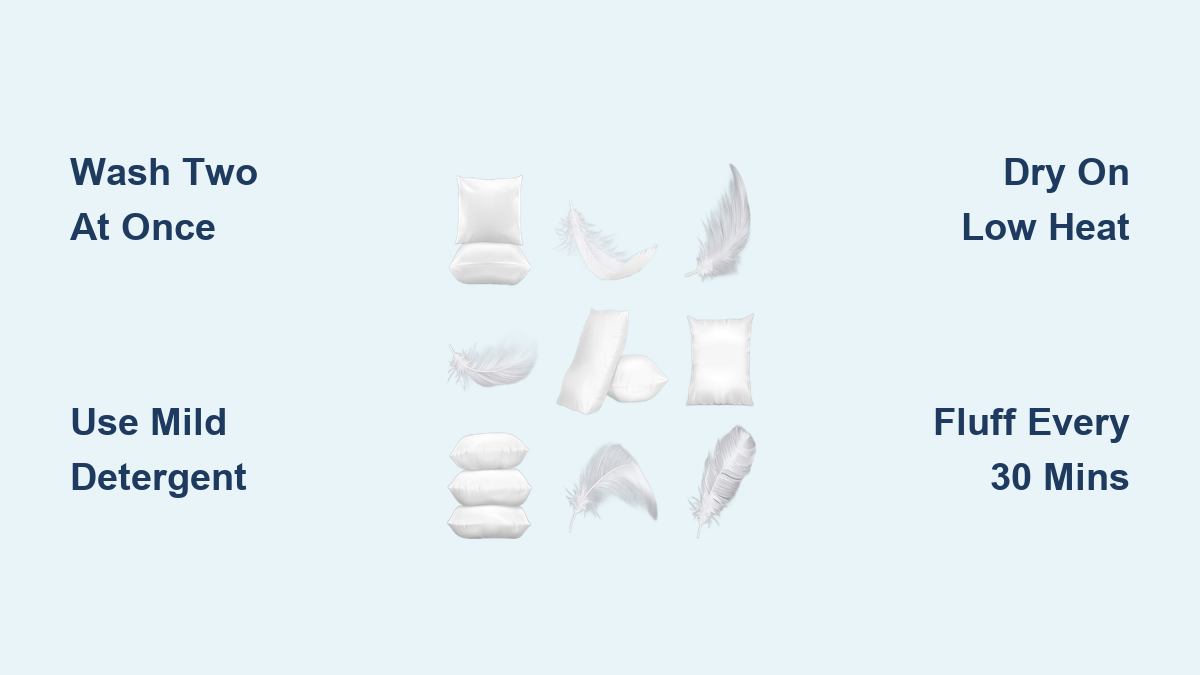
How to Wash Feather Pillows in Washing Machine
Feather pillows offer luxurious comfort and long-lasting support, but they demand careful care. Washing them in a washing machine is possible, but not without risk. Improper cleaning can ruin delicate feathers, cause clumping, and lead to mold if the pillow isn’t dried thoroughly. Yet when spills, odors, or allergens build up, a deep clean becomes necessary.
The key is knowing how to wash feather pillows in a washing machine safely, using the right settings, detergent, and most importantly, the drying method. This guide gives you a step-by-step, expert-backed process that protects your pillow’s integrity while ensuring it comes out fresh, fluffy, and completely dry.
Check Pillow Condition Before Washing
Before any wash, inspect your pillow closely. Feather pillows are delicate, and even small flaws can worsen during machine washing.
Look for Damage
- Check for holes, thin spots, or loose stitching along the seams
- Run your hands over the surface to feel for feather leakage
- If you find minor tears, stitch them closed with a needle and thread to prevent further loss
Test for Structural Integrity
- Squeeze the pillow firmly. If it doesn’t spring back, the feathers may already be damaged or degraded
- Avoid washing if the pillow feels lumpy, flat, or brittle, as cleaning may worsen the condition
Pro Tip: If your pillow is over 7 years old or shows multiple signs of wear, consider replacing it instead of washing.
Read the Care Label First
Not all feather pillows can be machine washed. The label is your first guide to safe cleaning.
What to Look For
- Machine Washable: Proceed with caution using gentle settings
- Dry Clean Only: Do not machine wash. Opt for professional cleaning instead
- No label: Assume it is not safe. Older or luxury pillows often require dry cleaning
Warning: Ignoring the care label can void warranties or destroy the pillow entirely.
Pre-Treat Stains and Odors
Clean only what is necessary. Avoid full washing if spot treatment works effectively.
For Fresh Stains
- Blot with a clean cloth. Do not rub the stain
- Mix 1 teaspoon mild detergent with 1 cup cold water
- Dab gently on the stain, then blot with a damp cloth to rinse
For Yellowing or Sweat Buildup
- Make a paste of baking soda and water
- Apply to stained areas, let sit 20 to 30 minutes, then brush off
- For deeper cleaning, pre-soak in warm water with half a cup of baking soda and half a cup of white vinegar. Soak for 1 hour before washing
Wash Two Pillows at Once for Balance
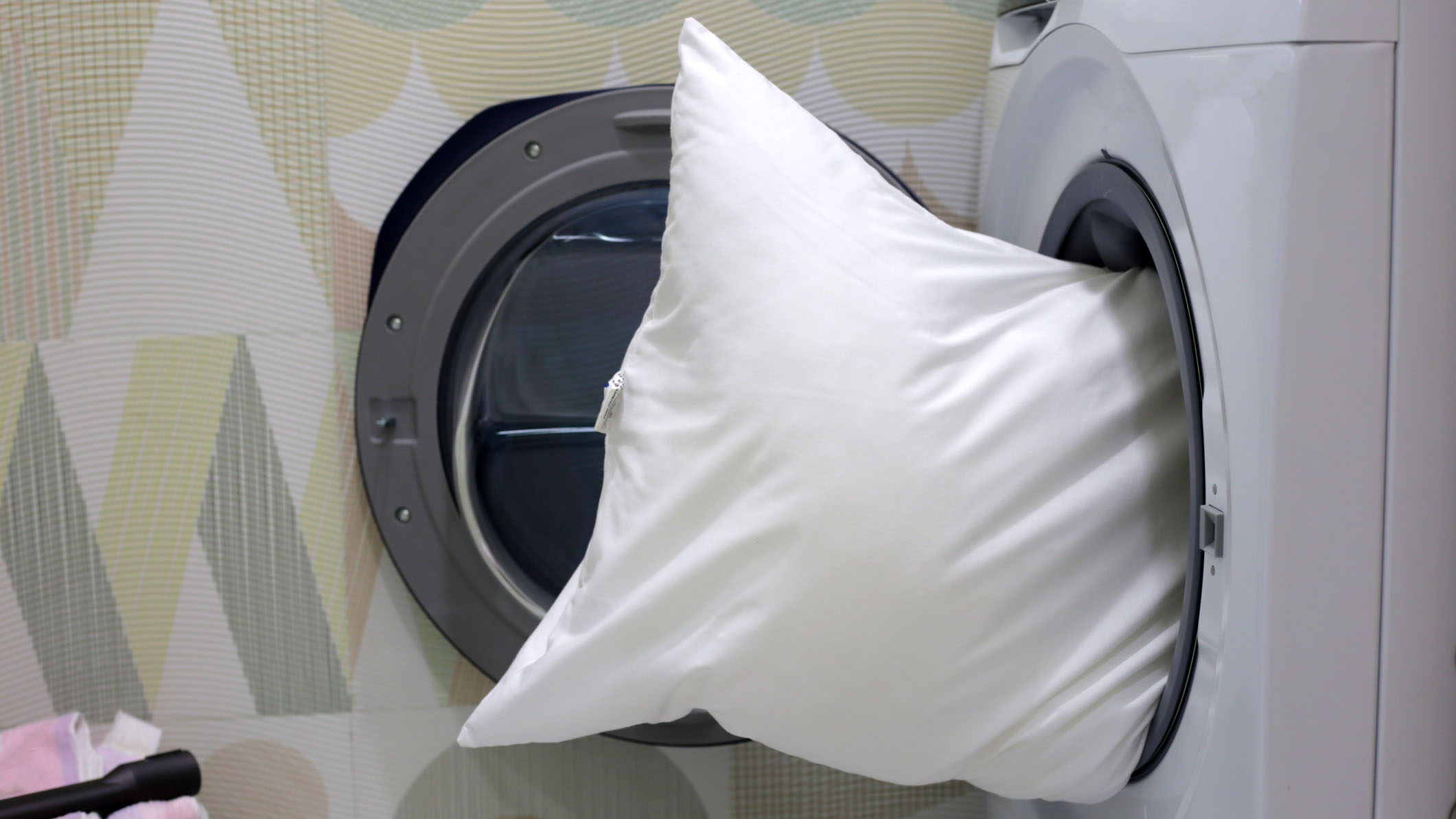
Balance is critical. Washing one pillow alone can damage your machine and the pillow itself.
Why Two Pillows
- Prevents drum imbalance and violent shaking during the spin cycle
- Ensures even agitation and rinsing across both pillows
- If you only have one pillow, add 2 to 3 clean towels on the opposite side of the drum
Load the Machine Properly
- Use a front-loading washer if possible. Top-loaders with agitators can tear feathers
- Place pillows vertically in the drum
- Press down to release trapped air so they submerge fully
Use Mild Detergent Only
Harsh chemicals strip natural oils from feathers, making them brittle and less fluffy.
Best Detergent Choices
- Down-specific detergents such as My Green Fills
- Woolite or other mild liquid detergents
- Low-sudsing, eco-friendly formulas
What to Avoid
- Bleach
- Enzyme-based cleaners
- Fabric softeners. They coat feathers and reduce fluffiness
- Powder detergents with fillers. They may not dissolve fully
Alternative: Some experts recommend washing with water only to preserve feather oils.
How Much Detergent to Use
- Use one-quarter to one-half the standard amount
- Add half a cup of white vinegar in the rinse cycle to remove residue and soften the fill
Select the Right Wash Cycle
Gentle handling is essential for preserving feather clusters and the pillow shell.
Recommended Settings
| Setting | Choice |
|---|---|
| Cycle | Delicate, gentle, or permanent press |
| Water Temperature | Warm (30 to 40°C or 86 to 104°F) |
| Spin Speed | Low to moderate |
| Rinse Cycles | Add an extra rinse to flush out all soap |
Why Warm Water
- Effectively removes oils and sweat from the fill
- Will not damage feathers like hot water can
Note: Cold water may not clean deeply. Hot water risks shrinking the fabric and scorching the feathers.
Dry on Low Heat with Drying Aids
This is the most critical step. Incomplete drying leads to mold, mildew, and ruined pillows.
Why Low Heat
- High heat burns feathers and weakens the quills
- Low heat gently evaporates moisture without causing damage
Drying Time
- Expect 2 to 4 hours, often across multiple cycles
- Never assume one 60-minute cycle is enough to dry the core completely
Add Tennis Balls or Dryer Balls
- 2 to 3 clean tennis balls placed in socks protect the fabric
- Wool dryer balls are reusable and effective
- One dry bath towel absorbs moisture. Remove after 30 to 45 minutes when damp
Pro Tip: These aids help break up wet clumps, reduce drying time by 30 to 50 percent, and restore loft to the pillow.
Fluff Every 30 Minutes During Drying
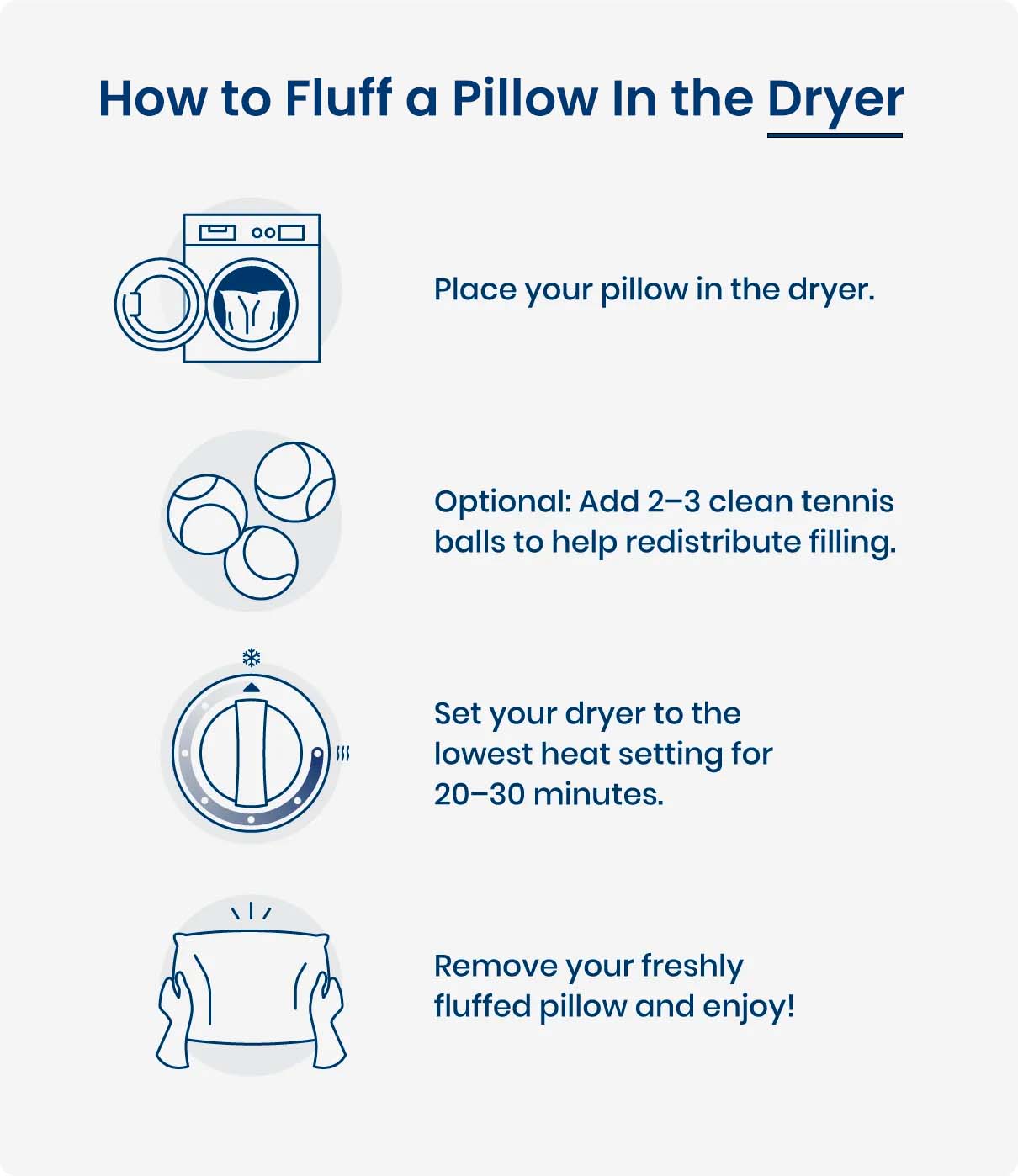
Manual intervention ensures even drying and prevents clumping.
During Drying
- Pause the dryer every 30 to 45 minutes
- Remove pillows and shake them vigorously
- Squeeze and knead to redistribute feathers evenly
- Check the core for dampness by pressing deeply into the center
Final Dryness Check
- The pillow should feel warm and dry throughout, not cool
- Smell the core. Any musty odor means it is still wet
- If in doubt, dry another 30 to 60 minutes
Warning: A slightly damp core can grow mold within 24 hours.
Air Drying: Use With Caution
Only attempt air drying if you have ideal conditions and no dryer available.
When Air Drying Is Safe
- Low humidity, warm temperatures, and strong airflow are required
- Use a drying rack. Never hang the pillow, as it distorts the shape
Steps for Air Drying
- Lay the pillow flat and turn it every 30 to 60 minutes
- Keep out of direct sunlight. UV rays damage feathers
- Total drying time ranges from 24 to 48 hours
Not recommended for most climates. Tumble drying is safer and faster.
Restore Loft After Washing
Even clean, dry pillows may need fluffing to regain their fullness.
Final Fluffing Steps
- Shake the pillow up and down and side to side
- Punch gently into the center to loosen compacted fill
- Toss in the dryer for 10 to 15 minutes on no-heat setting with dryer balls
Pro Tip: Store pillows uncompressed. Never fold or scrunch them.
Prevent Future Washing with Protectors
Reduce cleaning frequency with simple daily habits.
Use a Pillow Protector
- A waterproof, breathable cover blocks sweat, oils, and allergens
- Wash the protector monthly, not the pillow itself
Nightly Habits
- Go to bed with dry hair
- Apply lotions or oils earlier in the evening, not right before bed
- Wash pillowcases weekly in hot water
How Often to Wash Feather Pillows
Washing too often shortens pillow life. Follow these guidelines.
| Situation | Frequency |
|---|---|
| With protector | Every 6 to 12 months |
| Without protector | Every 6 months |
| Heavy sweaters or allergy sufferers | Every 3 to 4 months |
| Minimal exposure | Once per year or as needed |
Rule of Thumb: If the pillow smells, stains, or feels flat, clean it. Otherwise, skip washing.
When to Replace Your Pillow
Even well-cared-for feather pillows do not last forever.
Replace If
- You wake with neck or shoulder pain
- The pillow does not rebound after folding
- Feathers are leaking through the fabric
- It has permanent lumps or flat spots
- It smells musty even after thorough drying
Average Lifespan
- 7 to 10 years with proper care
- 5 to 7 years if washed frequently
Final Checklist: Do’s and Don’ts
Do
- Use a front-loader washer
- Wash two pillows at once
- Use mild or no detergent
- Add an extra rinse cycle
- Dry with tennis balls or a towel
- Fluff every 30 minutes during drying
- Check the core for moisture
- Use a pillow protector daily
Do Not
- Use a top-loader with agitator
- Use hot water or bleach
- Wring or twist the pillow
- Skip drying steps
- Fold or compress regularly
- Wash more than once a year unless needed
Frequently Asked Questions About Washing Feather Pillows
Can I wash feather pillows in a top-loading washing machine?
Front-loading washers are strongly recommended. Top-loaders with central agitators can tear feather clusters and damage the pillow shell. If you must use a top-loader, choose one without an agitator and wash on the gentle cycle.
How do I know if my feather pillow is dry enough?
Press deeply into the center of the pillow. If you feel any coolness or dampness, it is not dry. Also, smell the core. Any musty odor indicates residual moisture. Run the pillow in the dryer for another 30 to 60 minutes if needed.
Can I use regular laundry detergent on feather pillows?
Regular detergent is too harsh. It strips natural oils from feathers, making them brittle. Use a down-specific detergent, Woolite, or a mild eco-friendly formula. Use only one-quarter to one-half the standard amount.
Why do my feather pillows smell after washing?
A musty smell indicates incomplete drying. The core is still damp even if the surface feels dry. Return the pillow to the dryer immediately. To prevent this, always use low heat and add drying aids like tennis balls.
How long do feather pillows last?
With proper care and minimal washing, feather pillows last 7 to 10 years. Frequent washing or exposure to moisture reduces the lifespan to 5 to 7 years.
Can I wash feather pillows without detergent?
Yes. Some experts recommend washing with water only to preserve the natural oils in feathers. If you choose this method, add an extra rinse cycle to ensure all debris is removed.
Key Takeaways for Washing Feather Pillows Safely
Washing feather pillows in a washing machine is possible, but only when done with precision. The real secret is not the wash. It is the drying. Incomplete drying is the leading cause of mold, odors, and ruined pillows. Always use a front-loader on gentle cycle with warm water and minimal mild detergent. Wash two pillows at once for balance, and dry on low heat for 2 to 4 hours with tennis balls or dryer balls. Fluff manually every 30 minutes and check the core for dampness before storing.
Follow this guide to keep your pillows fresh, fluffy, and mold-free for years. With the right care, your feather pillow can deliver comfort and support for up to a decade without ever needing a risky wash.