
Milnor Washing Machine Repair Guide
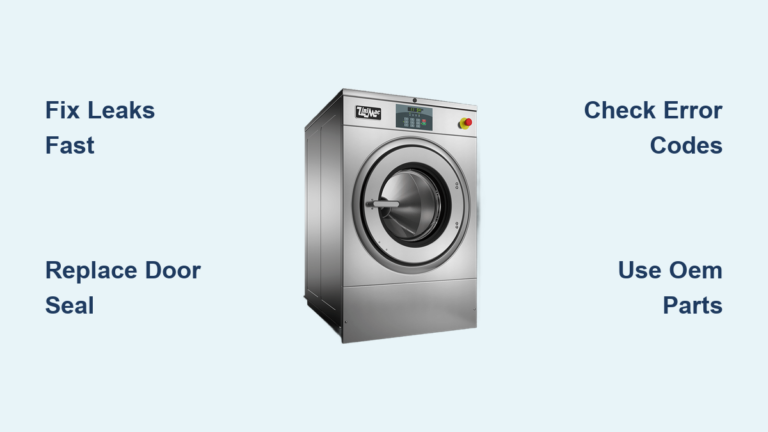
If your Milnor washing machine repair is dragging downtime or costing too much in guesswork, you are not alone. These industrial-grade washers power laundries in hospitals, hotels, prisons, and campuses where every minute of failure means lost revenue or disrupted operations. Yet even robust machines fail, especially as parts age and OEM components become scarce.
This guide delivers what technicians and facility managers need: actionable diagnostics, verified part sources, step-by-step procedures, and critical safety checks. You will learn how to fix common failures like non-spinning extract cycles, inverter overheating, and air brake issues, plus how to avoid costly misdiagnoses.
Find Genuine Milnor Parts Fast
Source from Alliance Laundry Systems
Alliance Laundry Systems is the official global distributor for genuine Milnor replacement parts. If you need OEM-certified components with full warranty backing, this is your primary source. Their inventory covers washers, dryers, and combo units, searchable by part number, model, or description.
What Is Available
You can source the following through Alliance Laundry Systems:
- Seals, gaskets, pulleys, hoses, and drive components
- New original equipment parts only
- Same-day shipping for orders placed before 4:00 PM Pacific Time
Critical Shortages to Know
Several key parts are discontinued with no replacements available:
- ML-02 09141: Gasket with no substitute
- ML-02 09219: Door glass no longer available
- ML-0203440B: Hose out of stock with no alternative
Pro Tip: Stock up on high-failure items now. Once these are gone, field repairs may require custom fabrication.
Use OEM Laundry Parts for High-Demand Components
For faster access or hard-to-find alternatives, OEM Laundry Parts and Equipment offers a broad range of compatible and genuine Milnor components.
Top Repair Parts by Category
The following categories have the highest demand:
- Valve: 23 variants covering water inlet, drain, and pneumatic control
- Relay: 9 variants essential for cycle sequencing and motor control
- Motor: 3 variants including extractor and drive variants
- Gasket: 3 variants in multiple sizes
- Board: 3 variants including processor and power supply units
Most Critical Parts and Prices
These are the highest-cost components to budget for:
- 39G555AAM Extractor Motor: $7,125.15
- 08BNCMOT Coin Output Board: $539.30
- 08PSS3401N Power Supply: $199.34
- 02-03343 Pinch Tube: $26.45
- 02-10545 Gasket: $44.66
Expert Note: The $7,125 motor is typically the main extractor drive. Prevent failure with annual oil changes and belt inspections.
Perform Annual Oil Changes Correctly

Shut Off Power First
Never begin an oil change without disconnecting power completely. Milnor washers use high-voltage systems and pressurized components. A live machine risks electric shock or accidental startup during service.
Drain Old Oil Step by Step
You will need a T25 hex driver, funnel, bucket for oil collection, and 22 oz of recommended oil available from Granger.
Follow these steps:
- Remove six T25 screws (three per side) to take off the back panel
- Pull out the cardboard insert holding wiring diagrams and model data
- At the top near the vent, remove the small cork and unscrew the filler cap
- Place a bucket under the oil reservoir
- Let 22 oz of oil drain from the bearing assembly
- Reinstall the filler cap and cork
Visual Cue: Dark, sludgy oil indicates overdue maintenance. Clean metal particles mean bearing wear requiring further inspection.
Refill with Precise Volume
Underfilling causes bearing damage while overfilling leads to leaks. Follow this refill procedure:
- Confirm the drain plug is sealed
- Remove the vent tube
- Insert a funnel and pour exactly 22 oz of fresh oil
- Reattach the vent tube and cork
- Allow time for air to escape and oil to settle
Best Practice: Log oil change dates. Repeat annually or based on usage intensity.
Clean Inverter and Replace Belts Proactively
Inspect Inverter Screen Yearly
Inside the inverter housing, a plastic lid covers a protective screen. Check annually for black dust or residue and clean with screen-safe spray if buildup is present.
Warning: A clogged inverter can overheat and fail. Replacement costs range from $2,000 to $3,000.
Replace Belts Every 3 Years
Drive belts wear gradually. Waiting for failure risks sudden downtime.
Replace belts when you notice:
- Visible cracks or fraying
- Glazing (shiny surface)
- Slipping during spin cycle
- Even if they look fine, replace every 3 years as preventive maintenance
Pro Tip: Carry spares on-site. Many facilities keep belts in inventory for immediate swaps.
Fix Brake System Failures Fast
Diagnose No-Spin Extraction
If the wash cycle finishes but the tub will not spin, the brake system is likely at fault.
Common symptoms include:
- Tub does not lock or release
- Spin button pressed but no movement
- Free-spinning or seized drum
Check Brake Drum and Airline
Key components to inspect include the brake drum attached to the gear reducer, the air cylinder that actuates the brake via compressed air, and the copper airline delivering air pressure.
Frequent Failures
These issues appear most often:
- Disconnected copper airline found sealed with epoxy or duct tape
- Loose or missing fasteners preventing drum securing to gear reducer
- Missing main nut and jam nut preventing torque transfer
Repair Steps
- Reattach all brake drum fasteners
- Torque main nut and jam nut to manufacturer specifications
- Reconnect copper airline to air cylinder
- Ensure no kinks or blockages in the line
Test: Manually trigger brake engagement. Listen for a firm click and confirm tub locks.
Resolve Extract Motor That Will Not Start
Rule Out Power and Mechanical Issues
When the extract motor hums but will not start, check fuses for voltage presence and integrity. Inspect the motor shaft by rotating manually; it should move freely. Confirm the bearing is not seized.
A humming motor usually suggests single phasing, but if voltage checks out, look elsewhere.
Diagnose Door Switch Lockout
Even with power and a good motor, the door switch can block operation. This small safety interlock prevents the extract cycle if the door is open. A stuck or misaligned switch sends a false door open signal. Earlier brake faults can trigger a system-wide lockout that persists.
Fix the Hidden Fault
- Close and reopen the door to reset the switch
- Power cycle the machine or use internal reset function
- Restart and test extract cycle
Key Insight: The motor was not broken. The control system was locked out. Reset clears the fault.
Verify Safety and Control Systems
Test Door Switch Regularly
This small component causes major outages.
Testing steps:
- Open and close the door and listen for a click
- Use a multimeter to check continuity
- Ensure switch actuates fully when door closes
Common Mistake: Assuming the motor failed when it is just a $5 switch.
Maintain Clean Air Supply
The brake system relies on dry, clean compressed air.
Check the following:
- Air filter for moisture or debris
- Copper airline for kinks or splices
- Air cylinder for smooth piston movement
Pro Tip: Install an inline air dryer to prevent corrosion and sticking.
Reset Control System After Repairs
Milnor controls retain fault codes and may not auto-reset.
Reset methods:
- Power off for 30 seconds, then restart
- Use model-specific button sequences (refer to nameplate data)
- Clear error logs via diagnostic mode if available
Final Step: Always reset after brake, motor, or safety system repairs.
Prevent Long-Term Repair Failures
Plan for Discontinued Parts
With at least six critical parts discontinued, legacy Milnor units face obsolescence.
These parts are at highest risk:
- Door glass (ML-02 09219)
- Gaskets (ML-02 09141, ML-0202366)
- Hoses (ML-0203440B)
Solutions include stockpiling spares now, exploring third-party fabrication for seals and hoses, and considering upgrade paths for aging machines.
Partner with Multi-Brand Service Providers
Yankee Equipment Systems offers on-site Milnor washing machine repair with rapid response.
Why they are effective:
- Technicians have 25 years of combined experience
- Mobile parts inventory reduces downtime
- Serve industries including hotels, universities, correctional facilities, military bases, and laundromats
Facility Manager Tip: Choose providers who say we cover all brands. They are more likely to support Milnor.
Follow Final Verification Protocol
After any major repair, do not skip testing.
7-Step Verification Process
- Inspect all reassembled parts
- Manually test brake engagement
- Verify air pressure to cylinder
- Confirm door switch actuation
- Reset control system
- Run full wash-extract cycle with water load
- Observe smooth phase transitions, full extraction speed, proper brake stop, and no noise or vibration
Only return the machine to service after passing all steps.
Summary: Milnor Repair Best Practices
| Task | Frequency | Tools Needed | Cost Risk if Ignored |
|---|---|---|---|
| Oil change | Annually | T25, funnel, 22 oz oil | Bearing failure ($1,000+) |
| Belt replacement | Every 3 years | Wrench, spare belts | Drive failure, downtime |
| Inverter cleaning | Annually | Screen spray | Inverter failure ($2,000-$3,000) |
| Door switch test | As needed | Multimeter | False lockouts, no spin |
| Control reset | After faults | Power cycle or buttons | Persistent error states |
| Spare parts stocking | Ongoing | Inventory log | Extended downtime |
Frequently Asked Questions About Milnor Washing Machine Repair
How Often Should I Change the Oil in My Milnor Washer?
Change the oil annually or based on usage intensity. The bearing assembly requires exactly 22 oz of fresh oil. Underfilling risks bearing damage while overfilling causes leaks. Log each oil change date to track maintenance history.
What Causes a Milnor Washer to Not Spin During Extraction?
The brake system is usually at fault. Common causes include disconnected copper airlines, loose brake drum fasteners, and missing main or jam nuts. Check these components first before assuming motor failure.
Where Can I Find Discontinued Milnor Parts?
Alliance Laundry Systems is the official global distributor. However, several parts including door glass (ML-02 09219), gaskets (ML-02 09141), and hoses (ML-0203440B) are discontinued with no replacements. Stockpile available spares or explore third-party fabrication.
Why Does My Milnor Extract Motor Hum But Not Start?
A humming motor usually indicates single phasing, but if voltage checks out, the door switch is likely at fault. The safety interlock prevents extract operation when it sends a false door open signal. Close and reopen the door, then power cycle the machine to reset.
How Much Does Major Milnor Washer Component Replacement Cost?
Extractor motors cost up to $7,125.15. Inverter replacement ranges from $2,000 to $3,000. Power supplies run about $199.34 while processor boards cost around $192.93. Budget accordingly and prioritize preventive maintenance.
Can I Prevent Costly Milnor Washer Repairs?
Yes. Perform annual oil changes, replace belts every three years, clean the inverter screen yearly, test door switches regularly, and maintain clean air supply to the brake system. Partner with experienced service providers and stock critical spare parts.
Key Takeaways for Milnor Washing Machine Repair
Milnor washers are built to last, but only with proactive maintenance, genuine parts, and skilled diagnostics. Master oil changes, brake repairs, and control resets to avoid $7,000 motor replacements and hours of downtime. Stay ahead of part obsolescence by stockpiling critical components before they vanish. Partner with reliable service providers like Yankee Equipment Systems who understand industrial laundry equipment. Always verify repairs under load using the 7-step protocol before returning machines to service. With the right approach, your Milnor machine will keep delivering heavy-duty performance for years to come.