How Heavy Is a Washing Machine: Average Weight Guide
You are planning a home renovation, moving to a new apartment, or simply curious about the appliance in your laundry room. The question “how heavy is a washing machine” keeps surfacing because weight affects delivery, installation, floor support, and long-term performance. A typical residential washing machine weighs between 55 kg and 100 kg (121–220 lbs) when empty, but this number nearly doubles during operation when you add water and wet laundry. Understanding these weight ranges helps you plan for safe transport, proper installation, and choosing a model that suits your space and needs.
This guide breaks down washing machine weight by type, capacity, and construction. You will learn exactly how much different models weigh, why they are built so heavy, and what that weight means for your home.
Washing Machine Weight by Type
:max_bytes(150000):strip_icc()/top-load-washer-vs-front-load-2145868-v5-6606d79a51e446be957069689296fc44.png)
Different machine types serve different household needs, and each comes with distinct weight characteristics. Knowing the average weight by type helps you plan for delivery, installation, and daily performance.
Front-Loader Weight Range
Front-loading washers typically weigh between 65 kg and 100 kg (143–220 lbs), making them heavier than top-loaders. This added mass comes from horizontal drum orientation, high-speed spin cycles reaching up to 1,600 RPM, and concrete or cast-iron counterweights weighing 15–25 kg (33–55 lbs).
• 7–8 kg capacity: 65–80 kg — Ideal for 2–3 people
• 9–10 kg capacity: 75–90 kg — Suitable for families of 4 or more
• 11–12 kg capacity: 85–100 kg — Best for bulky items like comforters
Pro Tip: Heavier front-loaders resist walking across floors during spin cycles, reducing wear on suspension components and extending machine lifespan.
Top-Loader Weight Range
Top-loading machines average 40–70 kg (88–154 lbs). Their vertical drum design requires less counterbalancing, resulting in a lighter build. However, they often use more water and energy compared to front-loaders.
• 6–7 kg capacity: 55–70 kg — Common in North American households
• Standard models: 40–65 kg — Easier to move but may vibrate more during high-speed spins
Caution: Despite lower weight, top-loaders can still shift during high-RPM cycles if not properly leveled on all four feet.
Washer-Dryer Combo Weight
Combination units pack both washing and drying functions into one appliance, increasing complexity and weight. These units weigh 70–90 kg (154–198 lbs) depending on capacity.
• 8–10 kg wash / 5–6 kg dry: 70–90 kg — Full-size combo units
• Compact models: 65–80 kg — Often installed in apartments or recreational vehicles
These space-saving units are convenient but limited in drying capacity. Their integrated condenser and heating elements add significant mass compared to standalone washers.
Commercial Machine Weight
Used in laundromats, hotels, and hospitals, commercial washers are engineered for daily, high-volume use. These machines feature reinforced steel frames and full stainless steel drums.
• 9 kg capacity: approximately 115 kg (250 lbs)
• 11–14 kg capacity: approximately 140 kg (310 lbs)
• 18–27 kg capacity: 150–300 kg (330–660 lbs)
How Capacity Affects Weight
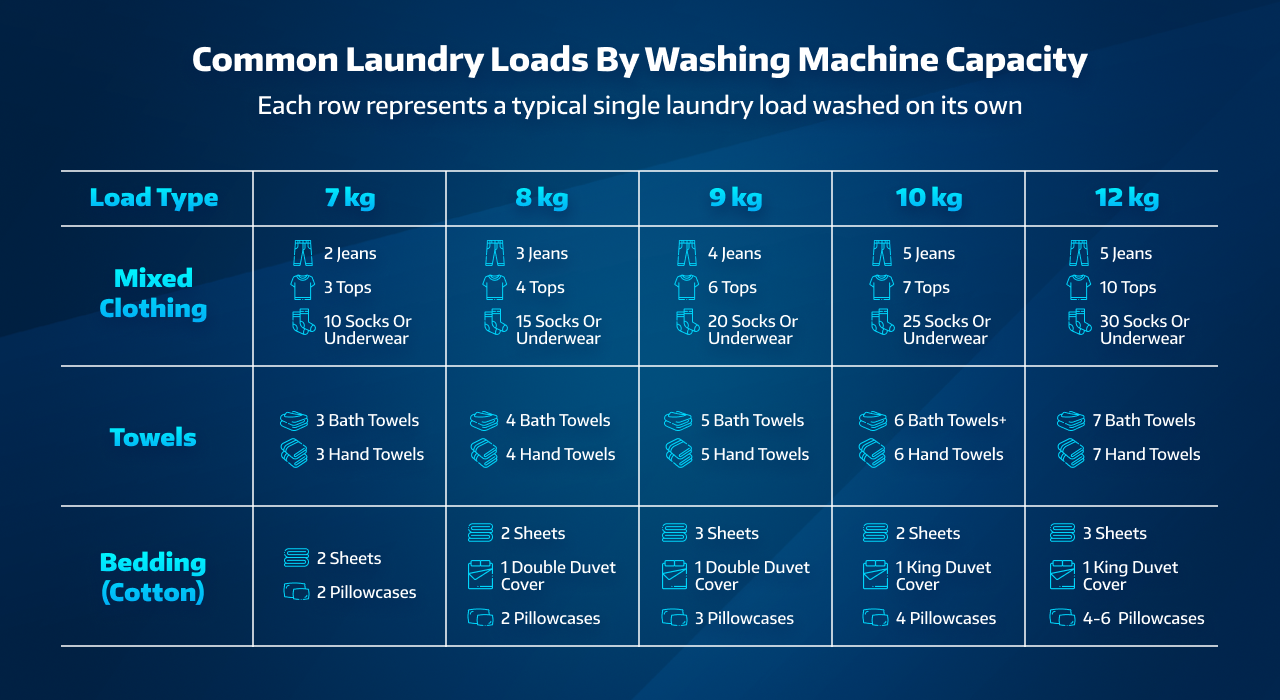
Larger capacity does not always mean a physically bigger machine, but it does mean more internal components and structural support, directly increasing weight.
Small Capacity Machines (5–6 kg)
Weigh 55–65 kg (121–143 lbs). These compact units are designed for singles or small spaces and often fit under countertops. Despite their smaller size, they still carry substantial weight due to built-in counterweights.
Mid-Size Machines (7–8 kg)
Weigh 65–80 kg (143–176 lbs). The most common household size, these models balance performance and footprint for families of 2–4 people.
Large Capacity Machines (9–12 kg)
Weigh 75–100 kg (165–220 lbs). These high-capacity machines handle large loads and bulky bedding. Their increased drum size demands stronger motors, thicker tubs, and heavier counterweights.
Expert Note: A 12 kg front-loader may weigh only 5–10 kg more than an 8 kg model, but that extra mass is critical for managing the intense forces generated during spin cycles.
Empty vs. Running Weight: The Real Load
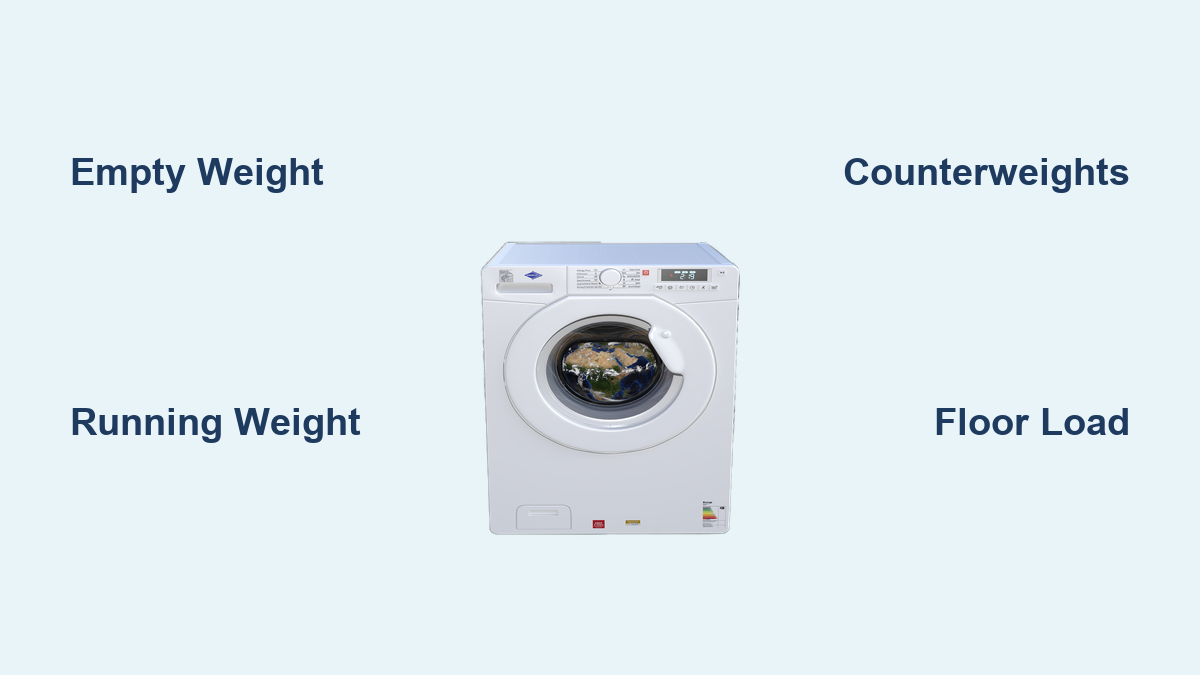
The weight listed in product specifications is the empty (net) weight, but that is not the full picture. Once in use, a washing machine gains significant mass from water and wet laundry.
Water Weight Adds Up Fast
One liter of water equals 1 kg (2.2 lbs). A standard cycle uses 15–60 liters (4–16 gallons), adding up to 60 kg (132 lbs) of weight from water alone.
Wet Laundry Gains Weight
Fabrics absorb 1.5–2 times their dry weight in water. An 8 kg dry load becomes 12–16 kg when wet.
Total Running Weight Examples
| Capacity | Empty Weight | Water + Wet Load | Total Running Weight |
|---|---|---|---|
| 5 kg | 55–65 kg | +25–30 kg | 80–95 kg (176–209 lbs) |
| 7 kg | 60–75 kg | +35–40 kg | 95–115 kg (209–253 lbs) |
| 8 kg | 65–80 kg | +35–40 kg | 100–120 kg (220–264 lbs) |
| 10 kg | 75–90 kg | +40–50 kg | 115–140 kg (253–308 lbs) |
| 12 kg | 85–100 kg | +45–60 kg | 130–160 kg (286–352 lbs) |
Why This Matters: Floors, vibration pads, and installation locations must support dynamic loads, not just empty weight.
Why Washing Machines Are So Heavy
The weight is not accidental; it is engineered for stability, safety, and performance. Several key components contribute to the substantial mass of washing machines.
Concrete Counterweights: The Hidden Mass
Most front-loaders contain 15–25 kg (33–55 lbs) of concrete or cast iron around or above the drum. These counterweights absorb centrifugal forces during high-speed spins, prevent machine movement (walking), and reduce noise and vibration.
Without these counterweights, even a small imbalance like a single sock could make the machine shake violently.
Drum and Tub Construction
Stainless steel drums add 5–10 kg and provide durability and corrosion resistance. Outer tubs are made of steel or composite material, with front-loaders requiring sturdier tubs due to horizontal stress. Commercial units use full stainless steel construction, adding 10–20 kg over domestic models.
Steel Chassis and Motor Systems
A rigid steel frame provides structural integrity. Commercial machines use bolted steel frames, while domestic models may use lighter composites. Induction motors are heavier but deliver high torque, while brushless motors are lighter and more efficient. Suspension springs and dampers absorb vibration, with more robust systems found in heavier models.
Factors That Influence Washing Machine Weight
Several design and functional elements determine how much a washing machine weighs.
Front vs. Top Load Impact
Front-loaders are 9–23 kg (20–50 lbs) heavier than top-loaders due to counterweights and drum support requirements.
Materials and Features
Stainless steel drums add 10–20 kg compared to plastic options. Reinforced chassis adds durability and mass. Premium models use denser materials for better noise insulation. Additional features like steam cycles, internal heaters, and auto-dosing dispensers add incremental weight.
Water Retention
If not drained before moving, a washer can retain 2–5 kg (4–11 lbs) of water, increasing total weight and risk of leaks during transport.
Weight as a Quality Indicator
Heavier does not always mean better, but in washing machines, weight often correlates with build quality and longevity.
Weight-to-Capacity Ratio
| Tier | Ratio | Expected Lifespan |
|---|---|---|
| Budget Domestic | 7–8 kg machine per kg laundry | 6–8 years |
| Premium Domestic | 8–10 kg per kg laundry | 10–15 years |
| Commercial | 7–8 kg per kg laundry | 25+ years |
A low ratio in a large-capacity model (80 kg for 12 kg capacity) suggests inadequate counterweighting, leading to more vibration and faster wear.
Vibration and Noise Control
Heavier machines with proper counterweights stay in place during spin cycles, transmit less noise to floors and walls, and require fewer repairs over time.
Tip: In apartments, use anti-vibration pads or a rigid base like marine plywood to further reduce noise transmission.
Practical Implications of Weight
How much a washing machine weighs affects everything from installation to daily operation and moving logistics.
Floor Load Capacity
Residential floors are typically rated for 150 kg/m² (30.7 lbs/sq ft). A running 140 kg washer on a 0.36 m² footprint creates a load of approximately 390 kg/m².
Risk zones include old timber floors that may be weakened by age or moisture, loft conversions often rated for only 100 kg/m², and upper floors in older buildings that may need structural reinforcement.
Solution: Use a rigid anti-vibration base to distribute weight more evenly across the floor surface.
Moving and Transportation Safely
Moving a washing machine safely requires proper preparation and equipment.
Steps to follow:
- Run a spin cycle to remove water from the drum
- Drain the pump filter and tilt machine to empty residual water
- Reinstall transit bolts to lock the drum in place
- Disconnect hoses and power supply
- Use a sack trolley or appliance dolly
- Always use two people—never carry alone
Warning: An undrained machine can be 5–10 kg (11–22 lbs) heavier and may leak during transport.
Moving tips include measuring doorways and hallways (standard front-loader is 60 cm wide), removing the top lid if needed to reduce height, and keeping the machine upright—laying it on its side can damage internal components.
Installation Clearance Requirements
Even the heaviest machine will not work well if installed incorrectly.
Allow 4–5 cm (2 inches) of rear clearance for water inlet hose, drain hose (must not kink), and power cord. Front-loader doors open approximately 90 degrees and need 100–105 cm (39–41 inches) of clearance to open fully.
Always level the machine using adjustable feet. An unlevel washer will vibrate excessively even if it is a heavy model.
Common Myths About Washing Machine Weight
Myth: Bigger Capacity Means Bigger Machine
Modern engineering allows 8 kg and 10 kg models to share identical external dimensions (60×60×85 cm).
Myth: Lighter Machines Are Easier to Install
True for moving, but lighter often means less stable and noisier during operation. Prioritize stability over ease of lift.
Myth: Weight Does Not Matter on Concrete Floors
Even on concrete, vibration transmission and floor loading concentration can be issues, especially in multi-story buildings.
Myth: All 8 kg Machines Are the Same
Weight can vary by 15 kg (33 lbs) between brands, reflecting differences in counterweighting and overall build quality.
How to Find the Exact Weight
Always check manufacturer specifications before buying or moving. Look for net weight or shipping weight in the product manual or on the product page. Shipping weight includes packaging and may be slightly higher. Never rely on estimates—verify exact numbers with the manufacturer.
Pro Advice: When planning an installation, confirm weight data early to assess floor safety and access routes.
Frequently Asked Questions About Washing Machine Weight
How heavy is a standard front-loading washing machine?
A standard front-loading washing machine weighs between 65 kg and 100 kg (143–220 lbs) when empty, depending on capacity and build quality.
Does washing machine weight affect floor structure?
Yes, especially in older buildings, lofts, or upper floors. A running washing machine can exert 390 kg/m² or more, which may exceed floor load ratings in some properties.
Why are front-loaders heavier than top-loaders?
Front-loaders require concrete or cast-iron counterweights (15–25 kg) to stabilize horizontal drums during high-speed spin cycles, making them 9–23 kg heavier than top-loaders.
How much does a washing machine weigh when full of water and clothes?
A washing machine’s total running weight can exceed 160 kg (352 lbs) when you account for water (15–60 liters) and wet laundry that absorbs 1.5–2 times its dry weight.
Is a heavier washing machine better?
Generally, yes. Heavier machines with proper counterweights are more stable, operate more quietly, and tend to last longer than lighter models with inadequate reinforcement.
Can I move a washing machine by myself?
It is not recommended. Machines over 60 kg require two people and proper equipment like an appliance dolly. Always drain water and reinstall transit bolts before moving.
Key Takeaways for Understanding Washing Machine Weight
Understanding how heavy a washing machine is goes beyond logistics—it directly impacts performance, safety, and long-term value. A typical residential washing machine weighs 55–100 kg (121–220 lbs) empty, with front-loaders being heavier than top-loaders due to their counterweight systems. The running weight during operation can exceed 160 kg (352 lbs) when you factor in water and wet laundry. Concrete counterweights of 15–25 kg are essential for stability during high-speed spins, and heavier machines generally prove more durable, quieter, and longer-lasting. Commercial units range from 150–300 kg (330–660 lbs) and are built for decades of heavy use.
When moving or installing a washing machine, always drain water, lock the drum with transit bolts, use proper equipment like a dolly, and enlist two people for safety. Check floor load capacity, especially in lofts or older buildings, and use anti-vibration pads or rigid bases to distribute weight evenly. Weight-to-capacity ratio serves as a reliable indicator of build quality, with premium models typically offering 8–10 kg of machine weight per kilogram of laundry capacity. A washing machine’s weight is not a flaw—it is a sign of engineering designed to handle the intense forces of daily use, keeping the appliance steady, quiet, and built to last.