How to Use Ryobi Pressure Washer
Nothing beats the satisfaction of a clean driveway, patio, or outdoor furniture after a quick session with a powerful pressure washer. If you own a RYOBI pressure washer like the RACPWS2, RACPW140, RACPWS140K, or RPW170-G model, you are already one step closer to achieving professional-level cleanliness at home. But knowing how to use a RYOBI pressure washer safely and effectively is key to getting the best results without damaging surfaces or equipment. In this guide, you will learn the full setup process, proper operation techniques, essential safety tips, and common troubleshooting steps to keep your cleaning tasks fast, efficient, and frustration-free.
Whether you are tackling mud-caked siding, greasy garage floors, or years of grime on deck tiles, following the correct procedure ensures optimal performance and extends the life of your machine. Let’s walk through each step, from connecting the water supply to selecting the right nozzle, so you can master your RYOBI pressure washer in minutes.
Prepare Your Workspace
Before starting the machine, take time to set up a safe and effective cleaning zone.
Clear the Cleaning Area
Remove toys, furniture, plants, and obstacles from the surface you plan to clean. This gives you full access and prevents accidental spray damage. Be mindful of electrical outlets, windows, and fragile materials like window screens or wooden trim that high-pressure water can harm.
Choose a Stable Surface
Place the pressure washer on flat, dry ground near a water source and electrical outlet if the model is electric-powered. Avoid wet or slippery surfaces to prevent tripping or tipping during use.
Inspect Equipment
Check the hose, wand, nozzle, and connections for cracks, leaks, or wear. Ensure the high-pressure gun and trigger work smoothly. A damaged component can reduce performance or cause unsafe operation.
Connect the Water Supply
Proper water flow is critical for both performance and pump longevity.
Attach Garden Hose to Faucet
Use a standard garden hose to connect the pressure washer’s inlet to a water source. Hand-tighten the connection and do not over-tighten, as this may damage the threads.
Open Water Valve Fully
Turn on the outdoor spigot completely to ensure a steady supply. The pump relies on constant water flow to avoid overheating and internal damage.
Prime the System
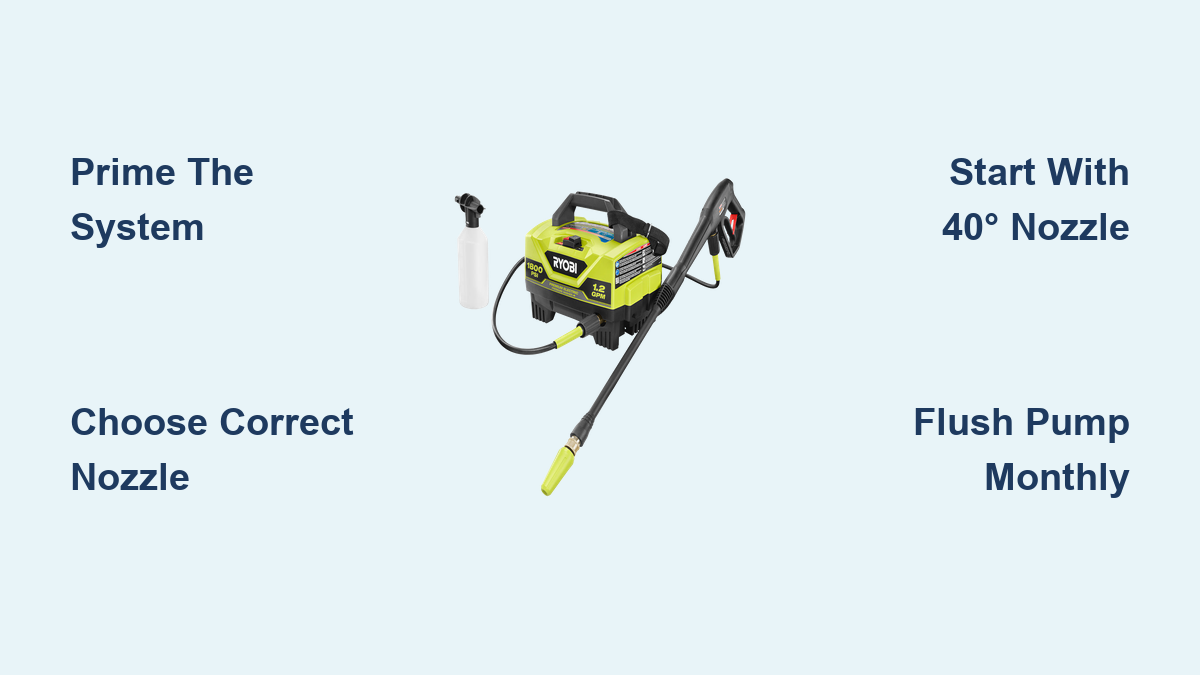
Squeeze the trigger on the spray gun until water flows steadily from the wand. This removes air from the lines and primes the pump. Once you see a consistent stream, release the trigger and proceed to power up.
⚠️ Never start the unit without water flowing. Running the pump dry can cause permanent damage within seconds.
Power Up the Unit
Now that the system is primed, it’s time to activate the pressure washer.
Plug In or Start Engine
For electric models, plug into a grounded GFCI outlet. For gas-powered units, follow the startup instructions in your manual, including choke, throttle, and pull cord steps.
Turn On the Machine
Flip the power switch, usually located on the unit or control panel. Electric models will start immediately, while gas models may require a few pulls.
Check for Proper Startup
Listen for smooth operation. If the motor struggles or makes unusual noises, shut down and recheck connections, water flow, or fuel levels for gas models.
Select the Right Nozzle Tip

The nozzle you choose determines spray intensity and coverage, which is critical for avoiding surface damage.
Understand Nozzle Color Codes
Each color represents a different spray angle and pressure level:
- 0° (Red): Pinpoint stream for extreme buildup only, use with caution
- 15° (Yellow): Narrow fan for concrete, brick, and heavy stains
- 25° (Green): Medium fan for decks, siding, and patios
- 40° (White): Wide fan for cars, windows, and delicate surfaces
- 75° (Black): Soap applicator for low-pressure detergent spray
Attach Nozzle to Wand
Twist the selected tip into the end of the spray wand until snug. Make sure it clicks or locks into place depending on your model.
✅ Pro Tip: Always start with a wider angle like 40° or 25° and move to narrower angles only if needed.
Apply Detergent (Optional)
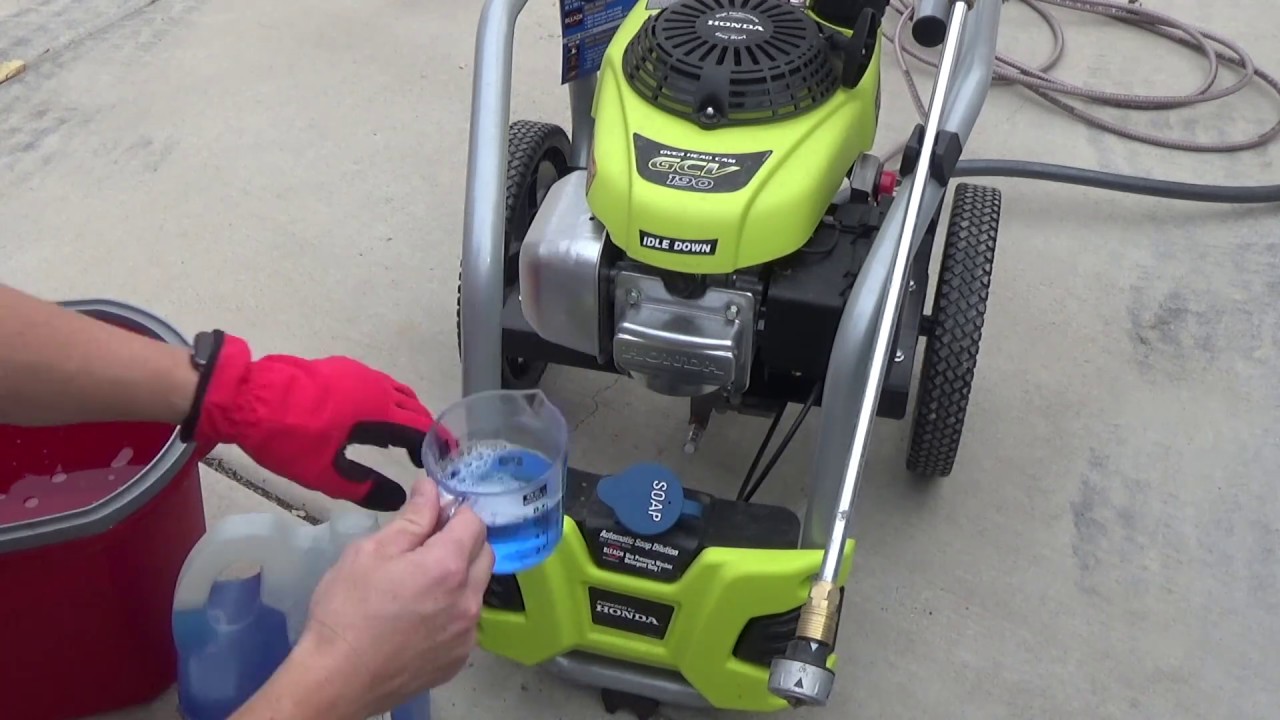
Many RYOBI models include a built-in soap tank for pre-treating dirty areas.
Fill the Detergent Tank
Pour appropriate pressure washer-safe detergent into the onboard tank. Never use household cleaners unless specified by the manufacturer.
Switch to Soap Nozzle
Attach the black 75° detergent tip or switch the detergent siphon valve, depending on your model.
Spray Evenly
Hold the wand 12 to 18 inches from the surface and apply soap in sections. Let it dwell for 3 to 5 minutes to break down grime, but do not let it dry.
❌ Avoid using detergent on hot surfaces or in direct sunlight, which can cause spotting.
Begin Pressure Washing
You are now ready to clean. Use proper technique to maximize efficiency and safety.
Maintain Correct Distance
Keep the nozzle 6 to 12 inches from hard surfaces like concrete and brick, and 12 to 18 inches from softer ones like wood and vinyl. Too close causes damage, while too far reduces effectiveness.
Use a Side-to-Side Motion
Move the wand in overlapping horizontal passes, similar to mowing a lawn. This ensures even cleaning and prevents streaks.
Work from Bottom to Top
Start at the base of walls or large surfaces, then gradually move upward. This minimizes streaking and controls runoff.
Rinse Thoroughly
After applying detergent, switch back to a 25° or 40° nozzle and rinse from top to bottom. Overlap strokes and maintain steady pressure.
✅ Expert Note: Always follow the spray, pause, rinse method for stubborn areas and do not linger too long in one spot.
Shut Down Safely
After cleaning, proper shutdown protects your machine and prevents damage.
Release Trigger Pressure
Pull the trigger one last time to relieve residual pressure in the line before turning off the unit.
Turn Off Power
Switch off the machine and unplug the cord or shut down the engine.
Close Water Supply
Turn off the faucet and disconnect the garden hose. Drain remaining water from the hose to prevent kinks or freezing.
Flush the Pump (Recommended Monthly)
Run fresh water through the system for 30 seconds without detergent to clear any residue and protect internal seals.
Store Properly
Extend your RYOBI pressure washer’s lifespan with smart storage habits.
Coil Hoses Neatly
Wrap the high-pressure hose and garden hose loosely around built-in reels or hooks. Avoid sharp bends that can degrade the inner lining.
Remove Nozzles for Storage
Store tips in a labeled case or onboard holder to prevent loss and contamination.
Keep in Dry, Temperate Space
Store indoors in a garage or shed, away from moisture, freezing temperatures, and direct sunlight.
❌ Never leave the unit outside uncovered. UV exposure and weather damage reduce longevity.
Troubleshoot Common Issues
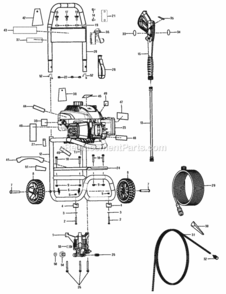
Even well-maintained machines can encounter problems. Here is how to fix frequent issues quickly.
No Water Pressure or Low Flow
Check these points:
- Is the faucet fully open?
- Is the garden hose kinked or clogged?
- Has the inlet filter become blocked? Clean it with water.
- Is the correct nozzle installed?
✅ Try priming again by squeezing the trigger with the unit off and water on.
Trigger Gun Won’t Spray
- Ensure the nozzle is securely attached.
- Disassemble and flush the tip, as debris often clogs small openings.
- Check for airlocks and re-prime the system.
Pump Makes Strange Noises
A knocking or screeching sound usually means:
- Not enough water supply
- Clogged filter
- Pump needs lubrication or professional service
⚠️ Stop use immediately if noise persists, as continued operation may destroy the pump.
Maintain Your Machine
Regular care keeps your RYOBI pressure washer running like new.
Clean After Every Use
Rinse off dirt, detergent, and debris from the frame, wheels, and hoses.
Inspect O-Rings and Seals
Check the wand and hose connections for worn or cracked O-rings. Replace them promptly to prevent leaks.
Replace Worn Parts Early
Worn nozzles, frayed cords, or leaking hoses should be replaced with genuine RYOBI parts for compatibility and safety.
Winterize If Needed
In freezing climates, drain all water from the pump and lines. Use a pump saver antifreeze solution to protect seals.
Frequently Asked Questions About RYOBI Pressure Washers
How do I prime my RYOBI pressure washer?
Turn on the water supply, then squeeze the trigger on the spray gun until you see a nice steady stream of water. Once achieved, the system is primed and the unit is ready to use.
Why does my RYOBI pressure washer have low or no water pressure?
Check that the faucet is fully open, the garden hose is not kinked, and the inlet filter is clean. Also verify that the correct nozzle is installed and the system is properly primed.
Can I use household cleaners in my RYOBI pressure washer detergent tank?
No, you should only use pressure washer-safe detergent. Household cleaners can damage the pump and internal components unless the manufacturer specifically states they are safe.
What nozzle should I use for cleaning my car?
Use the 40° white nozzle for cars and other delicate surfaces. This wide fan provides gentle pressure that cleans without damaging paint or glass.
How often should I flush the pump on my RYOBI pressure washer?
Flush the pump monthly by running fresh water through the system for 30 seconds without detergent. This clears residue and protects internal seals.
What should I do if my trigger gun won’t spray?
Ensure the nozzle is securely attached, flush the tip to remove debris, and check for airlocks by re-priming the system. If the problem persists, inspect the connections for damage.
Key Takeaways for Using Your RYOBI Pressure Washer
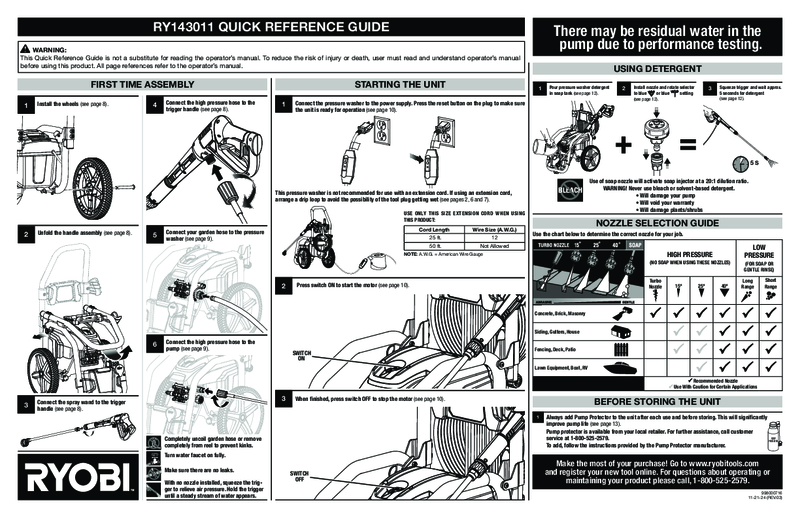
Knowing how to use a RYOBI pressure washer correctly transforms tough outdoor cleaning into a quick, rewarding task. The most critical steps are priming the system before startup, selecting the right nozzle for each surface, and always shutting down safely to protect the pump.
Regular maintenance, including monthly pump flushing and proper storage, will extend the life of your machine significantly. Always refer to your specific model’s manual for detailed guidance, and never skip safety checks.
With proper care, your RYOBI pressure washer will deliver years of reliable performance. Start with a simple cleaning task today, practice the techniques outlined here, and you will quickly build confidence in handling even the toughest outdoor grime.