
Clean Vinyl Siding Without a Pressure Washer
Dirty vinyl siding makes your home look neglected, yet many owners fear using high-pressure water. You can effectively remove mold and grime by learning how to clean vinyl siding without a pressure washer using simple tools.
This guide reveals three safe methods using garden hoses, vinegar, or bleach solutions to restore your exterior. You will discover step-by-step instructions to eliminate stains while avoiding the water damage risks associated with powerful machines.
Risks of Using High Pressure on Vinyl

Pressure washers often cause more harm than good when used on delicate vinyl surfaces. The intense force can crack panels, strip protective coatings, and push water behind the siding where it causes rot.
Homeowners frequently encounter costly repairs after forcing moisture into wall cavities or dislodging shingle granules on adjacent roofs. Gentle chemical cleaning removes organic growth without these dangerous side effects.
Why Water Intrusion Damages Homes
High-pressure streams easily bypass weatherproofing barriers designed for rain, not jets. This trapped moisture promotes mold growth inside walls and rots wooden framing over time.
- Cracked panels: Extreme pressure creates hairline fractures in old vinyl.
- Forced water: Moisture enters behind siding causing hidden structural decay.
- Granule loss: Roof shingles lose protection when hit by stray sprays.
Signs Your Siding Needs Gentle Care
Older homes or those with existing loose panels require the safest cleaning approach available. If you see green algae on shaded walls or black streaks near the roofline, low-pressure methods work best.
Apply Commercial Hose-Attached Cleaners

Using a dedicated hose attachment offers the fastest way to clean large sections of siding without scrubbing. These devices mix concentrated cleaner with water directly at the nozzle for instant application.
Connect and Spray the Solution
Attach the cleaner bottle to your standard 5/8-inch garden hose and switch the dial to the cleaning position. Spray the mixture onto the vinyl surface, ensuring complete coverage of moldy or dirty areas.
The specialized formula begins breaking down organic stains within seconds of contact. You do not need to scrub because the chemical action lifts dirt automatically.
Rinse After Short Dwell Time
Allow the solution to sit for 30 to 60 seconds before switching the nozzle to the rinse setting. Flush the area thoroughly with clear water to remove all loosened grime and chemical residue.
- Time estimate: Entire process takes under one minute per section.
- Best for: Large homes needing quick maintenance.
- Safety note: Do not let the solution dry on the surface.
Scrub Siding with Vinegar and Soap
Manual scrubbing with a vinegar solution provides a safe, eco-friendly alternative for spot cleaning small areas. This method uses common household ingredients to tackle light dirt and mild mildew safely.
Mix Natural Cleaning Ingredients
Combine one part white vinegar with three parts water in a bucket for an effective cleaning solution. Add a few drops of mild dish soap to help lift grease and dirt from the vinyl texture.
This gentle mixture kills surface mold spores without harsh chemicals or strong fumes. It is ideal for homeowners who prefer non-toxic options for their property.
Wash Upward and Rinse Down
Dip a soft-bristle brush into your solution and scrub the siding using upward motions to prevent streaking. Let the mixture dwell for five to ten minutes before rinsing from the top down with a garden hose.
- Pre-rinse the wall to remove loose dust and debris.
- Scrub gently in small sections starting from the bottom.
- Rinse thoroughly from the top to wash away suds.
Pro Tip: Always work in the shade to prevent the solution from drying too quickly and leaving spots.
Spray DIY Bleach Cleaner for Mold

A homemade bleach spray delivers powerful results against stubborn black mold and heavy mildew buildup. This budget-friendly formula matches expensive store-bought cleaners but costs pennies to make.
Prepare the Bleach Mixture
Mix one part household bleach with two parts water in a pump sprayer, then add eight ounces of dish soap. The soap acts as a surfactant to help the bleach spread evenly and penetrate deep into grime.
- Ratio: 1 part bleach to 2 parts water.
- Additive: 8 ounces of dish soap per gallon.
- Shelf life: Mix only what you need for one day.
Apply Safely to Exterior Walls
Spray the solution starting at the bottom of the wall and working upward to avoid streaks. Let it sit for 10 to 15 minutes, then rinse completely from the top down using moderate water flow.
Avoid spraying directly into attic vents, soffits, or eaves where liquid could damage insulation. Cover nearby plants with plastic sheeting since bleach can harm vegetation.
Treat Roof Shingles Without Damage
You can safely remove moss and lichen from asphalt shingles using the same low-pressure techniques. Chemical cleaning preserves shingle granules that high-pressure water would otherwise strip away.
Remove Moss from Shingles
Apply your bleach solution from the top of the roof downward to prevent water from getting under the shingles. Allow the mixture to sit for up to three minutes on heavy growth before rinsing gently.
Use a soft brush to lift stubborn patches if necessary, but avoid aggressive scrubbing. This method kills the roots of the moss preventing immediate regrowth.
Prevent Structural Damage
Chemical cleaning maintains the integrity of your roof while eliminating unsightly biological growth. Pressure washing often shortens roof life by removing the protective gravel layer on shingles.
- Safety first: Use a secure ladder and proper fall protection gear.
- Application: Work on cloudy days to slow evaporation.
- Result: Clean shingles without lost granules or leaks.
Select the Best Cleaning Method
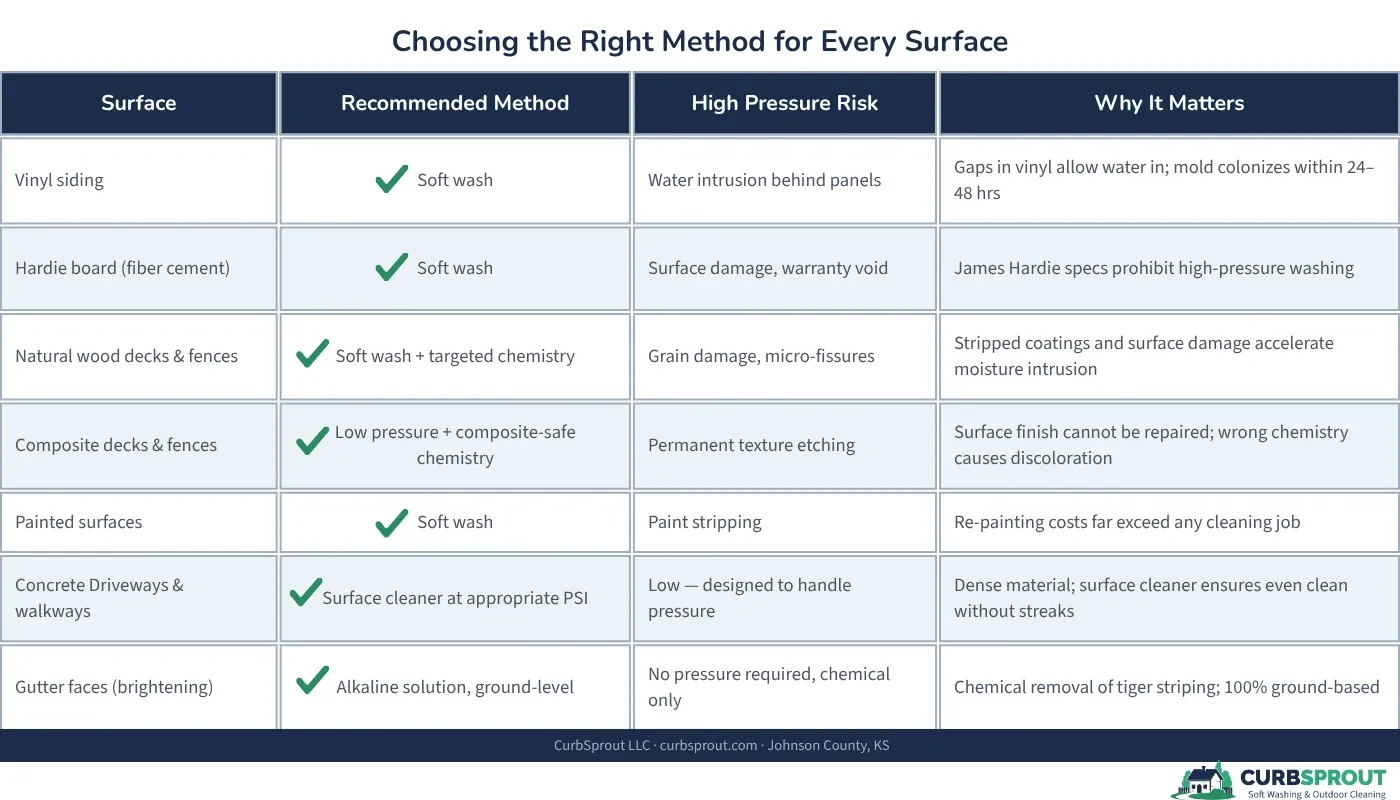
Choosing the right technique depends on the size of your job and the severity of the stains. Each method offers distinct advantages regarding cost, effort, and speed.
Compare Time and Cost Factors
Review the specific benefits of each approach to match your current needs and available tools. Some situations demand speed while others require a gentle touch or minimal expense.
| Method | Time Required | Estimated Cost | Effort Level |
|---|---|---|---|
| Hose Cleaner | 20–30 mins | $20–$30 | Low |
| Vinegar Scrub | 1–2 hours | <$5 | Medium |
| Bleach Spray | 30–45 mins | <$1 | Low |
Match Method to Situation
Select the hose-attached system for whole-house cleaning when you want fast results with zero scrubbing. Use the vinegar scrub for small touch-ups or if you have pets and children playing nearby.
Choose the DIY bleach spray for heavy mold infestations or when working with a tight budget. All three methods effectively clean vinyl siding without a pressure washer when applied correctly.
Follow Essential Safety Guidelines
Successful cleaning requires adherence to specific safety practices to protect both your home and yourself. Ignoring these rules can lead to damaged surfaces or personal injury.
Test Solutions Before Full Application
Always test your chosen cleaner on a small, hidden area behind a downspout first. Wait ten minutes to ensure no discoloration or damage occurs before proceeding with the full job.
Work in Shaded Conditions
Clean your siding on cloudy days or during early morning hours to prevent rapid drying. Direct sunlight causes solutions to evaporate too quickly, leaving behind unsightly streaks and residue.
- Timing: Early morning or late afternoon is best.
- Weather: Avoid windy days that blow spray onto plants.
- Protection: Wear gloves and eye protection when using bleach.
Frequently Asked Questions About Cleaning Vinyl Siding
Can I use bleach to clean my vinyl siding?
Yes, diluted bleach mixed with water and dish soap effectively kills mold and mildew on vinyl. Always rinse thoroughly and avoid spraying near plants or into attic vents to prevent damage.
How often should I clean my vinyl siding?
You should clean your vinyl siding once or twice a year to prevent heavy buildup of dirt and organic growth. Regular maintenance makes each cleaning session faster and easier.
Will vinegar damage vinyl siding?
No, a mixture of vinegar and water is safe for vinyl and works well for light cleaning tasks. It is an excellent eco-friendly option for removing dust and minor stains.
Do I need special tools to clean without pressure?
You only need a garden hose, a bucket, a soft brush, and optionally a pump sprayer or hose attachment. These basic tools are sufficient for professional results.
Why should I avoid pressure washing vinyl?
Pressure washing can force water behind siding, cause cracks, and strip roof granules. Low-pressure chemical cleaning is safer and equally effective for removing grime.
Key Takeaways for Cleaning Vinyl Siding Safely
You now know how to clean vinyl siding without a pressure washer using three effective and safe methods. Whether you choose a commercial hose attachment, a vinegar scrub, or a DIY bleach spray, you can achieve a spotless exterior.
Remember to always test your solution, work in the shade, and rinse thoroughly from top to bottom. Start with the method that best fits your budget and time constraints to restore your home’s curb appeal today.