
Samsung Washing Machine Maintenance Tips
If your Samsung washing machine seems to be working fine, do not be fooled. Silent wear is already happening inside. Without regular Samsung washing machine maintenance, limescale builds up, filters clog, and odors develop, slowly degrading performance and shortening lifespan. In hard or salty water areas, this damage accelerates fast. But with just 10 to 15 minutes a week, you can prevent 90% of common failures, save on energy bills, and extend your washer is life by up to 10 years. This guide delivers actionable, model-specific maintenance steps backed by technical detail so you keep your machine running like new.
Clean the Pump Filter Monthly to Prevent Drainage Issues

Front-load Samsung washers rely on a pump filter to catch lint, coins, and debris. When clogged, drainage slows or fails, triggering error codes like 4E, 4C, 5E, or 5C.
How to Remove and Clean the Filter
- Wait one hour after a hot cycle to let water cool.
- Place a large container and towel under the front access panel.
- Open the panel by pressing the top tab.
- Unscrew the rubber drain hose cap by turning counter-clockwise.
- Drain residual water into the container.
- Turn the pump filter counter-clockwise to remove. On some models, push in and twist like a medicine bottle cap.
- Rinse the filter under warm water with a soft brush.
- Shine a flashlight into the pump housing to check the impeller for blockages.
- Reinstall the filter by turning clockwise until it locks vertically.
- Secure the hose cap and close the panel.
Note: Top-load Samsung models do not have a pump filter. No action needed for these models.
Check Water Inlet Mesh Filters Quarterly
Sand, silt, and mineral particles can block water flow before it even enters your machine. Cleaning the mesh filters prevents low-pressure issues and error codes.
How to Clean Inlet Hose Filters

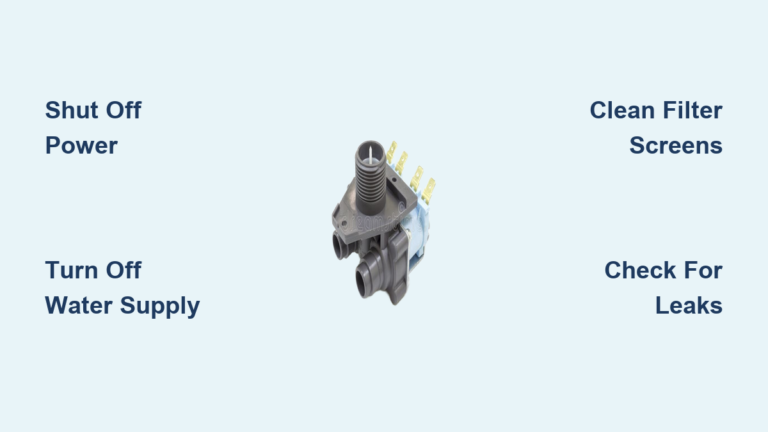
- Turn off the water supply valves.
- Disconnect the inlet hoses from the back of the washer.
- Use pliers to pull out the mesh filter from each connection.
- Soak in warm water and gently scrub with a toothbrush.
- Reinsert filters fully. Ensure they sit flush.
- Reconnect hoses and turn water back on.
- Check for leaks before starting a cycle.
Pro Tip: In sandy or high-mineral areas, clean these filters every three months instead of yearly.
Deep Clean the Detergent Drawer Monthly
Detergent and fabric softener residue cause clogs, odors, and leaks, especially in humid climates.
Standard Drawer Removal Process
- Pull the drawer out until it stops.
- Lift out the removable inserts. These are the main wash, pre-wash, and softener compartments.
- Rinse under warm water and scrub buildup with a soft brush.
- To fully remove the drawer, press both sides inward and pull for front load. For top load, pull out and tip upward.
- Wipe the drawer recess with a damp cloth.
- Dry all parts before reassembling.
Auto Dispenser Models Like WF50A8800AV
- Hold the release lever and pull the drawer out.
- Remove compartment lids using the pull tabs at the back.
- Pour lukewarm water into compartments to dissolve residue.
- Scrub gently with a brush and clean the rear valve thoroughly.
- Dry all components, especially the recess, before reinserting.
- Ensure lid seals snap tightly around the edges.
Warning: Never pour fabric softener directly into the drum. Always use the flower-marked compartment to avoid staining clothes.
Run Self Clean or Eco Drum Cycles Regularly
These built-in cycles clean hidden areas where moisture, mold, and limescale thrive.
Eco Drum Clean for Front Load
The cycle takes approximately one hour and 44 minutes. Run it every 40 washes or when prompted. Leave the drum empty, press Power, turn the dial to Eco Drum Clean, and press Start/Pause. Do not add detergent or cleaner.
Self Clean for Front and Top Load
Front load cycles take about four hours. Top load cycles take approximately one hour. Run Self Clean monthly for front load and every 20 washes for top load. Ensure the drum is empty, press the Self Clean button, and press Start. No cleaner is needed unless odor is present. Then add one-half cup of bleach.
After any cleaning cycle, leave the door and detergent drawer open for at least 20 minutes to dry completely.
Prevent Mold and Odors with Daily Habits
Mold grows fast in damp environments, especially in front-loaders with tight door seals.
Daily Prevention Habits
- Leave the door ajar after each wash for 15 to 20 minutes minimum.
- Wipe the door gasket with a dry microfiber cloth. Focus on the inner folds.
- Clean the drum interior monthly with a vinegar-soaked cloth.
- Avoid abrasive cleaners on the rubber seal. They cause cracks and leaks.
- Run a hot-water cycle once a month, even if you usually use cold water.
Fixing Existing Odors
- Run a Self Clean cycle with bleach.
- Or use a commercial washing machine cleaner like Affresh or OxiClean.
- Wipe the gasket and dispenser with a vinegar-water mix in a one-to-one ratio.
- Leave the machine open to dry for 24 hours if odor persists.
Clean Exterior Surfaces Safely
Stains and water spots degrade the finish over time, especially on stainless steel models.
Safe Cleaning Method
- Dampen a microfiber cloth with mild soapy water.
- Wipe the door, control panel, and casing.
- For stubborn spots, apply Cerama Bryte cooktop cleaner to the cloth, not the machine.
- Buff in circular motions.
- Wipe with a damp cloth.
- Dry thoroughly with a clean microfiber towel.
Never spray liquid directly onto the machine. Water can seep into controls and damage electronics.
Load and Operate Your Machine Correctly
Even perfect cleaning will not help if you overload or misuse the washer.
Smart Loading Tips
- Sort by color and fabric type. Separate cottons, synthetics, and delicates.
- Check garment labels for temperature limits.
- Distribute clothes evenly to prevent imbalance and vibration.
- Do not overfill. Leave space for clothes to move freely.
- Use small load settings for fewer items to save water and energy.
Prepare Delicate Items
- Empty pockets of coins, tissues, and sharp objects.
- Turn embroidered clothes inside out to protect designs.
- Secure drawstrings to prevent tangling.
- Wash bras, socks, and small items in a laundry net. Never run the net alone. Always include other clothes to balance the load.
Use Detergent Properly to Avoid Damage
Wrong detergent or overuse causes suds buildup, residue, and machine damage.
Detergent Dispenser Guide
| Compartment | Use For |
|---|---|
| Left | Main wash detergent |
| Front-right | Fabric softener, flower-marked section only |
| Rear-right | Pre-wash detergent |
Detergent Best Practices
- Use HE high-efficiency detergent only. Low suds are safe for Samsung machines.
- Follow dosage instructions. More is not better.
- Never pour softener directly into the drum.
- Clean auto dispensers monthly to prevent clogs.
- In hard water, use detergent with water softeners or add a rinse aid.
Decode Common Error Codes
Your washer speaks through error codes. Learn to respond fast.
Drainage Errors 4E, 4C, 5E, 5C
- Cause: Clogged pump filter or blocked drain hose.
- Fix: Clean the filter and check the hose for kinks or debris.
Other Warning Signs
| Symptom | Likely Cause | Action |
|---|---|---|
| Slow drainage | Clogged filter or hose | Clean pump filter |
| Bad smell | Mold in gasket or drum | Run Self Clean with bleach |
| Clothes not clean | Detergent buildup | Clean drawer, reduce dosage |
| Loud noise | Worn bearings or unbalanced load | Redistribute clothes, inspect |
| Leaks | Damaged seal or loose hose | Check gasket and connections |
| High bills | Limescale or motor strain | Run descaling cycle, call tech |
Descale Monthly in Hard Water Areas
In regions with hard or salty water, limescale buildup reduces efficiency and damages internal parts rapidly.
How to Descale Your Washer
- Leave the drum empty.
- Add two cups white vinegar or a commercial descaler.
- Run the hottest water cycle available, such as Cotton 90°C.
- Let the cycle complete fully.
- Wipe the gasket and door afterward.
- Leave the door open to dry.
Frequency: Monthly in hard or salty water areas. Even if no symptoms appear.
Know When to Call a Technician
Some issues go beyond DIY fixes.
Call a Samsung-Certified Technician If
- Grinding or clicking noises continue after cleaning.
- The machine shakes violently during spin.
- Water leaks from the base or back.
- Error codes return after troubleshooting.
- The drum will not spin or fill.
- Electrical issues occur, such as flickering display or tripped breaker.
- It is time for semi-annual or annual inspection.
In regions with extreme water conditions: Professional service every three to four months is recommended for heavy-use households. Technicians perform internal descaling, bearing lubrication, and motor diagnostics you cannot do at home.
Monthly Maintenance Checklist
Use this quick-reference list to stay on track.
| Task | Frequency |
|---|---|
| Clean pump filter | Monthly |
| Clean detergent drawer | Monthly |
| Run Eco Drum Clean or Self Clean | Every 20 to 40 washes |
| Wipe door seal and drum | Weekly |
| Leave door and drawer open | After every wash |
| Inspect hoses for leaks | Quarterly |
| Clean inlet mesh filters | Once or twice per year |
| Run descaling cycle with vinegar | Monthly in hard water |
| Schedule professional check | Every three to six months |
Frequently Asked Questions About Samsung Washing Machine Maintenance
How often should I clean the pump filter on my Samsung washing machine?
Clean the pump filter monthly or every 40 washes. Front-load models have this filter. Top-load models do not.
What happens if I never descale my washing machine?
Limescale builds up on heating elements and internal components. This reduces efficiency, increases energy consumption, and can lead to complete machine failure.
Can I use regular detergent in my Samsung washing machine?
No. Always use HE high-efficiency detergent. Regular detergent creates excessive suds that damage the machine and reduce cleaning performance.
Why does my Samsung washer smell bad even after cleaning?
Mold and bacteria thrive in damp environments. Leave the door open after every wash, run Self Clean with bleach, and wipe the door gasket regularly.
How do I run the Self Clean cycle on my Samsung washer?
Ensure the drum is empty. Press the Self Clean button, then press Start. No detergent is needed unless odor is present. Then add one-half cup bleach.
Should I leave the washing machine door open between uses?
Yes. Leave the door ajar for 15 to 20 minutes after every wash. This allows moisture to escape and prevents mold growth.
Key Takeaways for Samsung Washing Machine Maintenance
Consistent Samsung washing machine maintenance prevents 90% of common failures and extends your appliance is life by up to 10 years. Monthly tasks like cleaning the pump filter, scrubbing the detergent drawer, and running Self Clean cycles keep internal components free from debris and limescale. Daily habits such as leaving the door open and wiping the gasket stop mold and odors before they start. In hard water areas, monthly descaling with vinegar is essential. Professional servicing every three to six months catches issues you cannot see. Spend 10 minutes a week today to save hundreds in repairs tomorrow.