How to Clean Washing Machine Tub: Quick Steps
Your washing machine works hard to keep clothes fresh, but over time, the tub itself can become a breeding ground for mold, mildew, soap scum, and bacteria even though it is supposed to be cleaning. A smelly or grimy washer does not just reduce laundry performance. It can transfer odors and residue to your clothes and shorten the appliance lifespan. The good news is that cleaning your washing machine tub is simple, affordable, and takes less than an hour. Whether you own a front-loader or top-loader, this guide shows you exactly how to deep clean your machine using proven methods, safe cleaners, and the right tools.
You will learn how often to clean your tub based on usage, which parts need attention, the best cleaning agents to use and which ones to avoid, step-by-step cleaning procedures, and daily habits that prevent buildup. With manufacturer-backed tips and real-world-tested strategies, you will keep your machine running like new for years.
Why a Clean Tub Matters for Your Laundry
A dirty washing machine undermines every load of laundry. Despite regular use, residue from detergent, fabric softener, hard water minerals, and body oils accumulates in hidden areas. This buildup leads to musty odors, reduced cleaning power, and even mechanical issues over time.
Preventing Musty Smells and Mold
Front-loaders are especially prone to mold in the rubber door seal, where moisture gets trapped. That sour, mildewy smell is biofilm, layers of bacteria and fungi growing in damp, dark spaces. Cleaning the tub regularly disrupts this environment and stops odors before they start.
Stopping Detergent and Limescale Buildup
Using too much detergent or fabric softener leaves sticky residue inside the drum, dispenser, and hoses. In hard water areas, calcium and magnesium form limescale that clogs pumps and reduces water flow. Left unchecked, this forces the machine to work harder, increasing wear and energy use.
Protecting Your Appliance and Warranty
Many manufacturers exclude mold, odor, and residue issues from warranty coverage if caused by poor maintenance. Regular tub cleaning is considered preventive care. Some brands even include clean tub reminders to encourage upkeep.
How Often Should You Clean Your Washing Machine Tub
Cleaning frequency depends on usage, water type, and machine design.
Monthly Cleaning Is Standard
For most households, clean the tub once a month. This keeps residue and microbes under control and prevents deep buildup.
Increase Frequency If
You use fabric softener often, your water is hard (7+ grains per gallon), you run multiple loads daily, or you notice odors or visible mold. In these cases, clean every two to three weeks.
Front-Loaders Need More Attention
Due to their sealed design and moisture-trapping gasket, front-loading washers should be cleaned every one to two months, even with light use.
What Parts of Your Washing Machine Need Cleaning
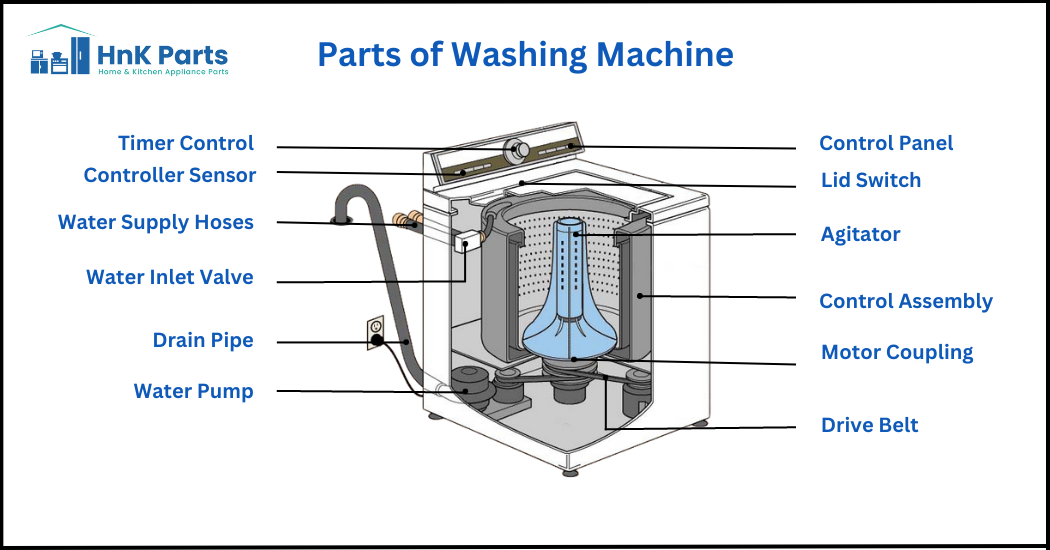
Effective cleaning goes beyond the drum. Target these key areas for a thorough job.
Door Seal and Gasket on Front-Loaders
Pull back the rubber seal and wipe underneath. This is where water, lint, and mold collect. Use a microfiber cloth and vinegar solution for best results.
Detergent Dispenser Drawer
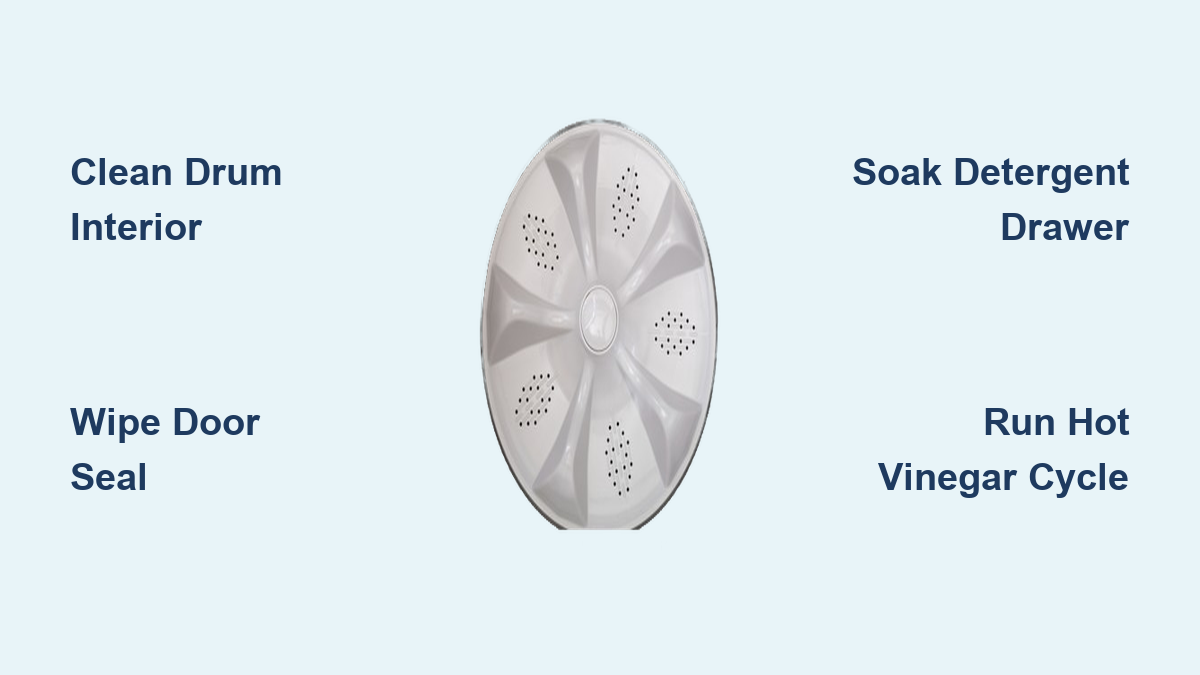
Remove the drawer and clean all compartments, main wash, pre-wash, and fabric softener. Soak in warm, soapy vinegar water and scrub slots with a toothbrush.
Drum Interior and Rim
Wipe the entire inner drum, especially the top edge where water and residue pool. Pay attention to areas behind agitators or baffles.
Drain Pump Filter
Located at the front bottom panel, this filter catches coins, hair, and debris. Clean every one to three months to prevent clogs.
Agitator Cap on Top-Loaders
Pop off the center cap and clean underneath. Dirt and hair often accumulate here.
Best Cleaning Agents for Your Tub
Use the right cleaner for your needs. Some work better for odors, others for limescale or biofilm.
White Vinegar
Use for descaling, deodorizing, and dissolving soap scum. Use two cups (475 ml) in the drum. This is best for monthly cleaning and moderate hard water. Never mix with bleach because it creates toxic fumes. Vinegar acetic acid breaks down mineral deposits and kills many bacteria and mold strains. It is affordable and widely available, but less powerful than commercial options in severe buildup cases.
Commercial Tub Cleaners
Examples include Affresh, OxiClean, and Active Washing Machine Tablets. Use these for heavy residue, biofilm, and long-term protection. Cost runs about $0.72 to $1.50 per use once a month. These products are formulated for internal sensors and components and are safe for HE machines. They combine oxygen bleach, surfactants, and descaling agents to deep clean without damaging the machine.
Baking Soda
Use for neutralizing odors and gentle scrubbing. Use one-half cup (120 g). Run this in a separate cycle after a vinegar cycle, not during. Mixing with vinegar causes foaming and overflow.
Citric Acid or Lemon Juice
Use for light limescale and fresh scent. Use the juice of two lemons or one-half cup citric acid powder. This is less concentrated than vinegar and may need repeat use, but it works well for sensitive users or machines where vinegar is discouraged.
Anti-Lime Scale Powders
Use for severe mineral buildup in hard water zones. Use monthly in high-hardness areas and follow product instructions for dosage.
Step-by-Step Guide to Clean Your Washing Machine Tub
Follow this proven three-phase process for a thorough clean.
Pre-Cycle Preparation
Remove Detachable Components
Front-loaders should pull out the detergent drawer using the release latch. Top-loaders should remove agitator cap and any removable dispensers. Check the manufacturer manual first because some parts snap out easily, others require tools.
Soak and Scrub
Create a soaking solution with one cup white vinegar and one teaspoon dish soap in warm water. Soak for 15 to 30 minutes. Use a toothbrush for small crevices, a pipe cleaner for narrow dispenser channels, and a rubber electric scrubber for large surfaces. Wear textured cleaning gloves for better grip.
Wipe Accessible Areas
Use a damp microfiber cloth to wipe the drum walls, door seal (pull back gasket), and lid and glass. Dry all surfaces before the cleaning cycle to prevent microbial regrowth.
Run the Cleaning Cycle
Choose the Right Wash Setting
Best option is to use the Tub Clean, Self-Clean, or Clean Washer cycle if available on your model. Alternative is to select the hottest water setting (90°C / 194°F) with maximum water level. High heat improves cleaner effectiveness by breaking down grease and killing microbes.
Add the Cleaning Agent
For white vinegar, pour two cups directly into the drum, not the dispenser. Run full cycle. For commercial cleaner, drop one tablet or pour one packet into the drum and follow label instructions. For citric acid or anti-lime powder, add as directed, usually one-half to one cup.
Never mix cleaning agents. Use only one agent per cycle. Never mix vinegar with bleach, detergent, or commercial cleaners.
Boost Stubborn Buildup with Soak Method
For old or neglected machines, start the cycle and let the tub fill with water. Pause the machine and let it soak for one hour. Resume to complete the wash and drain. This extended soak loosens biofilm and mineral deposits.
Post-Cycle Steps
Wipe Down and Dry
After the cycle ends, wipe the drum, seal, and dispenser housing with a dry towel. Remove residual moisture to prevent mold.
Reinstall Components
Ensure all parts are fully dry before reinserting. A damp drawer or cap traps moisture and restarts the cycle of odor.
Optional Rinse
If vinegar smell lingers, run a quick rinse or spin-only cycle with no additives.
Model-Specific Cleaning Tips

LG Front-Loaders
Use the Tub Clean mode on the control panel. The cycle runs 60 to 90 minutes at up to 90°C. Use LG cleaner, vinegar, or citric acid. Run a rinse cycle afterward if needed.
Samsung and Whirlpool
Avoid long-term vinegar use. These brands warn that prolonged vinegar use may degrade rubber seals or sensors. Opt for Affresh or OxiClean for monthly cleaning.
GE Appliances
GE recommends commercial cleaners like Affresh for best results and warranty compliance.
How to Deep Clean Without a Self-Clean Cycle
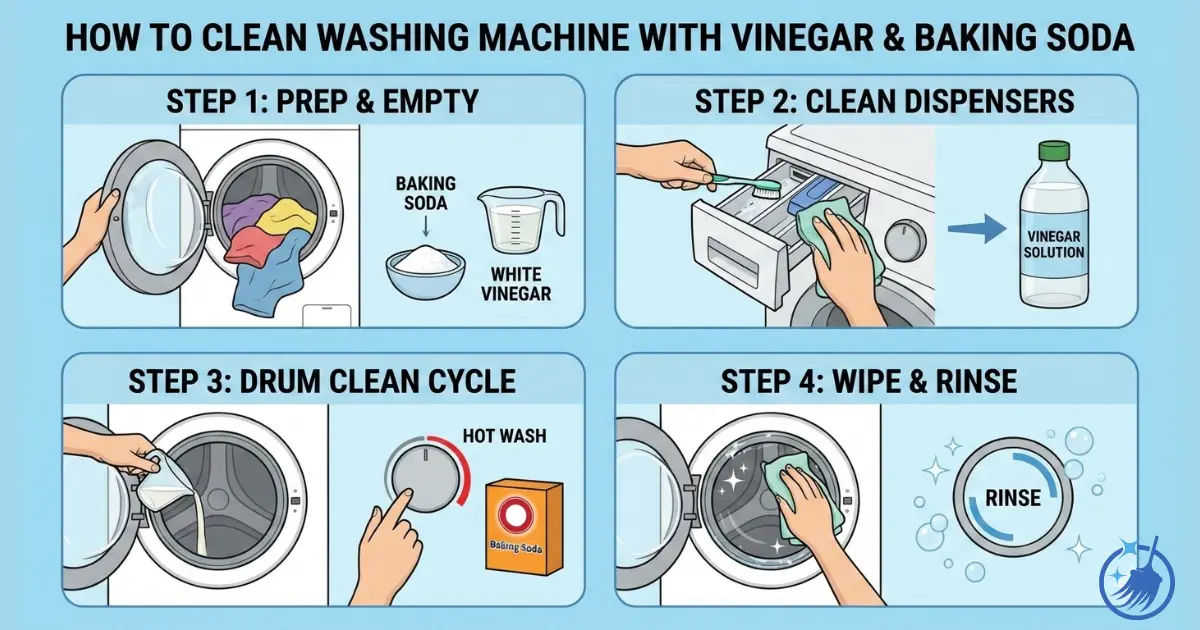
No Tub Clean option on your machine? No problem. Use this two-step deep cleaning method.
Two-Step Deep Cleaning
First cycle uses vinegar. Set to hottest water and largest load. Add two cups white vinegar to drum. Run full cycle.
Second cycle uses baking soda. Add one-half cup baking soda to drum. Run another hot cycle.
This combo dissolves buildup and neutralizes odors. It is ideal for neglected machines.
Daily Habits to Prevent Buildup
Cleaning is easier when you prevent grime in the first place.
Leave Door or Lid Open
Front-loaders should leave door ajar two to three inches after each use. Top-loaders should keep lid open. This promotes airflow and drying, stopping mold before it starts.
Wipe the Gasket Weekly
Keep a microfiber towel nearby. Wipe the door seal and glass after heavy cycles or every few days.
Use HE Detergent in Right Amounts
Excess suds leave residue in hoses and sump. Use high-efficiency (HE) detergent and follow dosage instructions.
Do Not Overload the Machine
Overpacking reduces water circulation and rinsing efficiency. Leave space for clothes to move freely.
Clean Detergent Drawer Weekly
Remove, rinse under warm water, and dry before reinserting. This prevents clogs and microbial growth.
Install a Water Softener If Needed
In hard water areas, a softener reduces limescale, extends time between cleanings, and protects internal parts.
Tools You Will Need
Keep these supplies on hand for easy cleaning.
White vinegar serves as a natural descaler. Dawn dish soap boosts scrubbing power. Commercial cleaner tablets provide reliable monthly cleaning. A toothbrush reaches tight spaces. Pipe cleaners clear narrow channels. Microfiber towels wipe and dry surfaces. Textured cleaning gloves give better grip when wet. A rubber electric scrubber cleans large drum surfaces quickly. A bucket holds soaking parts.
Safety Warnings to Remember
Never Mix Vinegar and Bleach
This combination produces toxic chloroform gas. Always use one cleaner at a time.
Avoid Abrasive Pads
Steel wool or harsh scrubbers can scratch the drum and void the warranty.
Do Not Use Laundry Detergent to Clean the Tub
It creates excess suds and leaves more residue, which is counterproductive.
Check Manufacturer Guidelines
Some brands discourage vinegar. When in doubt, use a recommended commercial cleaner.
Signs Your Tub Is Clean
After cleaning, look for these indicators.
No musty or sour smells. No black specks or slime on seals. Clear rinse water in next wash. Smoother spin cycle with less vibration. Fewer service issues over time. Regular maintenance can extend your machine life to 10 to 12 years or more.
Best Practices by Machine Type
| Task | Top-Loader | Front-Loader |
|---|---|---|
| Ventilate after use | Leave lid open | Leave door ajar |
| Key cleaning zones | Agitator base, dispensers | Door seal, glass, drawer |
| Recommended cleaner | Vinegar or tablets | Affresh, OxiClean |
| Cleaning frequency | Monthly | Every 1 to 2 months |
| Special tools | Toothbrush, pipe cleaner | Same plus seal-lifting tool |
Protect Your Warranty
Most manufacturers require regular maintenance to keep warranties valid. Cleaning the tub is considered owner responsibility. Use approved products and follow the manual to avoid voiding coverage.
Some models even display clean tub alerts after 30 to 40 cycles. Do not ignore these reminders.
Final 6-Step Maintenance Plan
For a consistently fresh, high-performing washer, follow this simple plan.
Run a cleaning cycle monthly with vinegar or a commercial tablet. Scrub dispensers and seals every one to three months. Use the hottest water setting or Tub Clean mode. Leave the door or lid open after every use. Never use detergent when cleaning the tub. Follow manufacturer instructions to avoid damage.
Frequently Asked Questions About Cleaning Washing Machine Tub
How do I clean my washing machine tub with vinegar?
Pour two cups of white vinegar directly into the empty drum. Select the hottest water setting and run a full cycle without any laundry. This removes residue, deodorizes, and dissolves soap scum buildup.
Can I use bleach to clean my washing machine tub?
Only use bleach if your manufacturer recommends it. Many brands advise against bleach because it can damage rubber seals and internal components. If allowed, use one cup of bleach and run a hot cycle.
How often should I clean my front-loading washer?
Clean front-loading washers every one to two months. These machines are more prone to mold and odor due to their sealed design and moisture-trapping door gasket.
What is the best commercial cleaner for washing machine tubs?
Affresh and OxiClean are top-rated options. They are formulated specifically for internal components, safe for HE machines, and effective against biofilm and residue. Cost runs about $0.72 to $1.50 per tablet.
Why does my washing machine smell bad after cleaning?
The smell may come from residual moisture or vinegar. Wipe all surfaces dry after cleaning and run a rinse cycle with no additives to remove any lingering odor. Ensure the door or lid stays open between loads to promote drying.
Can I use vinegar and baking soda together in the same cycle?
Do not mix them in the same cycle. This causes rapid foaming and can overflow the machine. Run vinegar first in one cycle, then baking soda in a separate cycle for best results.
Key Takeaways for Cleaning Your Washing Machine Tub
A clean washing machine tub means cleaner clothes, fewer odors, and a longer-lasting appliance. With just a few simple steps each month, you can keep your washer running at its best. Use two cups of white vinegar or one commercial tablet monthly for regular maintenance. Target the door seal, detergent drawer, and drum interior during each clean. Leave the door or lid open after every use to prevent mold and musty smells. Whether you use vinegar, a commercial cleaner, or a combination, consistency is the key. Start today and enjoy a fresher, more efficient laundry routine tomorrow.