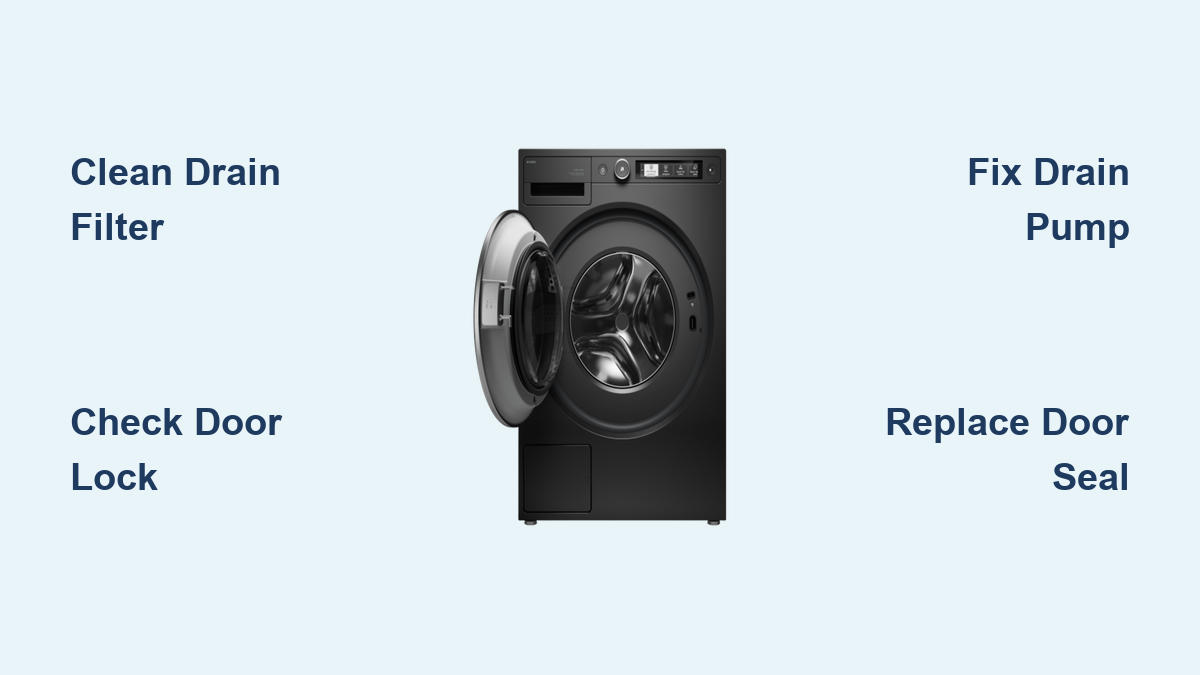
How to Fix Asko Washing Machine Repair Issues
Is your Asko washing machine not draining, failing to spin, or displaying an error code? You are not alone. Asko washers are known for their quiet operation, high efficiency, and durable Scandinavian design, but they can still develop problems over time, especially after years of reliable service. Whether you are dealing with a door that will not lock, excessive vibration, or a leak under the unit, most issues are repairable with the right knowledge.
This guide breaks down the most common Asko washing machine problems, their root causes, and how to fix them. You will learn whether you should prepare for a technician visit or attempt a repair yourself. You will also discover preventive maintenance steps to extend your washer is life to its full 15 to 20 year potential. If you own an Asko W4086C, W4114C, or W6098X model, this is your go-to resource for fast, accurate diagnostics.
Decode Common Error Codes on Your Asko

Your Asko washer displays specific error codes to help diagnose problems. Understanding these codes saves time and helps you communicate with repair technicians.
E10: Door Lock Failure
The E10 error means the washer detects the door is not locked. Even if the door appears closed, the machine will not start the cycle for safety reasons.
Common causes include:
– Faulty door lock solenoid
– Damaged door seal or misalignment
– Obstruction in the latch
– Wiring issue or control board fault
What to check:
– Listen for a click when starting the cycle
– Inspect the door gasket for tears or debris
– Ensure nothing blocks the door from fully closing
A technician will test lock continuity with a multimeter. If no signal is found, the door lock assembly requires replacement. In some cases, a control board reset resolves soft faults.
E20: Drain Problem
E20 indicates a drainage issue. The washer cannot empty water within the expected time.
Likely sources include:
– Clogged drain filter
– Kinked or blocked drain hose
– Failed drain pump
– Faulty pressure switch
Quick action steps:
1. Turn off power and unplug the machine
2. Open the lower front access panel
3. Remove and clean the self-cleaning lint filter
4. Check the drain hose for clogs or improper height
If the pump hums but no water moves, the impeller may be jammed. If silent, test for voltage at the pump connector. Replace the drain pump if no power reaches it or the impeller is broken.
E30: Overfilling Detected
The E30 code means the pressure switch senses too much water, triggering a safety shutdown.
Possible causes include:
– Malfunctioning inlet water valve stuck in the open position
– Failed pressure switch or clogged air hose
– Water level sensor error
Diagnostic tips:
– Check the air tube from tub to pressure switch for cracks or disconnection
– Test the inlet valve for continuity
– Inspect the pressure switch with a multimeter
Replace the inlet valve if it does not close properly. Clean or replace the pressure switch if readings are off.
E40: No Water Heating
E40 means the heating element is not working. Cold washes will not sanitize, and the Allergy Program may fail.
Root causes include:
– Open circuit in the heating element
– Faulty thermostat or NTC sensor
– Wiring fault or control board issue
Test procedure:
– Use a multimeter to check heating element resistance
– Inspect the thermal fuse and overheat protector
– Verify power delivery to the heater during a hot cycle
Replace the heating element if no continuity is detected. If the element tests fine, check the NTC sensor and control board signals.
E50: Motor Fault
E50 points to a motor or drive system problem. The drum will not spin or agitate.
Common triggers include:
– Worn motor carbon brushes on older models
– Failed inverter board
– Hall sensor or tachometer failure
– Foreign object jamming the drum
Diagnosis:
– Enter service test mode to run motor independently
– Check for burnt smell or visible damage on the inverter
– Inspect motor windings
Most modern Asko models use direct-drive motors, so focus on electronics rather than mechanical drive parts.
Fix Drainage Issues Fast
A clogged drain filter is the number one cause of drainage failure in Asko washers. Addressing this quickly prevents more serious problems.
Clean the Drain Filter
Steps to clean the filter:
1. Place a towel under the front panel
2. Unscrew the filter cover by turning counterclockwise
3. Pull out the filter and housing
4. Remove lint, coins, or debris
5. Reinstall and tighten securely
Perform this task monthly to prevent E20 errors and pump strain.
Inspect the Drain Pump
If the filter is clean but water remains, the drain pump may be failed.
Signs of pump failure:
– No humming during drain cycle
– Visible crack in pump housing
– Jammed impeller that will not rotate manually
Replacement guide:
1. Disconnect power and water
2. Remove lower rear panel
3. Disconnect pump hoses and wiring
4. Unscrew mounting bolts
5. Install new pump with genuine Asko part
A technician typically needs 45 to 60 minutes for this repair.
Stop Leaks at the Source
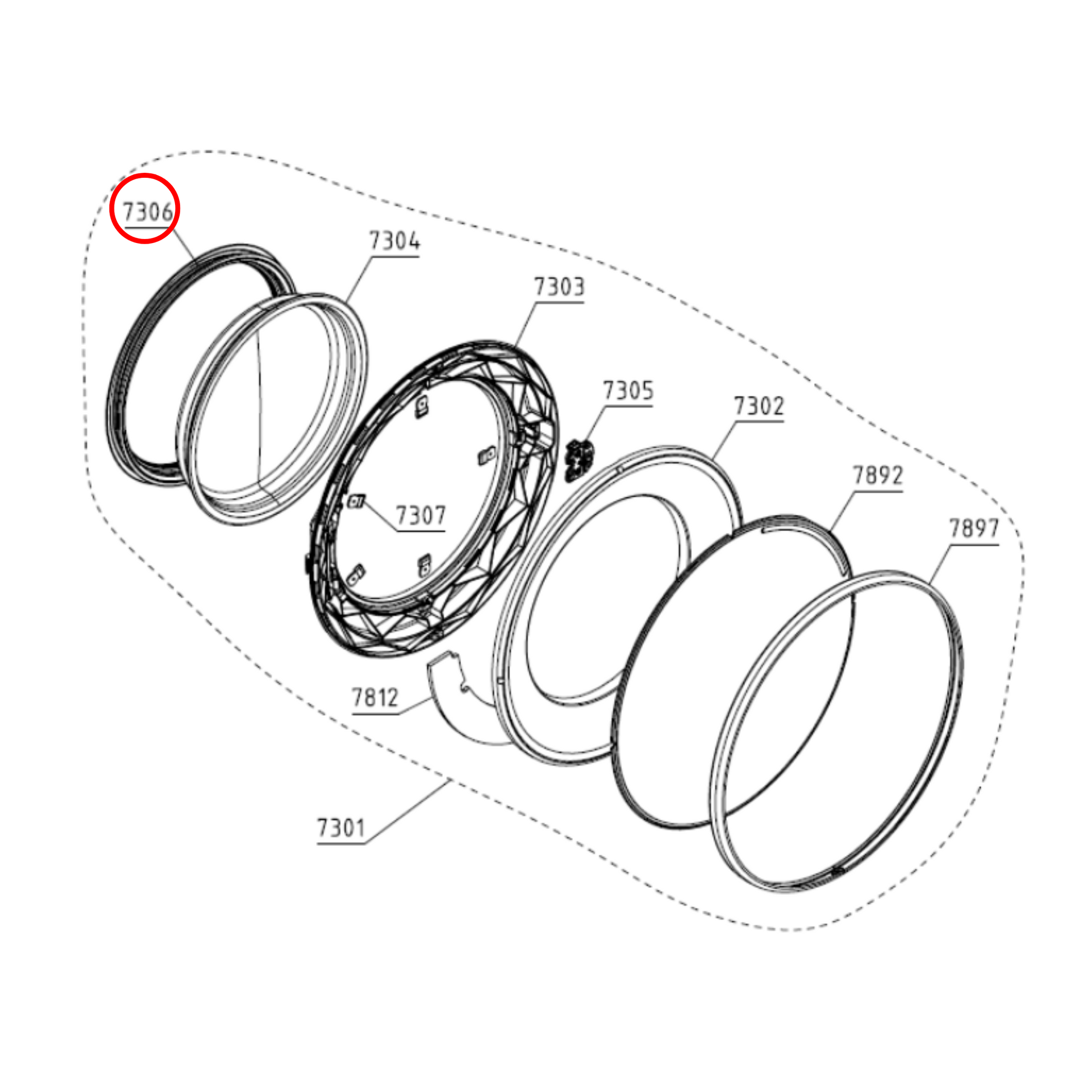
Water leaks can cause floor damage and mold problems. Identifying the source quickly minimizes repair costs.
Replace the Door Seal
A cracked or swollen door boot seal causes front-bottom leaks.
Visual cues indicating seal failure:
– Water pooling after cycles
– Mold or mildew in seal folds
– Visible splits near the latch
Fix steps:
1. Peel back the rubber bellow from the door frame
2. Remove retaining wire ring using pliers
3. Pull off old seal and install new one
4. Reattach wire and ensure even seating
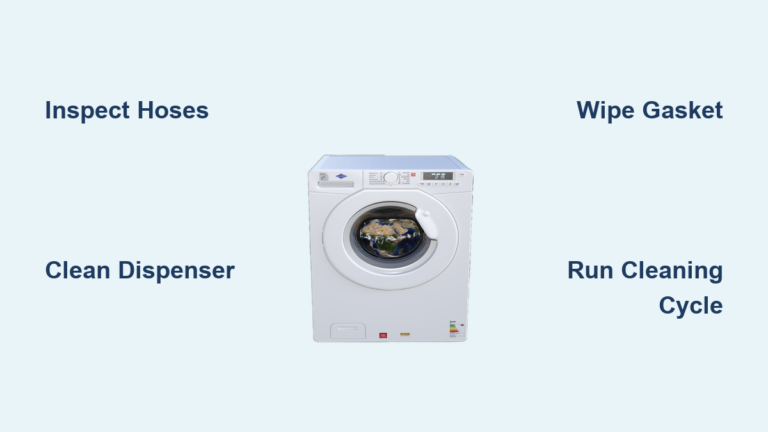
Wipe the seal monthly and leave the door ajar between loads to prevent moisture buildup.
Check Inlet Hoses and Connections
Leaks at the back often come from inlet hoses.
What to inspect:
– O-rings inside hose connectors for wear
– Tightness of fittings
– Bulges or cracks in hose material
Replace hoses every five years, even if no leaks are visible.
Eliminate Excessive Vibration
An unlevel washer shakes violently, especially during spin cycles. This damages internal components and creates noise problems.
Level the Machine Properly
Steps to level your Asko:
1. Use a spirit level on the top panel
2. Adjust front and rear feet until balanced
3. Ensure all four feet touch the floor
4. Lock jam nuts after adjustment
Never operate on a floating floor or uneven surface.
Replace Shock Absorbers
Worn shock absorbers cause side-to-side rocking.
Symptoms of failing shocks:
– Loud thumping during spin
– Oil leakage from shocks
– Machine moves across the floor
Repair process:
– Remove top panel and tilt machine back
– Disconnect shocks from base and drum
– Install new pair sold as a set
– Reassemble and test
Parts cost 80 to 120 dollars, with labor adding approximately one hour.
Restore Spin and Agitation
When the drum will not spin or agitate, laundry remains soaked and the cycle cannot complete.
Diagnose Motor and Inverter
If the drum does not spin, the issue is likely electronic.
Test method:
– Run a spin-only cycle
– Listen for motor hum
– Check for error E50
Technicians use multimeters for voltage checks and oscilloscopes for inverter output. The most common fix is replacing the inverter board. Use Asko OEM parts to maintain compatibility with Aqua Safe and Connected Home systems.
Clear Drum Obstructions
A foreign object stuck between inner and outer tub can block spinning.
Detection signs:
– Grinding or scraping noise
– Drum will not rotate freely by hand
Removal requires drum extraction. This is not a DIY-friendly repair. Technicians use specialized tools to separate the tubs and retrieve debris.
Prevent Future Problems
Regular maintenance extends the life of your Asko washer and prevents costly repairs.
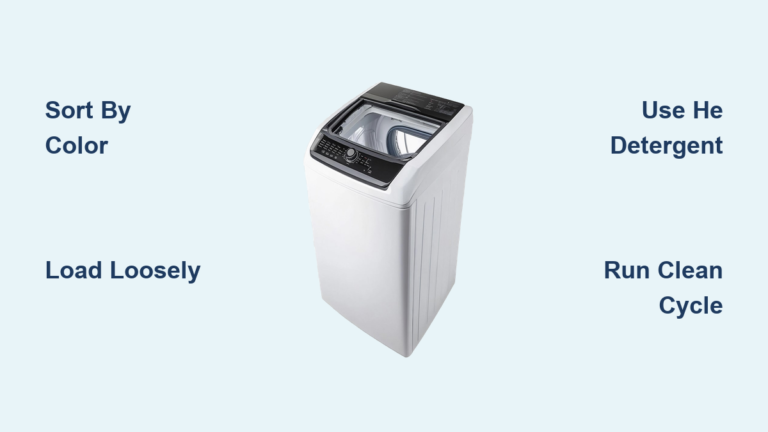
Use HE Detergent Only
Never use regular detergent in your Asko machine. These washers require high-efficiency detergent.
Why this matters:
– Regular detergent creates excess suds
– Suds trigger overflow, poor rinsing, and pump strain
– Can cause E20 or E30 errors and void warranties
Use half the recommended dose. Asko Active Water system uses less water than conventional machines.
Maintain the Aqua Safe System
Asko Aqua Safe is a multi-layer leak protection system.
Keep it functional by:
– Inspecting hoses and seals regularly
– Ensuring the base pan is clean and drain hole is clear
– Testing the float switch annually
Tampering with Aqua Safe components may disable automatic shutoff.
Schedule Routine Maintenance
Monthly tasks:
– Clean drain filter
– Wipe door seal
– Run hot cycle with washing machine cleaner
Quarterly tasks:
– Check inlet hoses
– Re-level machine
– Clean detergent drawer
Annual tasks:
– Inspect shock absorbers
– Test drain hose flow
– Verify high spin performance
When to Call a Professional
Some repairs require specialized knowledge and tools. Attempting these yourself risks damage and injury.
Avoid DIY Repairs
Asko strongly advises against consumer self-repair due to several factors.
Risks include:
– High-voltage components creating shock risk
– Water damage from improper reassembly
– Voided warranties if tampering is detected
– Increased cost if mistakes cause further damage
Only trained technicians should handle:
– Control boards
– Motor and inverter replacements
– Pump and valve replacements
– Drum or bearing repairs
Choose Authorized Repair Services
Asko washers use proprietary electronics, sealed drums, and integrated safety systems. Only authorized providers have the proper training and parts.
Why Use Factory-Trained Technicians?
Authorized technicians provide several advantages.
Benefits include:
– Genuine Asko parts in stock
– Service manuals and firmware tools
– Diagnostic access to Connected Home systems
– Warranties on labor and components
Top Service Providers
Asko Appliance Repair Service serves Manhattan, Brooklyn, and Queens with same-day repair, OEM parts, and full warranty. They specialize in compact and stackable units.
The Appliance Repairmen in Bethesda, Maryland offers service seven days a week. They charge a small diagnostic fee applied to repair costs, with pricing aligned with Appliance Blue Book standards.
Happy Home Appliance Repair covers New York, Maryland, Washington D.C., and Virginia. As a factory-authorized provider, they offer white-glove service and online booking.
Repair vs. Replace: What Is the Right Choice?
Knowing when to repair versus replace saves money and frustration.
Repair If
Consider repair in these situations:
– Machine is under 10 to 12 years old
– Issue involves drain, door lock, or vibration
– Genuine parts are available
– Repair cost is under 400 dollars
Consider Replacement If
Replacement makes sense when:
– Drum bearings or outer tub are damaged
– Control board repeatedly fails
– Unit is over 15 years old
– Repair exceeds 50 percent of new unit cost
Good news: Over 90 percent of Asko washer issues are repairable, even on older models.
Frequently Asked Questions About Asko Washing Machine Repair
How do I reset my Asko washing machine?
Turn off the machine and unplug it for 60 seconds. Plug it back in and turn the machine on. Press and hold the start button for three seconds to initiate a soft reset. This often clears minor error codes.
What causes an E20 error on my Asko washer?
E20 indicates a drainage problem. The most common cause is a clogged drain filter. Other causes include a kinked drain hose, failed drain pump, or faulty pressure switch. Clean the filter first before calling a technician.
Can I repair my Asko washer myself?
Asko advises against consumer self-repair due to electrical hazards and warranty concerns. Simple tasks like cleaning the filter are safe. However, repairs involving the control board, motor, or sealed drum components require professional service.
How much does Asko washing machine repair cost?
Common repairs like drain pump or door lock replacement typically cost 150 to 400 parts plus labor. Complex repairs involving the inverter board or motor can run 300 to 600 dollars. Diagnostic fees range from 50 to 75 dollars and apply toward the repair.
How long do Asko washing machines last?
With proper maintenance, Asko washers last 15 to 20 years. Monthly filter cleaning, using HE detergent, and annual professional inspections maximize lifespan.
Where can I find authorized Asko repair service?
Contact Asko customer service for authorized providers in your area. Factory-trained technicians have genuine parts, proper diagnostic tools, and warranty coverage on repairs.
Final Thoughts on Asko Washing Machine Repair
Asko washing machines are built to last, but when problems arise, they need specialized care. From E10 door lock errors to E20 drainage failures, most issues stem from predictable causes and can be fixed quickly by a factory-authorized technician. Avoid DIY risks, use HE detergent, and perform monthly maintenance to protect your investment.
With proper service, your Asko washer can deliver quiet, efficient, and reliable performance for 15 years or more. When in doubt, call a professional. Your machine and your floor will thank you.