Pressure Washer PSI Guide: Choose the Right Power
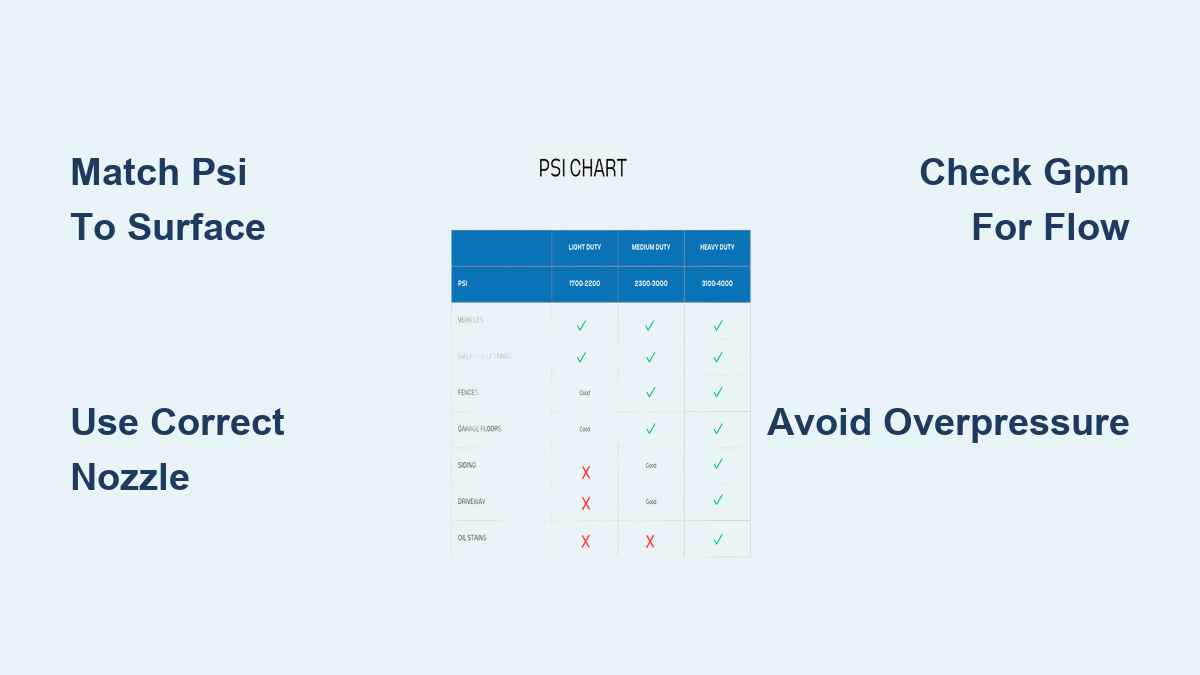
Years of grime on your driveway make a garden hose feel useless, yet buying the wrong machine could ruin your wood deck. Selecting the correct pressure washer PSI ensures you remove dirt efficiently without etching concrete or splintering timber.
This pressure washer PSI guide explains exactly how to match water pressure to your specific cleaning needs. You will learn the difference between PSI and GPM, discover which power range suits your home, and identify key features that prevent costly surface damage.
Decode PSI and GPM Metrics
PSI (Pounds per Square Inch) measures the force of the water hitting a surface. Higher numbers mean more impact power to blast away stuck-on mud or peeling paint. However, too much force can destroy delicate materials like cedar siding or car paint instantly.
GPM (Gallons per Minute) measures the volume of water flowing through the nozzle. While PSI provides the scrubbing power, GPM determines how fast you rinse debris away. A machine with high GPM cleans large areas like driveways significantly faster than low-flow models.
How Cleaning Units Measure True Performance
Cleaning Units (CU) combine pressure and volume into one effectiveness score. You calculate this by multiplying PSI by GPM to see the total cleaning capability.
- A 2,000 PSI unit with 1.5 GPM equals 3,000 CU.
- A 2,500 PSI unit with 2.0 GPM equals 5,000 CU.
Higher CU ratings indicate faster cleaning speeds for heavy-duty jobs. Residential tasks often need 1,950 to 2,400 CU, while industrial work requires 2,800 CU or more.
Match PSI Ratings to Specific Surfaces
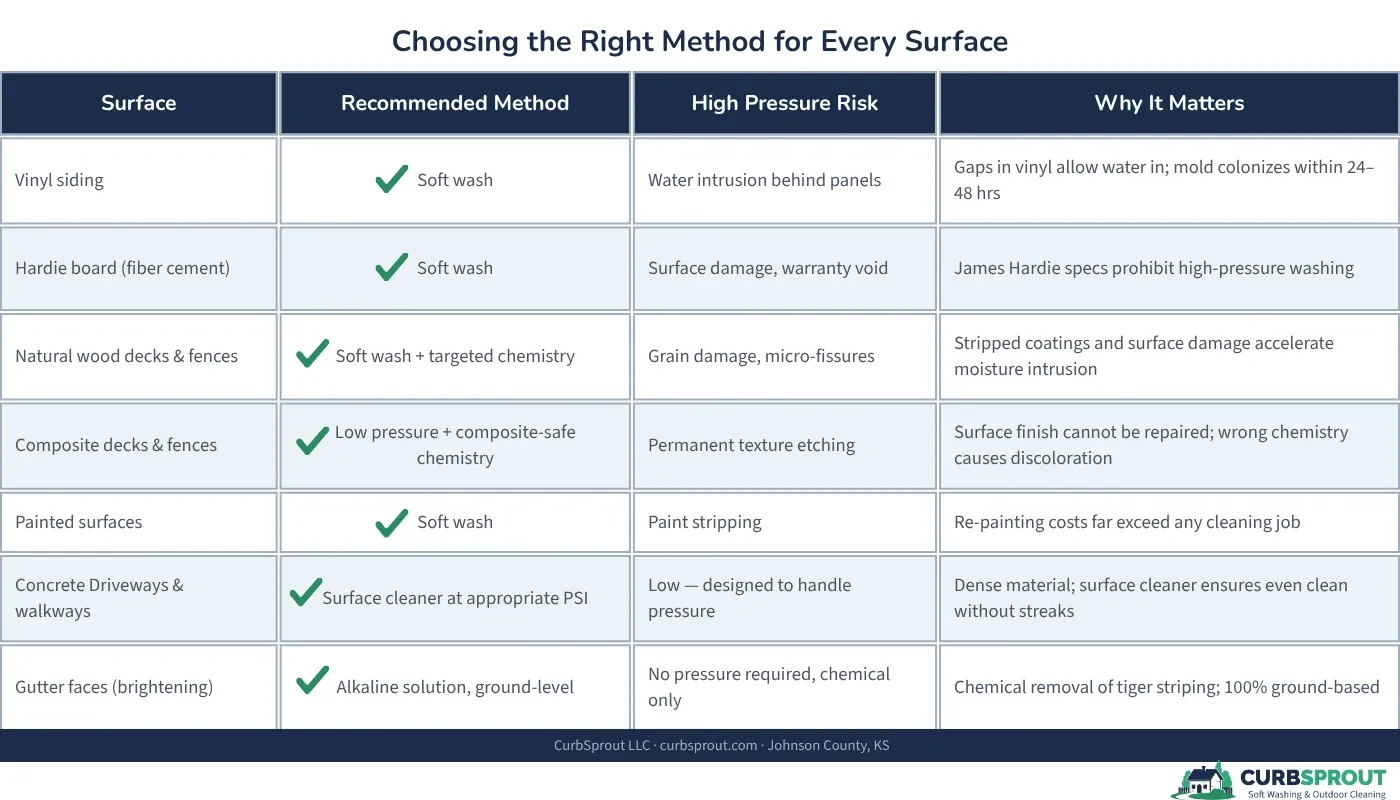
Choosing the right pressure washer PSI depends entirely on what you are cleaning. Using excessive pressure on soft surfaces causes permanent damage, while low pressure wastes time on tough stains.
Light-Duty Cleaning: 1,300 to 1,700 PSI
This range handles sensitive items and light soil without risking damage. Electric models dominate this category because they offer sufficient power for routine maintenance.
Ideal applications include:
* Patio furniture and outdoor toys
* Lawn mowers and garden tools
* Automobiles and bicycles
* Stairs and walkways
These units typically provide 1.2 to 1.6 GPM. Always use a 40-degree white tip nozzle when washing vehicles to spread the spray and protect paint.
Medium-Duty Cleaning: 1,800 to 2,000 PSI
Homeowners find this sweet spot perfect for removing stubborn grime from durable surfaces. You gain enough power to clean deep without the extreme risks associated with industrial machines.
Best uses for this range:
* Vinyl or wood siding
* Wooden decks and fences
* Garage floors and large SUVs
* RVs and light driveway stains
Gas-powered models often start here, though high-end electric units reach 2,000 PSI. Avoid using 0-degree red nozzles on wood, as the concentrated jet can splinter fibers.
Heavy-Duty Cleaning: 2,100+ PSI
Baked-on grease, large concrete expanses, and farm equipment demand maximum force. These machines deliver 2,100 to 3,200+ PSI to strip paint or clean tractor tires effectively.
Common heavy-duty tasks:
* Long concrete driveways
* Brick or stone patios
* Paint stripping and preparation
* Commercial equipment cleaning
Most units in this bracket are gas-powered with 2.0 to 4.0 GPM. A 2,800 PSI model can clean a 1,000 square foot driveway in under 20 minutes.
Electric Versus Gas Pressure Washer Comparison
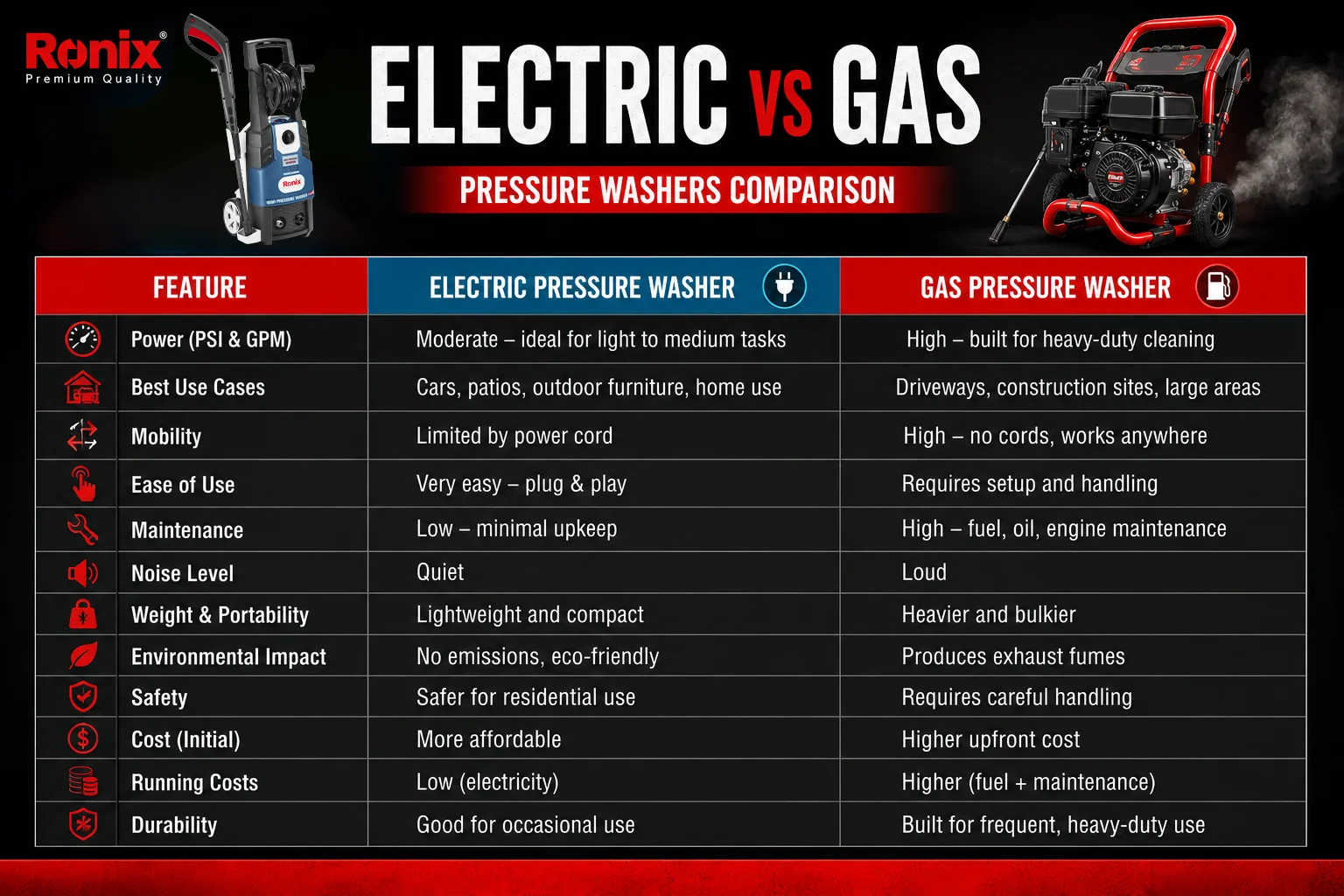
Your power source choice dictates portability, maintenance needs, and maximum available pressure. Understanding these differences helps you avoid buyer remorse.
Electric Models for Compact Power
Electric pressure washers excel in small yards and indoor storage situations. They weigh between 30 and 50 pounds and require no fuel mixing or oil changes.
Key advantages:
* Quiet operation suitable for neighborhoods
* Instant startup with a trigger pull
* Lower upfront cost and minimal maintenance
Limitations include cord dependency and lower maximum PSI. These units struggle in freezing temperatures due to internal water risks.
Gas Models for Maximum Mobility
Gas engines provide unmatched power and freedom from electrical outlets. They are the standard for large properties, contractors, and rural locations without easy power access.
Key advantages:
* High PSI and GPM for tough jobs
* Complete portability without extension cords
* Durability for frequent or commercial use
Drawbacks include higher weight (70–120 lbs), noise, fumes, and regular engine maintenance. You must change oil every 50 to 100 hours of use.
Essential Nozzle Types and Spray Patterns

Nozzles control the angle of the water stream, directly affecting cleaning intensity. Using the wrong tip can either inefficently clean or severely damage your property.
| Tip Color | Angle | Best Application |
|---|---|---|
| Red | 0° | Stubborn stains on concrete only |
| Yellow | 15° | Heavy grime and brick |
| Green | 25° | Decks, siding, and fences |
| White | 40° | Vehicles and delicate surfaces |
| Black | 65° | Applying detergent soap |
Interchangeable tips offer the most control, while dial wands combine angles into one tool. Always start with the widest safe angle and move narrower only if necessary.
Critical Safety and Surface Protection
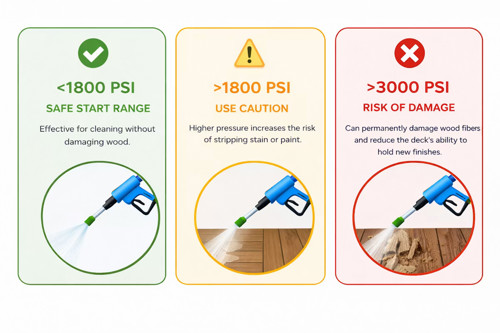
High-pressure water acts like a knife and can cause severe injury or property destruction if misused. Following strict safety protocols protects both you and your home.
Preventing Surface Damage
Different materials tolerate different pressure levels. Wood decks need under 1,500 PSI with a wide tip, while brick can handle 2,500+ PSI.
Safety rules for surfaces:
* Hold the wand 12 to 18 inches from wood.
* Spray vinyl siding downward to prevent water intrusion.
* Never point a 0-degree nozzle at paint or windows.
Personal Safety Requirements
Always wear safety goggles to stop debris from hitting your eyes. Closed-toe shoes prevent slips on wet surfaces, and you must keep children and pets away from the work zone.
Electrical safety note: Use a GFCI outlet for electric models and never operate any pressure washer in the rain.
Maintenance Steps for Longevity
Proper care extends the life of your pump and engine. Neglecting simple steps can lead to cracked housings or clogged carburetors.
After-Use Care Routine
- Relieve pressure by pulling the trigger after shutting off the machine.
- Drain all water to prevent freezing and internal cracking.
- Clean the inlet water filter monthly to maintain flow.
- Store the unit in a dry, frost-free location.
Gas Engine Upkeep
Change the oil every 50 to 100 hours of operation. Use fuel stabilizer for storage over 30 days and run the engine dry before long-term storage to prevent carburetor clogs.
Decision Checklist for Buying
Answering five key questions narrows down the perfect machine for your needs. This prevents overspending on power you do not need or buying a unit too weak for your tasks.
Ask yourself these questions:
* What is your primary cleaning target? (Cars need 1,300 PSI, driveways need 2,500+ PSI)
* Do you have outdoor electrical access? (No outlet means gas is required)
* How frequently will you use it? (Occasional use suits electric, frequent use needs gas)
* How much storage space do you have? (Electric fits in closets, gas needs sheds)
* What is your budget? ($100–$300 for electric, $300+ for gas)
Frequently Asked Questions About Pressure Washer PSI
What PSI do I need to clean my driveway?
You typically need at least 2,500 PSI to effectively remove oil stains and deep grime from concrete driveways. Lower pressure units may clean surface dirt but will struggle with baked-on stains.
Can high PSI damage my wooden deck?
Yes, using over 1,500 PSI on wood can splinter fibers and ruin the surface texture. Stick to 1,300–1,500 PSI with a 25-degree green tip for safe deck cleaning.
Is higher PSI always better for cleaning?
No, higher PSI increases the risk of damaging surfaces like paint, wood, and vinyl. The goal is to match the pressure to the material strength, not to maximize power.
What is the difference between PSI and GPM?
PSI measures water pressure or impact force, while GPM measures water volume or flow rate. Both matter, but GPM often dictates how quickly you finish a large job.
Do I need a gas or electric pressure washer?
Choose electric for light tasks like cars and patios where noise and maintenance matter. Choose gas for large driveways, heavy grime, or areas without electrical outlets.
Key Takeaways for Your Pressure Washer PSI Guide
Selecting the right pressure washer PSI balances cleaning power with surface safety. Light tasks need 1,300–1,700 PSI, while concrete and heavy grime require 2,500+ PSI to clean effectively.
Match your machine type to your property size and power access before buying. Electric units suit small jobs and easy storage, whereas gas models deliver the power needed for serious landscaping and construction cleanup.