How to Clean Driveway Without Pressure Washer
You do not need expensive machinery to restore your driveway’s appearance. High-pressure water can erode concrete and damage delicate pavers, making it risky for older surfaces.
This guide shows you how to clean driveway without pressure washer using commercial sprays or natural DIY mixes. You will learn exact steps to remove oil, kill mold, and maintain a spotless surface safely.
Select the Right Cleaning Method for Your Needs

Choosing between a chemical cleaner and a natural solution depends on your specific stain levels and environmental preferences. Both methods require scrubbing but offer different benefits regarding speed and eco-friendliness.
Use Commercial Cleaner for Fast Results
For deep cleaning with minimal physical exertion, a bleach-based outdoor cleaner like “30 Second Outdoor Cleaner” works best. Mix the solution with water at a 1:1 ratio in a two-gallon pump sprayer for even application. Apply this on a cool or overcast day to prevent the liquid from evaporating before it works.
Let the solution dwell for 15 to 30 seconds for light dirt or up to 15 minutes for stubborn grime. Scrub the area with a stiff-bristled brush to lift the softened residue immediately after waiting. Rinse thoroughly with a garden hose to reveal a significantly brighter surface.
Apply DIY Natural Solution for Eco Safety
Prefer a biodegradable option? Mix one gallon of warm water with one cup of baking soda and half a cup of white vinegar. Add one tablespoon of dish soap to create a fizzing reaction that breaks down grease effectively.
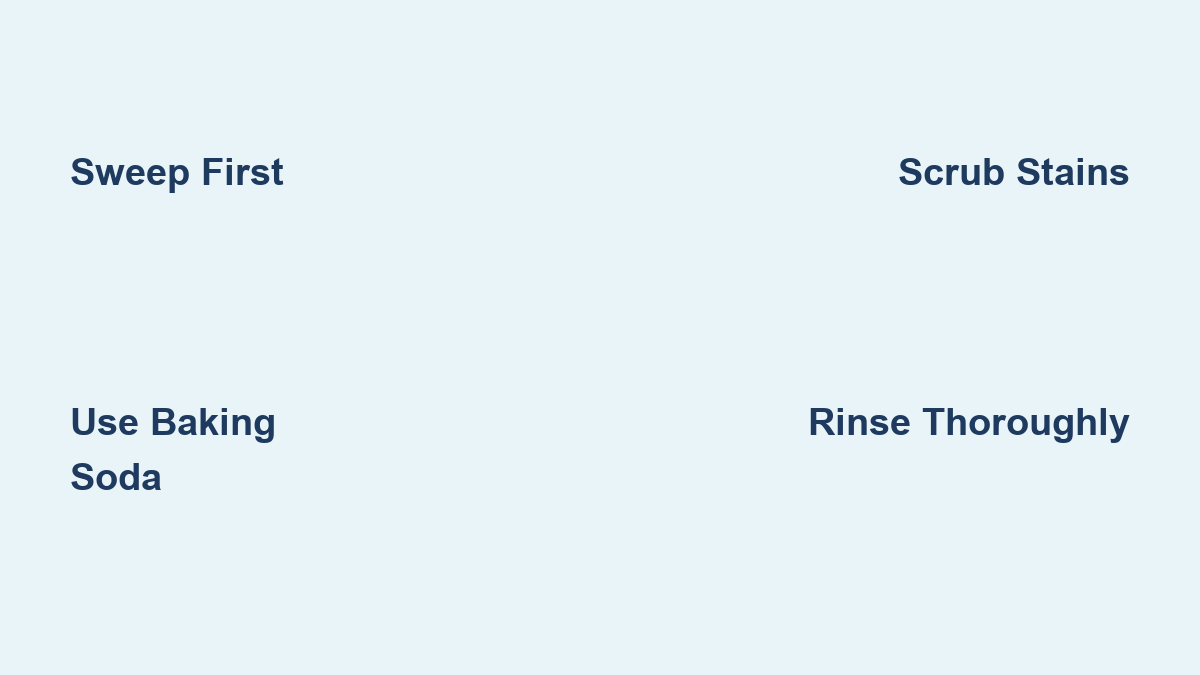
Sweep your driveway first to remove loose stones that could scratch the surface during scrubbing. Apply the mixture in sections, let it sit for 10 to 15 minutes, then scrub firmly with a brush. Rinse each section completely before moving to the next to avoid soap residue.
Eliminate Tough Stains Before General Washing

Treating specific stains like oil or algae before the main wash prevents them from spreading or remaining visible. Targeted pre-treatment ensures your general cleaning solution works more efficiently on the rest of the surface.
Remove Oil and Grease Spots Effectively
Oil stains require an absorbent material to pull the grease out of the porous concrete pores. Sprinkle baking soda, cornstarch, or kitty litter directly onto the stain and let it sit for 15 to 30 minutes.
Sweep up the powder once it has absorbed the oil, then apply a degreaser or dish soap paste. Scrub the spot vigorously with a stiff brush and rinse well to remove all traces of the degreasing agent. For deep-set stains, cover the paste with plastic wrap for one hour to trap heat and boost power.
Kill Algae Mold and Mildew Growth
Organic growth thrives in shaded areas and requires an acidic or bleaching agent to kill the roots. Spray a mixture of equal parts white vinegar and water directly onto green or black spots.
Allow the vinegar solution to sit for 30 minutes so the acidity can destroy the organic structure. Scrub the area with a stiff brush and rinse thoroughly to wash away the dead organisms. Alternatively, use a bleach-based cleaner to bleach mold on contact within seconds.
Control Weeds Growing in Cracks
Weeds in driveway joints can lift pavers and create uneven surfaces if left unchecked. Use a pump sprayer with a narrow nozzle to target only the weeds growing in the cracks.
Apply vinegar solution or a commercial weed killer directly into the joint without overspraying surrounding grass. Most weeds will die within 24 hours, allowing you to remove them easily with a trowel. Pouring boiling water into cracks offers an instant chemical-free alternative for small infestations.
Gather Essential Tools for Effective Cleaning

Having the right equipment makes the difference between a half-clean driveway and a professionally restored surface. You do not need complex machinery, but specific brushes and applicators are necessary.
Required Equipment List
You need specific tools to apply cleaners evenly and scrub effectively without damaging the surface.
* Stiff-bristled brush for concrete scrubbing
* Garden hose with adjustable spray nozzle
* Two-gallon pump sprayer for liquid application
* Push broom or leaf blower for debris removal
* Safety gloves and goggles for protection
* Respirator mask for bleach-based products
Avoid using wire brushes as they can scratch concrete and leave rust marks behind. A soft-bristled brush is better for delicate pavers or sealed surfaces to prevent abrasion.
Optional Items for Better Results
Knee pads save discomfort during long scrubbing sessions on hard concrete surfaces. Old towels or rags help wipe small areas to speed up drying time significantly. A spray bottle allows for precise spot-treating of stains without wasting large amounts of solution.
Follow These Steps to Clean Driveway Without Pressure Washer
Executing the cleaning process in the correct order ensures maximum effectiveness and prevents re-depositing dirt. Proper preparation and technique are more important than the strength of the cleaning agent.
Prepare the Surface Thoroughly
Start by sweeping the entire driveway with a push broom or using a leaf blower to remove leaves. Remove all small rocks and twigs because they can gouge the surface when you start scrubbing.
Pre-wet the surface lightly with a garden hose before applying any cleaning solution. Dry concrete absorbs cleaners too quickly, which reduces their ability to penetrate and break down grime. Damp concrete keeps the solution active on the surface where it needs to work.
Apply Cleaner and Scrub in Sections
Work in manageable sections of about 5×5 feet to ensure the solution does not dry out. Spray or pour the cleaner until the surface is saturated and the solution begins to pool slightly.
Wait for the recommended dwell time, then scrub in circular motions with firm pressure. Focus extra effort on stained or dark areas using long, overlapping strokes for even coverage. Watch for immediate color changes as mold lightens and grime lifts from the pores.
Rinse and Dry Completely
Rinse each section thoroughly with a garden hose before moving to the next area. Leftover soap or cleaner can attract dirt again or cause unsightly streaking on the concrete.
Use a wide spray pattern rather than a concentrated jet to avoid pushing dirt into new pores. Let the driveway air dry for 24 hours so sunlight can help kill any remaining microbes. Inspect the surface once dry and repeat the process on any spots that remain.
Avoid These Common Cleaning Mistakes
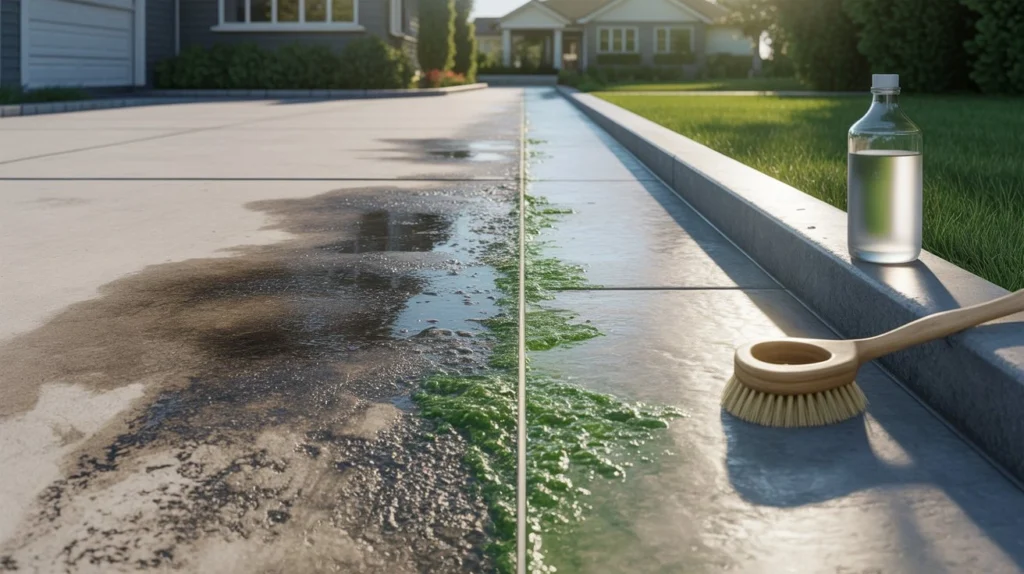
Skipping critical steps or using the wrong technique can ruin your efforts and damage the driveway. Awareness of these pitfalls ensures your hard work yields a pristine result.
Do Not Skip the Scrubbing Step
Cleaners loosen grime but do not remove it entirely without mechanical agitation. Skipping the scrubbing phase leaves behind residue that will look dirty again once dry.
Even with fast-acting products, brushing is non-negotiable to lift the softened material. Use enough pressure to agitate the surface gently without damaging paver edges or sealants.
Never Clean in Direct Hot Sun
Avoid cleaning when the temperature is above 80°F or when direct sunlight hits the driveway. Heat causes cleaners to evaporate too fast, preventing them from penetrating deep into the concrete.
Work early in the morning or on overcast days for the best dwell time and penetration. If you must clean in warm weather, keep the surface misted with water to maintain wetness.
Avoid Vinegar on Natural Stone Surfaces
While vinegar is excellent for concrete, it can etch natural stone, marble, or lime mortar. Stick to baking soda and dish soap mixtures for these delicate materials to avoid permanent damage.
Maintain Your Clean Driveway Long Term
Regular maintenance reduces the need for intensive deep cleaning sessions in the future. Simple habits keep your driveway looking fresh and prevent major stains from setting in.
Sweep Regularly to Prevent Buildup
Dirt, leaves, and pollen trap moisture that feeds mold and algae growth on the surface. Sweep your driveway weekly or bi-weekly with a dry push broom to clear joints and prevent buildup.
Removing organic matter regularly stops the food source for unwanted biological growth. This simple habit keeps the surface cleaner for longer periods between deep cleans.
Seal the Surface Every Few Years
Apply a concrete or paver sealer every two to three years to protect the surface. A good sealer forms a barrier that repels oil, water, and stains effectively.
Cleaning becomes much faster with a sealed surface since most spills wipe away easily. Always apply sealer after a deep clean when the surface is completely dry for best adhesion.
Manage Spills and Gutter Flow Immediately
Wipe up oil, coolant, or food spills the moment they happen to prevent deep penetration. Sprinkle baking soda or kitty litter on fresh spills, wait 15 minutes, then sweep and spot-clean.
Clean your gutters twice a year to prevent dirty water from overflowing onto the driveway. Trim overhanging trees to reduce shade, which discourages algae growth and minimizes falling leaves.
Frequently Asked Questions About Cleaning Driveways
Can I use bleach to clean my concrete driveway?
Yes, bleach-based cleaners like “30 Second Outdoor Cleaner” are effective for killing mold and brightening concrete. Always dilute bleach with water at a 1:1 ratio and wear a respirator mask due to strong fumes.
How often should I deep clean my driveway?
You should deep clean your driveway once or twice a year depending on shade and usage. Regular sweeping and immediate spot cleaning can extend the time between major cleaning sessions.
Will vinegar damage my concrete driveway?
No, vinegar is safe for standard concrete and helps dissolve grease and kill organic growth. However, avoid using vinegar on natural stone, marble, or grout as the acid can cause etching.
What is the best way to remove old oil stains?
Cover the stain with an absorbent like kitty litter or baking soda for 30 minutes to draw out oil. Follow up by scrubbing with a degreaser or dish soap paste and rinse thoroughly.
Do I need special equipment to clean without a pressure washer?
You only need basic tools like a stiff-bristled brush, garden hose, and a pump sprayer. These affordable items are sufficient to achieve professional results without high-pressure machinery.
Key Takeaways for How to Clean Driveway Without Pressure Washer
Cleaning your driveway without high-pressure equipment protects your surface from erosion and micro-cracks. By using the right chemical reactions and mechanical scrubbing, you can achieve a spotless finish safely.
Remember that preparation, dwell time, and thorough rinsing are the secrets to success. Start with a sweep, treat your specific stains, and maintain the surface regularly for lasting results.