
Fix Pressure Washer Soap Dispenser Not Working
You’re ready to tackle a tough cleaning job, detergent loaded and machine primed, only to discover no soap is coming through the wand. It’s a frustrating moment that catches nearly every pressure washer owner off guard. The good news is that a pressure washer soap dispenser not working rarely signals a dead machine. In most cases, the root cause is a simple clog, a wrong nozzle, or a worn internal seal that you can fix in minutes.
This guide walks you through every common cause and proven solution, starting with the easiest checks and moving toward deeper repairs. You’ll learn how to diagnose the issue step by step, what parts to inspect, and how to prevent the problem from returning. By the end, you’ll have a clear action plan to restore full soap flow and keep your pressure washer running smoothly.
Check the Spray Nozzle and Tip

The wrong spray tip is one of the leading reasons soap fails to dispense. Your pressure washer creates suction by dropping water pressure at the nozzle, and that suction pulls detergent into the stream. If the tip restricts flow too tightly, the suction never forms and soap stays in the tank.
Use the Correct Soap-Mode Nozzle
Only nozzles labeled “soap” or “detergent” produce the right pressure drop. These tips typically have a wider fan angle and a larger orifice than standard high-pressure tips. Using a 0° or 15° tip creates too much backpressure, which shuts off soap draw completely.
- Always check your owner’s manual for the recommended soap nozzle size.
- Never substitute a high-pressure tip when applying detergent.
Inspect the Tip for Damage or Clogs
Even the right tip can fail when debris or wear interferes with water flow.
- Remove the tip and check the opening for sand, mineral buildup, or dried soap.
- Flush with clean water or use a thin pin to gently clear blockages.
- Replace any tip with visible cracks, warping, or an uneven spray pattern.
Confirm Proper Tip Installation
A loose or misaligned tip disrupts the pressure differential your machine needs to draw soap.
- Push the tip fully into the wand until it clicks or locks into place.
- Hand-tighten only. Tools can damage the threads.
- Swap in a known working soap tip to rule out tip-specific issues.
Pro Tip: Keep a dedicated soap tip labeled and stored separately. Mixing it up with high-pressure tips leads to inconsistent results and faster wear.
Clean the Soap Inlet Valve

A clogged soap inlet valve is the single most common cause of failed soap dispensing. This small component uses a ball and spring mechanism that opens under low pressure and closes under high pressure. Even microscopic debris can jam the ball and block detergent flow entirely.
Remove and Inspect the Inlet Fitting
- Turn off the pressure washer and disconnect the water hose.
- Locate the soap inlet, usually near the pump or detergent tank.
- Unscrew the fitting by hand or with pliers wrapped in a cloth to avoid scratches.
- Pull out the internal ball, spring, and seat assembly.
Clear Debris from the Valve Seat
- Rinse all parts under warm running water.
- Use a soft brush or toothpick to dislodge residue around the ball seat.
- Avoid metal tools that could scratch or deform the seal.
- Blow out the housing with compressed air if available.
- Replace the ball if you spot pitting, cracks, or corrosion.
Reassemble and Test
- Dry every component before putting it back together.
- Screw the fitting in securely by hand.
- Run the unit in soap mode to verify that detergent now flows.
Expert Note: Many users replace entire injector assemblies when a two-minute cleaning would have solved the problem. Always start with this step before buying parts.
Replace Worn Injector Components

Even with regular cleaning, internal injector parts wear out over time. If cleaning the inlet valve doesn’t restore flow, worn components inside the chemical injector are the likely culprit.
Identify the Key Wear Parts
The chemical injector contains three parts that commonly fail:
- Piston: Moves to regulate suction and can crack or seize.
- O-rings: Seal moving parts and dry out or lose elasticity with age.
- Spring: Returns the piston to position and weakens or breaks over time.
Any one of these failing can break the pressure seal needed for soap draw.
Diagnose Internal Failure
- Remove the injector housing using your model’s manual as a guide.
- Check for cracked or swollen O-rings.
- Look for a corroded or stiff piston that won’t move freely.
- Inspect the spring for bending or breakage.
- Note any soap residue buildup inside the chamber.
Install a Complete Injection Kit
Rather than replacing parts one at a time, swap the entire chemical injection kit. These kits include all seals, springs, and pistons as a matched set designed to work together.
- Enter your full pressure washer model number when ordering.
- Follow the manufacturer’s instructions for disassembly and reassembly.
- Lubricate new O-rings with silicone grease before installation.
Pro Tip: O-rings are often the silent culprit. Even when they look fine, age-related hardening can cause micro-leaks that kill suction. Plan to replace them every one to two years.
Clear Soap Residue and Air Locks
Leftover detergent dries inside the lines and forms sticky buildup that blocks flow. Air pockets trapped in the hose can also break the siphon effect your machine needs to draw soap.
Flush the System After Every Use
Preventive flushing is the easiest way to avoid clogs:
- Switch to rinse mode after finishing your cleaning job.
- Run clean water through the soap line for 30 seconds.
- This clears residual detergent from the injector, hose, and nozzle.
Why it matters: Skipping this single step causes the majority of long-term soap dispenser clogs.
Prime the Soap Line to Remove Air Pockets
If your pressure washer has been sitting unused for weeks, air may have settled in the lines.
- Fill the detergent tank with fresh soap or plain water for testing.
- Turn on the pressure washer and engage soap mode.
- Hold the trigger for 10 to 15 seconds to prime the line.
- Repeat the process if soap still doesn’t appear.
Use Only Compatible Detergents
Not every cleaner is safe for pressure washer systems.
- Choose detergents specifically labeled for pressure washer use.
- Avoid thick, gel-based, or homemade solutions.
- Never use dish soap. It creates excessive foam and degrades seals.
Warning: Incompatible cleaners can void your warranty and accelerate wear on internal components.
Verify the Detergent Tank and Hose

Even with a perfectly working injector, problems in the supply line can stop soap flow. A quick check of the tank and hose often reveals the issue.
Check the Tank Level and Cap Vent
- Make sure the tank isn’t empty.
- Confirm the cap sits securely but isn’t over-tightened.
- The cap must allow air in to replace dispensed soap. A clogged vent blocks flow.
Inspect the Suction Hose and Filter
- Disconnect the hose from the tank and check both ends.
- Look for cracks, kinks, or collapsed sections along the length.
- Examine the inline filter or foot valve at the hose end:
- Clean it with warm water and a soft brush.
- Replace it if the screen is brittle or completely clogged.
Test with Clear Water
Fill the tank with plain water and run the machine in soap mode.
- If water flows through, the system works. Your detergent may simply be too thick.
- If nothing draws up, the issue is mechanical, likely the injector or nozzle.
Diagnose Pump and Pressure Settings
Some pressure washers only engage soap mode at lower pressures. If the system runs too hot, the injector won’t activate and detergent stays in the tank.
Confirm Soap Mode Activation
- Many units require switching to a low-pressure setting for soap application.
- Check your mode selector. Some models have a dedicated chemical injection position.
- Listen for a change in engine or pump sound when switching modes.
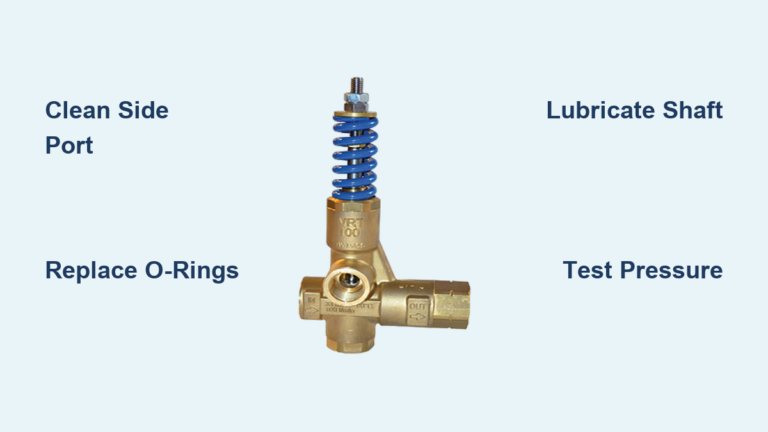
Check the Unloader Valve Function
The unloader valve regulates system pressure. When stuck in high-pressure mode, soap injection won’t engage and water sprays too forcefully even in soap mode.
- Clean the unloader valve according to manufacturer guidelines.
- Replace it if cleaning doesn’t restore proper function.
Test with Different Pressure Settings
- On gas models, try running at 50 to 60 percent throttle.
- Electric models may have a soap preset button. Make sure it’s selected.
- If soap flows at lower pressure, your system is functioning as designed.
Prevent Future Soap Dispenser Failures
Most soap dispenser problems are preventable with simple habits and routine maintenance.
Build a Post-Use Routine
- Switch to rinse mode after every job.
- Flush the soap lines for 30 seconds with clean water.
- Empty and rinse the detergent tank.
- Store the unit with the tank cap off to prevent mold growth.
Store Your Pressure Washer Properly
- Keep the machine in a dry, frost-free location.
- Drain all water if you plan to store it for more than a month.
- Coil hoses loosely to avoid kinks that restrict flow.
Schedule Regular Maintenance
- Clean the soap inlet valve every 3 to 6 months.
- Replace the chemical injection kit annually or after roughly 50 uses.
- Inspect O-rings and hoses at the start of each cleaning season.
When to Call a Professional
Most soap dispenser issues are DIY-friendly, but some symptoms call for expert service.
- The pump leaks or makes grinding noises.
- You’ve replaced all relevant parts and still get no suction.
- The unit won’t switch to low-pressure mode at all.
A certified technician can test pump pressure, inspect internal valves, and verify overall system integrity.
Frequently Asked Questions About Pressure Washer Soap Dispensers
Why is my pressure washer soap dispenser not working even with a full tank?
A full tank alone doesn’t guarantee soap flow. The most common cause is a clogged soap inlet valve, where debris blocks the ball and spring mechanism. A wrong spray tip or worn O-rings inside the injector can also stop detergent from drawing into the stream.
Can I use dish soap in my pressure washer?
No. Dish soap produces excessive foam and contains additives that degrade seals and clog internal components. Always use detergents specifically formulated for pressure washers to protect your machine and maintain warranty coverage.
How do I know if my soap injector is bad?
Signs of a bad injector include no soap flow even after cleaning the inlet valve, visible cracks or wear on the piston, hardened O-rings, or a weak spring that won’t return components to position. Replacing the full chemical injection kit usually resolves these issues.
Why does soap only come out at low pressure?
Soap injection relies on a pressure drop to create suction. At high pressure, the system generates too much backpressure for the injector to pull detergent. Switching to a low-pressure or soap-mode setting allows the pressure differential to form and soap to flow.
How often should I flush my pressure washer soap system?
Flush the soap system with clean water for 30 seconds after every use. This prevents residue buildup inside the injector, hose, and nozzle. For long-term reliability, also clean the soap inlet valve every 3 to 6 months.
Do I need to replace the whole injector kit or just one part?
Replacing the entire chemical injection kit is almost always better than swapping individual parts. Kits include the piston, O-rings, and spring as a matched set, ensuring all wear points are addressed at once and the system returns to like-new performance.
Key Takeaways for Fixing a Pressure Washer Soap Dispenser
A pressure washer soap dispenser not working is one of the most common and most fixable problems pressure washer owners face. The vast majority of cases trace back to three culprits: a clogged soap inlet valve, the wrong spray nozzle, or skipped post-use maintenance. Start your diagnosis with the inlet valve since cleaning it takes only minutes and resolves most issues.
If cleaning doesn’t restore flow, move on to inspecting the spray tip, then the internal injector components. Replacing the full chemical injection kit is usually more effective than replacing parts individually. Finally, commit to a simple post-use routine of flushing the lines with clean water. With these habits in place, your pressure washer will deliver consistent soap flow for years to come.