Washing Machine Spinning but Clothes Wet: Quick Fix Tips
Youve just finished a full wash cycle. The machine spun, the timer ended, but when you open the dooryour clothes are still dripping wet. Heavy. Soaked. It feels like you need to run them again or spend extra time and money drying them. This is a common yet frustrating issue: your washing machine is spinning, but its not extracting water effectively.
The problem isnt always a broken motor or a complete failure. More often, its something subtlelike a clogged drain, a worn clutch, or an unbalanced loadthat prevents the drum from reaching the high speeds needed to dry clothes. Even if the tub moves, inadequate spin speed, incomplete drainage, or mechanical slippage can leave behind excess moisture. And that means longer drying times, higher energy bills, and extra wear on your fabrics.
In this guide, well cover exactly why this happens, how to diagnose the root cause step by step, and what fixes workwhether you are dealing with a Whirlpool, LG, Samsung, Bosch, Maytag, or GE model.
Check Load Balance First
Uneven Distribution Triggers Safety Mode
Modern washers detect imbalance and automatically reduce spin speed to prevent damage. If your clothes are clumped to one side like jeans piled on the left, t-shirts on the right the tub wobbles. Sensors respond by slowing or stopping high speed spin, leaving clothes wet.
Signs of imbalance include:
- Machine shakes violently or walks across the floor
- Cycle takes longer than usual
- Second spin cycle removes a lot of water
- No error codes appear
Redistribute and Retest
- Pause the cycle and open the lid or door.
- Manually spread out clothes evenly around the drum.
- Close and restart the spin cycle.
- Use spin only mode if available.
Pro tip: Mix large and small items. Never wash a single bulky item like a comforter without towels to balance it.
Inspect the Drain System
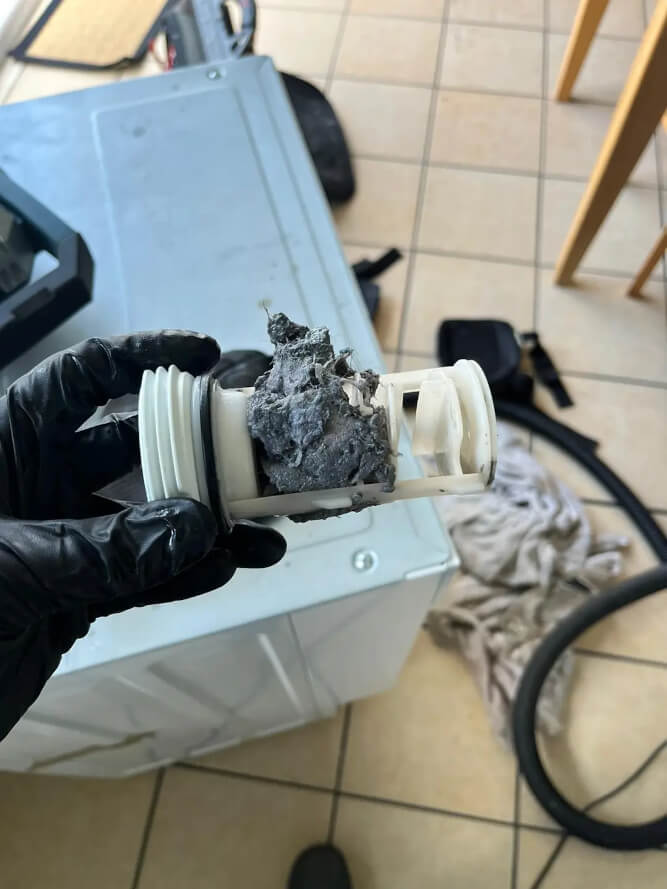
Clogged Pump or Filter Is the Number 1 Cause
A blocked drain system is the most frequent reason clothes stay wet even if the drum spins. Water cannot exit fast enough, so the spin cycle starts with standing water, reducing centrifugal force.
Where blockages happen:
- Pump filter (coin trap) catches socks, hair ties, coins
- Drain hose can trap fabric or kink behind the machine
- Impeller internal pump blade jams or breaks
How to Clean the Pump Filter
- Unplug the machine and place towels underneath.
- Open the front access panel usually at the bottom.
- Place a shallow container under the filter cap.
- Slowly unscrew the cap water will drain out.
- Pull out the filter and remove lint, debris, or small garments.
- Rotate the impeller inside should spin freely with no resistance.
- Reinstall and tighten securely.
Warning: Always unplug and drain residual water first. Hot water may remain in the system.
Fix Drain Hose Issues
Kinks or Improper Installation Prevent Full Drainage
Even a partially restricted hose limits water flow. If the machine does not fully drain before spinning, it cannot extract moisture efficiently.
Common hose problems:
- Looped or bent hose behind the washer
- Inserted too far into standpipe creates airlock
- Standpipe too short under 39 inches or unvented
- Hose diameter reduced by crushing
Correct Installation
- Keep the hose high looped 65 to 90 inches above floor
- Do not tape or clamp it into the drain
- Ensure standpipe is at least 39 inches tall and properly vented
- Avoid sharp bends or compression
Test: Run a drain only cycle into a bucket. Flow should be strong and steady, not a trickle.
Replace a Worn Drive Belt
Belt Slippage Reduces Spin Speed
Applies to: Maytag, GE, older Whirlpool, and belt driven front loaders
A stretched, cracked, or glazed belt cannot transfer full power from the motor to the drum. The tub spins slowly, especially under heavy loads, leaving clothes wet.
Signs of belt wear:
- Shiny, glazed surface from friction
- Cracks or fraying along edges
- More than one half inch of deflection when pressed
- Squealing or burning smell during spin
How to Replace the Belt
- Unplug the machine and remove the back or front panel.
- Inspect the belt for tension and condition.
- Remove old belt from motor and drum pulleys.
- Install new OEM specified belt exact size matters.
- Realign pulleys and reassemble.
Note: Light loads may spin fine; heavy loads fail. This is classic belt slippage.
Diagnose Clutch Failure (Direct Drive Models)
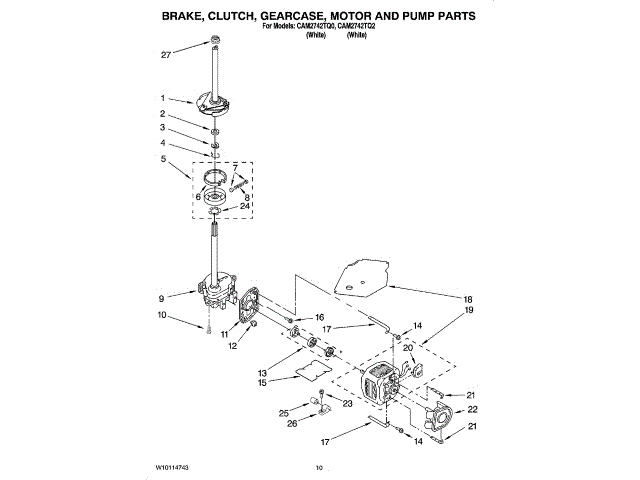
Whirlpool and Kenmore Top Loaders Lose Spin Power
In direct drive models, the clutch engages the spin basket at high speed. When it wears out, the drum spins too freely with no resistance, no torque, no drying power.
Symptoms of bad clutch:
- Tub spins easily by hand no drag
- No loud spin noise just a quiet whir
- Clothes soaking wet after cycle
- No error codes or strange sounds
- Grease leaking from transmission
How to Test the Clutch
- Unplug the washer and remove the cabinet.
- Lift the inner tub and try rotating it.
- A healthy clutch has strong resistance at startup.
- A worn clutch spins with zero effort.
If it turns like a bicycle wheel, the clutch is gone.
Install a New Clutch
Step by Step Repair for Whirlpool and Kenmore
Tools needed:
- One half inch socket wrench
- Pliers, screwdriver, channel locks
- OEM clutch kit includes E-clip, springs, washer spacer
- Foam padding to protect machine
Disassembly Steps
-
Remove top and front panels:
– Unscrew top fasteners.
– Disconnect lid switch.
– Tilt top back and remove. -
Access transmission:
– Remove cap inside tub.
– Disconnect motor wires.
– Release water pump clip.
– Discharge capacitor with insulated screwdriver. -
Pull out motor transmission unit:
– Tilt washer back.
– Remove four mounting bolts.
– Slide assembly out together.
Remove Old Clutch
- Save the small washer spacer critical for reassembly.
- Pry off E-clip with pliers.
- Remove spring retainer.
- Pull out old clutch inspect for grease, wear, or broken tabs.
Install New Clutch
- Insert thicker spring matches original spec.
- Place plastic keeper on the bottom of clutch.
- Align clutch tabs with transmission divots.
- Snap on new E-clip using channel locks.
- Reinstall washer spacer.
Reassemble and Test
- Slide motor transmission back in.
- Align keyed shaft and reattach bolts.
- Reconnect wires and capacitor.
- Reinstall panels and lid switch.
- Run spin cycle listen for full speed engagement.
Success sign: Loud, high pitched spin noise and dry clothes.
Test the Lid or Door Switch
Safety Switch Blocks Full Spin
If the lid or door switch fails, the control board thinks the door is open even if it is closed. It allows tumbling but blocks high speed spin.
Applies to:
- Top loaders: Lid switch
- Front loaders: Door lock motor and switch
Test with Multimeter
- Unplug the machine.
- Locate the switch near lid hinge or door frame.
- Set multimeter to continuity mode.
- Press the actuator should beep when engaged.
- No continuity? Replace the switch.
Bypass Test (Diagnostic Only)
- Cut power.
- Jumper the two switch terminals with a wire.
- Plug in and test spin.
- If spin works, the switch is faulty.
Warning: Never leave bypassed replace the switch permanently.
Diagnose Capacitor or Motor Issues
Weak Start Capacitor Slows Spin Up
The start capacitor gives the motor a boost to reach high RPM. If it is weak or failed, the motor hums but never ramps up.
Symptoms:
- Motor starts but spin is sluggish
- Humming without full acceleration
- Works with light loads, fails with heavy ones
How to Test and Replace
- Unplug and discharge capacitor short terminals with insulated screwdriver.
- Remove wires and label them.
- Use multimeter in capacitance mode compare reading to label.
- If reading is off by more than 10 percent, replace.
Safety first: Always discharge before handling. Capacitors store lethal voltage.
Check Control Board and Sensors
False Imbalance Detection Limits Spin
Even if the load is balanced, a faulty vibration sensor or control board may think the machine is shaking, so it reduces spin speed.
Signs of electronic fault:
- No spin above 400 RPM
- No error codes
- Machine behaves erratically
- Wiring shows corrosion or rodent damage
Use Diagnostic Mode
Most machines have a built in test mode. For Whirlpool or LG:
- Press and hold Spin + Rinse for 3 seconds.
- Cycle through tests using Program button.
- Look for:
– Step 6: Drain pump activation
– Spin motor test
– Error code display
If pump runs but spin does not engage, suspect motor, capacitor, or control board.
Clear Error Codes After Repair
Reset the System to Resume Normal Operation
After fixing a clog or replacing a part, error codes like EF-1 or E21 may persist.
How to reset:
Method 1: Power Cycle
- Unplug for 5 to 10 minutes
- Plug back in
Method 2: Button Sequence (varies by brand)
- Whirlpool: Press Spin + Rinse + Power
- LG: Press Start + Hold for 3 seconds
- Samsung: Press Drain/Spin + Option + Power
Always verify the code is gone before running a full cycle.
Prevent Future Issues
Maintenance That Works
Most wet clothes problems are preventable with routine care.
Do this every 3 to 6 months:
- Clean pump filter and check impeller
- Inspect drain hose for kinks
- Run a clean cycle with vinegar or washer cleaner
Load smart:
- Do not overload max three quarters full
- Mix heavy and light items
- Use HE detergent only no suds overload
- Avoid washing bulky rugs or comforters unless rated
Pro tip: Run a monthly hot water cycle with 1 cup vinegar to clear buildup.
When to Call a Pro
Know Your Limits
Some repairs are best left to technicians.
DIY friendly:
- Clean pump filter
- Replace drive belt
- Fix drain hose
- Swap lid door switch
- Install clutch if experienced
Call a technician for:
- Motor replacement
- Transmission rebuild
- Control board repair
- Internal pump disassembly
- Complex electrical diagnostics
Cost note: A service call starts at $150 to $250. Replacing a $20 belt yourself saves big.
Final Test After Repair
Verify the Fix Works
- Run a full cycle with a mixed load towels plus shirts.
- Ensure no water remains in the tub.
- Check clothes they should be damp, not dripping.
- No leaks, noise, or vibration.
- No error codes return.
Success: Clothes are light, dry feeling, and ready for a short dryer cycle.
Key Takeaways for Fixing Your Washing Machine
The number one cause of clothes staying wet is a clogged drain system, so always check the filter, hose, and impeller first. The second most common culprit is a worn drive belt in belt driven models or a failing clutch in direct drive top loaders, both of which prevent the drum from reaching adequate spin speeds. Load imbalance tricks sensors into slowing or stopping the spin, so distribute laundry evenly and avoid overloading. Error codes like EF-1 and E21 point directly to drainage problems and must be cleared after repair. The start capacitor can prevent full spin up if weak, and the lid or door switch must engage fully for high speed spin to activate. Most DIY fixes like cleaning the filter or replacing a belt can save $200 or more in service calls. Regular maintenance prevents approximately 80 percent of these issues. Even if your machine appears to spin, inadequate RPM due to mechanical slippage or incomplete drainage results in poor water extraction.
Frequently Asked Questions About Washing Machine Spinning But Clothes Still Wet
Why does my washing machine spin but leave clothes wet?
This happens because the machine is not reaching adequate spin speed or is not draining fully before spinning. Common causes include a clogged drain pump or filter, a worn drive belt, a failing clutch in direct drive models, or load imbalance triggering safety sensors.
How do I know if my washing machine drain hose is clogged?
Run a drain only cycle into a bucket. If water flows slowly or trickles, the hose is partially blocked. You can also disconnect the hose and inspect it visually for kinks, crushing, or trapped debris like socks or lint.
Can a bad clutch cause wet clothes even when the drum spins?
Yes. In direct drive top loaders like Whirlpool and Kenmore, a worn clutch allows the tub to spin freely without resistance. The drum may appear to spin, but it lacks the torque needed to extract water effectively.
Does load imbalance really affect spin performance?
Absolutely. Modern washers have imbalance detection sensors that automatically reduce spin speed when they detect excessive vibration. If your load is unevenly distributed, the machine will slow or stop the spin to prevent damage, leaving clothes wet.
Should I replace the start capacitor if my washer leaves clothes wet?
Only test it first. A weak start capacitor causes the motor to hum but not accelerate to full speed. Use a multimeter in capacitance mode. If the reading deviates more than 10 percent from the label, replace it.
How often should I clean my washing machine pump filter?
Clean the pump filter every 3 to 6 months, or immediately if your washer displays error codes like EF-1 or E21. Regular cleaning prevents the blockages that are the leading cause of wet clothes after spinning.