How to Wash a Leather Jacket in a Machine
You’ve worn your leather jacket for months, maybe years. It’s broken in perfectly, but now it carries a stubborn odor, feels stiff, or just needs a refresh. You’re tempted to toss it in the washing machine. But washing a leather jacket in a washing machine is risky. Manufacturers warn against it, and horror stories of shrunken, cracked, or torn jackets are everywhere.
Still, some people report success. So what’s the truth? This guide breaks down the risks, the rare success stories, safer alternatives, and if you proceed, the safest possible method based on real user experiences.
Why Machine Washing Leather Is Risky
Leather is a natural material treated to be soft, flexible, and water-resistant. But it’s not designed for submersion or mechanical stress. The core risks include:
Shrinkage happens when heat and agitation cause fibers to tighten, potentially shrinking the jacket by an inch or more. Seam failure occurs because centrifugal force during spin cycles can generate 10 to 15 pounds of tension, ripping weakened stitching, especially in vintage pieces. Cracking affects coated or shiny leathers that may develop surface cracks when flexed in water. Deformation happens because wet leather is heavy and prone to stretching or developing pointy shoulders if hung improperly. Mold in lining can develop from slow or improper drying, especially in cotton or wool linings.
Manufacturers and care labels almost always advise against machine washing or soaking leather. Tumble drying is even more dangerous because high heat destroys leather integrity.
When Machine Washing Actually Works
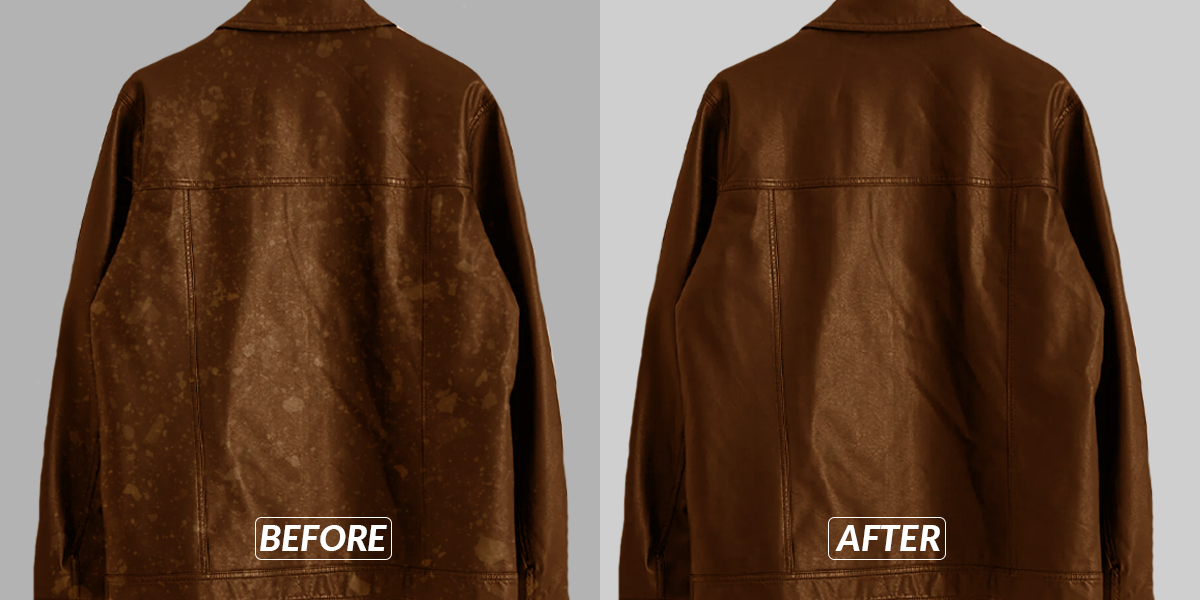
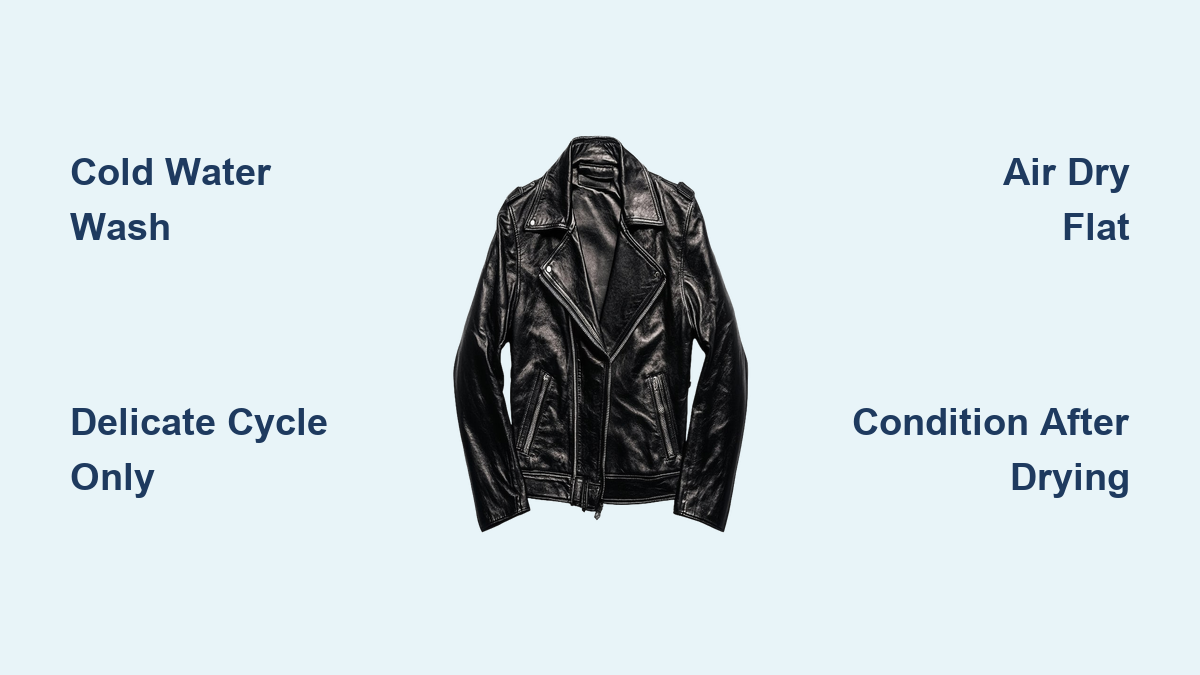
Despite the warnings, users have reported safe machine washing under tightly controlled conditions. Success typically requires cold water only, a delicate or hand-wash cycle, minimal spin or no spin, low-heat or air-dry drying, and full-grain leather in good condition.
One user washed a $24 black leather jacket with two tablespoons of detergent on a six-minute delicate cycle, added dark clothes for cushioning, and dried it on medium heat in 10-minute checks. The result was odor gone, leather supple, slight shrinkage of about one inch, and a better fit.
Another user revived a suede Schott jacket that had developed shiny patches. Washing restored its texture, though it now fades like denim. These are exceptions, not guarantees. Success depends on leather type, jacket age, machine settings, and drying care.
Check the Care Label Before Doing Anything
Before attempting any cleaning method, check the care tag inside your jacket. It may say “do not wash,” “dry clean only,” “wipe clean with damp cloth,” or “avoid water exposure.”
If it says anything other than “machine washable,” assume it’s not safe. Most real leather jackets carry a dry clean only or spot clean recommendation. No label means treat it as high risk. Vintage jackets from the 1960s to 2000s often have aged stitching and are more prone to seam failure.
Identify Your Leather Type First

Different leather types respond differently to machine washing. Understanding your jacket material is essential before proceeding.
Full-grain leather is the most durable and naturally water-resistant. It handles moisture and gentle agitation better than other types. This is the best candidate for machine washing, though success is still not guaranteed.
Coated or shiny-finish leather has a surface coating that can crack or peel when flexed in water. It’s also prone to water spotting and discoloration. Never machine wash or dry this type. Use spot cleaning only.
Suede and nubuck can be rejuvenated by washing, per user reports. However, they may develop denim-like fading after washing. Avoid heat and aggressive agitation. Use cold water and minimal spin if attempting.
Faux synthetic leather is made from polyurethane or PVC. It can be hand washed in warm water with mild detergent and may tolerate a gentle machine cycle. Never use hot water because it causes shrinkage. Dry flat or on low heat.
Wool-lined jackets carry extra risk because wool shrinks with heat and agitation. Never machine wash the lining. Clean the leather exterior separately and treat the lining with spritzing or dabbing.
Pre-Wash Inspection: Is Your Jacket a Candidate
Assess the risk before starting. Ask yourself these questions.
Is this jacket replaceable? If it’s vintage, expensive, or sentimental, don’t risk it. Are seams tight and strong? Gently tug at stress points like shoulders and underarms. Is the leather cracked, stiff, or peeling? Don’t wash. Condition or consult a professional instead. Does it have metal hardware, zippers, or embroidery? These can snag or corrode during washing.
If you answer no to any of these, skip machine washing entirely.
Safer Alternatives to Machine Washing
Hand cleaning with soapy water is the best method for spot cleaning or light refresh. What you need includes mild detergent, baby shampoo, or leather cleaner, a soft sponge or microfiber cloth, and a clean dry towel.
Mix a few drops of detergent in a bowl of water. Dampen a sponge and wring until almost dry. Wipe leather in circular motions, focusing on cuffs, collar, and stained areas. Never soak because excess moisture weakens fibers. Wipe with a dry cloth to remove residue. Air dry flat for 24 hours, away from heat or sun.
For spot cleaning on grease, sweat, or small marks, use a clean cloth, one drop of detergent, and an old toothbrush with soft bristles. Dampen the cloth with water only first. If needed, add one drop of detergent. Gently dab or brush. Never scrub hard. For stains, push from edge to center to prevent spreading. Wipe clean and dry thoroughly.
Most odors come from the lining, not the leather. For fabric lining, turn the jacket inside out. Spray an odor eliminator evenly. Smooth fabric and hang inside-out for 15 minutes. Turn right-side out. For wool lining, do not soak. Use a stiff brush to remove surface dirt. Spritz with odor killer and dab stains with tiny soapy spots. Dry flat, out of sunlight.
Step-by-Step: Machine Washing (High Risk)
Only attempt this on a low-value, full-grain leather jacket in good condition. This method is not recommended by experts. Proceed at your own risk.
Use cold water and select the delicate, hand-wash, or wool cycle. Choose the smallest load size and disable fast spin or set it to minimal. Prepare the jacket by zipping all zippers to reduce stress. Turn it inside out to protect the outer surface. Optionally, tuck sleeves into the body to minimize tumbling strain.
Add one to two tablespoons of mild, unscented detergent. Or use leather-specific cleaner, which is the safer option. Avoid bleach, fabric softener, or enzymes.
Add cushioning by tossing in dark clothes like black pants, socks, or towels to cushion the jacket. This prevents harsh tumbling and reduces impact.
Run a short cycle using six to 15 minute wash time. Monitor if possible and stop early if you notice issues.
Drying: Where Most Failures Happen
Wet leather is fragile. Heat and gravity cause shrinkage, warping, and mold.
Air dry flat is the safest method. Lay clean towels on a flat surface. Place the jacket flat on top and reshape the collar and sleeves. Insert dry towels inside to absorb moisture. Replace wet towels every few hours. Drying time can take up to five days. Be patient.
Low-heat tumble drying can be used sparingly, but only if the jacket survived washing intact. Use air-only or extra-low heat. Use 15-minute intervals and check every time. Add dryer sheets to reduce static and odor. Remove while slightly damp and finish drying flat.
Radiator drying requires caution. Use a warm, not hot, radiator. Place the jacket over it and rotate frequently. Never leave unattended. Avoid direct contact with hot metal.
Post-Wash Care: Restore Softness
Once fully dry, leather needs oils to prevent cracking.
Apply a small amount of leather conditioner like Obenauf’s or Lexol. Use a soft cloth to buff in circular motions. Focus on stiff areas like elbows and shoulders. Let absorb for one to two hours, then buff off excess.
Pro tip: Test conditioner on a hidden spot first.
For optional waterproofing, use leather waterproofing spray from shoe stores. Apply only to the outer surface. This helps protect against future moisture and stains.
When to Avoid Machine Washing Completely
Never machine wash if the jacket is vintage, expensive, or irreplaceable. Never machine wash if the leather is coated, patent, or cracked. Never machine wash if seams are frayed or weak. Never machine wash if the lining is wool or delicate fabric. Never machine wash if you’re not prepared to accept total loss.
Key Takeaways for Washing Leather Jackets

Machine washing leather is not recommended by experts. Full-grain leather has the best survival chance. Cold water, delicate cycle, and no spin are minimum requirements. Drying is the most dangerous phase. Air dry flat when possible. Never wash vintage, coated, or wool-lined jackets. Hand cleaning and spot treatment are safer alternatives. Always condition after any cleaning to restore oils.
If in doubt, take it to a professional leather cleaner. It’s worth the $20 to save a $200 jacket.
Frequently Asked Questions About Washing Leather Jackets
Can you wash a real leather jacket in a washing machine?
Yes, some people have done it successfully, but it’s not recommended. The risks include shrinkage, seam failure, cracking, and deformation. Professional cleaning or hand washing are safer options.
What happens if you machine wash a leather jacket?
The jacket may shrink by an inch or more, seams may rip apart, the leather may crack or peel, and the lining may develop mold. These outcomes are common, especially with vintage or delicate jackets.
What is the safest way to clean a leather jacket at home?
Hand cleaning with soapy water is the safest DIY method. Use mild detergent or baby shampoo, a soft sponge, and avoid soaking. Wipe clean and air dry flat. Spot cleaning works for small stains.
How do I dry a leather jacket after washing?
Air dry flat on towels is the safest method. Insert dry towels inside to absorb moisture and replace them as needed. If using a dryer, use extra-low heat in 15-minute intervals. Never use high heat.
Can I wash a faux leather jacket in the machine?
Faux leather made from polyurethane or PVC can tolerate a gentle machine cycle. Use cold water and mild detergent. Never use hot water because it causes shrinkage. Dry flat or on low heat.
How often should I condition my leather jacket?
Clean or condition every six months to maintain appearance and condition. More frequent spot cleaning may be needed for collars, cuffs, and high-touch areas.
Final Thoughts on Machine Washing Leather Jackets
Machine washing a leather jacket is possible but carries significant risks. Full-grain leather in good condition has the best chance of surviving the process, but success is never guaranteed. The drying phase is where most failures occur, making proper technique critical.
For most leather jackets, hand cleaning or professional dry cleaning remains the safest approach. If you decide to machine wash a low-value jacket, follow the cold water, delicate cycle, minimal spin, and flat dry method. Always condition the leather afterward to restore oils and prevent cracking.
Your leather jacket is built to last, but only if you treat it right. When in doubt, trust the professionals.