GE Washing Machine Maintenance Tips
Is your GE washing machine leaving clothes less than fresh or making strange noises? Many homeowners overlook simple maintenance steps that can prevent odors, extend appliance life, and keep laundry days running smoothly. The truth is, GE washing machine maintenance isn’t complicated, but skipping it can lead to costly repairs, mold growth, and even premature replacement. Whether you own a top-load agitator model or a modern front-loader with smart features, routine care makes all the difference.
In this guide, you’ll learn exactly how to clean, inspect, and maintain your GE washer using factory-recommended methods and a clear schedule that fits any household. From monthly drum cleans to annual deep dives under the agitator, we’ll cover every critical task backed by GE’s own guidelines.
Prevent Overloading Damage
Overloading is one of the most common and damaging habits in washing machine use. While it’s tempting to cram in one more towel, doing so strains key components like the motor, transmission, and bearings.
Signs You’re Overloading Your GE Washer
Excessive vibration during spin cycles often indicates the drum is too full. Clothes that come out wrinkled or still damp suggest poor water circulation. Incomplete rinsing with soap residue points to overloaded conditions. Unusual banging or thumping sounds mean the machine is struggling to balance the load.
Best Practice for Load Size
Fill the drum no more than three-quarters full for optimal performance. For top-loaders, ensure items don’t rise above the agitator. Front-loaders should allow space for tumbling, leaving a hand’s width between the load and the door glass.
Pro Tip: If the machine struggles to balance or walks across the floor, redistribute the load and restart. Chronic imbalance accelerates wear and may trigger UL error codes.
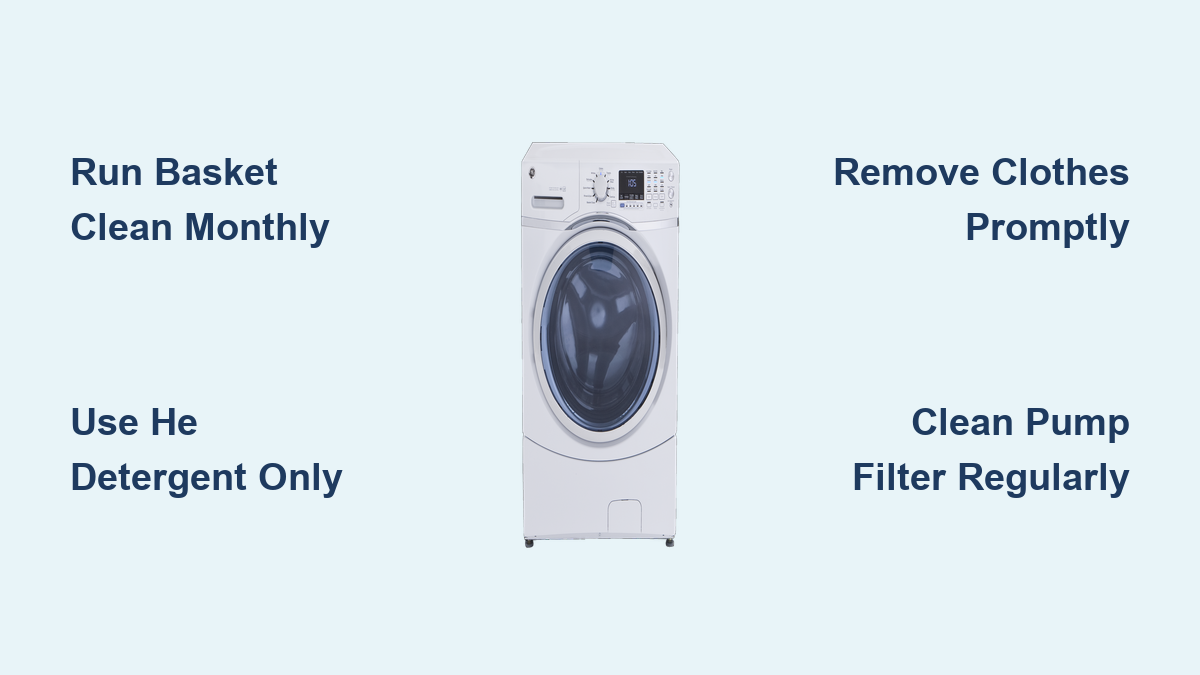
Use Only HE Detergent
Most GE washers today are high-efficiency models designed to use less water and energy. Using regular detergent here causes problems fast and leads to costly repairs.
Why HE Detergent Matters
HE detergent produces fewer suds, preventing overflow and sensor interference. It dissolves quickly in low-water conditions common in modern washers. This reduces buildup in dispensers and pumps that can cause drainage issues.
Warning: Non-HE detergents create excess suds that trap dirt and moisture, leading to mold, odors, and SUD error codes that interrupt wash cycles.
Detergent Dosage Tips
Use one tablespoon for small loads and two tablespoons for large loads of HE liquid. Skip liquid fabric softener and use dryer balls instead to reduce residue buildup. For pods, place one pod directly in the drum rather than the dispenser for proper dissolution.
Expert Note: Even small overdoses add up. Over time, residue coats internal parts, reducing cleaning power and inviting mildew that causes persistent odors.
Remove Wet Clothes Immediately
Leaving laundry inside after the cycle ends creates a breeding ground for bacteria and mold, especially in front-load models with rubber door seals.
Prevent Musty Smells
Remove clothes within 30 minutes of cycle end to prevent bacterial growth. Leave the door or lid open post-wash to dry the drum completely. Wipe the door gasket weekly with a dry cloth to remove moisture trapped in folds.
Caution: Keep the open washer out of reach of children and pets. Never leave the machine unattended with the door open.
Real-World Result: Users who follow this step report zero odor issues even after years of heavy use.
Position the Washer Correctly
Improper placement leads to vibration, hose kinks, and premature wear that shortens your appliance’s lifespan.
Installation Must-Dos
Allow four inches of clearance from walls to prevent hose kinking. Ensure the unit is level on all sides using a bubble level. Adjust leveling legs by hand, turning clockwise to raise and counterclockwise to lower.
How to Check Level: Place a bubble level on top of the washer. Adjust legs until the bubble is centered front-to-back and side-to-side.
Benefit: A level washer runs quieter, lasts longer, and avoids damaging your floors from excessive vibration.
Run Monthly Basket Clean Cycles
The Basket Clean cycle is GE’s built-in solution for removing soap scum, mineral deposits, and microbial buildup that accumulates in every washer.
How to Run Basket Clean
Empty the drum completely before starting. Select Basket Clean on the control panel. Add one cup of liquid chlorine bleach or one affresh washing machine cleaner tablet directly into the tub. Close the lid or door and start the cycle. Let it complete fully without interrupting.
Frequency: Once per month works for most households. High-use homes may benefit from every three weeks.
Post-Cycle Tip: Wipe any residual film from the tub edges with a damp cloth after the cycle completes.
Deep Clean the Agitator

Fabric softener buildup under the agitator is a leading cause of persistent odors, even in clean-smelling homes. This task is essential for top-load model owners.
Symptoms of Buildup
Musty smell during wash cycles indicates buildup is present. Black, slimy residue under the agitator cap is a clear sign. Reduced water spray from agitator fins means the spray ports are clogged.
Tools Youll Need
Gather an 11 mm socket, 12-inch socket extension, ratchet or impact driver, garden hose, and wet Scotch-Brite pad before starting.
Step-by-Step Cleaning Process
Pull off the agitator cap firmly by pulling upward. Insert the socket and extension into the center bolt. Turn counter-clockwise to loosen the bolt, then lift the agitator straight up and set aside. Scrub the underside and base thoroughly with the hose and pad. Clean the tub floor and transmission ring as well. Reinstall the agitator, aligning it with the transmission spines. Tighten the bolt clockwise without over-tightening to avoid cracking the plastic. Replace the cap securely.
Final Rinse: Run a Heavy cycle with hot water and one cleaning tablet to flush remaining debris.
Maintenance Schedule: Clean every 12 months, or every six months if using fabric softener regularly.
Clean the Detergent Dispenser Monthly
Clogged dispensers reduce cleaning performance and contribute to mold growth in hidden areas.
Removable Drawer Care
Pull out the drawer fully to access all areas. Disassemble caps and inserts if your model allows. Wash in warm, soapy water using a mild detergent. Scrub with a soft brush, focusing on corners where residue accumulates. Rinse thoroughly and dry completely before reinserting all parts.
Warning: Never put the dispenser in the dishwasher. Heat can warp plastic components.
Non-Removable Dispenser Care
Wipe with a damp cloth weekly to prevent buildup. Flush with warm water monthly to dissolve residue. Use a toothbrush for clogged jets and small openings.
Cleaning Frequency: Every four to eight weeks, depending on fabric softener use.
Use UltraFresh Vent Feature
Available on select GE front-loaders, UltraFresh Vent reduces moisture and prevents mold that causes persistent odors.
How to Activate UltraFresh Vent
After the cycle ends, press the UltraFresh Vent, Tub Fresh, or Vent and Save button depending on your model. The drum spins slowly to circulate air. Internal drying takes 30 to 60 minutes to complete.
Best Practice: Use after every wash, especially in humid climates or enclosed laundry rooms where moisture accumulates.
Result: Eliminates damp conditions that lead to musty towels and black gasket mold.
Maintain the Pump Filter
A clogged filter causes drain errors and standing water in front-load models. This maintenance task prevents serious drainage problems.
How to Clean the Pump Filter
Place towels on the floor to catch water. Unplug the washer for safety. Open the bottom front panel by removing the screw or clip. Slowly unscrew the filter cap, allowing water to drain. Remove lint, coins, and debris from the filter. Reinstall the filter and panel securely.
Frequency: Every three to six months, or immediately if E24 error appears indicating a drain problem.
Safety First: Always disconnect power before accessing internal parts to prevent electrical shock.
Decode Error Codes Yourself

GE washers display fault codes to help diagnose issues without calling a technician first.
How to Enter Diagnostic Mode
For top-load models, close the lid and turn the cycle knob to Spin Only. Power the washer on, then off, then on, then off, then on within 10 seconds. For front-load models, press and hold Spin and Soil Level together for three to five seconds.
Common GE Error Codes
DL indicates door lock failure. Check for obstructions and replace the lock if needed. F1 means a communication error between components. Try resetting power first. UL signals an unbalanced load that needs redistribution. SUD shows excess suds from using wrong detergent. Run a rinse cycle and switch to HE detergent. F5 indicates a lid switch fault. Ensure the lid closes fully and inspect the switch. E24 means a drain problem. Clean the pump filter or check for hose kinks.
Next Step: For persistent codes, call GE support at 1-800-432-2737 for further troubleshooting.
Follow the Maintenance Schedule
Sticking to a simple routine prevents 90% of common washing machine problems.
GE Washer Care Calendar
Run the Basket Clean cycle monthly without fail. Clean the detergent dispenser every one to two months. Deep clean the agitator annually or biannually if using fabric softener. Clean the pump filter on front-load models every three to six months. Wipe the exterior as needed to keep the machine looking new. Inspect hoses every six months for leaks or kinks. Level the washer if vibration occurs. Use UltraFresh Vent after every front-load cycle.
Bonus Tip: Set phone reminders or mark your calendar to stay consistent with maintenance tasks.
Extend Your Washer’s Lifespan
With proper care, GE washers can last 10 to 15 years, providing excellent return on your investment.
Long-Term Benefits of Maintenance
Regular maintenance eliminates foul odors that make laundry unpleasant. Cleaning performance stays consistent cycle after cycle. Service calls become rare, saving money on repairs. Higher resale value results from keeping the machine in excellent condition.
Historical Insight: Since introducing the first agitator washer in 1939, GE has prioritized durability. Modern models under Haier continue this legacy with stainless steel tubs, smart diagnostics, and energy-efficient motors.
Frequently Asked Questions About GE Washing Machine Maintenance
How Often Should I Run the Basket Clean Cycle on My GE Washer?
Run the Basket Clean cycle once per month for optimal hygiene. High-use households may benefit from running it every three weeks. Use one cup of chlorine bleach or one affresh cleaning tablet for best results.
What Causes Musty Smells in My GE Front-Load Washer?
Musty smells come from mold growing in damp conditions. Leaving wet clothes in the machine, not using UltraFresh Vent after cycles, and failing to clean the door gasket regularly all contribute. Run monthly clean cycles and leave the door open between loads to prevent this.
Can I Use Regular Detergent in My GE HE Washing Machine?
No, never use regular detergent in HE machines. Regular detergent creates excess suds that interfere with sensors, leave residue, and promote mold growth. Always use HE-specific detergent and follow dosage guidelines on the bottle.
How Do I Find My GE Washing Machine Model Number?
For top-load models, check under the lid, near the right hinge, on the back of the control panel, or the bottom left cabinet corner. For front-load models, look around the door opening when open or the lower front right corner outside the machine.
Why Does My GE Washer Keep Showing the SUD Error Code?
The SUD error code appears when excess suds are detected. This happens when using non-HE detergent or using too much detergent. Switch to HE detergent only and reduce the amount. Run a rinse cycle to clear the suds, then restart your load.
How Do I Know If My GE Washer Needs Agitator Cleaning?
Signs include musty odors during wash cycles, black slimy residue visible under the agitator cap, and reduced water spray from the agitator fins. Annual cleaning prevents these issues from developing.
Key Takeaways for GE Washing Machine Maintenance
Proper maintenance prevents 90% of common washer problems and extends your appliance’s life significantly. Always use HE detergent in the correct amounts, avoid overloading the drum beyond three-quarters full, and remove wet clothes within 30 minutes of cycle completion. Run the monthly Basket Clean cycle with bleach or a dedicated cleaner to prevent soap scum and mold buildup.
For top-load owners, annual agitator deep cleaning removes fabric softener residue that causes persistent odors. Front-load owners should use the UltraFresh Vent feature after every cycle and clean the pump filter every three to six months. Following this complete GE washing machine maintenance guide will keep your appliance fresh, efficient, and reliable for years to come.