How to Use Soap in Pressure Washer
Cleaning a grimy deck or algae-covered siding with water alone often leaves behind stubborn residue that high pressure cannot remove. Using soap in a pressure washer breaks down organic matter and lifts grime safely without damaging delicate surfaces.
This guide explains how to select the right detergent, configure your injection system, and apply chemicals effectively. You will learn specific steps to prevent equipment damage while achieving professional results on driveways, siding, and vehicles.
Select Pressure Washer-Safe Detergents

Choosing the correct chemical agent is the most critical step in the cleaning process. Standard household cleaners often contain additives that destroy internal pump seals and create excessive foam.
Why Household Soaps Damage Pumps
Regular dish soap or laundry detergent creates high suds that cause pump cavitation. This phenomenon occurs when air bubbles collapse inside the pump, leading to severe mechanical failure and voided warranties.
- Only use detergents labeled specifically for pressure washers.
- Ensure the formula is biodegradable and low-foaming.
- Avoid bleach or acids unless your unit has ceramic plunger pumps.
Match Chemicals to Surface Types
Different surfaces require specific pH levels to clean effectively without degradation. Using an alkaline cleaner on aluminum or an acid on marble can cause permanent etching.
- Concrete: Use degreasers or alkaline-based cleaners for oil removal.
- Vinyl Siding: Select pH-neutral mildew removers to prevent discoloration.
- Wood Decks: Apply oxygenated brighteners designed for wood fibers.
- Vehicles: Utilize car wash-specific formulas to protect wax coatings.
Dilute Concentrates Before Use
Never pour concentrated detergent directly into your machine tank or injection line. Improper mixing leads to poor cleaning performance and potential chemical damage to components.
- Read the manufacturer’s recommended dilution ratio.
- Mix detergent with water in a separate container at a 1:10 to 1:20 ratio.
- Stir gently to avoid creating unnecessary foam before pouring.
- Pour the pre-mixed solution into your detergent bottle or tank.
Configure Your Soap Delivery System

Your pressure washer likely uses one of three methods to introduce soap into the water stream. Identifying your system type ensures you set it up correctly for optimal suction.
Operate Downstream Injectors
Downstream injection pulls diluted soap from an external bottle after the water passes through the pump. This method protects the pump from harsh chemicals while utilizing the Venturi effect for suction.
- Connect the injector between the high-pressure hose and spray wand.
- Submerge the pickup hose filter completely in your diluted solution.
- Attach the black low-pressure nozzle to activate chemical flow.
- Verify your injector GPM rating matches your machine output.
Fill Built-In Detergent Tanks
Many electric models feature integrated tanks on the frame that hold pre-mixed solution. These systems rely on variable pressure nozzles to draw chemical into the stream.
- Engage the trigger lock and remove the tank cap.
- Fill the reservoir with your pre-mixed detergent solution.
- Reinsert the pickup tube and secure the cap tightly.
- Rotate the nozzle to the lowest pressure setting to dispense.
Attach Gun-Mounted Bottles
Some units utilize bottles that screw directly onto the spray gun handle for quick attachment. These are ideal for small jobs like patio furniture or vehicle washing.
- Unscrew the bottle cap and fill with diluted soap.
- Reattach the bottle securely to the gun mount.
- Switch the nozzle to the chemical or low-pressure mode.
- Squeeze the trigger to draw soap into the water stream.
Apply Detergent Using Proper Technique
Correct application prevents streaking and ensures the chemical has enough time to break down dirt. Rushing this step often results in wasted effort and uneven cleaning results.
Select the Black Low-Pressure Nozzle
Soap will not dispense if you use a high-pressure tip because the vacuum effect cannot form. The black nozzle (65-degree pattern) reduces pressure enough to allow chemical suction.
- Install the black nozzle on your wand tip.
- Rotate variable nozzles to the widest fan setting.
- Avoid using white, green, yellow, or red tips for application.
- Check that the pickup hose remains submerged during operation.
Spray from Bottom to Top
Applying soap from the bottom upward prevents dirty runoff from streaking over areas you have not yet cleaned. This technique ensures even coverage across the entire surface.
- Start spraying at the base of the wall or fence.
- Move the wand upward in overlapping horizontal strokes.
- Hold the wand approximately 12 to 18 inches from the surface.
- Maintain a consistent 60-degree angle for uniform distribution.
Allow Proper Dwell Time
Letting the detergent sit allows it to penetrate and loosen grime before you rinse. However, you must monitor the surface closely to prevent the solution from drying.
- Wait 3 to 5 minutes for light dirt and general grime.
- Extend dwell time to 5 to 10 minutes for heavy mildew.
- Mist the surface with water if it begins to dry prematurely.
- Work in shaded areas or on cool days to extend dwell time.
Rinse Surfaces and Flush Equipment

Thorough rinsing removes suspended dirt and chemical residue. Flushing your equipment immediately after use prevents clogs and extends the life of your injection system.
Flush Chemical Lines with Clean Water
Residual detergent can crystallize inside the injector or pickup hose if left standing. Running clean water through the system clears these lines effectively.
- Remove the pickup hose from the soap bottle.
- Place the filter end in a bucket of clean water.
- Trigger the gun for 10 to 15 seconds to clear the line.
- Disconnect the injector if storing the machine long-term.
Switch to High-Pressure Nozzles for Rinsing
Change your nozzle to a higher pressure setting to blast away loosened dirt. The white (40-degree) or green (25-degree) tips provide enough force for rinsing without damaging most surfaces.
- Remove the black nozzle and install a white or green tip.
- Never use the red zero-degree nozzle on siding or wood.
- Test a small area first to ensure the pressure is safe.
- Keep the wand moving to avoid gouging the surface.
Rinse from Top to Bottom
Reverse your application pattern by rinsing from the top down. This ensures that dirty water flows over uncleaned areas and washes away completely.
- Start at the highest point of the surface.
- Spray downward in overlapping vertical strokes.
- Inspect for remaining suds or streaks as you go.
- Repeat rinsing on any missed spots until water runs clear.
Troubleshoot Soap Dispensing Issues

Equipment issues often stem from simple setup errors rather than mechanical failure. Checking these common problems can save you time and frustration.
Diagnose No Soap Flow
If no detergent is coming out, the system likely lacks the necessary vacuum or has a blockage. Check your nozzle selection and hose placement first.
- Ensure you are using the black low-pressure nozzle.
- Verify the pickup hose filter is fully submerged in liquid.
- Inspect the filter for debris and rinse if clogged.
- Check the injector valve for mineral buildup or obstruction.
Resolve Excessive Foaming
High foam levels indicate you are using the wrong type of cleaner. Household soaps create bubbles that disrupt pump function and reduce cleaning efficiency.
- Drain the current solution from your tank immediately.
- Flush the entire system with clean water to remove suds.
- Refill with a dedicated low-foam pressure washer detergent.
- Avoid using dish soap even in emergency situations.
Fix Streaking on Surfaces
Streaks usually result from applying soap to a wet surface or rinsing in the wrong direction. Correcting your technique eliminates these visual imperfections.
- Apply detergent to a dry surface for better adhesion.
- Always apply bottom-up and rinse top-down.
- Pre-rinse loose debris before applying chemical solutions.
- Work in smaller sections to maintain control over dwell time.
Maintain Your Pressure Washer System
Regular maintenance prevents corrosion and keeps your chemical injection system functioning properly. Simple habits after every use protect your investment.
Flush After Every Use
Running clean water through the soap lines is the single most important maintenance task. This prevents chemical residue from hardening and blocking the injector.
- Run clean water through the pickup line for 20 seconds.
- Spray through the wand until the output is clear.
- Store the unit with dry lines to prevent mold growth.
- Inspect O-rings on tanks and bottles for wear.
Store Chemicals Correctly
Proper storage preserves the effectiveness of your detergents. Exposure to direct sunlight or extreme temperatures can degrade active ingredients.
- Keep detergent containers in a cool, dark place.
- Seal lids tightly to prevent evaporation and contamination.
- Label containers clearly if storing multiple types of cleaners.
- Dispose of old or separated chemicals according to local regulations.
Frequently Asked Questions About Using Soap in Pressure Washers
Can I use regular dish soap in my pressure washer?
No, regular dish soap creates excessive foam that causes pump cavitation and damage. You must use low-foaming detergents specifically formulated for pressure washers to protect internal seals.
Why is my pressure washer not pulling up soap?
This usually happens if you are using a high-pressure nozzle instead of the black low-pressure tip. High pressure prevents the vacuum effect needed to draw soap from the bottle into the water stream.
How long should I let soap sit on the surface?
Allow detergent to dwell for 3 to 10 minutes depending on the grime level. Never let the soap dry on the surface as this can cause permanent staining or etching on materials like wood and vinyl.
Do I need to dilute pressure washer soap?
Yes, most concentrates require dilution ratios between 1:10 and 1:20 before entering the system. Pouring undiluted chemical directly into the machine can damage components and result in poor cleaning.
What nozzle do I use to apply soap?
You must use the black nozzle with a 65-degree fan pattern for soap application. Variable pressure nozzles must be twisted to their lowest pressure setting to activate the chemical injection system.
Key Takeaways for Using Soap in Your Pressure Washer
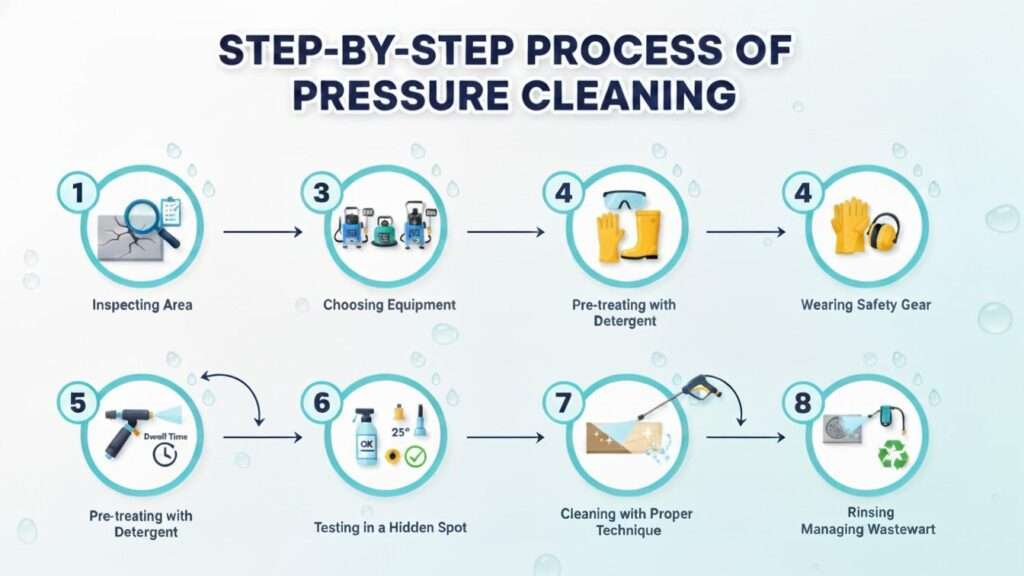
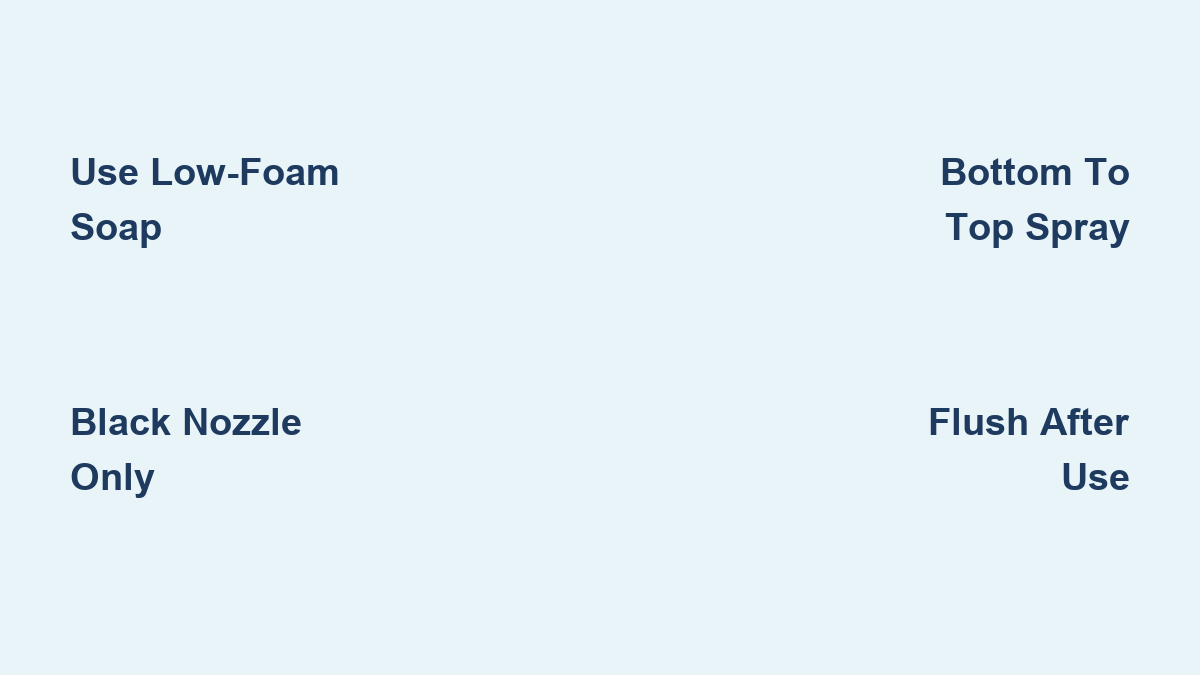
Using soap in a pressure washer requires specific detergents, correct nozzle selection, and proper application techniques. Always choose low-foaming chemicals designed for your machine, apply them from the bottom up, and rinse from the top down to avoid streaks.
Remember to flush your system with clean water after every use to prevent clogs and corrosion. By following these steps, you will achieve deeper cleaning results while extending the lifespan of your equipment.