Pressure Washer Nozzle Size Guide
You stand ready with your pressure washer running, yet hesitation stops you from pulling the trigger. Selecting the wrong nozzle size can strip paint, etch concrete, or leave grime untouched. The secret to professional results lies in matching the pressure washer nozzle size to your specific cleaning task.
This guide explains every color-coded tip and its unique spray angle for safe, effective cleaning. You will learn exactly which nozzle removes oil from driveways versus cleaning delicate vinyl siding without damage.
Decode Pressure Washer Nozzle Color Codes
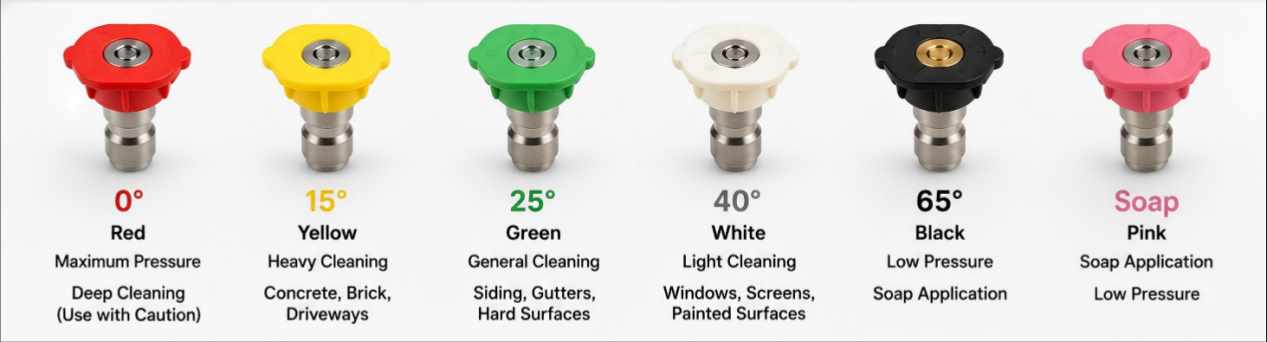
Manufacturers use a universal color-coding system to identify spray angles instantly. These colors remain consistent across major brands like Kärcher, Ryobi, and Sun Joe to prevent user error.
What Each Color Represents
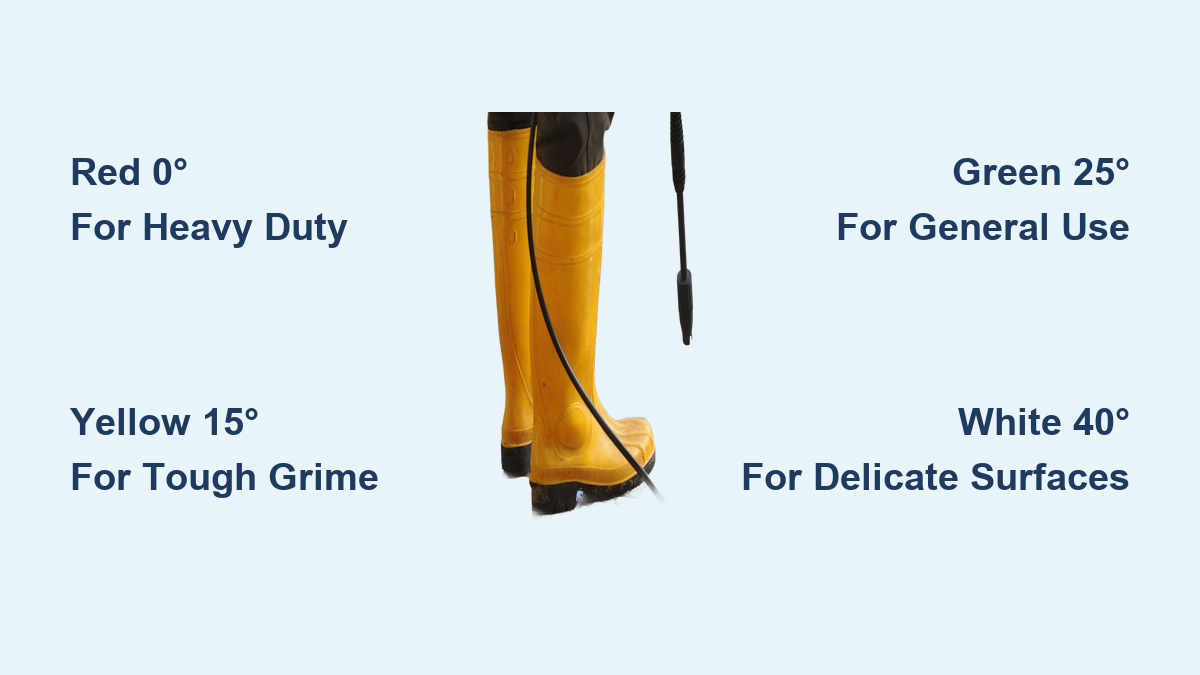
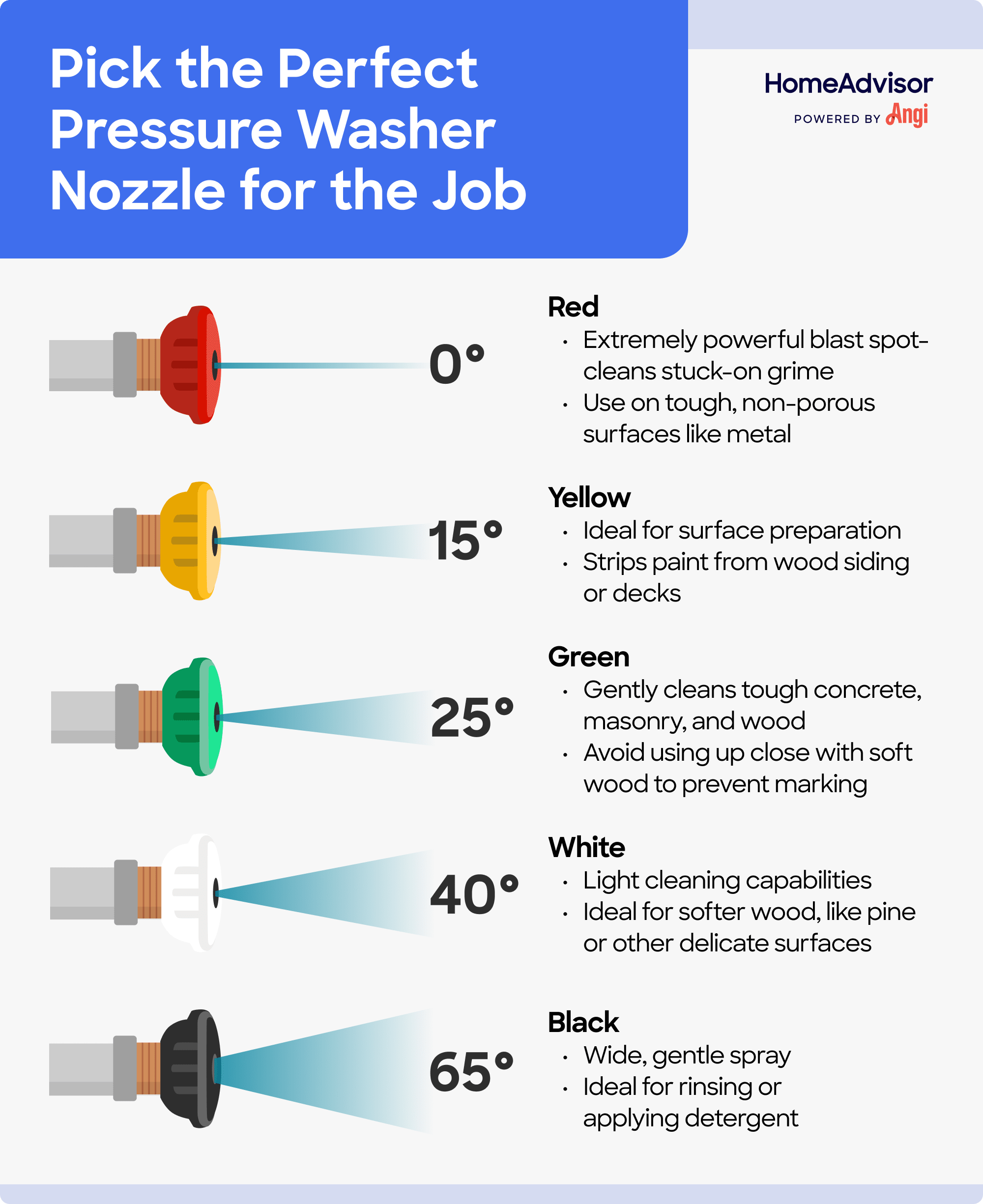
- Red (0°): Creates an ultra-narrow pinpoint jet for maximum impact force.
- Yellow (15°): Delivers a strong, focused fan spray for tough grime removal.
- Green (25°): Provides a balanced spread ideal for general-purpose cleaning.
- White (40°): Produces a wide, gentle mist safe for sensitive materials.
- Black (65°): Designed specifically for low-pressure detergent application.
Why Color Identification Matters
Memorizing degree measurements is unnecessary when color codes provide instant visual cues. This system prevents accidental surface damage by ensuring you never grab a red tip when cleaning wood. Organizing your nozzles by color also speeds up your workflow significantly.
How Spray Angle Impacts Cleaning Power
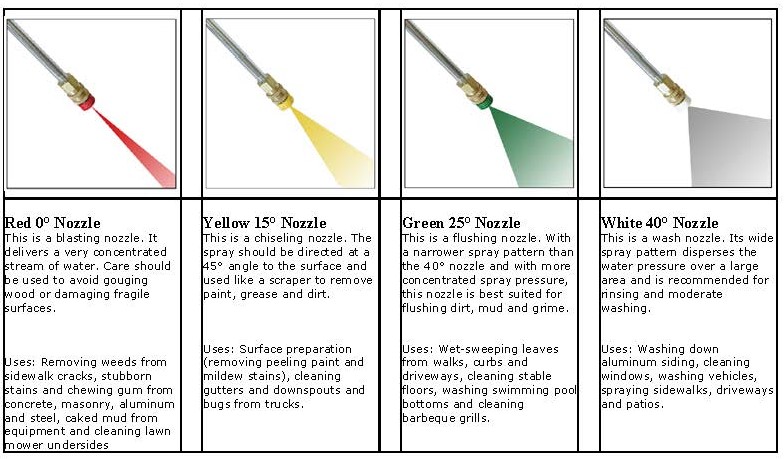
The spray angle dictates how water force distributes across a surface area. Smaller angles concentrate the machine’s PSI into a tiny stream, drastically increasing impact pressure.
Comparing 0° Red vs. 40° White Force
A red nozzle focuses all water energy into a single piercing line capable of cutting rust. Conversely, a white nozzle disperses that same energy over a wide area to gently rinse dirt. Using a 0° tip on siding acts like a knife, while a 40° tip acts like a broad hand.
The Versatility of Green and Yellow Tips
Most homeowners rely on green and yellow nozzles for ninety percent of their projects. The green tip offers enough spread to cover ground quickly while maintaining scrubbing power. The yellow tip steps in when you need extra aggression for baked-on driveway stains.
Match Nozzle Size to Common Surfaces
Selecting the correct tip protects your property from irreversible water damage. Using a nozzle with too much force can gouge wood or crack vinyl panels instantly.
Concrete Driveways and Garage Floors
Use the Yellow (15°) or Green (25°) nozzle for best results. These angles cut through tire marks and oil without pitting the concrete surface. Start with the green tip and switch to yellow only for stubborn stained areas.
Vinyl Siding and Exterior Windows
Use the White (40°) nozzle to safely clean without warping materials. This wide pattern removes pollen and dirt while minimizing the risk of forcing water behind panels. Never use red, yellow, or green tips on vinyl as they cause cracks.
Wooden Decks and Fences
Use the White (40°) or Black soap nozzle to avoid splintering soft wood fibers. Wood is porous and easily damaged, so keep the wand at least 18 inches away from the surface. Test a hidden spot first to ensure the pressure does not lift the grain.
Vehicles and Motorcycle Washing
Use the Black nozzle for soap and the White (40°) for rinsing paint. Car finishes scratch easily, so anything narrower than 40° poses a severe risk to clear coats. A foam cannon attachment paired with the black tip yields the safest wash.
When to Use the 0° Red Nozzle Safely
The red nozzle delivers the highest pressure and carries the greatest risk of injury or damage. It should only be used on durable, non-porous surfaces where extreme force is required.
Ideal Applications for Red Tips
- Stripping thick layers of old paint or rust from metal.
- Cutting through heavy grease deposits in industrial settings.
- Removing hardened sealant from masonry or brick.
Critical Safety Warnings
Always wear safety goggles and heavy gloves when operating a 0° tip. Keep the wand moving constantly and maintain a distance of at least 24 inches from the work surface. Never point this nozzle at people, pets, or electrical components.
Apply Detergent with the Black Nozzle

The black nozzle functions differently by reducing water pressure to allow chemical dwell time. It creates a wide 65° spray pattern that soaks surfaces without blasting soap away immediately.
Steps for Chemical Application
- Fill your detergent tank with the appropriate cleaning solution.
- Attach the black nozzle to the wand end.
- Apply soap evenly from the bottom up to prevent streaking.
- Let the solution sit for 2 to 5 minutes without drying.
- Switch to a white or green nozzle to rinse the surface clean.
Common Application Mistakes
Avoid using the black nozzle for rinsing since it lacks the necessary pressure. Do not apply soap in direct sunlight as it will dry before working effectively. Always switch back to a high-pressure tip for the final rinse cycle.
Maintain Nozzles for Peak Performance
Clogged or worn nozzles reduce cleaning efficiency and can cause pump damage over time. Regular maintenance ensures consistent spray patterns and prolongs equipment life.
Clean Orifices After Every Use
Sand and mineral deposits often block the tiny opening inside the tip. Use the included stainless steel cleaning pin to gently clear any debris from the orifice. Soak heavily clogged tips in white vinegar for ten minutes before cleaning.
Identify Signs of Wear and Tear
Erosion widens the orifice over time, causing the spray pattern to flare and lose pressure. Replace your nozzles immediately if the spray looks uneven or cleaning takes longer than usual. A degraded green tip might perform like a weak white tip, wasting your time.
Match Nozzle Size to PSI and GPM Ratings
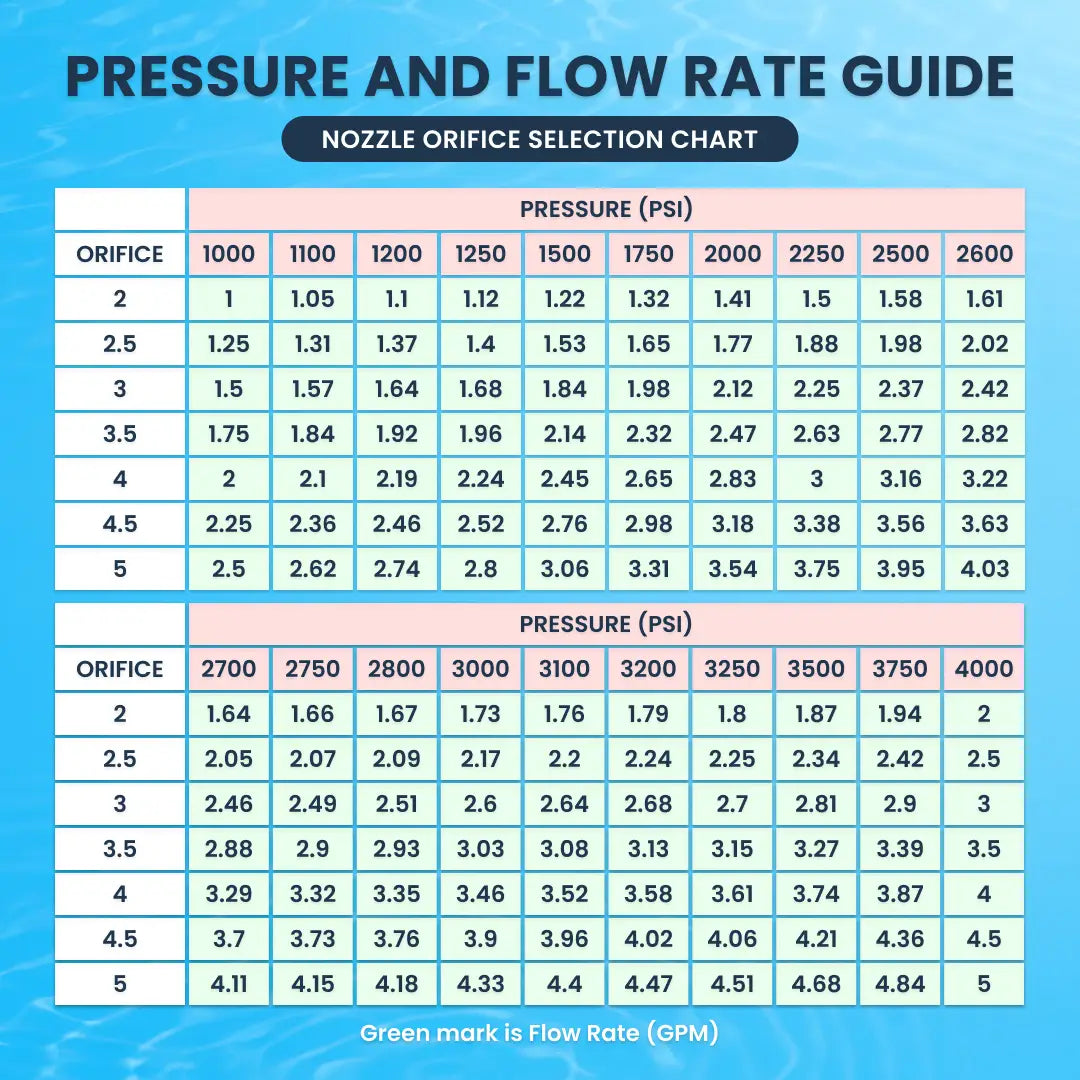
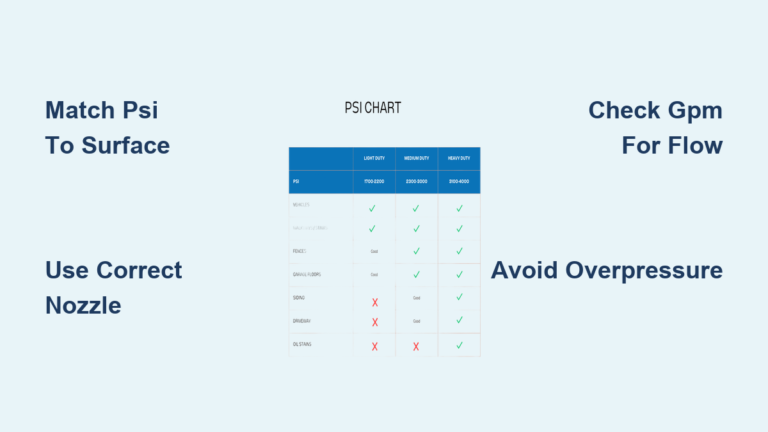
Nozzles must match your machine’s flow rate to prevent back pressure issues. Using an orifice that is too small for your GPM can strain the pump and void warranties.
Understanding Flow Rate Requirements
Check your owner’s manual to find the recommended GPM rating for your nozzles. A 2.5 GPM machine requires a nozzle rated for 2.5 GPM to function correctly. Mismatched flow rates lead to poor performance and potential mechanical failure.
Fixed vs. Adjustable Nozzle Tips
Adjustable tips offer convenience by allowing angle changes without swapping parts. However, fixed color-coded tips generally provide more consistent spray patterns and durability. Serious cleaners prefer fixed tips for their reliability and precise pressure delivery.
Expert Tips for Better Cleaning Results
Technique plays just as important a role as nozzle selection in achieving professional outcomes. Following proven methods ensures you clean faster while protecting your surfaces.
Start Wide and Narrow Down
Begin every job with the widest safe angle, typically the white 40° tip. Move to narrower angles only if the wider spray fails to remove the dirt effectively. This approach prevents accidental damage and helps you gauge surface tolerance.
Maintain Consistent Overlap and Distance
Move the wand in slow, overlapping passes with about 30 percent overlap between strokes. Holding the wand at the correct distance prevents streaking and ensures even cleaning coverage. Closer is not always better, as getting too near can damage even hard surfaces.
Frequently Asked Questions About Pressure Washer Nozzle Sizes
Can I use a 0° red nozzle on my concrete driveway?
You should generally avoid using a red nozzle on concrete unless removing severe stains. The extreme pressure can etch the surface and leave permanent marks. Stick to yellow or green tips for safe and effective driveway cleaning.
Which nozzle is best for washing a car?
The white 40° nozzle is the safest choice for rinsing car paint and glass. Always use the black nozzle first to apply soap gently before rinsing. Never use red, yellow, or green tips on vehicles as they will scratch the finish.
Why is my pressure washer nozzle spraying unevenly?
Uneven spraying usually indicates a clog from debris or mineral buildup inside the orifice. Remove the tip and clean it with the provided pin or soak it in vinegar. If cleaning does not fix the pattern, the nozzle is likely worn and needs replacement.
What does the black pressure washer nozzle do?
The black nozzle is designed exclusively for applying low-pressure detergent. It allows soap to soak into surfaces without being blasted away immediately. Do not use it for rinsing or high-pressure cleaning tasks.
How do I know if my nozzle size matches my pressure washer?
Check your machine’s GPM rating and ensure your nozzles match that flow rate. Using a nozzle with an orifice too small for your GPM creates dangerous back pressure. Consult your owner’s manual for the specific nozzle specifications required.
Key Takeaways for Your Pressure Washer Nozzle Size Guide
Selecting the correct pressure washer nozzle size balances cleaning power with surface safety. Remember that red tips cut while white tips rinse, and matching the color to your task prevents costly damage. Start with wider angles and maintain your tips regularly for the best long-term results.
Keep this guide handy next time you fire up your machine to ensure you always choose the right tool. Proper nozzle selection turns a risky chore into a quick, professional-grade cleaning session.