Fix Pressure Washer Not Building Pressure
Your pressure washer motor runs loud, but the spray is weak or nonexistent. When a pressure washer not building pressure frustrates your cleaning plans, the cause is usually a simple clog, not a broken pump.
You can restore full power in under 15 minutes by checking the nozzle, inlet filter, and internal valves. This guide walks you through every step to diagnose and fix the issue without professional help.
Inspect and Clean the Nozzle First
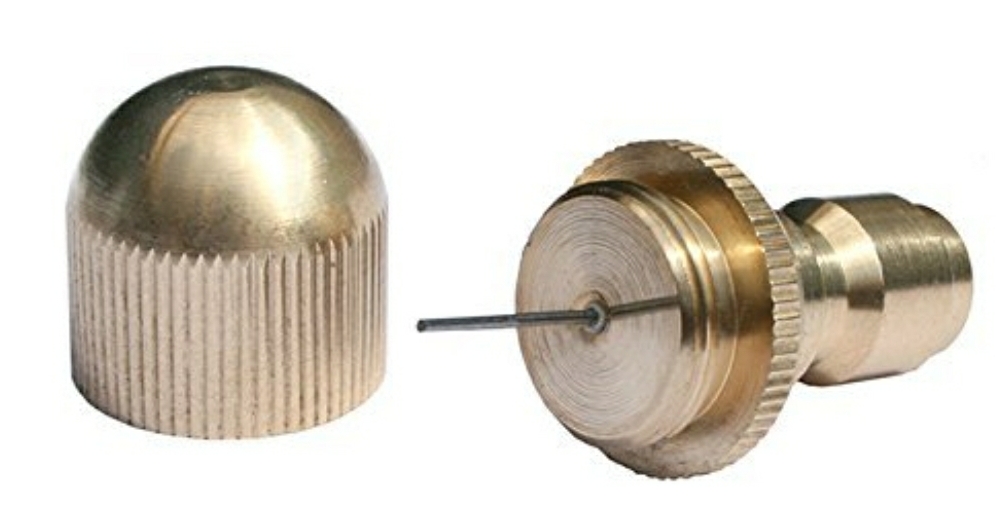
The spray tip is the most common culprit when your pressure washer not building pressure symptoms appear. Even tiny debris like sand or mineral scale can block the tiny orifice, stopping high-pressure flow instantly.
Clear Blocked Orifices Safely
Remove the spray wand from the trigger gun to inspect the tip. Use a paperclip or a specialized thin tool to gently clear any visible gunk.
- Remove the spray wand from the trigger gun completely.
- Inspect the tip for discoloration or visible blockages.
- Clear the hole using a paperclip or fine pin.
- Extract internal orifices on variable wands using a 2mm Allen wrench.
- Rinse thoroughly under running water before reassembling.
Pro Tip: Never use a metal drill bit or sharp object. These can widen the precision orifice and ruin your spray pattern forever.
Verify High-Pressure Settings
Many users accidentally leave the nozzle in soap mode or a wide-angle setting. This looks like zero pressure even if the pump works perfectly.
- Rotate the nozzle tip to the 0° or 15° setting. These are typically red or yellow tips.
- Avoid black (40°) or white (soap) tips when testing for pressure.
- Push and pull the variable wand collar to ensure it switches modes smoothly.
If the spray remains weak after cleaning and adjusting, the issue lies deeper in the system.
Clean Stuck Check Valves Inside the Pump
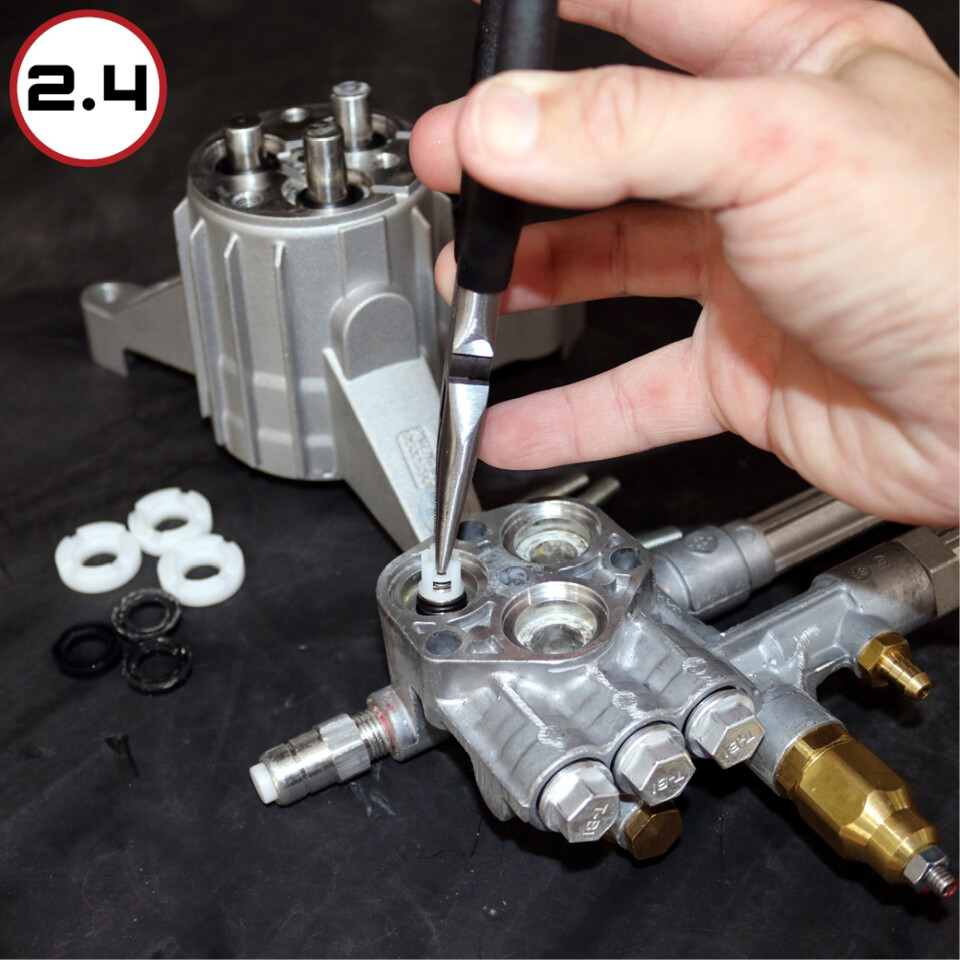
If the nozzle is clean, stuck or dirty check valves are the next likely cause. These small components inside the pump head control water direction. When they fail, your pressure washer not building pressure because water flows backward instead of out.
Remove and Scrub Valve Components
You can access these valves without taking apart the entire pump. Follow these steps carefully to avoid damage.
- Turn off and unplug the unit, then pull the trigger to release residual pressure.
- Locate the check valves, which appear as two or three brass fittings on the pump head.
- Unscrew each valve gently using needle-nose pliers.
- Inspect the spring and ball inside for debris or sticking.
- Rinse all parts under clean water and use a soft brush to remove grit.
- Wipe the valve seat in the pump housing with a clean cloth.
- Reinstall valves by hand and tighten gently without over-torquing.
Expert Note: One clogged valve is enough to kill all pressure. You must check every single valve to ensure success.
Schedule Annual Valve Maintenance
Prevent future failures by cleaning these valves once a year. Flushing fresh water through the system before storage also stops mineral buildup from occurring.
Clear the Inlet Filter and Water Supply

No amount of pump power matters if water cannot enter the system. A clogged inlet filter starves the pump, causing low pressure even when the motor runs at full speed.
Locate and Rinse the Filter Screen
The filter sits inside the water inlet port where your garden hose connects. It catches sediment before it enters the pump.
- Shut off the water supply and disconnect the garden hose.
- Find the inlet filter deep inside the water inlet port.
- Remove the filter screen, which may be brass or plastic.
- Rinse backward under a tap to flush out sand, rust, or sediment.
- Reinstall securely to prevent vibration loss during operation.
Warning: Never run the pressure washer without this filter. Dirt entering the pump can destroy internal components quickly.
Confirm Adequate Water Flow
Ensure your water source provides enough volume for the pump to function correctly.
- Make sure the faucet is fully open to maximize flow.
- Check the garden hose for kinks, collapses, or internal blockages.
- Use a 5/8-inch diameter hose because smaller hoses restrict necessary water volume.
If pressure returns after cleaning the filter, you have solved the issue immediately.
Seal Leaks at High-Pressure Connections

Small leaks in the high-pressure system prevent pressure buildup by letting water escape before it reaches the nozzle. Identifying these leaks is crucial when a pressure washer not building pressure persists.
Find and Fix Visible Leaks
Turn on the water and start the unit to inspect all connection points visually.
- Start the unit with the trigger closed.
- Inspect connections from the pump outlet to the hose, gun, wand, and nozzle.
- Look for dripping or fine spraying, especially when pulling the trigger.
- Tighten loose fittings by hand before replacing parts.
Replace Damaged O-Rings
Leaks almost always indicate a bad O-ring at a quick-connect point.
- At the nozzle base: Remove the quick-connect collar and use a small pick to pull out the old O-ring.
- Insert a new O-ring ensuring it sits flat and is not twisted.
- Lubricate lightly with silicone grease to extend the life of the new seal.
Common Mistake: Forcing connections with damaged O-rings strips threads. Always inspect seals before tightening anything.
Check O-rings on check valves and trigger gun inlets as well. Replace any that look cracked or flattened.
Test the Variable Wand Mechanism
Adjustable wands contain internal sliding mechanisms that can jam due to mineral buildup. If your wand feels stuck, it may be blocking flow entirely.
Free a Stuck Nozzle Collar
Use physical force and leverage to unstick the internal components of the wand.
- Hold the wand firmly, perhaps bracing it between your feet for leverage.
- Push and pull the nozzle collar vigorously to break up buildup.
- Repeat the motion until the mechanism moves smoothly.
If the collar remains stuck, soak the wand tip in white vinegar for 30 minutes. This dissolves mineral deposits that water cannot remove.
Confirm Internal Function
Test both high-pressure and soap modes once the wand moves freely. If water flows in soap mode but not high-pressure, the internal valve is likely clogged. Clean or replace the wand if this persists.
Run the Hose Vibration Test
This quick diagnostic test tells you if the pump is working or if the problem is downstream. It saves time by directing your focus to the right area immediately.
Diagnose with Pulse Feedback
Perform this test with the trigger closed initially, then open it while watching the hose.
- Start the pressure washer with the trigger gun closed.
- Pull the trigger and watch the high-pressure hose closely.
- Feel for vibration or jumping in the hose line.
- Hose jumps or vibrates: The pump is generating pressure. The problem is in the wand, nozzle, or hose.
- No movement: The pump is not pressurizing. Check the inlet filter, check valves, or water supply.
Why it works: Pressure pulses travel through the hose even if the nozzle is blocked. No pulse means no pump output.
Use the Troubleshooting Decision Matrix
Match your specific symptoms to the likely cause using this quick reference guide.
| Symptom | Likely Cause | Immediate Fix |
|---|---|---|
| Zero pressure, motor runs | Nozzle blocked or wrong setting | Clean tip; set to 0°/15° |
| Zero pressure, no hose pulse | Inlet restriction or bad check valve | Clean filter; inspect valves |
| Low pressure, steady flow | Partial clog or worn O-ring | Replace seals; flush system |
| Intermittent pressure | Debris in valve seat | Remove and clean all check valves |
| Leaking at connection | Failed O-ring | Replace with correct size |
Keep this matrix handy for fast diagnosis during your next cleaning session.
When to Escalate to Advanced Issues
If you have cleaned the nozzle, filter, and check valves but the pressure washer not building pressure issue remains, the problem may be internal.
Signs of Serious Pump Failure
Look for these indicators that suggest professional repair is needed.
- Motor runs but zero hose vibration occurs.
- Strange noises like grinding or knocking come from the pump.
- Oil leaks or discolored oil appear in oil-lubricated models.
- Overheating happens after only short use periods.
Possible Internal Problems
- Worn pump pistons or seals
- Failed unloader valve
- Thermal damage from dry running
- Motor or capacitor failure in electric models
Do not disassemble the pump unless you are trained. Internal repairs require special tools and seals.
Contact Support
Call (888) 279-9274 for technical help if basic troubleshooting fails. If your unit is under warranty, avoid DIY pump work as unauthorized repairs may void coverage.
Prevent Future Pressure Loss
Adopt simple maintenance habits to avoid downtime and keep your machine running strong.
Monthly Checks
- Inspect O-rings and replace if cracked.
- Flush the system with clean water after each use.
- Store with the wand in soap mode to relieve spring tension.
Annual Maintenance
- Clean check valves thoroughly.
- Replace worn nozzles.
- Drain and winterize if storing in freezing temperatures.
Keep a Repair Kit
Store these items in a zip bag for emergencies:
* Spare O-rings in various sizes
* Extra 0° and 15° nozzles
* 2mm Allen wrench
* Paperclips and soft brush
* Silicone grease
Final Thoughts on Fixing Pressure Washer Issues
Most cases of a pressure washer not building pressure are user-fixable and take less than 10 minutes to resolve. Start with the nozzle, then check the filter, and finally inspect the check valves to solve 9 out of 10 problems. Using the hose vibration test confirms pump function and helps you avoid unnecessary disassembly.
By following this systematic approach, you save time and money while keeping your equipment in top condition. Regular maintenance prevents small clogs from turning into major mechanical failures.
Frequently Asked Questions About Pressure Washer Pressure Loss
Why is my pressure washer running but not spraying water?
This usually indicates a blocked nozzle, a stuck check valve, or a clogged inlet filter. The motor runs, but water cannot flow through the system due to these obstructions.
How do I know if my pressure washer pump is bad?
If the hose does not vibrate when you pull the trigger and you have checked all filters and valves, the pump may be failed. Strange noises or oil leaks also indicate internal pump damage.
Can a clogged nozzle cause zero pressure?
Yes, a clogged nozzle is the number one cause of zero pressure. Even a tiny piece of sand can block the orifice completely, stopping all high-pressure output.
How often should I clean the check valves?
You should clean the check valves once a year as part of routine maintenance. This prevents debris buildup that leads to sticking and pressure loss.
What causes a pressure washer to lose pressure suddenly?
Sudden pressure loss often results from a piece of debris lodging in the nozzle or check valve. It can also happen if an O-ring fails suddenly, causing a major leak.
Is it worth repairing an old pressure washer pump?
If the motor is good and the frame is solid, replacing seals or cleaning valves is worth it. However, if the pump housing is cracked or pistons are worn, buying a new unit may be more cost-effective.