

How to Wash Sheepskin in Washing Machine
You’ve spilled coffee on your cozy sheepskin rug, or maybe your baby’s blanket has seen better days. Youre tempted to toss it in the washing machine but wait. Washing sheepskin isnt like laundering cotton sheets. Done wrong, it can turn soft, fluffy wool into a matted, shrunken disaster and transform supple leather into stiff cardboard. The good news? Most high-quality sheepskins can be safely machine-washed if you follow strict, tannery-approved guidelines.
The key lies in understanding your sheepskins origin and care code. Not all hides are created equal: some are designed to withstand gentle cycles, while others like California-tanned S-series must never get wet. This guide breaks down exactly how to wash sheepskin in a washing machine, based on real tannery instructions, detergent science, and drying best practices. Youll learn which models can survive a spin cycle, the only safe detergents to use, and why drying is the most critical step.
Confirm Machine Washability First
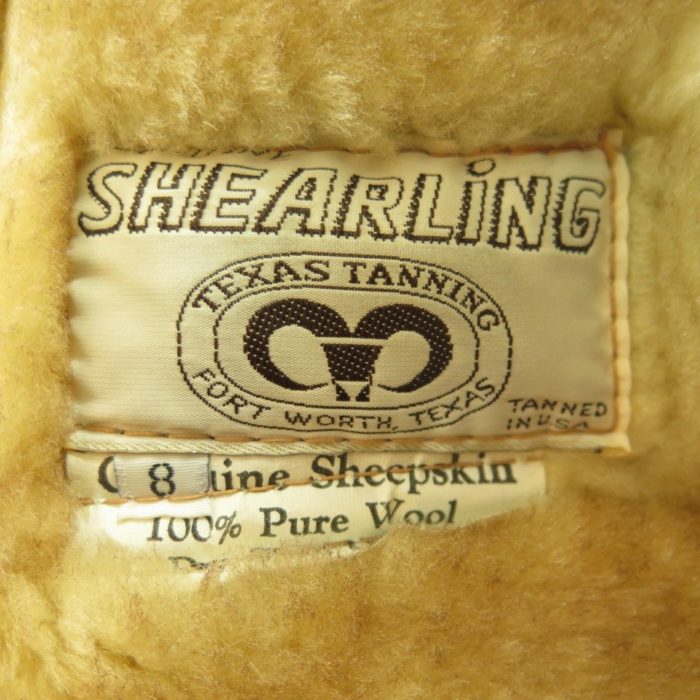
Before touching that washing machine, determine if your sheepskin can handle water. Washing an unwashable hide leads to irreversible damage.
Check Tannery Code or Care Label
Look for a tag or stamp indicating the tannery code. The following codes indicate machine-washable sheepskins:
- No prefix (Traditional Tanners, Ashford, OR)
- L (Living Sky, Idaho) with caution
- V (Vermont-tanned) safe with wool cycle
- P (Pennsylvania) hand wash preferred
The S code (San Francisco, California) means do not machine wash. These hides are tanned under strict environmental rules and lack washable chemicals.
When to Avoid Machine Washing
Even washable sheepskins should skip the machine if the leather shows signs of dryness or cracking, it has been previously damaged by heat, its heavily soiled with oil paint or non-organic stains, or you are unsure of its tannery origin. When in doubt, spot clean only or return to the tannery for professional service.
Pre-Wash Preparation Steps
Proper prep prevents matting, reduces wash frequency, and extends your sheepskins life.
Shake and Freshen Outdoors
Take the sheepskin outside and shake vigorously by the corners. This removes dust, lint, pet hair, and surface debris often eliminating the need for a full wash.
Brush Wool Before Washing
Use a wire dog brush or wide-tooth comb to detangle matted areas. Brush in the direction of wool growth to avoid felting. For stubborn tangles, spray lightly with a 1:3 white vinegar to water mix, wait 2 minutes, then gently comb through.
Spot Clean Stains First
Only machine wash when overall soiling demands it. For localized spills, dampen a cloth with mild soap or baby shampoo, wipe in one direction only never scrub, then blot dry with towel and air dry completely before proceeding.
Choose the Right Detergent
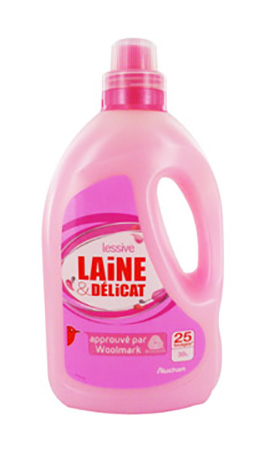
Using the wrong soap is the number one cause of ruined sheepskins. Chemicals in regular detergents destroy protein-based wool and leather.
Use Wool-Safe Detergents Only
Select products labeled wool approved or bearing the WoolMark logo. The detergent must be free of enzymes, bleach, brighteners, and softeners.
Recommended options include Unicorn Fiber Wash, Eucalan or Soak lanolin-rich no-rinse formulas, or Woolite only if explicitly labeled safe for wool. Never use regular laundry detergent, fabric softener, Woolite All Down, OxiClean, or dish soap.
Apply Minimal Detergent
Use half the recommended amount. Excess residue stiffens leather over time. Add detergent directly to water during fill, not onto the hide.
Set Correct Machine Settings
Even with the right detergent, improper settings cause felting, shrinking, and texture loss.
Select Wool or Hand-Wash Cycle
Choose wool cycle (ideal), hand-wash cycle (acceptable), or delicate cycle only if wool setting unavailable. Avoid cycles with high agitation or long spin times.
Control Water Temperature
Keep water between 20-30°C (68-86°F). L-tannery recommends max 85°F (29.4°C), P-tannery advises not to exceed 100°F (37.8°C), and V-tannery requires cool water only. Warm water opens wool scales while cold helps preserve texture.
Limit Agitation and Soak Time
Let the sheepskin soak for 5-10 minutes with minimal churning. Excessive movement causes felting, a permanent matting of fibers. Do not add other laundry items. Wash alone to prevent friction.
Run Double Spin Cycle
After washing, run a spin-only cycle to remove water, then repeat a second time. This reduces drying time and prevents leather from sitting damp, which leads to stiffness.
Remove Water Safely Post-Wash
Never wring or twist the hide this damages both wool and leather.
Lift and Squeeze Gently
Press water out by lifting and squeezing sections. Do not wring.
Shake Aggressively by Base
Hold the leather side and shake hard to fluff wool, remove creases, and distribute moisture evenly. Repeat 3-5 times.
Dry Sheepskin Properly
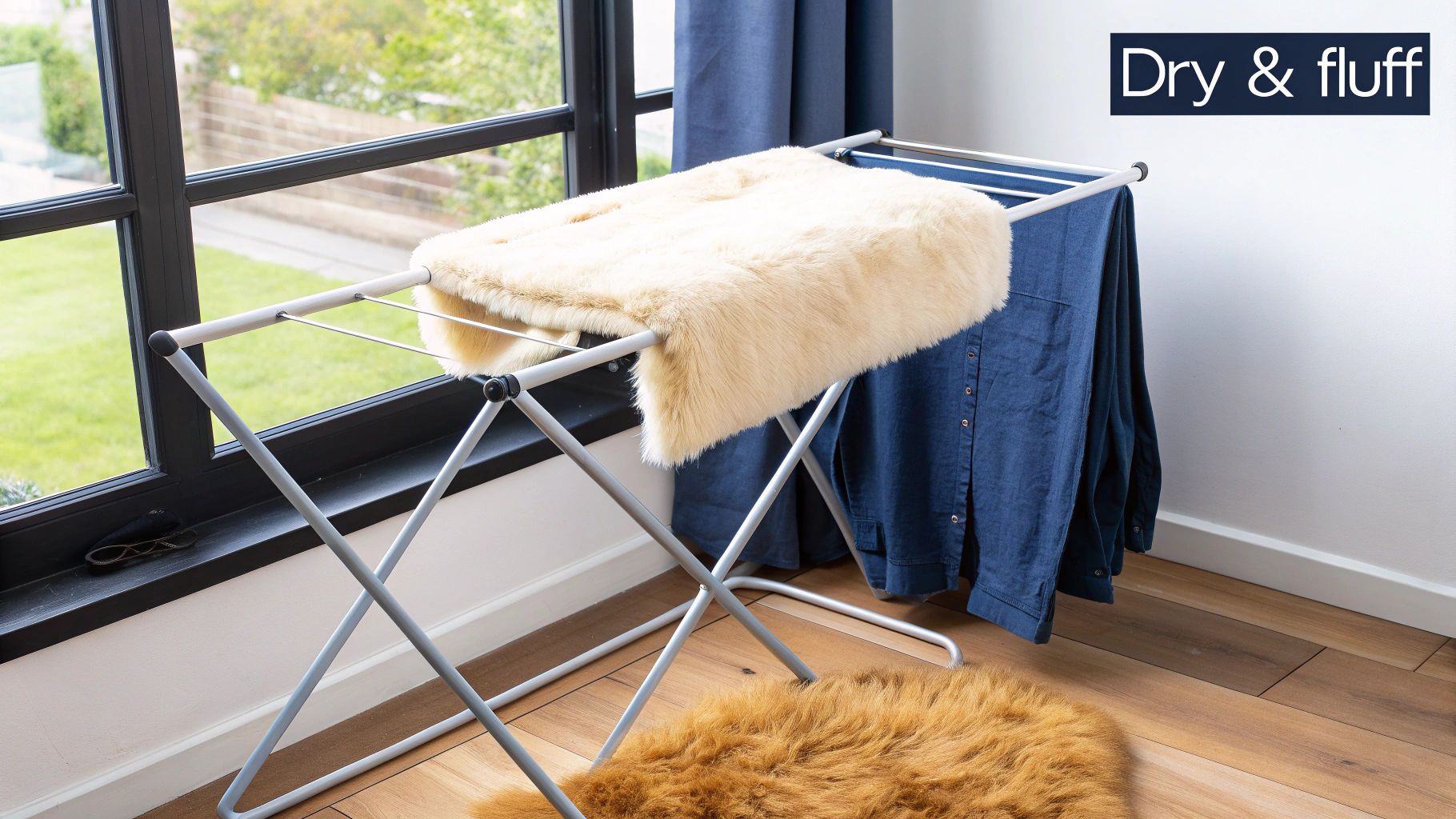
Improper drying ruins more sheepskins than washing. Heat and neglect cause irreversible hardening.
Air Dry on Line or Flat
Best method: hang over a clothesline, folded in half with wool side out. This protects the leather from direct airflow and UV exposure. Alternative: lay flat on a clean surface, wool side down, away from sunlight and heat sources.
Never Tumble Dry on Heat
If using a dryer, use only no-heat or wool-smoothing cycle and check every 10 minutes. Remove while still damp. Over-drying makes leather stiff and brittle.
Stretch and Massage During Drying
As the hide dries, stretch the leather side every 30-60 minutes and rub and pull to maintain suppleness. This mimics the tannerys stretching process and is essential for softness.
Condition for Softness After Washing
Restoring pH balance and natural oils keeps wool fluffy and leather flexible.
Use Vinegar Soak (Recommended)
After washing, soak in half cup white vinegar per 4 gallons of water for 10 minutes. This neutralizes alkaline residues, closes wool scales, and restores softness like a hair conditioner.
Apply Lanolin for Dry Skins
For stiff or aged sheepskins, add liquid lanolin to rinse water or apply directly to leather side with sponge. Lanolin is natural sheep oil that replenishes lost fats and improves flexibility. Use sparingly too much attracts dirt.
Restore Texture With Brushing
Brushing brings back fluff and luster after washing and drying.
Use the Right Tools
Wire dog brush works for general fluffing, medium-tooth dog rake handles deeper matting, and wide-tooth comb provides fine grooming.
Brush at All Stages
P-tannery recommends brushing when wet (helps separate fibers), damp (sets texture), and dry (finishes and maintains). Brush in the direction of wool growth.
Avoid These Common Mistakes
Even experienced users ruin sheepskins by making preventable errors.
1. Using Enzyme-Based Detergents
Enzymes break down protein fibers in wool and leather. Avoid any detergent labeled bio, stain-fighting, or enzyme-powered.
2. Adding Fabric Softener
Softeners coat fibers, making leather cardboard-like and water-resistant. They never wash out.
3. Over-Washing
Wet the leather only when necessary. Frequent washing shortens lifespan. Shake and air out weekly instead.
4. Exposing to Heat
Heat causes irreversible shrinkage and hardening. No dryers, heaters, or sun drying.
5. Skipping Stretching During Drying
Unstretched hides shrink and stiffen. Stretch every hour until 80% dry.
6. Washing S-Code Sheepskins
California-tanned (S) hides are not washable. Spot clean only.
7. Ignoring Metal Contact
V-tannery warns that natural tannins react with iron. Avoid metal railings, chairs, or hangers which cause gray or black stains.
Rescue a Stiff or Damaged Sheepskin
If your sheepskin turned stiff, try these steps but success is not guaranteed.
Re-Wash With Lanolin
Wash again using lanolin-rich wool wash, not detergent. Soak 15 minutes, then squeeze and air dry with constant stretching.
Soak in Vinegar Solution
Use half cup vinegar per 4 gallons water for 10 minutes. Helps reopen fibers and soften texture.
Stretch and Massage Aggressively
While damp, pull and rub the leather in all directions for 5-10 minutes every hour.
Brush Frequently
Use a wire brush multiple times a day during drying.
Care by Use Case
Different sheepskin products require tailored cleaning approaches.
Rugs and Throws
Wash every 6-12 months, follow full machine-wash protocol, prioritize air drying, and brush weekly.
Car Seat Covers
Spot clean monthly, machine wash only if soiled with food, mud, or odors. Ensure complete drying to prevent mildew.
Baby Blankets
Wash more often but gently. Use hypoallergenic lanolin-safe wool wash, avoid strong scents or additives, and dry indoors away from heat.
Jackets and Footwear Liners
Most are not machine-washable. Check garment label. Often require professional cleaning or spot treatment.
Frequently Asked Questions About Washing Sheepskin in Washing Machine
Can all sheepskins be washed in a washing machine?
No. Only sheepskins with tannery codes L, V, P, or no prefix are machine-washable. The S code (California-tanned) must never be machine washed and requires spot cleaning only.
What happens if I use regular laundry detergent on sheepskin?
Regular detergents contain enzymes and alkaline compounds that break down protein fibers in wool and leather. This causes irreversible damage including matting, stiffening, and deterioration of the hide.
How do I prevent sheepskin from shrinking in the washing machine?
Use cool water (never above 100°F), select wool or hand-wash cycle, minimize agitation, and stretch the leather continuously during drying. Never use heat or tumble dry on hot settings.
Why does my sheepskin feel stiff after washing?
Stiffness occurs from improper drying, excessive detergent residue, or heat exposure. Always use wool-safe detergent at half strength, air dry away from heat sources, and stretch the leather regularly during the drying process.
Can I put sheepskin in the dryer?
Only use a dryer on no-heat or wool-smoothing cycle, and remove while still damp. Never fully dry sheepskin in a machine as heat causes irreversible hardening and shrinkage.
How often should I wash my sheepskin rug?
Wash sheepskin rugs only when necessary, typically every 6-12 months. Frequent wetting shortens the lifespan. Shake outdoors weekly and spot clean spills immediately to reduce washing frequency.
Key Takeaways for Washing Sheepskin in Washing Machine
Machine washing sheepskin can be safe but only with the right hide, detergent, cycle, and drying method. Always verify the tannery code before washing. S-code sheepskins must never be machine washed. Use only wool-safe detergents with the WoolMark logo and apply half the recommended amount. Select wool or hand-wash cycle with water between 68-86°F and minimize agitation to prevent felting.
The drying phase is the most critical step. Air dry away from heat and sunlight, stretch the leather every 30-60 minutes, and remove from any dryer while still damp. Condition with a vinegar soak after washing to restore softness and pH balance. When in doubt, spot clean or send to the tannery for professional service. With proper care, your sheepskin will stay soft, supple, and beautiful for years.