How to Clean Washing Machine Hose: Quick Steps
Is your washing machine draining slowly, backing up with water, or emitting foul odors? These issues often point to a clogged or dirty washing machine hose. Over time, both inlet and drain hoses accumulate debris like lint, soap scum, hair, mineral deposits, and even small clothing items, reducing efficiency and risking leaks or floods. Knowing how to clean washing machine hose properly can prevent costly repairs and extend your appliance’s lifespan. This guide walks you through identifying problems, removing and cleaning both types of hoses, and maintaining them for long-term performance, all safely and effectively.
Recognize Clogged Hose Symptoms
Before disassembling anything, confirm the hose is the issue by checking for telltale signs. Identifying symptoms early prevents unnecessary repairs and helps you target the right component.
Water Backs Up During Drain Cycle
If water returns to the drum after draining, it may indicate a partial blockage in the drain hose. This siphoning effect happens when gunk restricts full evacuation.
Incomplete Drainage After Spin
Standing water at the end of a cycle suggests debris is trapping water in the hose. Do not confuse this with pump failure. Check the hose first.
Slow Water Intake
When fill cycles take longer than usual, inspect the inlet hoses. Sediment buildup or clogged filter screens can severely limit flow.
Foul Smells From Machine
Stagnant water and organic residue in the drain hose breed mildew and bacteria, causing musty odors. Cleaning the hose eliminates the source.
Low Water Pressure or Spitting
Sputtering faucets or weak flow at the washer connection often stem from mineral scale in inlet hoses, especially in hard water areas.
Know Your Hose Types
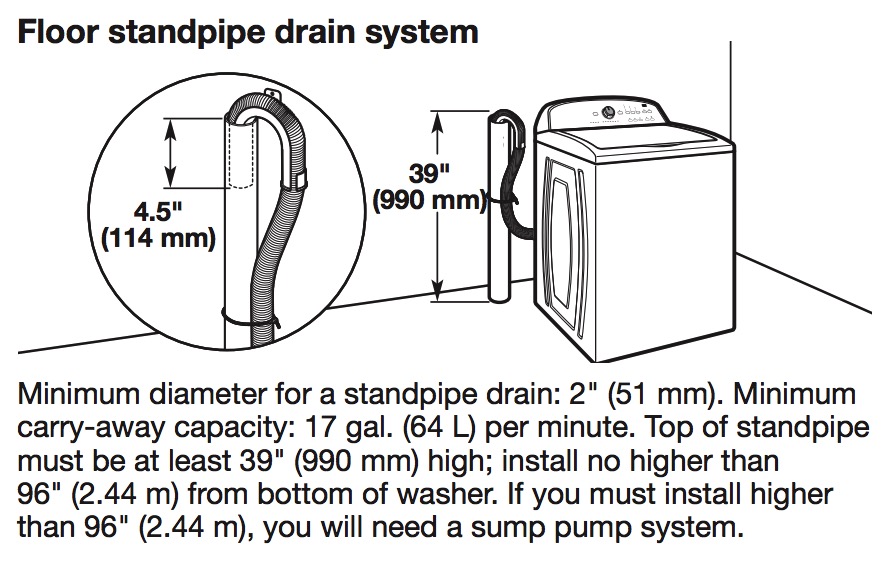
Each type serves a different function and collects distinct contaminants. Understanding which hose causes your problem saves time and effort.
Inlet Hoses: Hot and Cold Supply Lines
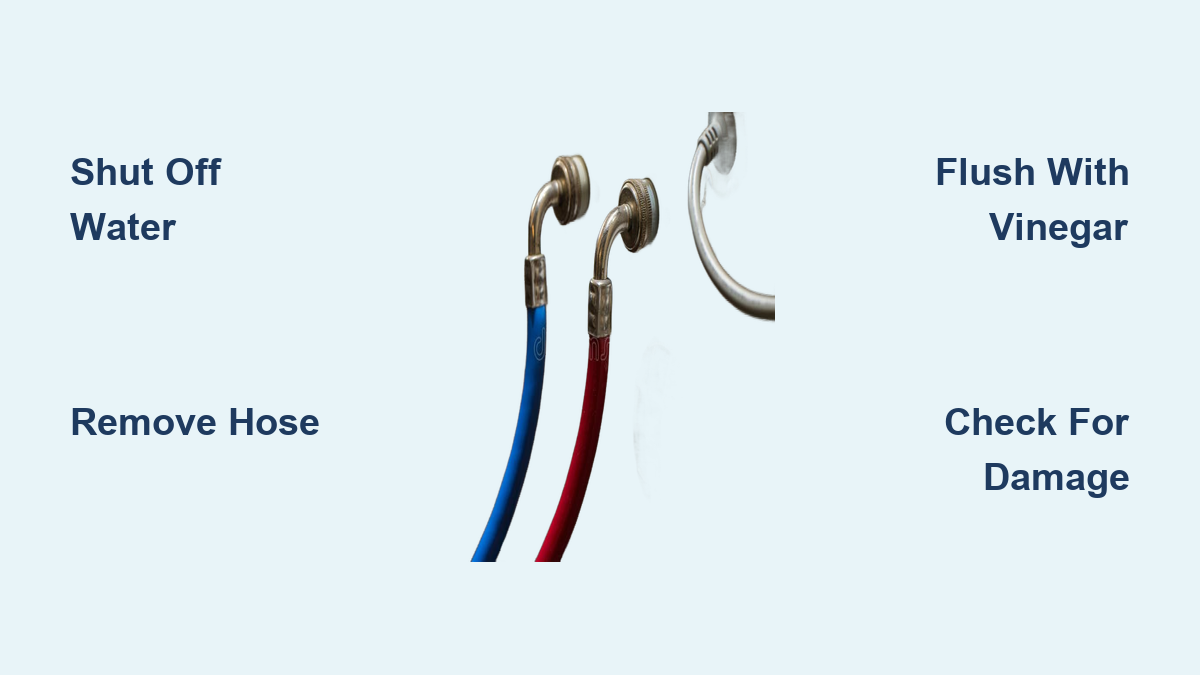
These connect the washing machine to household water valves. Most are braided stainless steel with rubber interiors.
Common issues include:
- Mineral scale from hard water
- Detergent sludge in filter screens
- Sediment buildup reducing pressure
Drain Hose: Removes Used Water
Attached to the pump, this hose directs wastewater to a standpipe or sink.
Common issues include:
- Lint and hair clogs
- Soap scum and biofilm
- Kinks or collapses restricting flow
Both require regular inspection, but cleaning methods differ.
Prepare for Safe Cleaning
Avoid leaks, electrical hazards, and floor damage with proper preparation. Taking these steps upfront prevents water damage and injury.
Shut Off Power and Water
Unplug the washing machine. Turn off both hot and cold water supply valves behind the unit to prevent accidental flooding.
Gather Essential Tools
You will need:
- Adjustable pliers or wrench
- Screwdriver for hose clamps
- Needle-nose pliers
- Bottle brush or flexible pipe cleaner
- Garden hose or faucet access
- White vinegar
- Mild dish soap
- Bucket and towels
Protect Your Floor
Place towels or a tarp under connections. Have a bucket ready to catch residual water when disconnecting hoses.
Remove the Washing Machine Hose
Proper removal prevents damage to fittings and threads. Follow these steps carefully to avoid costly mistakes.
Detach Inlet Hoses Safely
- Close water valves completely.
- Place a towel under each connection.
- Use pliers to loosen the nut connecting the hose to the water valve.
- Repeat on the washing machine side.
- Remove the hose and set aside.
Pro tip: Unscrew the inlet filter screen from the machine’s water inlet port for separate cleaning.
Disconnect Drain Hose Carefully
- Locate the hose at the back of the machine.
- Loosen the clamp securing it to the pump outlet.
- Disconnect from the standpipe or drain.
- Drain remaining water into a bucket before full removal.
Warning: Never force a stuck hose. Twist gently while pulling to avoid damaging the pump outlet.
Inspect the Hose Thoroughly

A visual check determines whether cleaning will work or if replacement is needed. Skipping this step wastes time on a hose that cannot be saved.
Check for Physical Damage
Look for:
- Cracks or splits
- Bulges or soft spots
- Brittle, cracked rubber
- Flaking interior lining
Replace immediately if any damage is present.
Shine Light Through the Hose
Hold one end to a bright light. If you cannot see through, there is a blockage. Note where darkness appears, as it may indicate clog location.
Identify Buildup Type
- Gray slime or gunk indicates soap scum and biofilm, typical in drain hoses.
- White crusty deposits mean mineral scale, common in inlet hoses.
- Lint balls or fabric scraps suggest an overloaded washer or missing filter.
This helps choose the best cleaning method.
Clean Based on Contaminant Type
Use targeted techniques for maximum effectiveness. Different buildup requires different solutions.
Remove Large Debris Manually
Use needle-nose pliers to pull out socks, coins, or lint clumps, especially from the drain hose. Insert a bottle brush, flexible pipe snake, or straightened wire hanger. Gently rotate to dislodge compacted material.
Never use sharp tools, as they can scratch or puncture the hose lining.
Flush With Strong Water Pressure
Connect one end of the hose to a tap. Open the water and flush in both directions.
For inlet hoses, ensure both ends and filter screens run clear. For drain hoses, flush until outflow is free of debris. Repeat until water flows freely and no particles emerge.
Soak in Cleaning Solution
Choose the right soak based on buildup:
For soap scum and mildew, mix hot water with a few drops of dish soap. Submerge the hose for 30 minutes. Let it sit filled with solution for deeper penetration.
For hard water scale, use a 50/50 white vinegar and warm water mix. Soak for 30 to 60 minutes. Vinegar dissolves lime and mineral deposits naturally.
Pro tip: Plug one end and let the hose fill completely. This maximizes contact time inside bends.
After soaking, flush thoroughly with clean water.
Clean Inlet Filter Screens
These small mesh filters trap sediment but clog easily.
- Remove the screen from the washer’s inlet valve.
- Soak in vinegar for 10 minutes.
- Scrub gently with an old toothbrush.
- Rinse under running water.
- Reinstall securely. Hand-tighten only.
Note: Skipping this step causes 90% of recurring inlet flow issues.
Reconnect and Test the Hose
Improper reassembly leads to leaks and siphoning. Follow these steps carefully to ensure proper operation.
Reattach Inlet Hoses Correctly
- Reinstall filter screens if removed.
- Hand-thread hoses onto water valves and machine.
- Tighten with pliers. Do not over-tighten, as this risks stripping threads.
- Open water valves slowly and check for leaks.
Secure Drain Hose Properly
- Reconnect to pump outlet and tighten clamp.
- Insert into standpipe no more than 6 inches deep.
- Ensure the hose has a high loop, 30 to 90 inches above floor, to prevent siphoning.
Never seal the drain airtight. This creates a vacuum that blocks drainage.
Run a Test Cycle
Plug in the machine. Run a short rinse or spin cycle.
Watch for smooth water intake, complete drainage, and no leaks at connections. If problems persist, repeat cleaning or consider replacement.
Prevent Future Clogs With Maintenance
Keep hoses clear with simple habits. Regular maintenance prevents most common issues.
Clean Every 3 to 6 Months
Schedule hose inspections every few months. Increase frequency if you use powdered detergent, have hard or well water, or wash heavily soiled clothes frequently.
Inspect Filters Monthly
Check inlet filters monthly. Rinse if cloudy or clogged. This prevents gradual pressure loss.
Use HE Detergent
High-efficiency detergent produces fewer suds and less residue, reducing slime buildup in hoses and pumps.
Avoid Overloading
Too many clothes increase fiber shedding, which accumulates in the drain hose. Stick to manufacturer load recommendations.
Run Monthly Vinegar Wash
Once a month, run an empty hot cycle with 2 cups of white vinegar. This helps dissolve internal buildup and freshen the system.
Replace Hoses Every 5 Years
Even if they look fine, replace rubber inlet hoses prone to bursting and drain hoses with recurring clogs. Upgrade to braided stainless steel inlet hoses. They resist bursting and last longer.
Critical Warnings to Follow
Avoid common mistakes that cause damage. These errors lead to costly repairs and potential water damage.
Never Use Chemical Drain Cleaners
Products like Drano can degrade rubber and plastic, leading to cracks and leaks. Stick to vinegar and mechanical cleaning.
Do Not Pour Boiling Water
Extreme heat can warp plastic or melt rubber hoses. Use warm, not boiling, water for soaking.
Avoid Kinks in Drain Hose
When reinstalling, maintain a smooth curve. Sharp bends restrict flow and promote clogs.
Limit Standpipe Insertion Depth
Inserting the drain hose too far, more than 6 inches, causes siphoning. Water flows back into the machine.
When to Replace Instead of Clean
Cleaning helps in most cases, but replacement is safer in certain situations. Knowing when to replace saves time and prevents repeated issues.
Hose Shows Structural Damage
Cracks, bulges, or soft spots mean the hose is failing. Replace immediately to avoid bursts.
Leaks Persist After Reconnection
If water seeps from connections despite proper tightening, the hose may be warped or worn.
Inner Lining Is Flaking
Peeling material inside the hose will continue to break off and clog the system.
Over 5 Years Old
Manufacturer lifespan for most hoses is 5 years. Proactively replace to prevent unexpected failures.
Clogs Return Frequently
Recurring blockages despite regular cleaning suggest internal degradation. A new hose restores full flow.
Real-World Tips From Users
Verified homeowners report that vinegar soaks clear 80% of inlet scale in hard water areas. Plumber’s snakes remove deep drain clogs unreachable by brushes. Monthly filter rinses prevent most slow-fill issues. Front-loaders need more frequent drain hose cleaning due to tighter hose bends and lower spin speeds. Homes with well water require quarterly maintenance.
Key Takeaways for Cleaning Your Washing Machine Hose
Cleaning your washing machine hose is a straightforward DIY task that prevents major plumbing problems. Start by identifying symptoms like slow drainage, backup, odors, or low water pressure to determine which hose needs attention. Always disconnect power and water before beginning any work. Remove the hose carefully, inspect it for damage, then clean using manual removal, flushing, and soaking appropriate to the contaminant type. Do not skip cleaning the inlet filter screens, as this step resolves most recurring flow issues. Reconnect securely, maintaining proper hose depth and loop height to prevent siphoning. Finally, establish a maintenance schedule of cleaning every 3 to 6 months, inspecting filters monthly, and replacing hoses every 5 years. Following these steps keeps your washing machine running efficiently, avoids water damage, and extends the life of your appliance.
Frequently Asked Questions About Cleaning Washing Machine Hoses
How do I know if my washing machine hose is clogged?
Look for water backing up into the drum, incomplete drainage after spin cycles, slow water fill, foul odors, or reduced water pressure. These symptoms indicate buildup restricting water flow.
Can I clean both inlet and drain hoses the same way?
No. Inlet hoses typically have mineral scale requiring vinegar soaks, while drain hoses collect lint and soap scum needing manual debris removal and detergent soaks. Each requires different cleaning approaches.
How often should I clean my washing machine hoses?
Clean hoses every 3 to 6 months. Homes with hard water, well water, or heavy laundry use may need more frequent cleaning, possibly quarterly.
What is the best cleaning solution for washing machine hoses?
Use a 50/50 white vinegar and warm water mixture for mineral deposits and hard water scale. Use hot water with mild dish detergent for soap scum and organic buildup.
Do I need to replace the hose or just clean it?
Replace the hose if it shows cracks, bulges, soft spots, flaking inner lining, is over 5 years old, or has recurring clogs despite regular cleaning. Otherwise, cleaning should resolve the issue.