How to Move a Washing Machine Down Stairs Safely
Moving a washing machine down stairs is one of the most physically demanding household tasks you can tackle. These bulky appliances weigh between 150 and 300 pounds, making them awkward to grip and balance, especially on a staircase. A single misstep can lead to back injuries, damaged flooring, or a ruined washer. But with the right tools, preparation, and technique, you can move your washer safely without injury or damage.
This guide walks you through every critical step. You will learn how to secure the drum, disconnect utilities, choose the best equipment, navigate stairs safely, and determine when to call professionals. Whether you are relocating your laundry setup to a basement or moving to a new home, this actionable plan ensures a smooth, controlled descent.
Prepare the Washing Machine
Before lifting a single pound, prepare the washer to prevent leaks, internal damage, and safety hazards during the move.
Drain All Water and Dry Interior
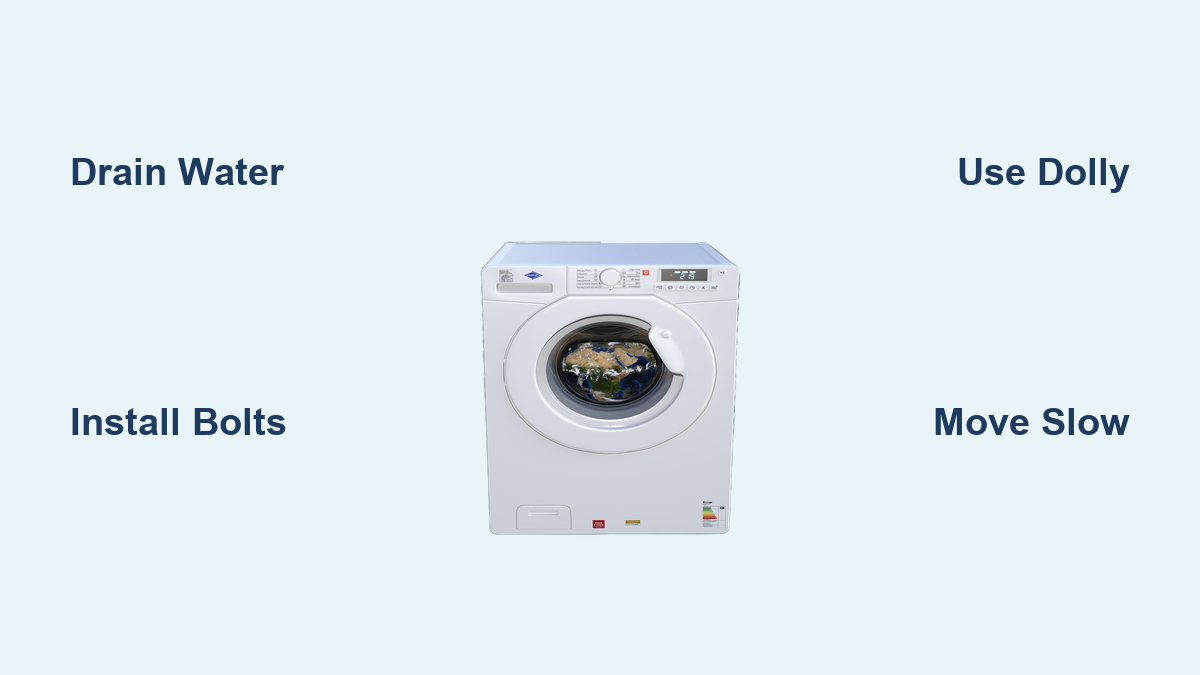
Even an empty washer holds residual water in hoses, pumps, and the drum. To eliminate this, run a spin-only cycle 24 hours before moving. Leave the door and detergent drawer open to air-dry the interior. Wipe down seals and tub to prevent mold and mildew during transport.
Water adds weight and can leak, damaging floors or walls during the move.
Disconnect Power and Water Lines
Safety starts here. Never move a plugged-in appliance.
- Turn off the circuit breaker supplying the washer.
- Unplug the power cord from the wall.
- Shut off both hot and cold water valves behind the machine.
- Detach inlet hoses and drain remaining water into a bucket.
- Cap the hose ends to avoid spills and contamination.
Label hoses and connections if you plan to reinstall the same unit later.
Reinstall Shipping Bolts
This step is non-negotiable. The drum floats on suspension springs, and movement without stabilization can destroy internal components.
Locate the shipping bolts, usually stored in the back panel or provided with the original packaging. Insert them into the holes on the rear of the washer to lock the drum in place. Tighten securely with a wrench.
Skipping this step can cause permanent drum or suspension damage, leading to costly repairs or replacement. If bolts are missing, order replacements using your model number from the manufacturer or an appliance parts supplier.
Measure the Path
Many moves fail not from lack of strength but from poor planning. Take time to measure everything before committing to the move.
Check Clearance at Every Point
Use a tape measure to verify the washer can fit through door frames, hallways, stair width and tread depth, landings and turns, and basement or destination entry. Compare these dimensions to the washer height, width, and depth, including hoses and control panel overhang.
You need at least 2 to 3 inches of clearance on all sides for safe maneuvering.
If the path is tight, consider removing doors or temporarily detaching hoses for better clearance.
Gather the Right Tools

Using the wrong equipment risks injury and appliance damage. Invest in proper gear before starting.
Use a Stair-Climbing Appliance Dolly
This is the gold standard for moving heavy appliances downstairs. Look for a dolly with swivel stair-climbing wheels that grip each step, rubber guards to protect walls, and 600 plus pound weight capacity. Rent from U-Haul, Home Depot, or Lowe.
Renting a dolly from U-Haul made the move a piece of cake with my wife guiding me down the stairs.
Secure with Ratchet Straps
Never rely on hand-holding. Strap the washer firmly to the dolly using two 10 to 15 foot straps rated at 500 plus pounds. Cross them diagonally for maximum stability. Ensure the washer does not tilt or overhang.
The unit should not wobble when gently shaken.
Protect with Moving Blankets
Wrap the washer in thick moving pads or blankets. This prevents scratches on the finish and shields walls, railings, and stair edges. Tape or strap the padding in place so it does not slip during the move.
Consider Shoulder Moving Straps
If a dolly is not available, shoulder-based lifting straps are the next best option. They distribute weight across your back and legs, allowing better control than forearm-only straps. You need two people minimum for this method.
Avoid forearm straps. They dig into arms, reduce grip, and increase injury risk.
Assemble Your Moving Team
Even with the best tools, you need the right people to execute a safe descent.
Minimum Two Strong Adults
One person guides the top of the dolly or appliance while one controls the descent from behind. Constant communication is essential throughout the process.
Ideal Two Movers Plus One Spotter
The third person clears obstacles, opens doors, warns of hazards, and assists at tight turns.
More than two guys on stairs most will just be watching. Never attempt this alone. Even lifting one corner does not give you control over balance.
Move the Washer Downstairs Step by Step
Now that everything is ready, execute the descent with precision.
Clear and Light the Path
Remove rugs, wall decor, and furniture. Turn on lights or use flashlights in dim areas. Open all doors along the route. Cover sharp corners with padding.
Load the Washer onto the Dolly
- Tilt the washer slightly backward.
- Slide the dolly underneath the base.
- Use a pry bar or furniture slider if needed.
- Center the unit on the platform.
Lift one edge at a time using a flat pry bar. Do not drag the washer.
Strap Firmly to the Dolly
Attach ratchet straps through the dolly frame and around the washer. Tighten until the appliance does not shift. Confirm balance with no dangerous overhang.
Descend the Stairs Safely
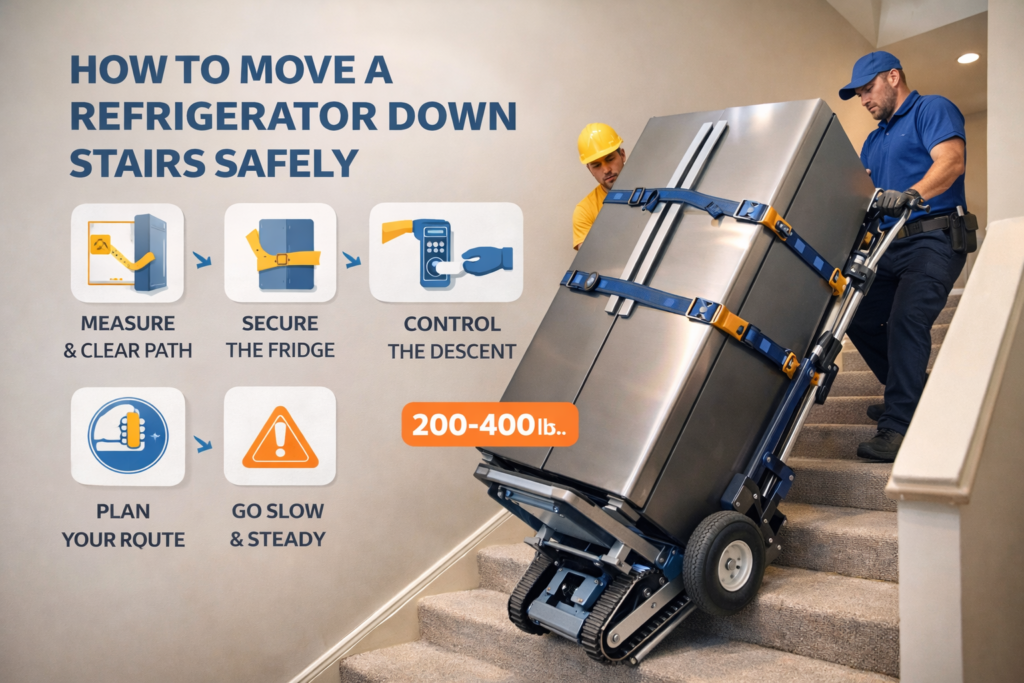
This is the most critical phase. A rushed or uncoordinated move can end in disaster.
Use the Backward Descent Method
Move the dolly backward down the stairs. Rear wheels grip the step edge first while front wheels lower slowly to the next tread. Maintain a slow, steady pace.
Moving backward gives the rear mover better control and visibility of each step.
Assign Roles Clearly
The front mover guides direction, prevents wall contact, and manages tilt. The rear mover controls speed and ensures wheels step down properly. The spotter watches for snags and keeps the path clear.
Use short commands like Stop, Lower, Hold, and Clear.
Navigate Landings and Turns
Pause at landings to reposition. Rotate the dolly slowly. Do not jerk or twist. Recheck straps and balance after each turn.
Delivery guys make it look effortless because they do it every day with the right tools.
Alternative Carry with Shoulder Straps
Only use this method if stairs are short, straight, and a dolly is not available.
Proper Lifting Technique
Wear gloves and sturdy shoes. Position one lifter at the top handling the upper section and one at the bottom bearing more weight on descent. Use shoulder straps to carry weight on legs and back, not arms.
Descend One Step at a Time
Move slowly in sync. The bottom lifter steps down first. Keep the washer level and close to the body. Pause if balance is lost.
With proper setup, shoulder straps are not too bad even on stairs.
Avoid Common Injuries
Moving a washer is a leading cause of back injuries during household moves. Respect the risks.
Prevent Back Strain
Bend your knees, not your back. Keep the load close to your body. Use leg muscles to lift and lower. Never twist while carrying weight.
One wrong lift can result in herniated discs or long-term pain.
Protect Hands and Feet
Wear steel-toed boots or heavy-duty shoes. Keep fingers away from pinch points between walls, steps, and dolly edges. Use gloves with grip to prevent slipping.
Never Rush
Speed kills control. Move slowly and deliberately.
Momentum on stairs can turn a controlled descent into a dangerous drop.
When to Hire Professionals
Sometimes the smartest move is to call experts.
Hire Movers If
- Stairs are narrow, steep, or curved.
- Washer weighs over 250 pounds.
- You lack help or proper tools.
- Flooring is hardwood, tile, or high-value.
- You are moving other heavy items simultaneously.
Benefits of Pro Movers
Professional movers bring industrial equipment including heavy-duty dollies, straps, and ramps. They have trained technique from daily experience with stair navigation. They carry insurance coverage for damage or injury. Many offer full-service options including disconnect, move, and reinstall.
Money well spent if there are stairs or tight corners involved.
Cost Comparison
| Option | Cost | Risk |
|---|---|---|
| DIY with rental dolly | 20 to 50 dollars | High injury and damage risk |
| Moving straps | 15 to 30 dollars | Moderate to high risk |
| Professional movers | 100 to 300 dollars flat | Low risk insured experienced |
Book movers early in the month. End-of-month is peak moving season.
Model and Brand Tips
Not all washers are equal. Know what you are dealing with.
Front-Load vs Top-Load
Front-loaders are heavier with a lower center of gravity, making them harder to load onto a dolly. Top-loaders are lighter and easier to balance, but still require shipping bolts.
Samsung and LG Models
These typically weigh 180 to 220 pounds and require shipping bolts, which are often missing after years of use. Verify bolt availability before moving.
For an old Samsung washer, consider buying new and having delivery pros install it in the basement.
Final Checklist Before Moving
- Washer drained and dried
- Power and water disconnected
- Shipping bolts installed
- Path measured and cleared
- Dolly and straps ready
- Moving blankets in place
- Team briefed and equipped
- Shoes, gloves, and safety gear on
Key Takeaways for Moving Your Washer Down Stairs
Shipping bolts are mandatory. Never skip this step or you risk permanent damage to the drum and suspension system.
A stair-climbing dolly is the safest tool. Rent one if needed rather than attempting to carry the washer by hand.
Two people minimum are required. Coordination beats brute strength when navigating stairs.
Move slowly and communicate. Control beats speed every time.
When in doubt, hire professionals. It is cheaper than medical bills or a broken washer.
Moving a washing machine down stairs is not easy, but it is manageable with the right approach. Prepare thoroughly, use proper equipment, and respect the risks. Your back, your home, and your appliance will thank you.
Frequently Asked Questions About Moving a Washing Machine Down Stairs
Can I move a washing machine without shipping bolts?
No. Shipping bolts lock the drum in place to prevent internal damage during transport. Without them, the drum can shift and destroy suspension components. Order replacements if the original bolts are missing.
How much does it cost to rent a stair-climbing dolly?
Rental costs typically range from 20 to 50 dollars per day from U-Haul, Home Depot, or Lowe. This is a small investment compared to the risk of injury or appliance damage.
Is it safe to move a washing machine alone?
No. Never attempt to move a washer solo. The weight and awkward shape make it impossible to maintain control on stairs. At minimum, you need two strong adults with proper equipment.
How do I know if I need professional movers?
Hire professionals if your stairs are narrow, steep, or curved, if the washer exceeds 250 pounds, if you lack proper tools or help, or if your flooring is valuable. The cost ranges from 100 to 300 dollars for flat-rate appliance moves.
What is the safest way to descend stairs with a washer?
Use a stair-climbing dolly and move backward. One person controls the top while another manages the descent from behind. Move slowly with constant communication between team members.
Do I need to drain water before moving a washer?
Yes. Run a spin-only cycle 24 hours before moving to remove residual water from the drum, hoses, and pump. Leave the door open to air-dry the interior. Water adds weight and can leak during transport.